
Monasteries in Heraklion That You Will Enjoy Exploring
Which monasteries to see in the Heraklion region. Which are the most important monasteries in Heraklion, why you should visit, and what to see.
The region of Heraklion is home to many monasteries that reflect Crete’s spiritual and cultural history. Set in mountains, coastal areas, and quiet valleys, these monasteries offer a look into the island’s traditions through their architecture, frescoes, and peaceful courtyards. This article highlights notable monasteries across the Heraklion area, inviting you to explore the history and heritage they preserve.
📍 Must-do: Balos Cruise 📍 Knossos Palace 📍 Check rental car rates for Crete 🚗
Monasteries in Heraklion
Want to embark in a different day trip? Leave behind the beach and the archaeological sites to explore the region of Heraklion in a different way. Learn more about the history and culture of Crete by visiting the monasteries in the region.
Saint Peter and Saint Paul Monastery
📍 35.342568 N, 25.131771 E
ℹ️ Opening hours from 10 a.m. to 1.30 p.m. (closed on Saturdays).
Unexpectedly located in the center of Heraklion, this monastery was built during the first years of the Venetian rule (around the 12th century) and it originally was the katholikon of a Dominican monastery which made it one of the largest Latin churches in the former city of Candia (present Heraklion).
Sitting on top of the Venetian Wall, this unique temple in Gothic style faces the sea on the northern coast of Heraklion. During the Venetian domination, the monastery became the final resting place of important citizens, however, when the Ottoman Empire conquered the island, the temple was made into a mosque and a minaret was added to the structure, just as many other churches in Crete.
The temple underwent important reconstruction works, and it is interesting to note that during recent excavations, archaeologists found graves dating from the second Byzantine period (961-1205) and Arabic remains from the immediately preceding times. Many objects found during this works are now exhibited in the Historical Museum of Heraklion.

📌 Are you skimming through the post and have no time to read it now? Save it on Pinterest and read it later!
Savvathiana Monastery
📍 35.342568 N, 25.131771 E
ℹ️ Opening hours: 8 a.m. to 1 p.m. and 4 p.m. to 6 p.m.
Located near Rogdia, around 20 km from the center of Heraklion, this monastery is located on the slopes of a hill and it was built during the Venetian era. The Holy Monastery of Savvathiana (also known as Savatiana or Savatiano Monastery) is 440 meters above sea level, in a protected position. The monastery, which now operates as a nunnery, was continuously attacked during the Ottoman era.
In the complex, you can also see Agios Antonios Church, partially built inside a cave. The church was initially not part of the monastery. The church features two isles, one of them dedicated to Saint Anthony, while the secondary aisle, which is much newer, is dedicated to Agios Savvas. You can also visit the chapel dedicated to the Virgin which is connected to the main church through a path and a bridge that creosses a small stream.
Inside the monastery complex, you can also visit the cemetery, a former mill, an old guest room, an ossuary, the nuns’ cells, and an old water tower. Traditionally, monks from coastal monasteries took refuge here to escape pirate raids.
Agarathos Monastery
📍 35.227193 N, 25.249326 E
ℹ️ Opening hours: 8.30 a.m. to 6 p.m.
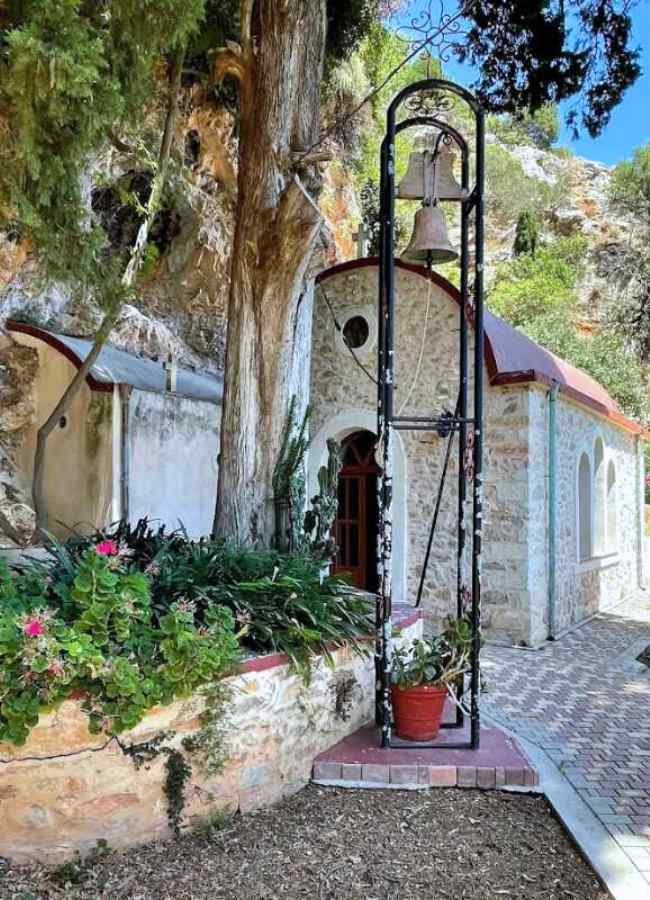
Located not far from Myrtia village, around 23 km from the center of Heraklion, this is one of the most ancient monasteries on the island. It has been proved that the monastery dates from the 15th century yet many sources confirm that it might have been founded at least five centuries earlier by Nikiforos Fokas (a Byzantine emperor that retook the control of Crete and ruled from 963 to 969).
Just like may other monasteries on the island, the monastery was designed as a fortress, and its main church features an impressive central dome. The place played a key role as an education center during the Venetian times. Today, it is possible to visit several areas inside the monastery, including the cells, the main church and the church museum.

Kera Kardiotissa Monastery
📍 35.224391 N, 25.461732 E
ℹ️ Opening hours: 7 a.m. to 7 p.m. (summer), 8 a.m. to 5 p.m. (winter)
Known as Keras Monastery, or Kera Kardiotissa Monastery is located about 50 km from Heraklion city, on the northern slopes of Mount Dikti (650 m asl) and only a short drive from the Krasi and Kera villages and the Lasithi Plateau. The complex is dedicated to the Virgin Mary and probably dates back to the Venetian times, around the 14th century.
The monastery received its name after an old icon of the Monther of God that was considered miraculous. However, the image was taken away from Crete back in 1498 and is now enshrined in the Roman Church of Saint Alphonsus. However, the icon was replaced centuries after by another image also thought to be holy.
As many other religious centers on the island, the monastery has the structure of a fortress and it was a revolutionary headquarters during the Ottoman Era and it was severely attacked on many occasions as a consequence.
Vrontisi Monastery
📍 35.144999 N, 24.881389 E
ℹ️ Opening hours: from 8 a.m. to 5 p.m. Entrance to the monastery is free.
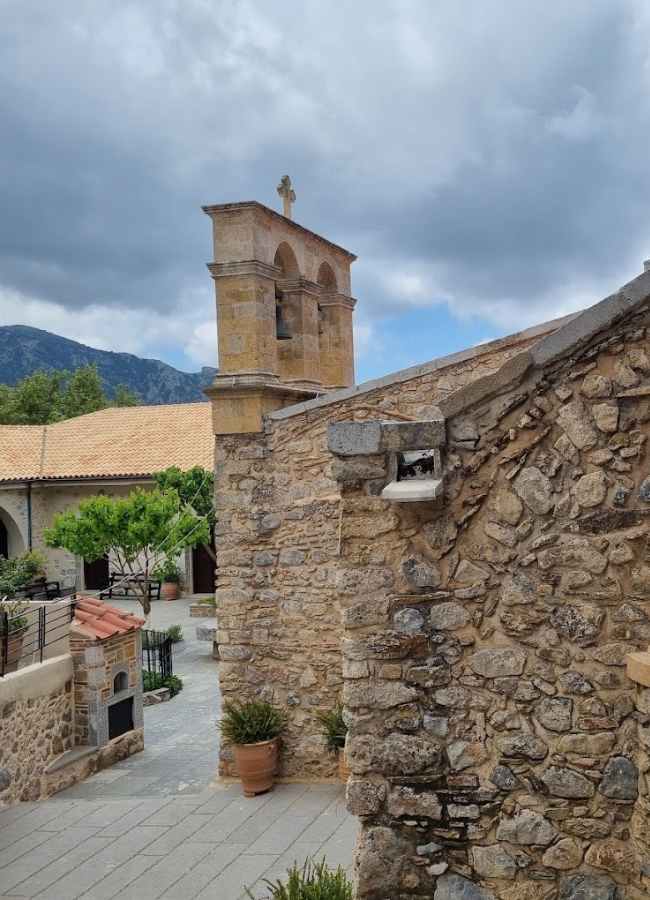
Located close to Zaros village, Moni Vrontisi is a 14th-century monastery probably one of the oldest on the southern coast of the island. The monastery is about 50 km from Heraklion and it was built on the southern slopes of Mount Psiloritis (around 550 m asl), offering unique views of the Asterusia Mountains and the Mesara Plain.
Vrontisi flourished as a monastic and spiritual center during the 16th and 17th centuries (Venetian times). However, durng the Ottoman occupation and thanks to its fortified structure, the monastery functioned as a revolutionary centre during different Cretan uprisings. The place functioned as headquarters during the Cretan Revolt which made the Ottomans kill the monks and burn the crops in reprisal. As a consquence, the monastery was deserted.
Today, the monastery is active and you can visit it. It hoses a two-nave church dedicated to Agios Antonios and it features traces of very ancient frescoes. At the main entrance, you can see a Venetian marble fountan (probably from the 15th century) that features Adam and Even and the rivers of the Garden of Eden.
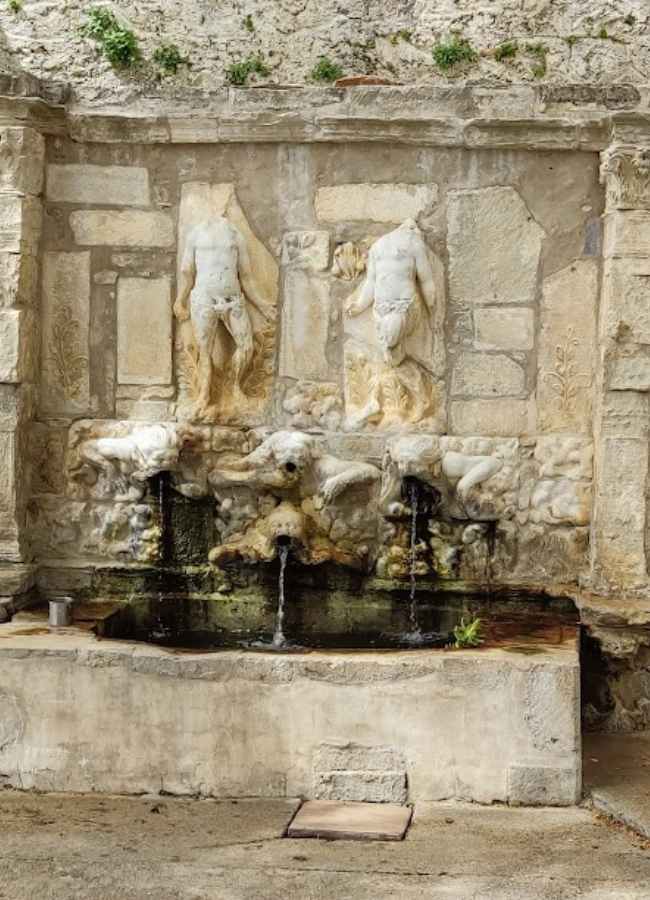
Monastery of Agios Georgios Epanosifi
📍 35.144999 N, 24.881389 E
ℹ️ Opening hours: from 9 a.m. to 12.30 p.m. and 5.30 p.m. to 7.30 p.m.
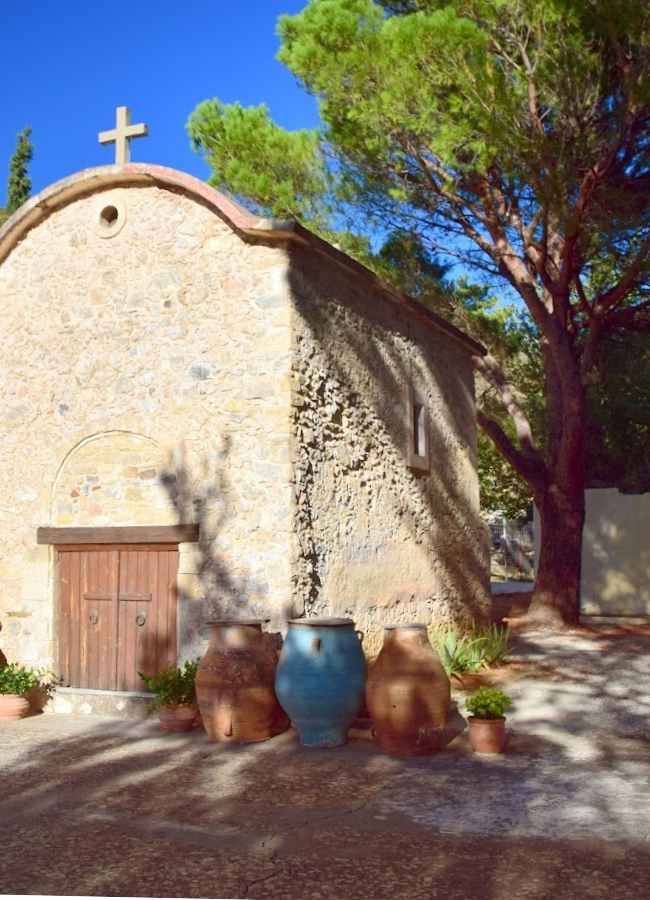
This religious place is about 30 km south of Heraklion and it dates from the Venetian times. Agios Georgios Epanosifi is Crete’s biggest monastery and pilgrimage center on the island. It gained importance during the Ottoman occupation, a period of great prosperity for the religious center.
The monastery maintained a school and a rich library where monks were active copyists of books, hymn writers, and teachers. In 1821 with the revolution against the Turks, the monastery suffered different attacks, many monks were slaughtered, while icons and relics were sold to purchase weapons. In 1941 the monks of Epanosifi took part in the Battle of Crete which became a hospital for the wounded and over 100 families found refuge in the premises.
Inside the monastery you can visit the two-aisled Basilica, dedicated to Saint George. The church also shelters the miraculous icon of Agios Georgios, largely covered with precious offerings.

Afentis Christos
📍 35.233207 N, 25.140858 E
ℹ️ The monastery is uninhabited, there’s a dirt road from Archanes that leads to the abandoned place.
Afenti Christos Church is the only remains of a Venetian-era monastery that was in operation here throughout the whole Venetian rule. The monastery was founded in 1443 and was erected on the top of Mount Giuchtas For that reason, it was often believed to have been constructed on top of an ancient temple dedicated to Zeus (many travelers in the past reached the peak looking for the grave of Zeus).
Overlooking the coast of the island, the area offers a panoramic view of the sea and the traditional village of Archanes. The small church stands close to an old three-story building, that was probably part of the cell complex for the monks that lived in the monastery.
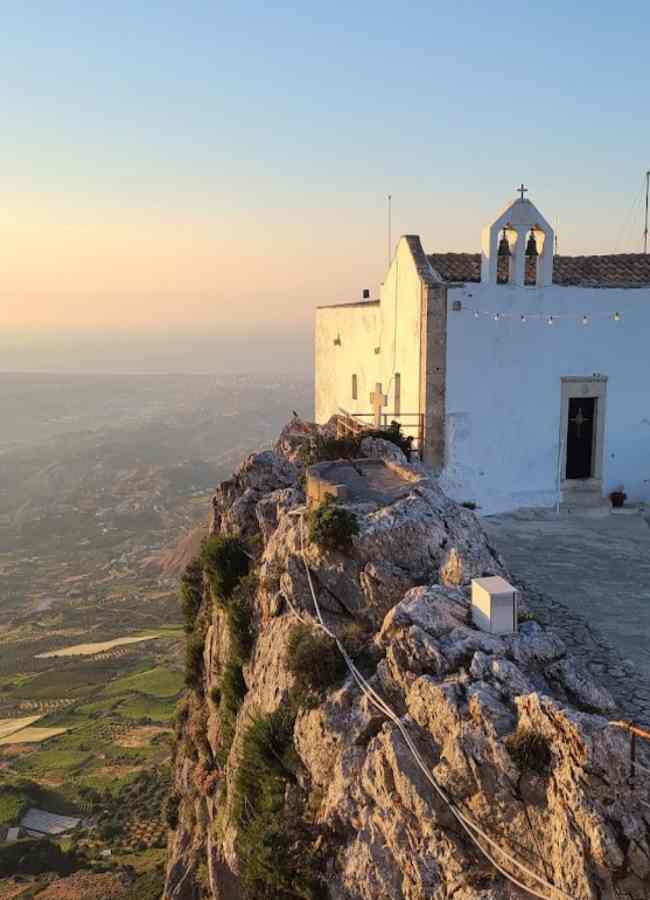
Panagia Koudouma Monastery
📍 34.938472 N, 25.085587 E
ℹ️ Opening hours: 7 a.m. to 10 p.m.
Also known as Koudoumas Monastery, this complex in the Asterousia Mountains sits at the edge of Katarraktis Gorge. It’s located about 80 km south of Heraklion and accessible only by a lengthy drive along a 25-kilometer dirt road (starting from Sternes village), all traits that make it one of the hardest to access monasteries in Crete.
Built within a cave, the male Koudoumas Monastery is dedicated to the Dormition of the Virgin Mary, celebrated each year on August 15, drawing pilgrims from across Crete to the area, which is known for its many caves, some still used by hermits. If you enjoy hiking, then you can follow the path from Sternes to the monastery (the hike takes about 3 hours).
The monastery dates from Venetian times but it was re-established in 1870 after centuries of abandonment due to coastal pirate raids. Known for their hospitality, the resident monks welcome visitors to stay in simple guest rooms with basic amenities, making Koudoumas a peaceful retreat.
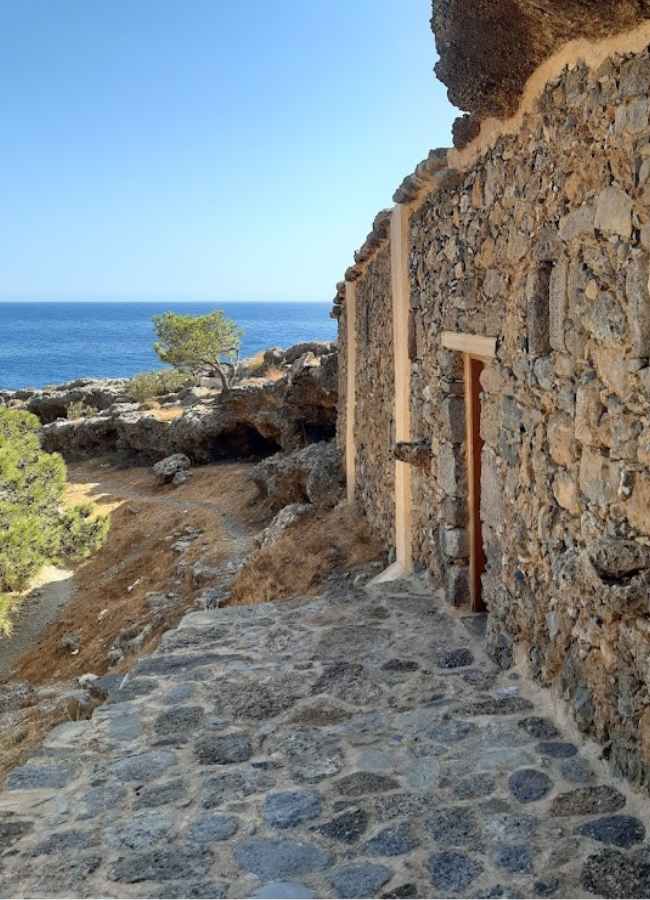
Moni Panagia Odigitria in Sivas
📍 34.973451 N, 24.799682 E
ℹ️ Opening hours: from 7 a.m. to 8 p.m.
Panagia Odigitria Monastery, located in the Asterousia Mountains near Sivas, around 14 km from the coastal village of Matala, in southern Crete.
It is another of Crete’s oldest historic monasteries featuring an impressive fortress-like structure. This historic male monastery dates back to the 14th century, however it was probably established centuries before, during the second Byzantine era. The monastery played an important role during Crete’s battles against the Ottomans. In particular, you can see the so called Tower of Xeropateras (named afer a rebel monk) which had an important defensive role in fights against the Turks.
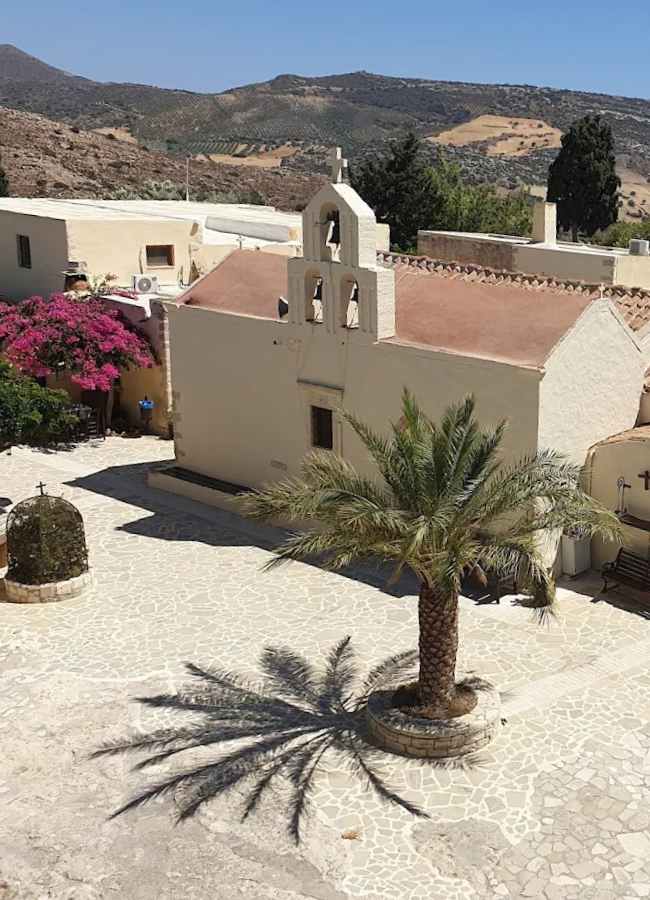
Exploring the monasteries of Heraklion reveals more than architectural skills; it’ open’s a window into Crete’s spiritual history and traditions. Each monastery lets you to step back from the island’s bustling life and experience moments of peace, faith and history. Visit them to enrich our understanding of Crete and connect with its timeless culture and beauty.

Are you visiting Crete Soon?
Join my Facebook group for more tips, or plan your Crete itinerary with me!
Pin for Later
Monasteries in Heraklion, Crete



Gabi, the Crete Insider
Hi, I’m Gabi — your go-to local expert in Crete! I’ve been living in Chania, Crete since 2016, and I’ve turned my love for the island into a full-time passion — guiding travelers, writing for travel media, and curating local experiences.
I co-authored DK Eyewitness Top 10 Crete and other guides. I run the blogs The Tiny Book, Greece Planner, and My Cretan Recipe. Through this platform I help travelers design unforgettable trips to Crete.
🚘 THE BEST WAY TO SEE CRETE IS BY CAR 🚘
Compare international car companies in Crete, or trust a reliable local company like Retyhmnon Cars.


