Why You Should Visit Ancient Aptera Ruins in Chania
Step into Crete’s fascinating past at Aptera, one of Crete’s most engaging archaeological sites. This article, helps you explore its ancient ruins and learn about a city that’s only a few minutes from the center of Chania, that once thrived from the early Iron Age through the Roman period.
📍 Must-do: Balos Cruise 📍 Knossos Palace 📍 Check rental car rates for Crete 🚗
About Ancient Aptera
Located near modern Souda, just a short drive from Chania (12 km), Aptera offers a clear window into Crete’s history.

Perched on a plateau 200 meters above Souda Bay, Aptera was a fascinating ancient city-state sheltering a history that stretches back to the Minoan era, this site is a must-visit for history lovers, mythology enthusiasts, and curious travelers.
Aptera was a key center of trade and local governance, and its well-preserved ruins—from a small theater to impressive Roman cisterns—help bring its past to life. The site can be seen in a short time and is simple to explore. It features informative, easy-to-read signs and clear pathways, making it a popular day trip from Chania town.
How to Get to Aptera
Aptera is found on a hill near Souda in western Crete, just around 12 kilometers from Chania. Its elevated location gives visitors beautiful views of the surrounding countryside and the sea, making it a scenic spot for exploring history.
The best way to reach Aptera is by car. The drive from Chania takes about 20–30 minutes on the national road. There is ample parking available at the site.

Things to Know about Aptera
Aptera wasn’t just any city—it was a powerhouse of trade and military might. Thanks to its two thriving ports, Minoa (modern-day Marathi) and present Kalyves, Aptera became a major commercial hub. Its people were renowned archers and sought-after mercenaries.
The city saw its golden age during the Hellenistic period (4th–3rd century BC), when it began minting its own coins—an unmistakable sign of economic and political strength. These coins depicted Artemis, Apollo, or Hera alongside symbols like a bow, a bee, or a torch.
During the Roman rule, Aptera’s fortunes began to decline. Trade slowed, but agriculture flourished. The city remained inhabited through the Byzantine era, though it never regained its former glory.

😉 RELATED ARTICLE
→ Guide to the Most Important Archaeological Sites in Crete
Legends
One of the myths that I particularly like, is the one that explains how Aptera got its name. Although some believe its name honors goddess Artemis Aptera, there’s a more charming legend that tells of a fateful musical contest between the Muses and the Sirens.
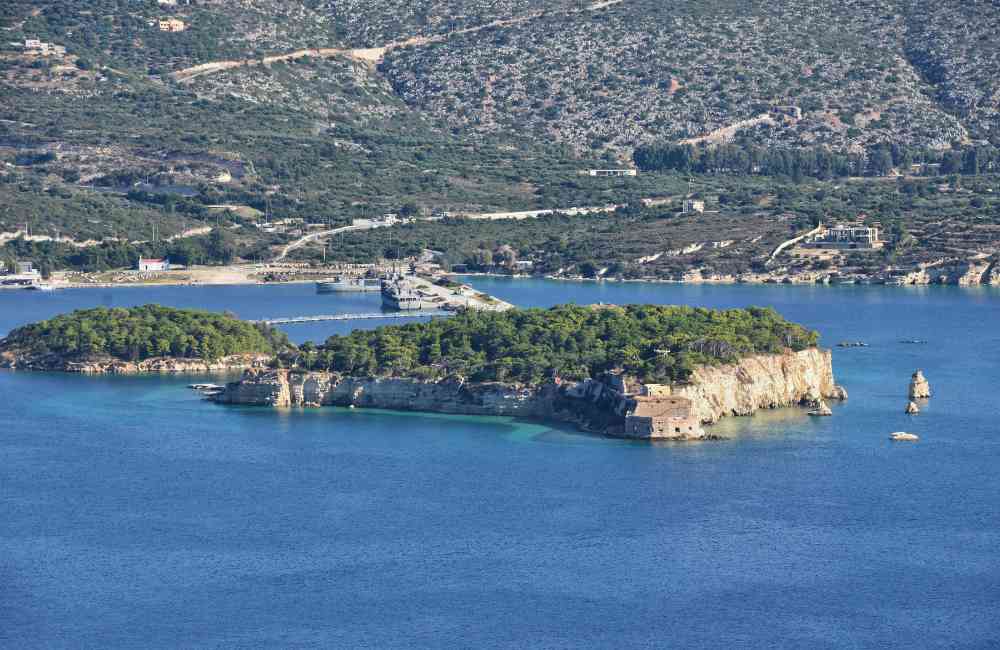
When the Sirens lost, they shed their feathers in despair, turning white as they fell into the sea, on the Bay of Souda, opposite the city. These feathers became the tiny islets of Souda Bay, now called Lefkes (meaning “white”).
Explore the Archaeological Site
A visit to Aptera is like stepping back in time, besides, there’re ongoing excavations constantly revealing new discoveries. During a visit to Aptera, these are some of the spots you will not want to miss:
- The City Walls
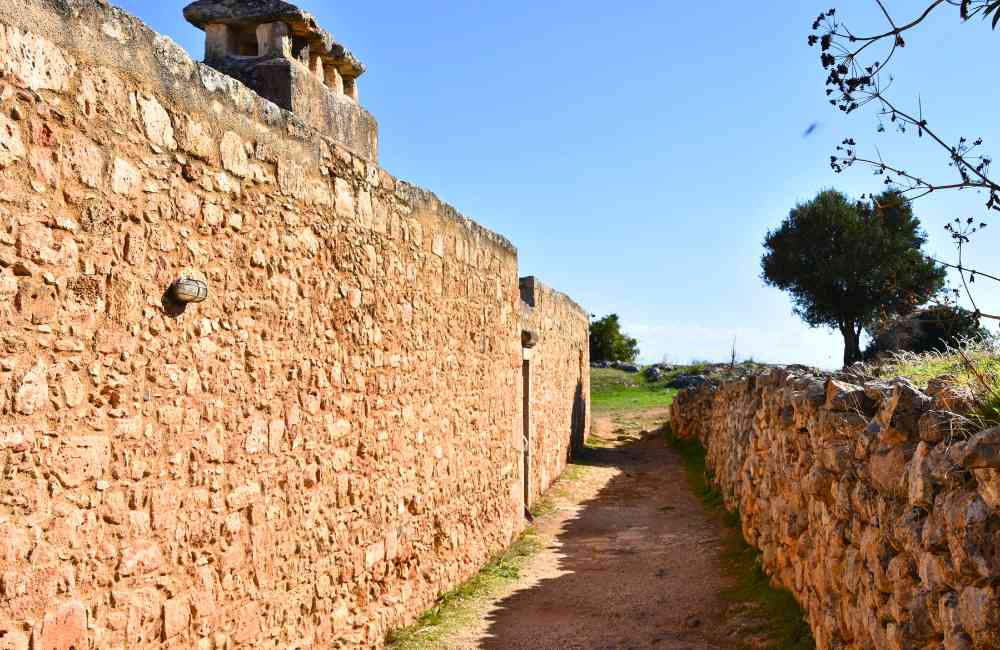
Stretching nearly 4 km, these massive Hellenistic-era fortifications (3rd century BC) speak about Aptera’s former power and its need to defend itself.
- Roman Cisterns
Hidden behind the chapel of Agios Ioannis Theologos, these impressive arched structures once stored the city’s water supply, feeding both public and private baths. Probably the most stunning spot to see withing the complex of Aptera, don’t miss a stop to explore these immense Roman arches.

- Triple-Arched Roman Building
Although its original function is not completely understood, it is thought that this complex was part of a parliamentary chamber. It is easy to spot this place to the east of the city walls.

- Double-Parted Sanctuary
This is a small but significant two-room temple that was built during the 5th–4th century BC.
- Ancient Theater
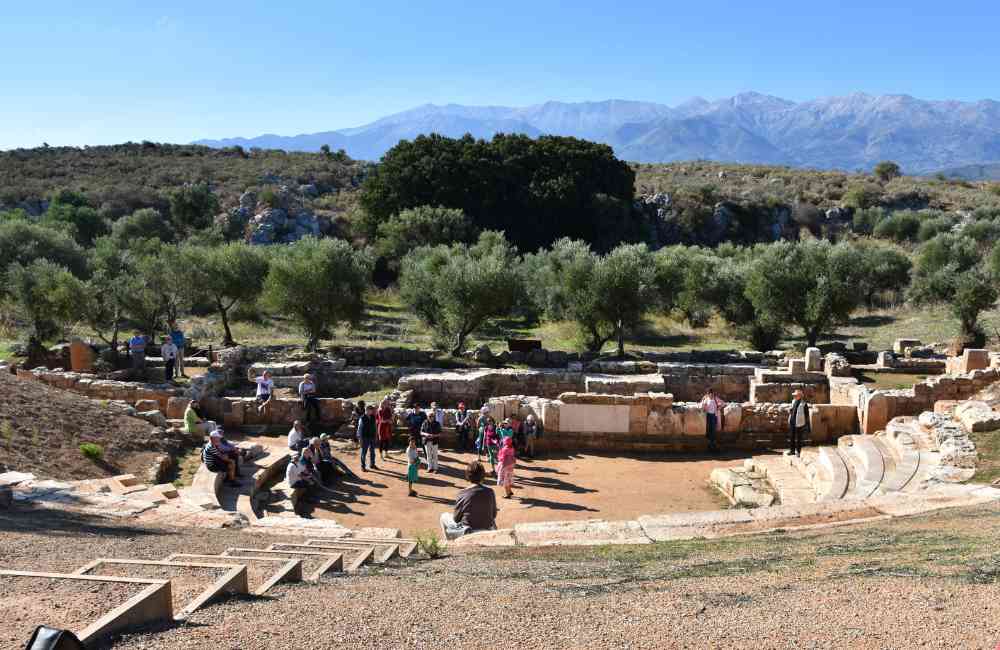
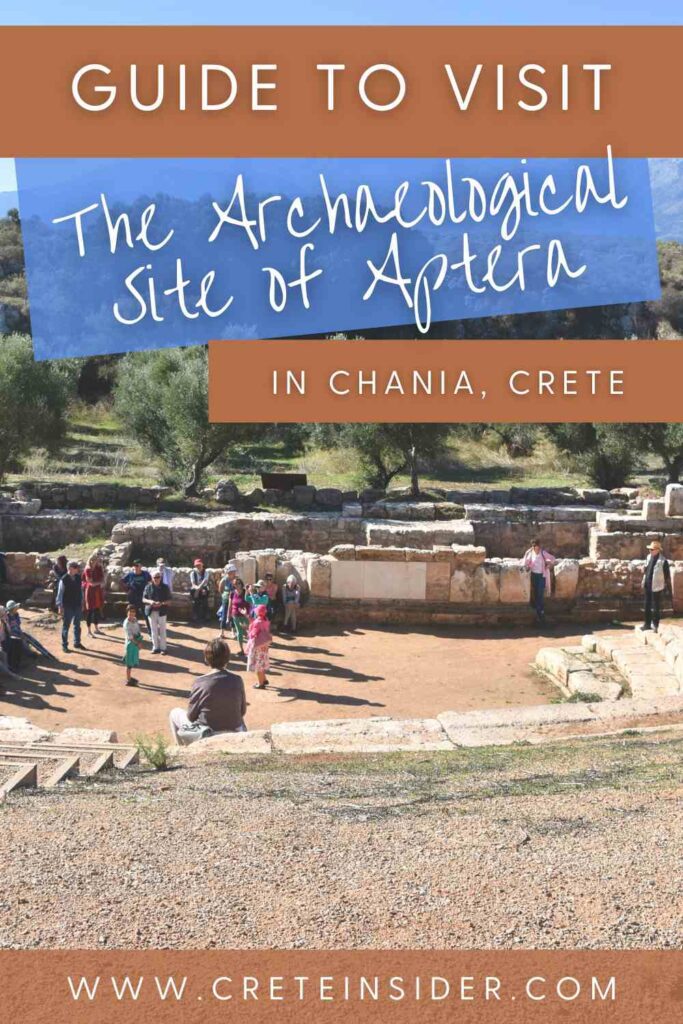
Another fascinating place within the ruin complex, this ancient theater was entirely carved entirely from limestone. It is a well-preserved structure with some unexpected acoustics (I happened to be there while a choir was making a visit and decided to spontaneously sing during their visit!). The theater sits at the southeastern entrance of the city.

- Roman Manor
Also known as Roman villa, here you can see the ruins of what one was a luxurious residence with a peristyle courtyard, showcasing the elegance of Roman architecture. If you’ve ever been to Pompeii, in Italy, you will certainly find a lot of resemblances.

- The Necropolis
Located in the modern neighborhood of Plakalona Megalon Chorafion, these ancient tombs date back to the Roman, Hellenistic, and even Geometric periods.
- Agios Ioannis Theologos Monastery
This is a more modern structure located within the Ancient Aptera complex. It was built with stones from the ancient city, and it was active until the 1960s. Since then, the monastery has been partially restored.

- Ottoman Fortresses
Although it is not located within the Ruins of Aptera, these two impressive structures should be included as a stop during your visit. Located a few minutes from Aptera, on top of the same hill, the Turks left their mark on the Koules (also known as Palaiokastro) which was built to suppress the Cretan revolution.
Below the hill, and also overlooking the Bay of Souda, the Itzedin Fortress is a 19th-century stronghold that once housed barracks and a hospital.

Aptera’s Treasures
Many of Aptera’s most fascinating finds—vases, coins, figurines, sculptures, and inscriptions—are on display at the Archaeological Museum of Chania in the Halepa district. If you’re eager to dive deeper into Crete’s past, this museum is well worth a visit.

Practical Details to Visit Aptera
ℹ️ USEFUL INFO
→ Opening Hours
- Summer Season: 8 a. m. to 3 p. m.
- Winter Season: Hours may vary. It is a good idea to check ahead before your visit.
- Opening times might change during holidays or special events.
→ Ticket Fees
- Adults: Approximately €10.00
- Reduced Rates: Around €5.00 for seniors and students (ID required)
- Children: Often free or available at a very low fee
- Check out updated fees here.
→ Parking Area
A clearly marked parking area is available right at the entrance. The space is large enough for both private cars and tour buses.

History and Importance of Aptera
Aptera was a bustling city that played a key role in Crete’s history from the early Iron Age through the Roman period. It grew as an important center for trade and local administration, and later expanded under Roman influence.
The ruins at Aptera, including its theater, cistern, and protective walls, tell the story of daily life, public gatherings, and the city’s strong community spirit. This site also gives us a valuable look into the development of early urban life on Crete.

Places to Visit Near Aptera
A visit to Aptera is even more special when you explore the attractions nearby:
Koules, Ottoman Fortress
As mentioned before, this place is a short distance from the archaeological site but is not part of the complex. Also known as the Aptera Fortress, this impressive castle on top of a hill overlooks the Souda Bay and is easily visible as you drive along the national road.
The well-preserved is about 12 km east of Chania. It was built by Hussein Avni pasha after the Cretan Revolution of 1866 to control the area known as Apokoronas and to offer support to the underlaying Intzedin Fortress, another strategically important defensive structure on the Souda Bay.

Gavalochori Village
One of the prettiest villages in the area of Apokoronas, east of Chania, this incredibly beautiful settlement still preserves many authentic traditions of the island, some of them unique to Gavalochori, like the centennial craft of kopaneli, still cultivated and treasured by the women in the villae.
Gavalochori is known for its unique Folklore Museum, the traditional architecture and local hospitality. Stroll through its narrow streets, enjoy the local cuisine in a family-run taverna, and take in the peaceful rural scenery.

Vamos Village
Just a few monutes from Gavalochori, Vamos is another traditional Cretan village, that offers a glimpse into local life with its stone houses and narrow alleys.
When you visit, take your time to wander along the streets of Vamos, visit the main church or explore the spectacular Saint Anthony in Karydi Monastery nearby. You can also enjoy a cup of Greek coffee in the main square, discover local crafts, sample homemade products, and experience the slower pace of village life.

Agia Triada Monastery in the Akrotiri Peninsula
Although you’ll need to drive a few minutes to reach the heart of the Akrotiri Peninsula, this is a worthy place to visit near the ancient ruins of Aptera. The spectacular Monastery of Agia Triada, in Akrotiri is one of the pretties monasteries in Crete.
It’s located in a serene area, surrounded by olive trees and vineyards, and its impressive architecture and gorgeous gardens make it a perfect spot for exploration, wine tasting, and taking truly beautiful pictures.

A portal to Crete’s ancient past, Aptera is a place where to marvel at well-preserved ruins following easy-to-follow paths that tell the story of a once-thriving city.
A visit to the ancient ruins of Aptera promises a full day of exploration and discovery but also the chance to enjoy some truly stunning landscapes. Are you visiting soon?

Are you visiting Crete Soon?
Join my Facebook group for more tips, or plan your Crete itinerary with me!
Pin for Later!
Guide to Visit the Ancient Ruins of Aptera, Crete


Gabi, the Crete Insider
Hi, I’m Gabi — your go-to local expert in Crete! I’ve been living in Chania, Crete since 2016, and I’ve turned my love for the island into a full-time passion — guiding travelers, writing for travel media, and curating local experiences.
I co-authored DK Eyewitness Top 10 Crete and other guides. I run the blogs The Tiny Book, Greece Planner, and My Cretan Recipe. Through this platform I help travelers design unforgettable trips to Crete.
→ Book your 1:1 consultation with a local to plan your Crete escape
🚘 Trusted Car Rental in Crete
CAR RENTAL IN CRETE ~ Enjoy peace of mind by hiring a car from a local company. Rethymnon Cars offers excellent cars, full insurance with no excess, no credit card deposit, and no extras.