

Hiking in Crete: Best Hikes, Trails, Gear & Where to Hike
Crete is a perfect destination for hiking in the mountains, a popular activity on the island. Thousands of tourists visit yearly to discover the most beautiful natural landmarks and stunning gorges.
No matter the difficulty of your path, whether you’re hiking Mount Psiloritis, following the E4 hiking trail, crossing the Samaria Gorge, or simply having fun with the Preveli hike, this complete guide to the most amazing hikes in Crete has all the answers you need. Get ready to walk the paths of Crete!
📍 Must-do: Balos Cruise 📍 Knossos Palace 📍 Check rental car rates for Crete 🚗
Crete is a perfect destination for those who love to be in touch with nature. It is a paradise for those who enjoy outdoor experiences. Home to dozens of beautiful walking trails, hikes, and natural paths of any difficulty level, you will certainly find the right hiking trail in Crete!
Getting Ready for Hiking in Crete

When facing a new hiking trail, the most important thing is to be ready for the adventure you’re about to embrace. If it is your first hike, you’ll be better off starting by walking a path with a low difficulty level.
This guide also answers common questions about hiking in Crete and offers some ideas about some essential hiking gear you might need.
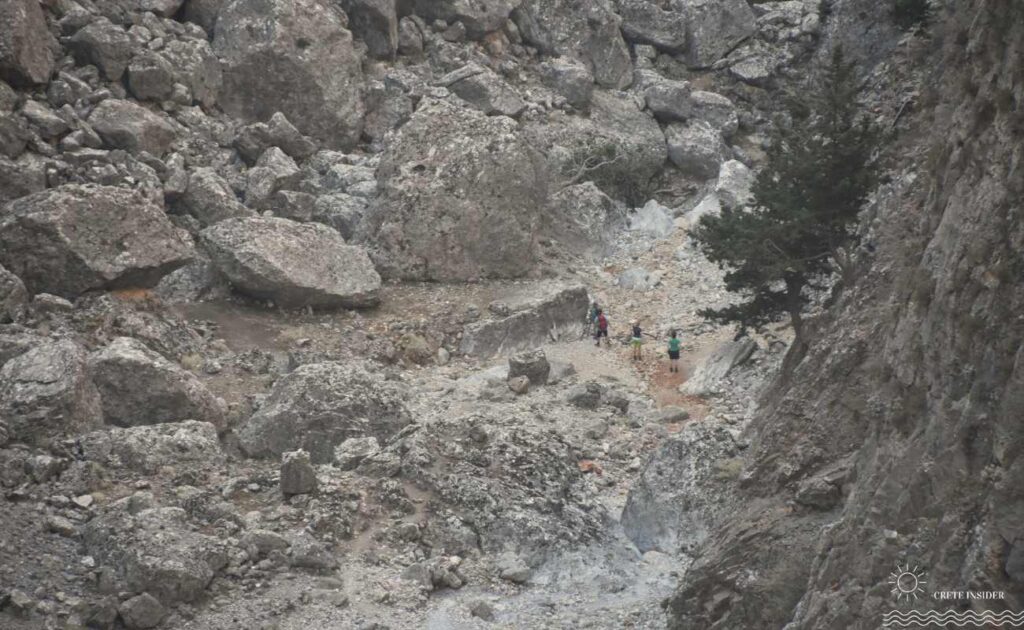
Although I enjoy hiking on the island, my skills are far from an expert’s level. So, I turned to experienced local hikers and mountain guides to offer the most accurate information. I hope you enjoy the read!
Planning your Hike in Crete
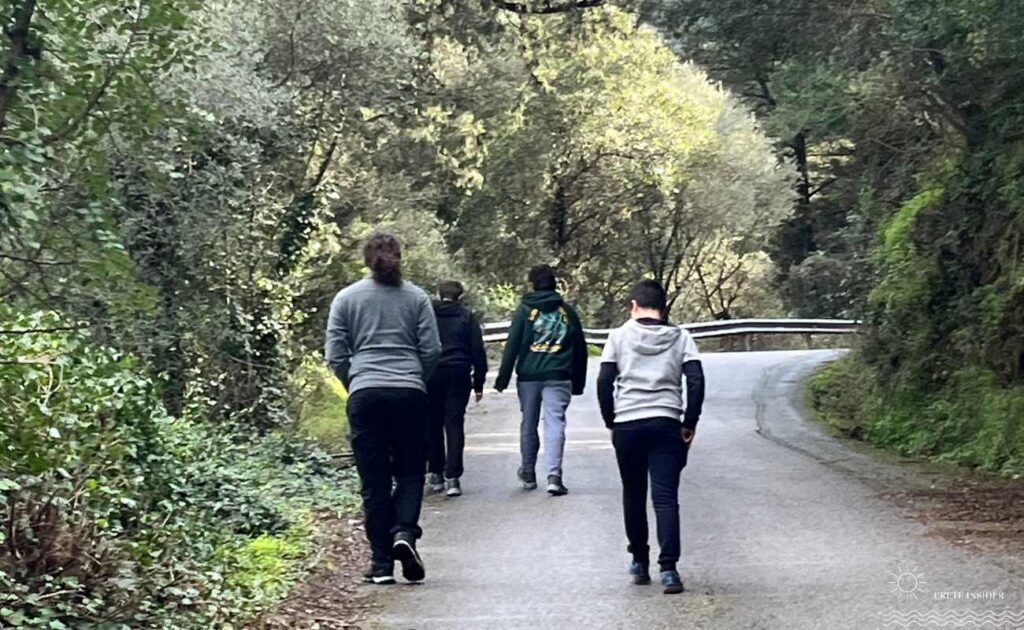
Planning is the first and most important step to enjoying the whole experience. Decide what you want to see and what to enjoy before even considering a hike.
Waterfalls and springs? Coastal paths? Mountains and gorges? Here are a few ideas, but do research or contact an experienced team to help you plan the perfect hike. The and will inform you much better than me, an occasional hiker in love with the island.
I trust my hikes to Sophia from Evenos Travel. She knows exactly where I should go for the best sights in West Crete. She and her team have suggested the following trails.
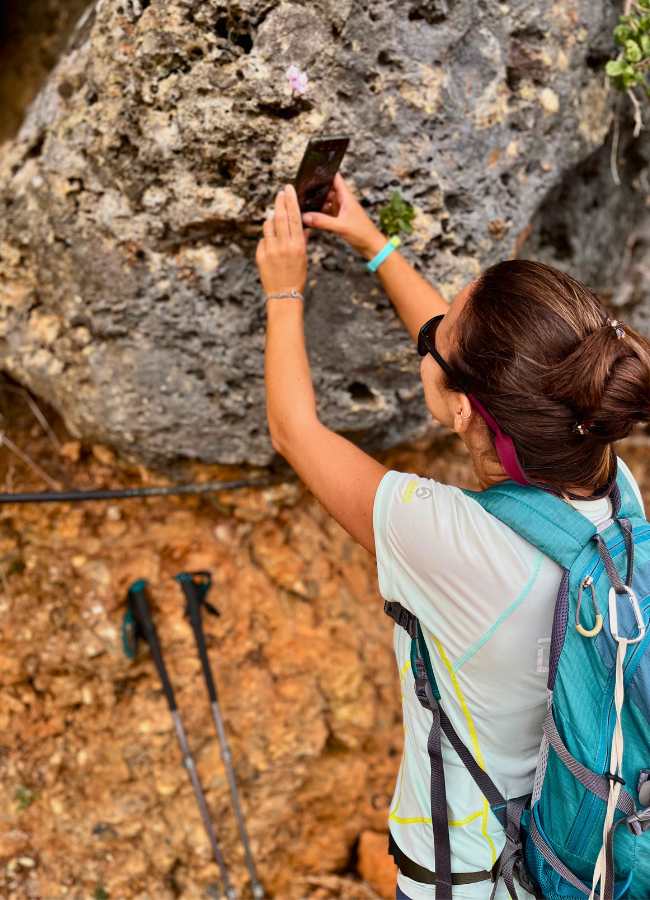
For those who prefer to venture out independently, reliable resources like AllTrails can provide basic hike information and reviews from fellow hikers. I often turn to AllTrails for planning simple walks, finding it a trustworthy companion.
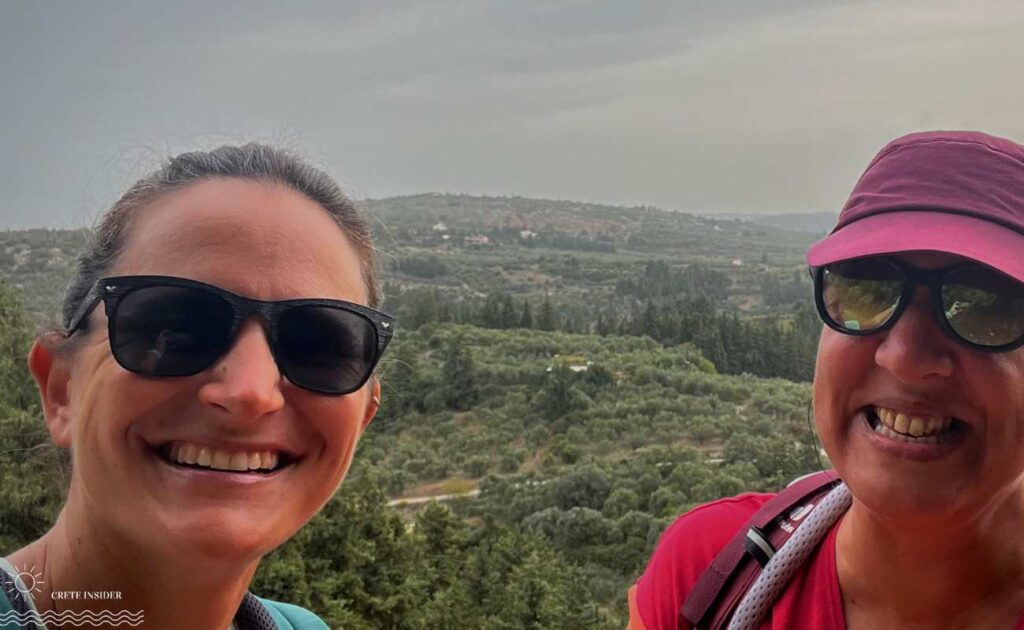
Remember, it’s crucial to double-check distance and elevation gain every time you’re getting ready for a hike. Knowing these two important details will ensure a safe and enjoyable hike.
AllTrails helps you by marking the paths as easy, moderate, or difficult. And even when this information can be subjective, don’t overlook ratings if you’re a beginner.
Hiking and walking are two very different things. If you’ve never hiked, remember that hiking is slower and more tiring than simple walking, especially with significant elevation gain. These factors also change according to other details, such as your fitness level, the terrain, the trail condition you’ll be walking on, the weather and season, and how high (or low) you will start your path.
Some of the Best Hikes in Crete
1. Chora Sfakion – Glyka Nera (Sweet Water) Beach – Loutro (Chania Region)
ESSENTIAL INFORMATION
- Trail: One-way. You will return to the starting point (Chora Sfakion) by ferry.
- Hiking time: about 4 hours + stops
- Distance: 7.2 km
- Elevation difference: 0 m – 65 m – 0 m – 25 m – 0 m.
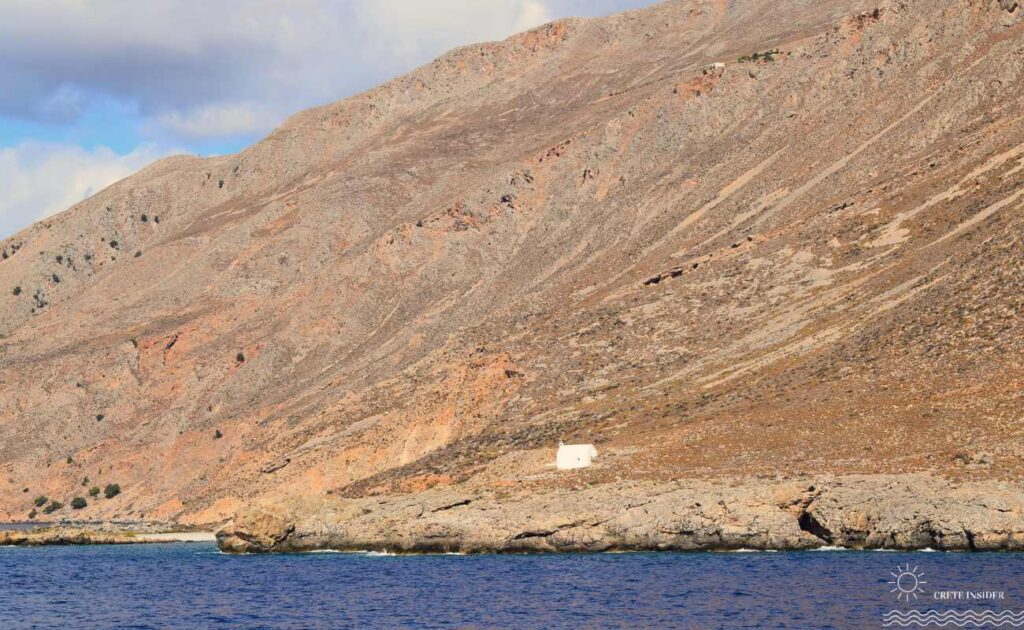
This is a popular hike on the southern coast of Crete, best done in the early morning or late afternoon to avoid the midday heat. It takes you to the gorgeous village of Loutro, where you can swim or eat by the sea before returning to Chora Sfakion and, eventually, Chania.
The walk, which typically takes around 3-4 hours, starts at the coastal village of Chora Sfakion, following the road towards Anopoli. After approximately 5 kilometers, the well-marked E4 footpath veers off the road, guiding you towards Glyka Nera beach, also known as Sweetwater.
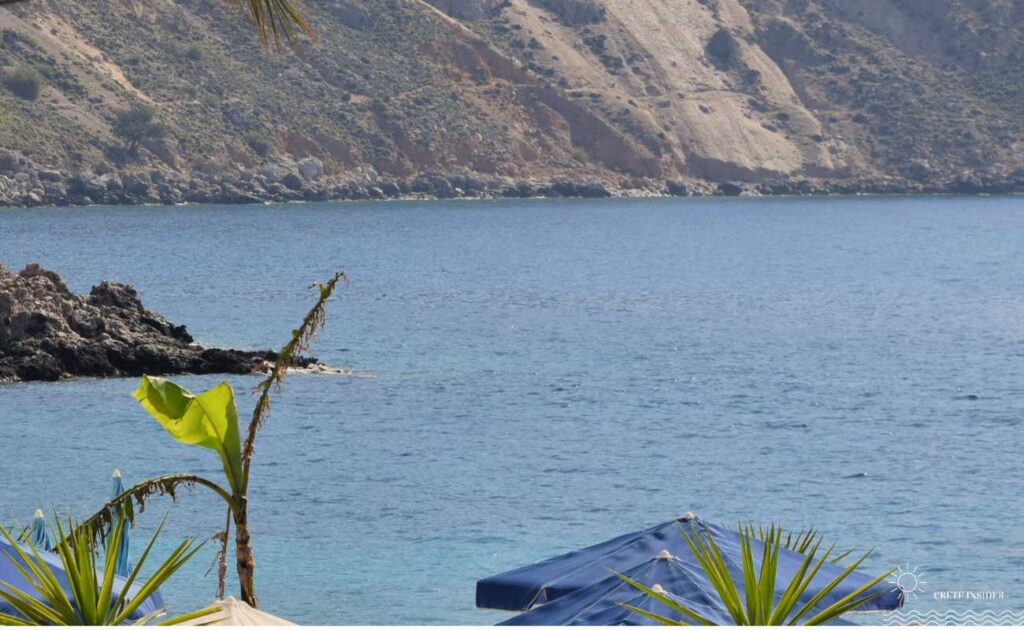
Glyka Nera gets its name from the freshwater springs on the beach only meters from the shoreline. The melted snow water comes up in springs on the beach and in the sea, making a swim here quite “refreshing” (yes, swimming here is cold!), especially before summer!
The landscape is gorgeous, especially the turquoise-blue water all along the way. During the final part of the trail, the footpath heads along to the fishing village of Loutro, a unique and tiny settlement on the southern coast of the Chania region. One more of the several southern coastal villages that are only accessible on foot or by boat!
You can return to Chora Sfakion on the regular ferry at the end of the hike.
Respect the environment and live by this essential hiking principle: Leave No Trace. Whatever you bring, ALWAYS take it back with you, including garbage and biodegradable stuff.
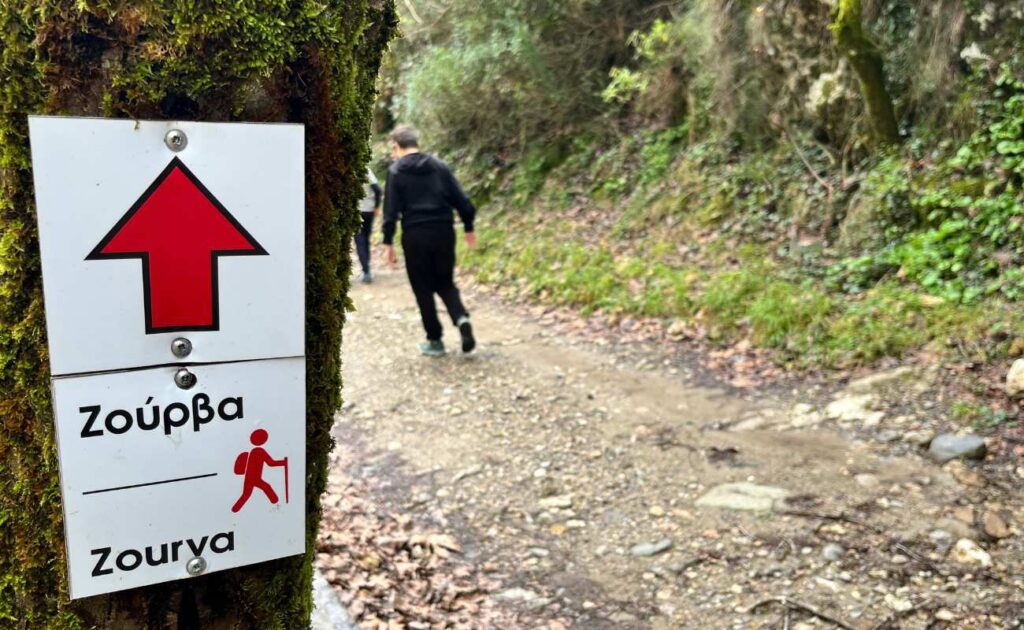
2. Zourva – Tromarissa Springs (Chania Region)
ESSENTIAL INFORMATION
- Trail: One-way and back, 2.5 hours.
- Hiking time: 5 hours
- Distance: 7 km
- Elevation difference: 550 m – 1100 m – 550 m.
The Zourva-Tromarissa hike begins on the northern side of Zourva, a traditional mountain village in Chania at 550 meters, located about 45 minutes from the center of town (by car).
The area is home to an impressive wood, Paradisos, filled with cypresses typical of the White Mountains. The hike follows an old trail that climbs to reach Tromarissa Springs.
The well-marked path is a steady climb uphill (about 2 hours) through the cypress forest. As it rises, the trail passes an ancient peak sanctuary with stunning views of Crete’s northern coast.
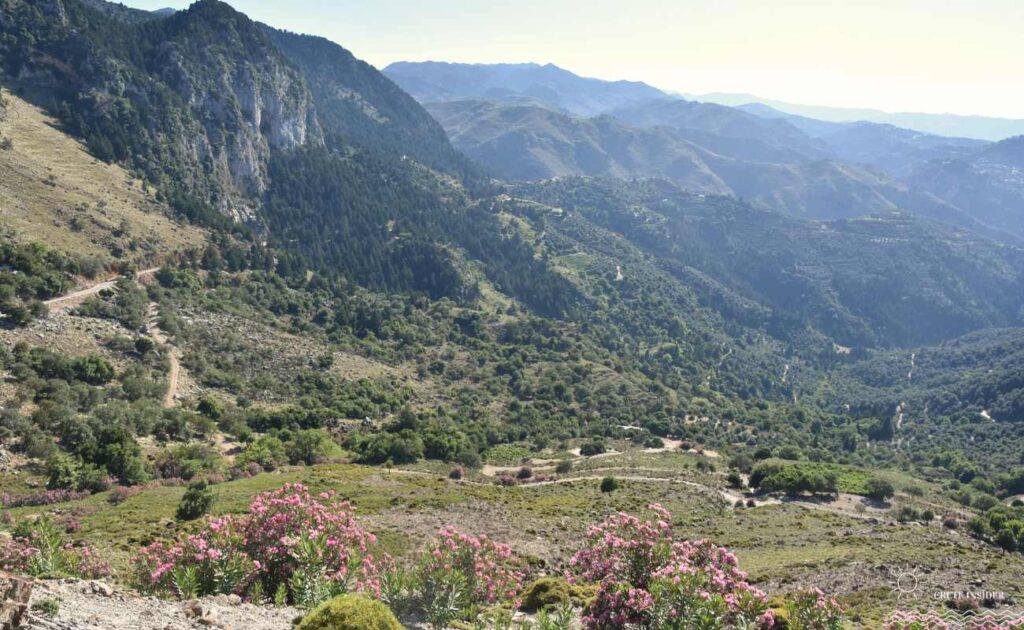
The hike follows the old kalderimi, an ancient cobblestone-paved road built for hoofed traffic to the springs. The Tromarissa gorge that starts from here is technical (there are 47 rappels to go down).
Near the springs, you will find several ancient plane trees. According to an old legend, this was where fairies dwelled, scaring away evil spirits. The name of the springs comes from the Greek word for “scare” (‘τρομάζω’ -> Τρομάρισσα).
3. Margarites – Eleftherna (Rethymnon Region)

ESSENTIAL INFORMATION
- Trail: Loop (circular hike)
- Hiking time: about 5 hours + stops.
- Distance: 14.5 km.
- Elevation difference: 250 m – 380 m – 200 m – 250 m.
- Once back in Margarites, a famous pottery village in Rethymnon, you can visit the ceramic shops or attend a pottery class.
This trail combines culture, history, nature, and Cretan traditions into one unforgettable hike. Considered a fairly easy hike, it starts at the well-known pottery village of Margarites. It follows old cobbled paths and small dirt roads, passing over the hills toward the archaeological site of Eleftherna. Over here, vast (and ongoing) excavations reveal the area’s ancient history.
This is a perfect trail for spring if you enjoy the local flora, as you can spot beautiful wildflowers along the path. The views toward Mount Psiloritis (the highest peak in Crete at 2,456 meters) are spectacular any time of the year!
4. Gious Kambous – Agia Fotia Gorge (Rethymnon Region)
ESSENTIAL INFORMATION
- Trail: One-way hike (you can return with a taxi).
- Hiking time: About 3,5 hours + stops.
- Distance: 4,8 km.
- Elevation difference: 760 m – 900 m – 470 m.


This hike starts from the plain of Gious Kambous above the village of Spili. It is arguably one of the best hikes in spring, when numerous wild orchids grow on the fertile plain of Gious Kambous, as does a rare species of red Cretan Tulip, the Tulipa doefleri. This is, by all means, the best hike if you enjoy nature!
The gorge starts at the Gious Kambos Plateau (760 m) and ends at the springs (470 m).
From the plain, you will head westwards, taking in the stunning views and colors of the surrounding area, and then follow the path down the short gorge of Agia Fotia – this part is not very well-marked, so it is a good idea to contact a local guide).
Right after, you will descend, surrounded by large plane trees and wild herbs, to reach the main road to Spili.
5. Zaros Gorge – Rouvas Forest (Heraklion Region)
ESSENTIAL INFORMATION
- Trail: One-way. The hike starts at Zaros Gorge (also named Agios Nikolaos Gorge), and the way back is along the same path.
- Hiking time: About 5.5 hours (2.5 hours one-way).
- Distance: 10 km total (5 km each way).
- Elevation difference: 425 m – 930 m – 425 m.
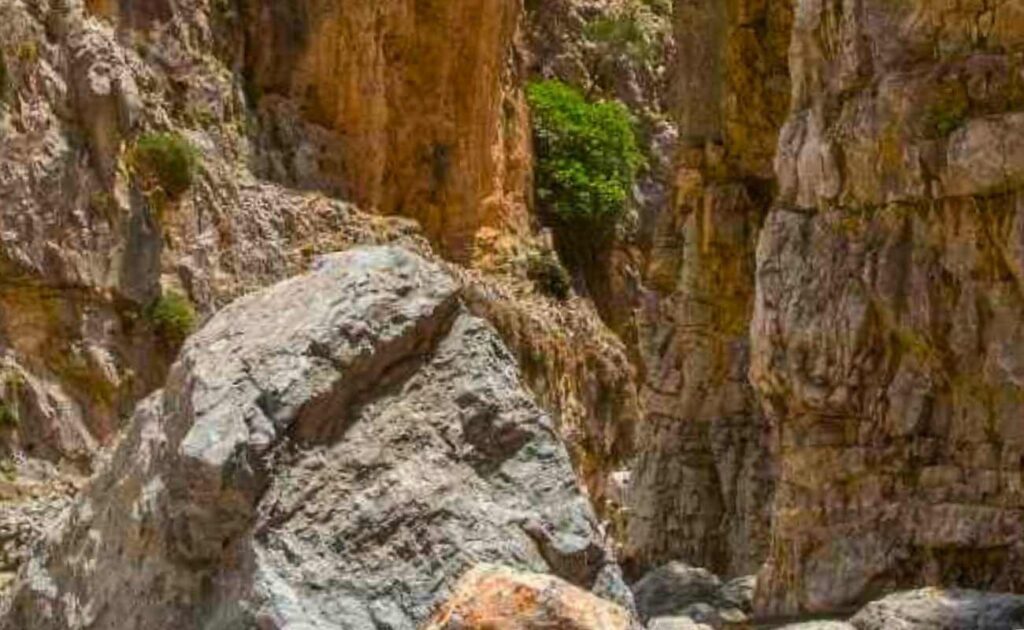
The hike starts behind the mountain village of Zaros. Here, you will take the well-marked path towards Agios Nikolaos church and the gorge behind.
This beautiful path leads uphill along the spectacular lush gorge, featuring impressive cliffs on both sides. This is an ideal nesting area for Griffon vultures (Gyps fulvus).
As you gradually ascend, you will access a thickly wooded area: a dense forest of oaks, pines, cypresses, holm oaks, acers, planes, and wild pear trees that continue up to the small plateau.
A great place to enjoy a traditional picnic in the mountains! After a short (and well-deserved) break, you will take the same path back to Zaros.
6. Agios Ioannis – Agios Antonios – Moni Koudouma (Heraklion Region)
ESSENTIAL INFORMATION
- Trail: One way and back. This hike is in the Asterousia Mountain range, part of the E4 hiking path, and the way back is on the same trail.
- Hiking time: About 5.5 hours (2.5 hours each way).
- Distance: 9.8 km total (4.9 km each way).
- Elevation difference: 40 m – 130 m – 0 m – 130 m – 40 m.

This is the way to go if you’re looking for a beautiful coastal hike. You’ll start in the secluded and far-away-from-civilization hamlet of Agios Ioannis (Kapetanianon) on the southern side of the Asteroussia mountain range in Heraklion.
The well-marked trail is part of the long-distance E4 hiking trail. It takes you to the huge cave of Agios Antonios, which shelters a small, picturesque chapel. Seven natural rock basins collect holy water at the back of the cave.
From here, the path continues through pine trees towards the impressive monastery of Koudouma, near a beautiful pebble beach. The return journey is along the same path to Agios Ioannis.
7. Kato Zakros – Gorge of the Dead – Ano Zakros (Lasithi Region)
ESSENTIAL INFORMATION
- Trail: This can be a one-way or a return hike.
- Hiking time: About 3 hours (one way).
- Distance: 6.5 km (one way).
- Elevation difference: 0 m – 230 m (one way).
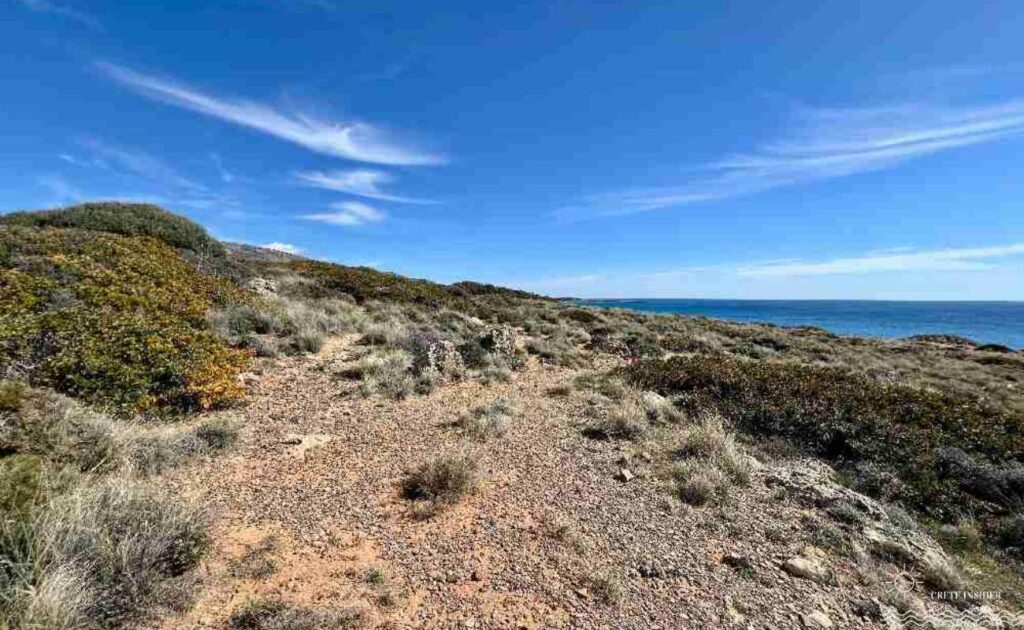
One of the most popular hikes in the Lasithi region, this path heads inland towards the mysterious Gorge of the Dead (also known as Faragi Nekron or Kato Zakros Gorge), near the Minoan Palace of Kato Zakros. This is the first (or last!) part of the E4 long-distance hiking path, ending at the beautiful beach of Kato Zakros.
The gorge features huge, impressive cliffs where archaeologists have found ancient Minoan tombs. The area of spectacular natural beauty is the natural habitat of Griffon vultures, which you can often spot flying overhead. The well-marked path takes you up to Ano Zakros village.
Here, you can take a break and enjoy a cup of traditional Greek coffee in one of the few kafeneia in the village square to get a close-up insight into the local way of life.
Since the village has been restored respecting the traditional way, it’s a good idea to stroll around the alleyways, where you can check out many interesting buildings and the springs of Ano Zakros. This explains why you’ll encounter many water mills and hydro-used buildings that still stand strong, dotting the picturesque little alleys.
8. Selakano Dikti – Limnakaro – Lasithi Plateau (Lastihi Region)
ESSENTIAL INFORMATION
- Trail: Loop. This is a long, hugely satisfying, and beautiful hike. It should NOT be done in a strong (northerly) wind.
- Hiking time: About 6 hours (+ stops).
- Distance: 18 km (one way).
- Elevation difference: 885 m – 1976 m – 825 m.
- Please note that there are no water sources available along the hike.
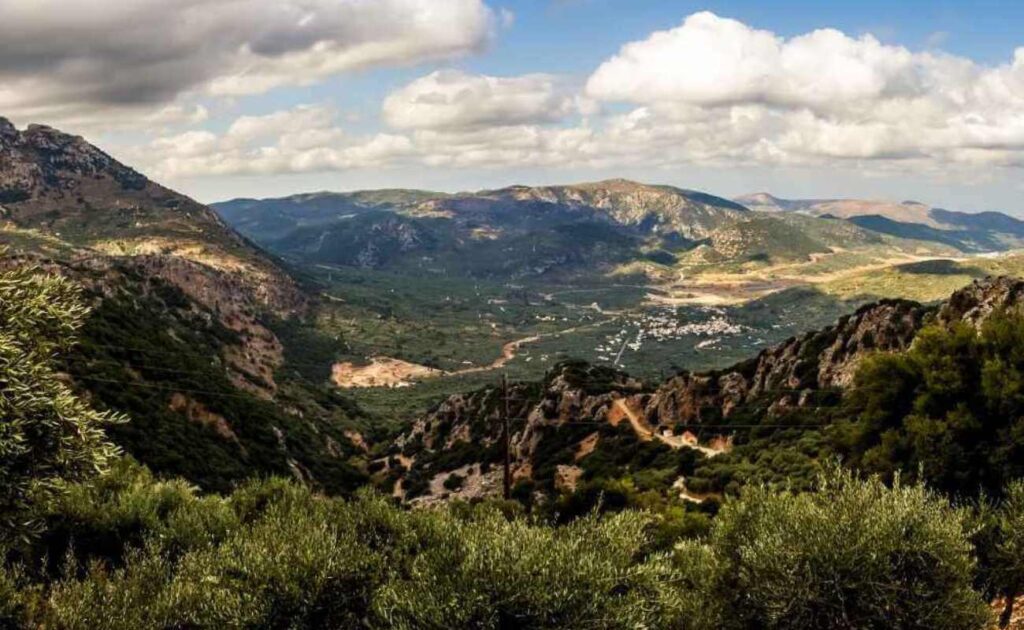
This hike starts at the small, forgotten mountain settlement of Selakano. It follows the E4 path through the vast pine Selekano forest, a place known for the quality of local honey.
Many beekeepers bring their beehives here since pine trees provide enough food for the bees. The Selekano wonderful pine honey is the primary local produce.
Prepare for a challenging ascent as the path leads you steeply up a valley, across rugged terrain, and into the formidable Dikti Mountains. You’ll learn that, over here, not much survives the cold winters and the long, scorching summers.
Consequently, you will see mostly low vegetation, shrubs, and many bare rocks that complete the scene: quite a stunning contrast typical of the Cretan landscape.
This part of the E4 path ascends to Skali and, from here, down towards the Lassithi Plain, a trail that offers stunning views all along the way.
Three Famous Gorges You Can Hike in Crete
If you’re more of a traditional hiker and want to visit the spectacular—and more popular—gorges in Crete, check out these hikes.
You can check this useful guide to the most beautiful gorges in Crete or read on to find essential details about the most popular gorge hikes on the island.
9. Samaria Gorge National Park: Omalos – Samaria Gorge – Agia Roumeli (Chania Region)
ESSENTIAL INFORMATION
- Trail: Point-to-point, getting back to Chania by boat and bus.
- Hiking time: 4-6 hours
- Distance: The total length of the gorge (the gorge only) is 14.3 km + 2.7 km from the end of the gorge to the nearest village of Agia Roumeli (local mini buses also cover this last part).
- Elevation difference: +/-1200-0 m.
- The Samaria Gorge is also a UNESCO World Heritage Site.
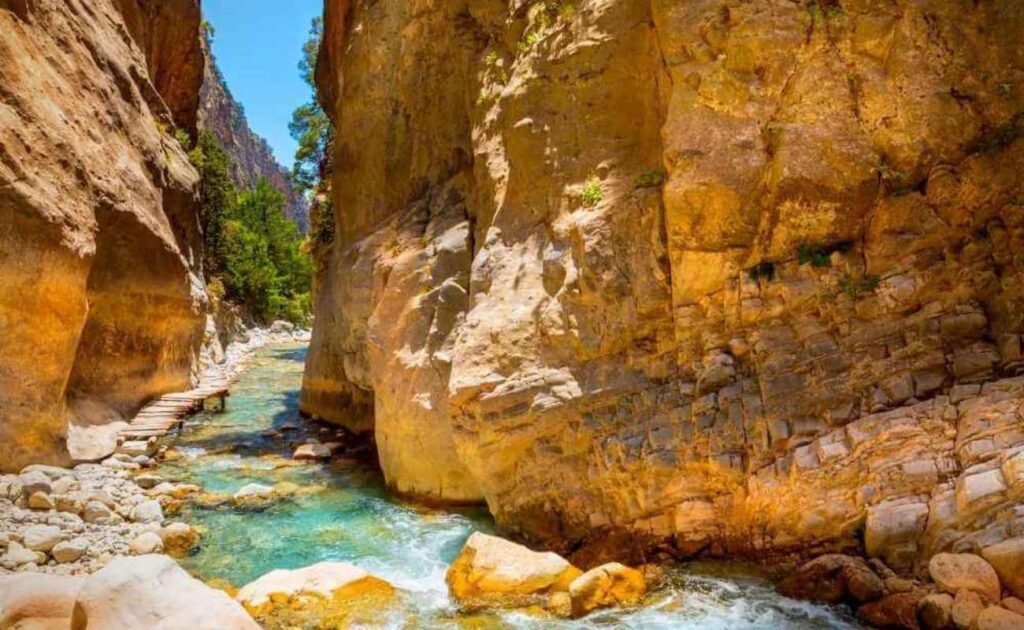
This epic trail is among Greece’s most famous walking experiences, attracting thousands of visitors worldwide from May to October each year. The path is closed during the winter.
Although mostly downhill, the route is strenuous and challenging, especially because it requires long hours to pass.
The trail begins at the Omalos Plateau, 38 km south of Chania, at 1,040 to 1,250 meters. The first part of the hike, which extends for about 2 km, is the steepest downhill part of the trail.
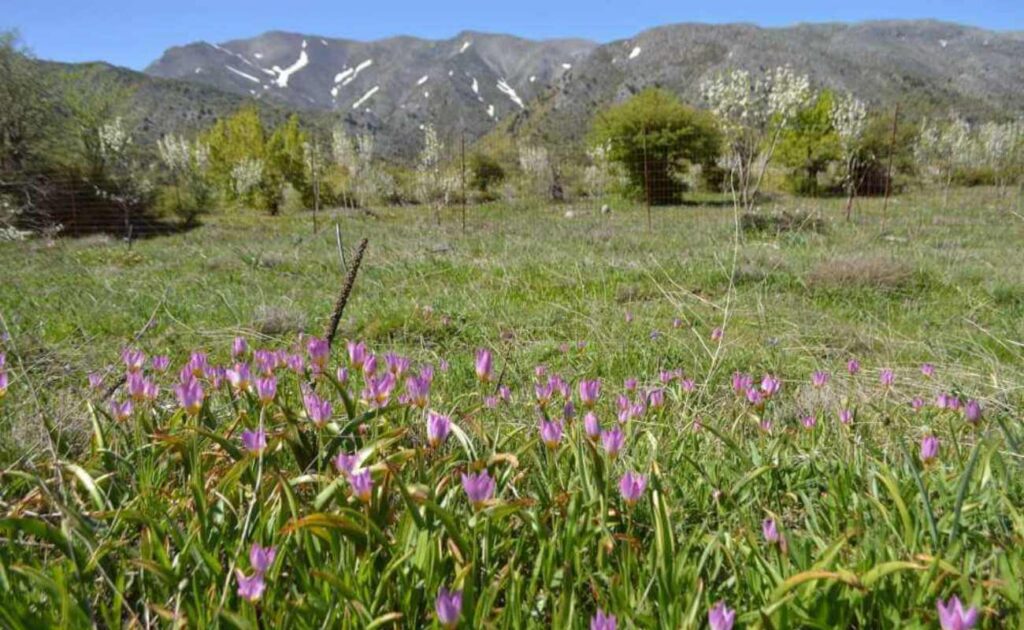
The hike ends at the coastal village of Agia Roumeli. Here, you can take a ferry to the south coast ports of Chora Sfakia (one hour) or Sougia, where you can catch the bus back to Chania.
This wonderful hike can also be done on a two-day hiking experience.
10. Imbros Gorge – Komitades (Chania Region)
ESSENTIAL INFORMATION
- Trail: Point-to-point.
- Hiking time: 2.5-3 hours.
- Distance: 6.6 km
- Elevation difference: 780 m – sea level
- The trail has always been considered easy enough for first-time hikers.
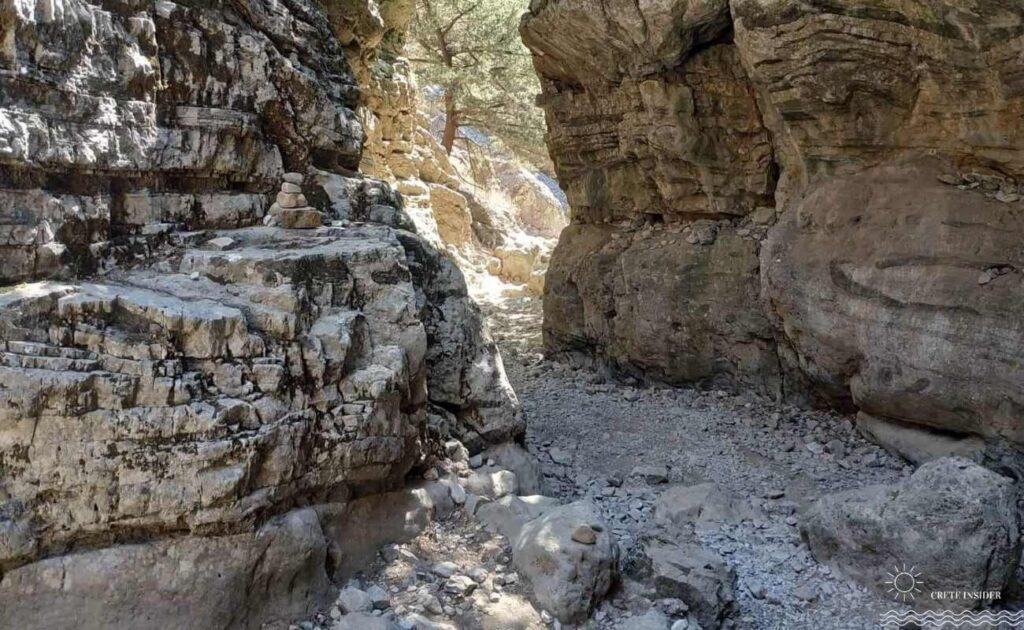
The main reason hikers prefer Imbros is that it’s a lot easier than Samaria. And as it’s less popular too, it’s often less crowded. Besides, Imbros is usually open all year round. You will also be rewarded with breathtaking views while crossing narrow paths between large rock formations.
Imbros has always been a very important place on the island, dear in the heart of locals, as it was an escape route for the Allied soldiers during WWII.
Imbros is also part of the European path E4. The gorge is relatively easy to descend; it features an initial part quite open (the so-called Porofarago) and narrows along the way with higher walls on both sides.
The most impressive point of the Gorge is Stenada (the narrowest point with walls that are only 1.5 meters apart.
The exit of the gorge is in the village of Komitades. Here, you can take a taxi back to Imbros (or Chania) or reach Chora Sfakion for a boat trip (or more hiking) to any of the different beaches on the southern coast.
>> FROM IMBROS TO MARMARA BEACH HIKE: GET A QUOTE HERE
11. Agia Irini Gorge (Chania Region)
ESSENTIAL INFORMATION
- Trail: Out-and-back trail.
- Hiking time: 3-4 hours (one way)
- Distance: The round trail is 13.7 km long (6,8 km one way).
- Elevation difference: 730 m – 0 m (one way).
- The hike ends near Sougia, and you can return to the starting point by taxi.
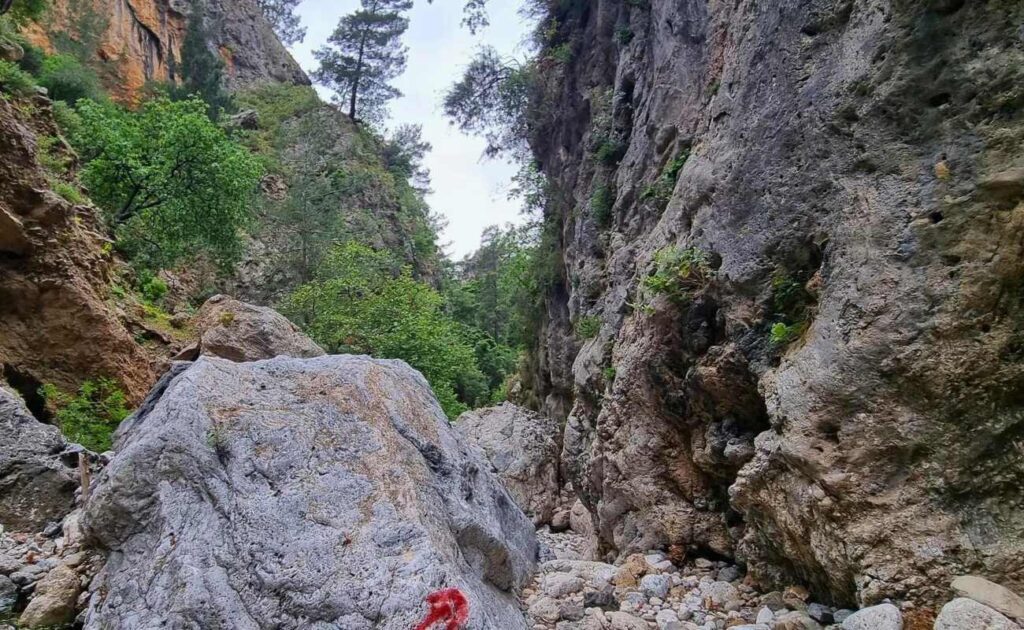
The whole path is clearly signed, so don’t worry about losing your way. The gorge features impressive high slopes, unique cliffs, and an impressively diverse flora and fauna.
The trail starts at an elevation of 560 meters and leads to the beautiful beach in Sougia on the southern coast of Crete.
At the end of the hike (6.5 km), you can either hike back to the gorge’s entrance or reach Sougia for the bus to get back to Chania or a taxi ride to reach the parking area at the beginning of the gorge.
>> Looking for more hikes in Crete? Check these other gorges in the 4 regions of the island.
Hiking Clothes and Equipment for Crete’s Gorges
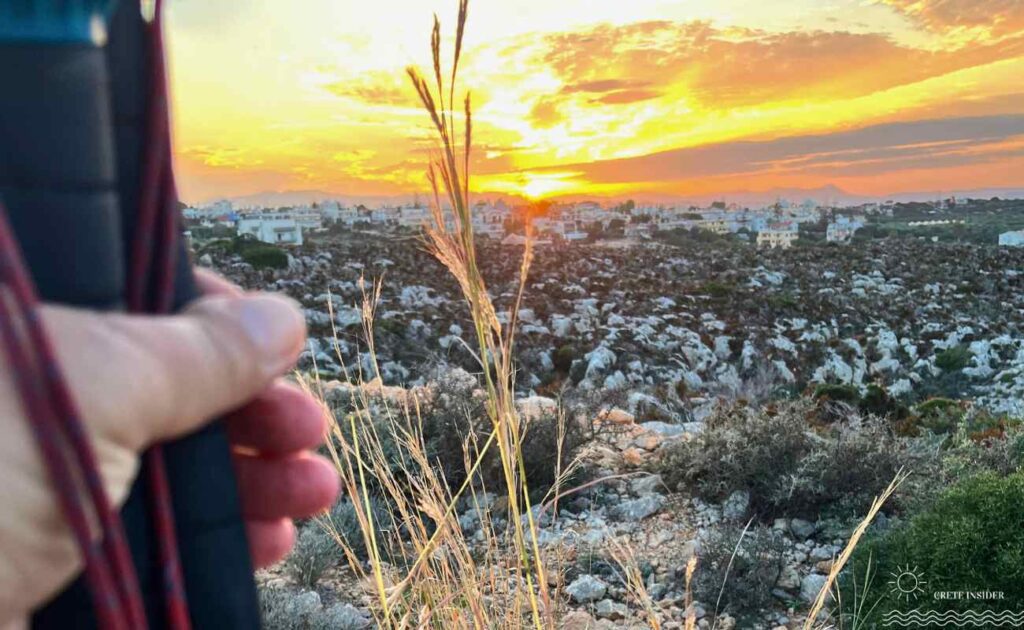
These tips work well for those just starting… and for experienced hikers!
If you’re a beginner, don’t go on a shopping spree! A whole new set of hiking clothes is unnecessary if you’re starting. If you hike regularly, you certainly already have all you need!
If this is your first attempt at hiking, you will only need a pair of long, comfortable pants (shorts in summer), a T-shirt, and a good pair of sneakers or hiking boots for short walks along well-marked trails. Add a light backpack, a sunhat, and sunscreen, and you’re all set.
However, although this outfit will go a long way for short hikes when trails get longer and more complex, you will need to upgrade some of your gear. More technical walks mean you’re already into hiking (or have become addicted to your new hobby).
Hiking in Crete can be incredibly rewarding, and you want to do it every year! Specialized gear will pay off and make it easier to hike, be comfortable, and enjoy every step of the way. Choose good, resistant clothes and boots. This can sound expensive, but they last long. I’ve used (and still do) the same hiking boots for about 6 years. They were quite a good investment.
The same goes for my backpack. I’ve just upgraded my hiking shorts. They’ve lasted long and could have lasted longer if I hadn’t put on some winter weight!
Basic Clothes for Hiking in Crete
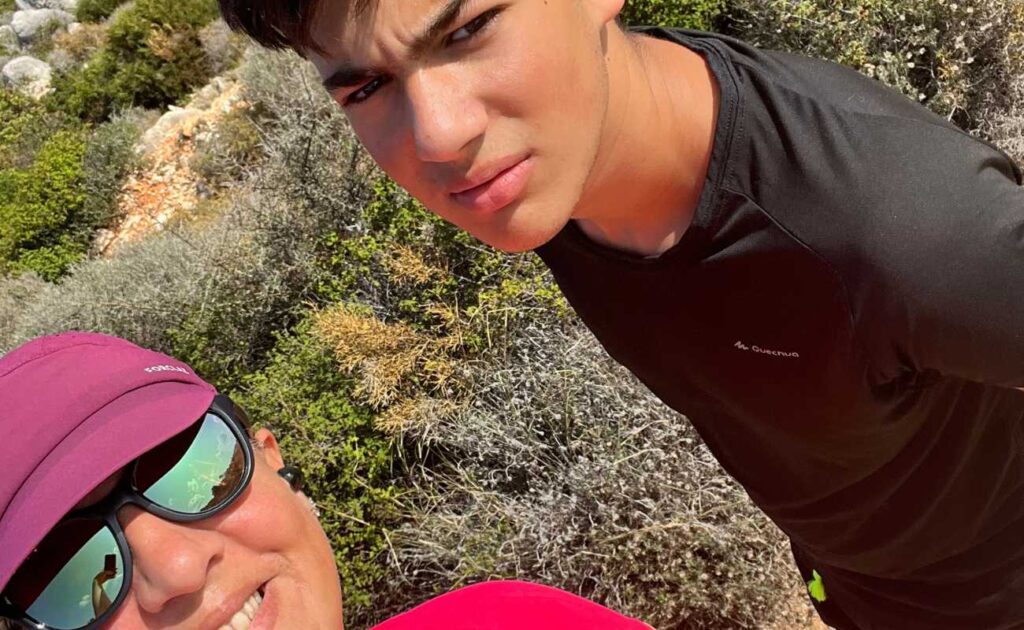
It doesn’t matter if you’re hiking in Crete or somewhere else… or where exactly you will be hiking. It’s always important to know that weather conditions can change rapidly, especially in the mountains.
This includes temperature excursions, meaning the temperature your body perceives can change in minutes (think hiking in the sun for hours and then accessing a part of the path with tall trees offering shade). This can make you feel cold or very hot from one minute to another.
The right gear will prevent you from walking in uncomfortable conditions or getting sick. The key to enjoying your Crete hike is to be always comfortable. So, how do you achieve that ideal comfort? Layers! Layering is the key to adjusting to any changing weather conditions.
Basic Layer
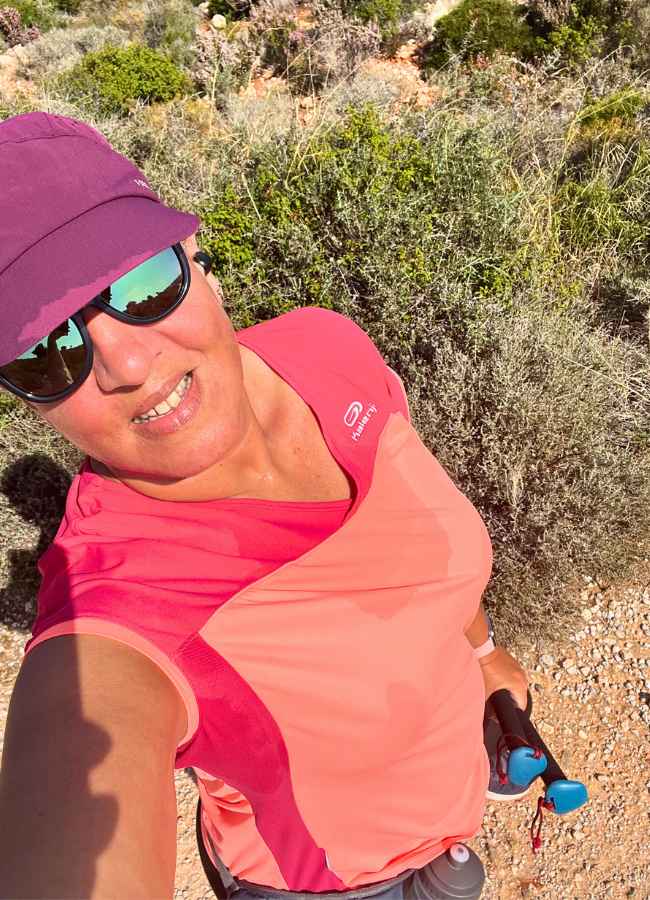
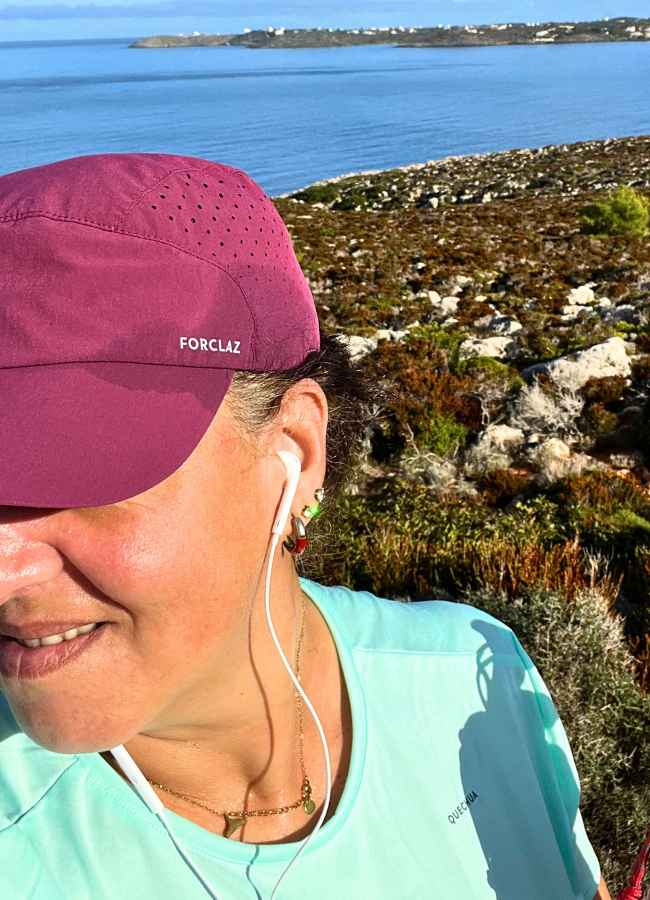
A good short-sleeve t-shirt will always be a good base layer for Crete in summer. Materials vary according to your budget. Cotton is the obvious and cheapest choice, but if you’re a regular hiker, you already know that cotton won’t dry when you sweat.
The best alternatives are merino wool and quick-dry garments (often known as performance blend fabric). I use Decathlon’s quick-dry apparel, which is enough for me.
The garments are affordable, resistant, and performant. The in-house brands Quechua, Arpenaz, and Forclaz are pretty good.
No Decathlon in your town? You can buy online (US – UK – CA – AU – GR) or check Amazon’s alternatives for convenient quick-dry t-shirts. There are also long-sleeve versions for winter.
Hiking Pants
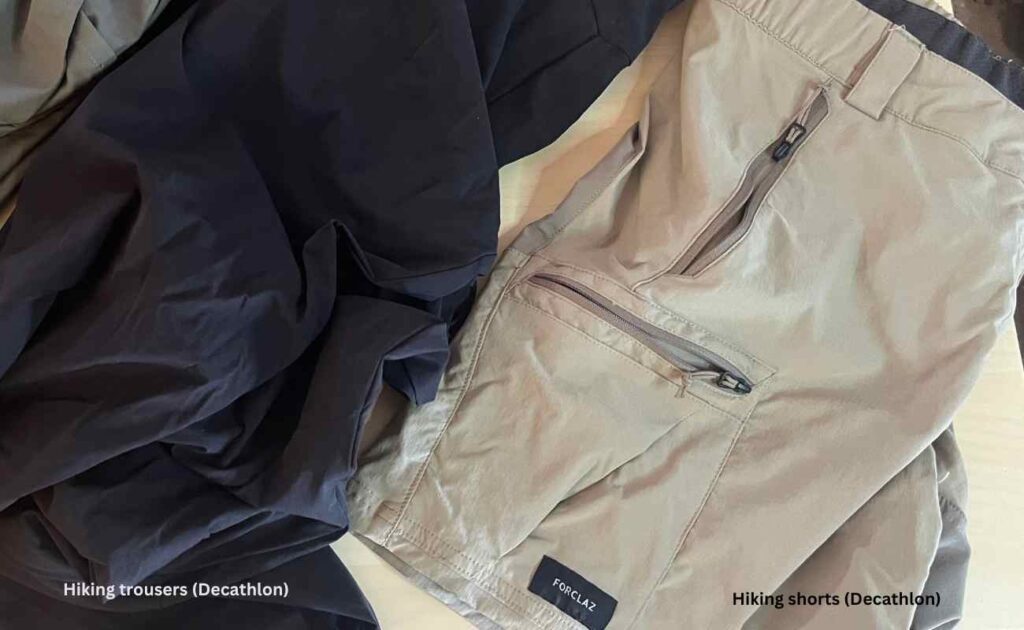
Most experienced hikers will agree that long pants are often better, no matter the weather. However, there are great short pants or convertible hiking pants (those models with a zipper that turn into shorts on the fly). I always prefer shorts for hiking.
Longer pants protect you from scratches (bushes, rocks, branches) and bugs, especially mosquitoes.
When checking for hiking pants (or shorts), try to find something light (especially for summer), breathable, and a bit stretchy for more freedom of movement. Again, Decathlon and Amazon offer a great variety of quick-dry hiking pants.
Shoes
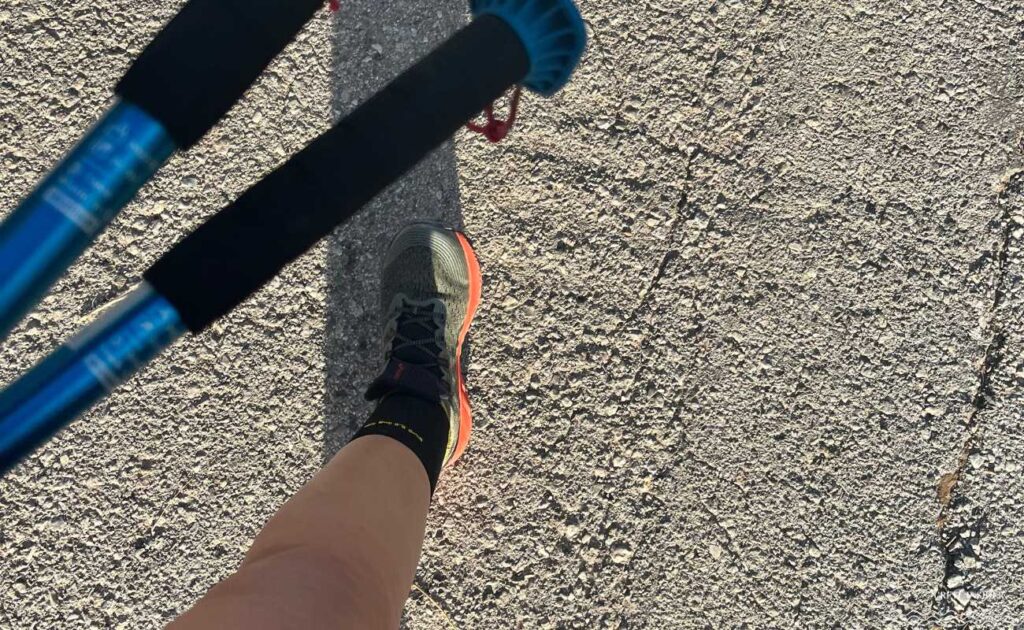
I’ve hiked with tennis shoes on a few easy trails. My go-to sneakers have always been Sketchers, I love them because they are light and breathable. I’ve used them for ages on my city walking tours (and I can’t complain).
However, I’ve lately changed to trail runners (I love the ASICS Trabuco series) for easy trails. At the same time, I wouldn’t dream of facing a more strenuous walk, like Samaria or Imbros, for instance, with trail runners without ankle support. Something that’s key for comfort but, most importantly, to prevent turning any misstep into a serious injury.
In my case, I also wear knee braces when I hike trails longer than 5 km.
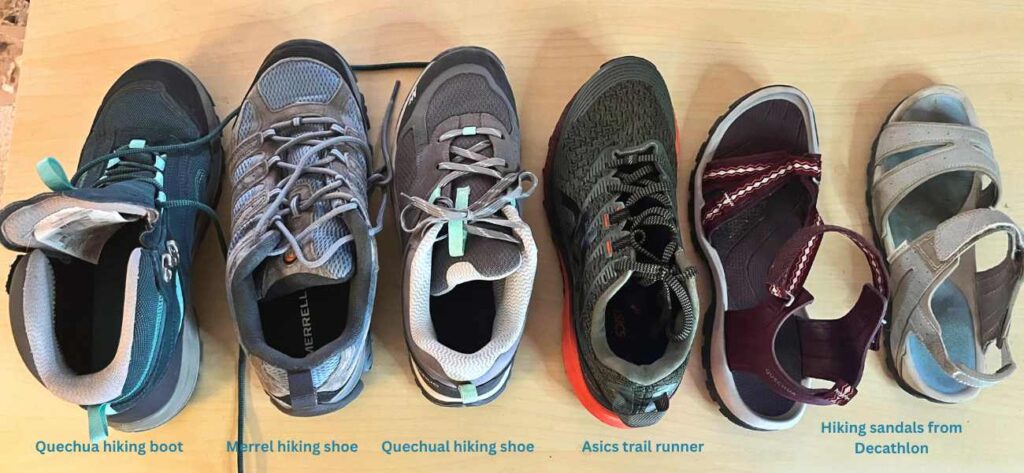
In summer, you should wear a light, water-proof hiking boot, while warm, snowproof hiking boots are better for winter. I’ve worn a very basic Decathlon hiking boot pair for ages. If you can spend more, choose well-known brands like Columbia, Merrell, or Keen.
However, it’s important to remember that despite how good or resistant your shoes can be, if they haven’t been broken in, they can cause issues. Don’t ever hit a trail with brand-new shoes.
Outerwear
Even in Crete during summer, you will need something to cover. It can be a light fleece, a raincoat, a windbreaker, or a feather-down jacket. These can make all the difference during early morning hikes (often chilly) or sudden temperature drops.
I have a Uniqlo ultralight packable down jacket that has traveled the world with me. It’s warm but light, so it always goes in my backpack. I also wear a Karrimor fleece in winter (that’s excellent, not just for hikes).
Socks
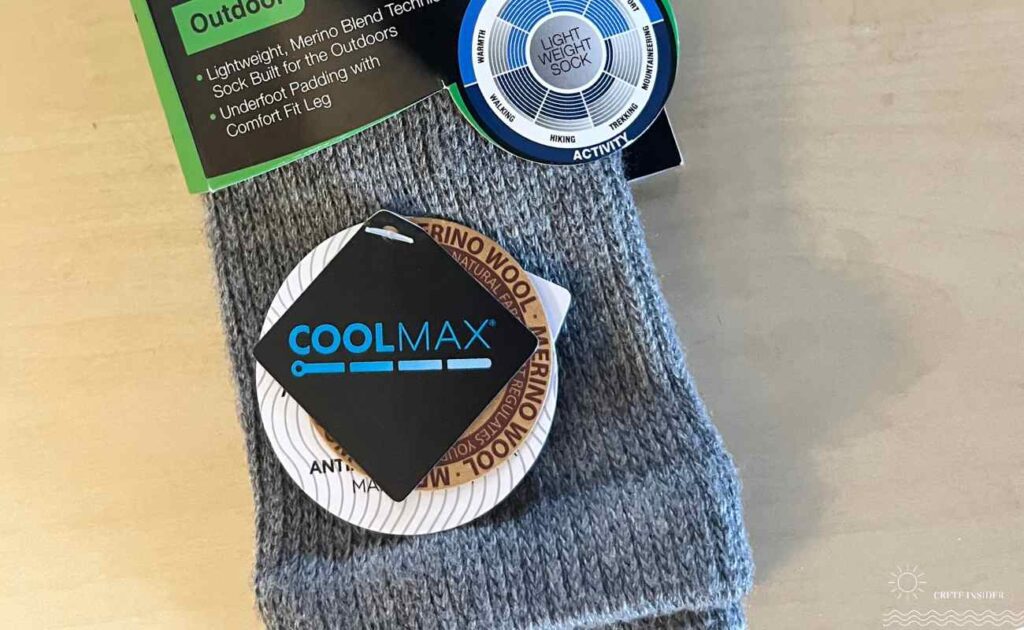
Pay attention to socks. They are key to success when hiking long trails. Choose your socks wisely; they will absorb moisture and help prevent blisters.
I suggest avoiding cotton (but also wool for summer) and finding a blended fabric with breathable wool that keeps moisture away (the first ingredient for painful blisters and uncomfortable rubbing).
Light Backpack
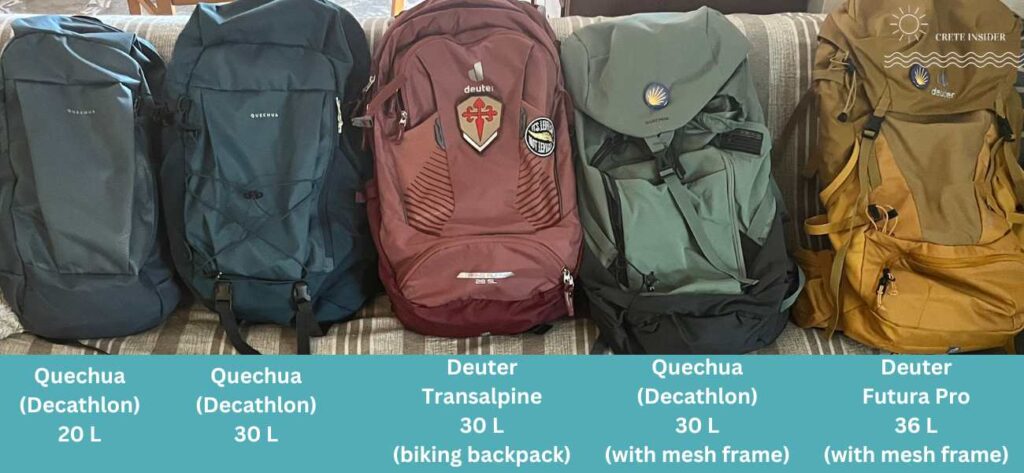
Unless you’re going for a long, multi-day hike, just any comfortable backpack will do. Make sure it has comfortable shoulder straps.
Inside, you will carry sunglasses, sunscreen, water, snacks, a map, a phone, money, and a camera, to mention a few items.
Experienced hikers will enjoy a more technical backpack with a breathable back panel (in mesh or similar) and attachments for walking poles or other essential items. If you enjoy long hikes, you can also opt for a hiking backpack with a Camelbak water pouch that holds several liters of water.
These, however, are often not needed in Crete, where mountain springs are common. These are good, budget-friendly options for short, occasional hikes.
Other Items
Sunglasses, a hat (wool for winter, but breathable and light for summer), and sunscreen.
Frequently Asked Questions About Hiking in Crete

WHEN IS THE BEST TIME TO GO HIKING IN CRETE?
Plan your hike from April to June or September to early November to enjoy pleasant weather and fewer crowds.
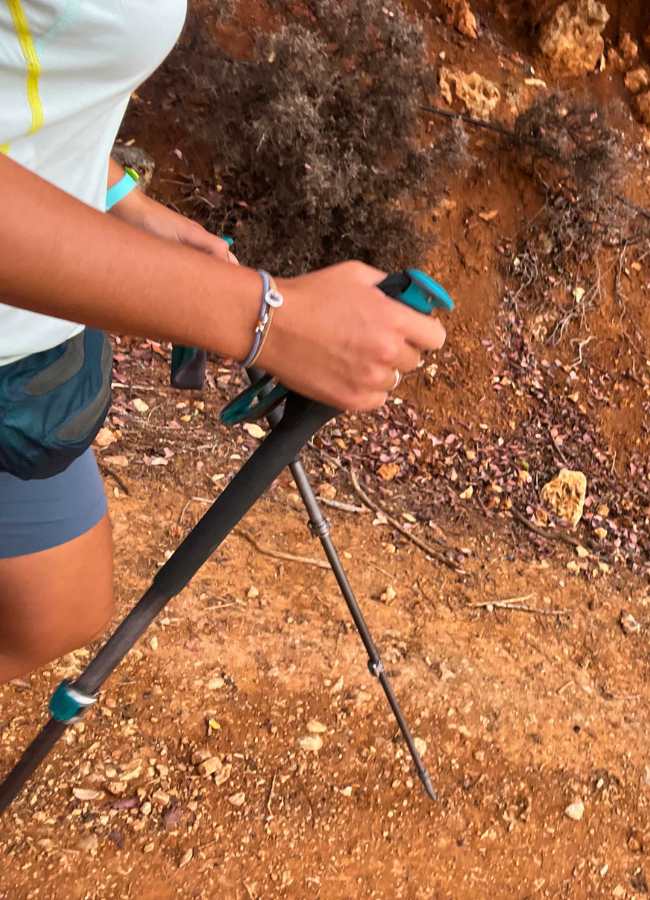
ARE HIKING POLES ESSENTIAL?
For some hikes, you will certainly appreciate having hiking poles. The descent in Samaria, for instance, is much easier to face if you carry walking poles with you.
CAN I HIKE ON MY OWN?
Contacting a certified mountain guide when choosing off-the-beaten-path roads is always a good idea. Some popular hikes, such as Samaria, can be done on your own (in a just-follow-along-with-the-crowds way). Professional guides will offer guidance, information, and experience, which is essential, especially for first-time hikers.
WHAT HIKING EQUIPMENT DO I NEED?
The key piece of garment you’ll need is a pair of good hiking boots. You can rent (or buy affordable) hiking poles in different places around the island.
Are you ready to walk your way around the island? Trust me, you will love it! Have you ever experienced any of these Hikes in Crete?
Pin for Later
Guide to Go Hiking in Crete

Gabi, the Crete Insider
Hi, I’m Gabi — your go-to local expert in Crete! I’ve been living in Chania, Crete since 2016, and I’ve turned my love for the island into a full-time passion — guiding travelers, writing for travel media, and curating local experiences.
I co-authored DK Eyewitness Top 10 Crete and other guides. I run the blogs The Tiny Book, Greece Planner, and My Cretan Recipe. Through this platform I help travelers design unforgettable trips to Crete.


