
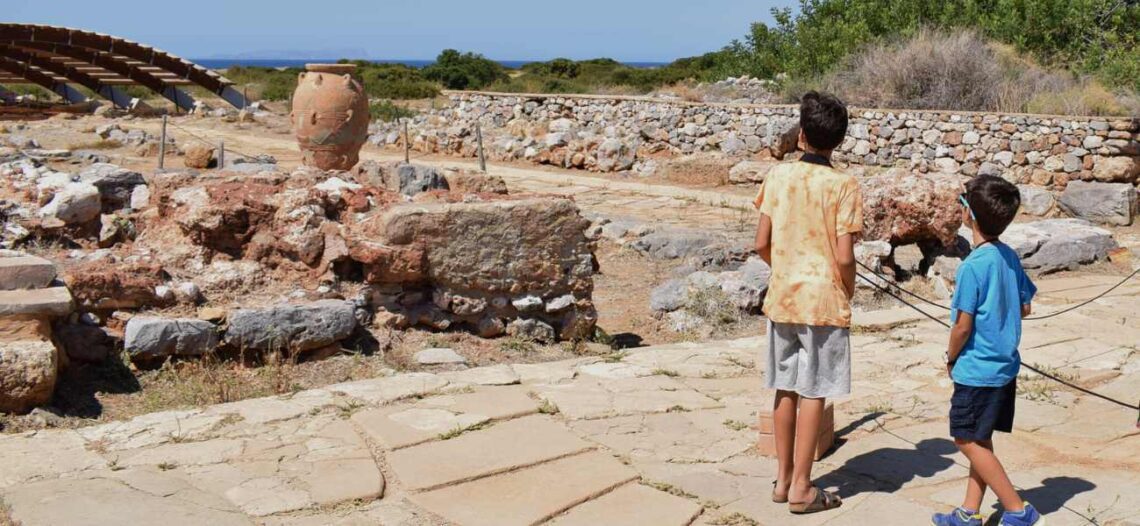
A Local’s Guide to Visit the Minoan Palace of Malia, Heraklion
In this article you can learn everything about the Minoan Palace of Malia and plan the perfect visit to one of the four Minoan Palaces that have been digged in Crete. Tips, detailed info and what to see in Malia’s Minoan Palace in Crete.
Are you thinking of visiting the archaeological site of Malia? Then you are in the right place. Here is everything you can expect from this well-preserved monument of Ancient Greek history. If archaeology and history interest you, this is the real deal. So, follow along as we unravel the wonders of ancient Malia’s Minoan Palace together.
📍 Must-do: Balos Cruise 📍 Knossos Palace 📍 Check rental car rates for Crete 🚗
If you want to embrace the depth of the Cretan lifestyle and explore every aspect of the island, visiting such an important archaeological site is a no-brainer.
After all, we are talking about the third-largest Minoan city in the nation, measuring 7,500 square meters. With this large palace, it is no coincidence that archaeologists found priceless jewelry hidden in the ruins of Malia.
To help you decide and prepare for a trip to Minoan Malia, here is what to expect from the site.
The Minoan Palace of Malia is a remarkable archaeological site. It was one of the largest and most significant palaces of the Minoan civilization, known for its complex architecture, featuring a series of interconnected rooms and complex structures. It was built around 1900 BC in Malia, a strategic location close to the coast, thus playing an important role in trade and commercial activities in the ancient world.
By visiting this site, you can connect with the rich heritage of the Minoans and gain insights into their advanced society. It is a must-visit destination during your journey through Crete if you’re curious about the past.
📌 Are you skimming through the post and have no time to read it now? Save it on Pinterest and read it later!
Early Excavations
Archaeological interest in Malia began in the early 20th century. Excavations took place in the 1920s and 1930s, uncovering pottery, tools, and various religious items. The discoveries provided a glimpse into the daily life and spiritual practices of the Minoans. Despite damage from time and looting, Malia’s ruins have retained significant historical value, highlighting the site’s importance.
Archaeological Significance
Malia is the third largest Minoan palace and showcases architectural features like a central courtyard, complex storage rooms, and an intricate drainage system. The palace layout is compared with other significant sites, including Knossos and Phaistos.
What to See in the Archaeological Site of Malia, Crete
The Museum
Once you enter ancient Malia, you’ll immediately see the site’s two-room museum. I recommend checking it out to feed your imagination for the next few hours.
As you walk through, pay attention to the scale model recreating the two-floor palace complex in its glory days, and picture it in your mind once you start moving through the ruins.
There is little else to see since all the significant relics are at the Archaeological Museum of Heraklion. However, you could admire the photographs and a few minor finds before heading out into the open.
The Palace
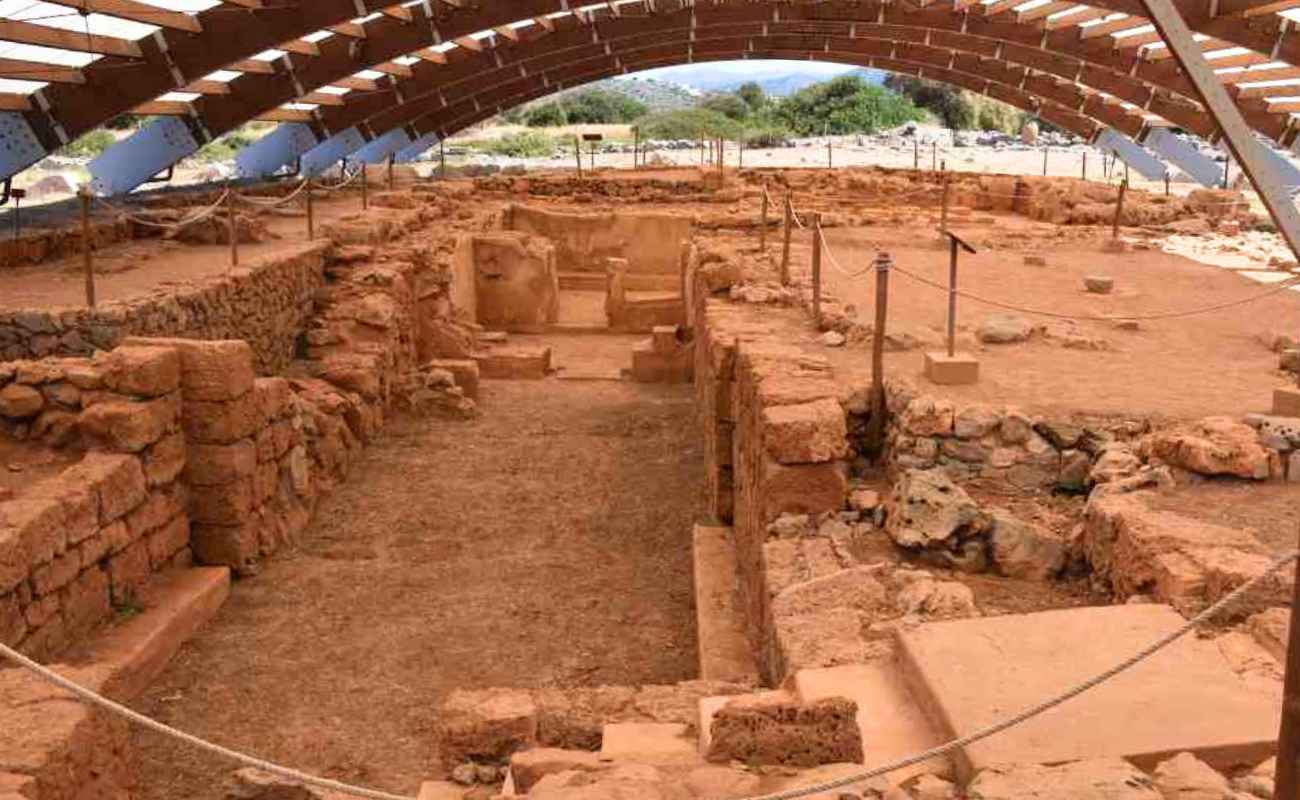
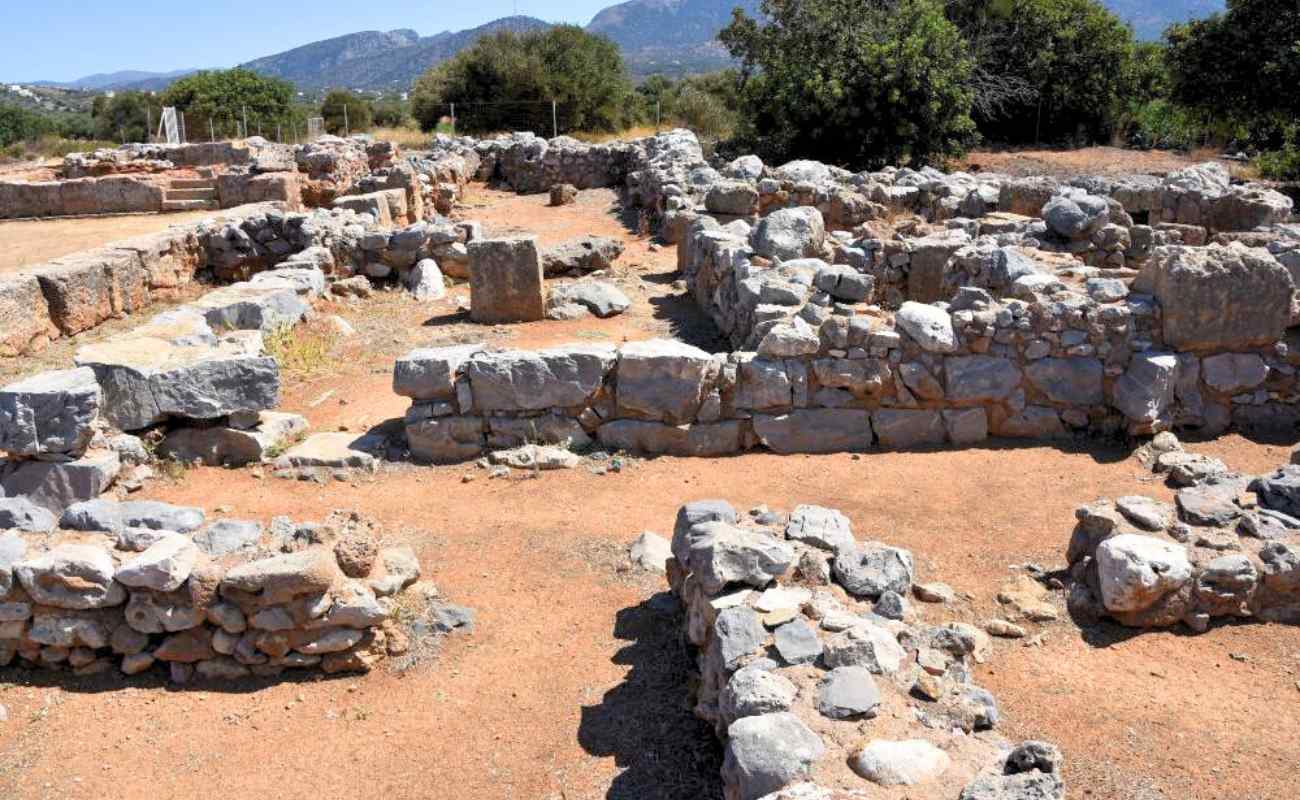
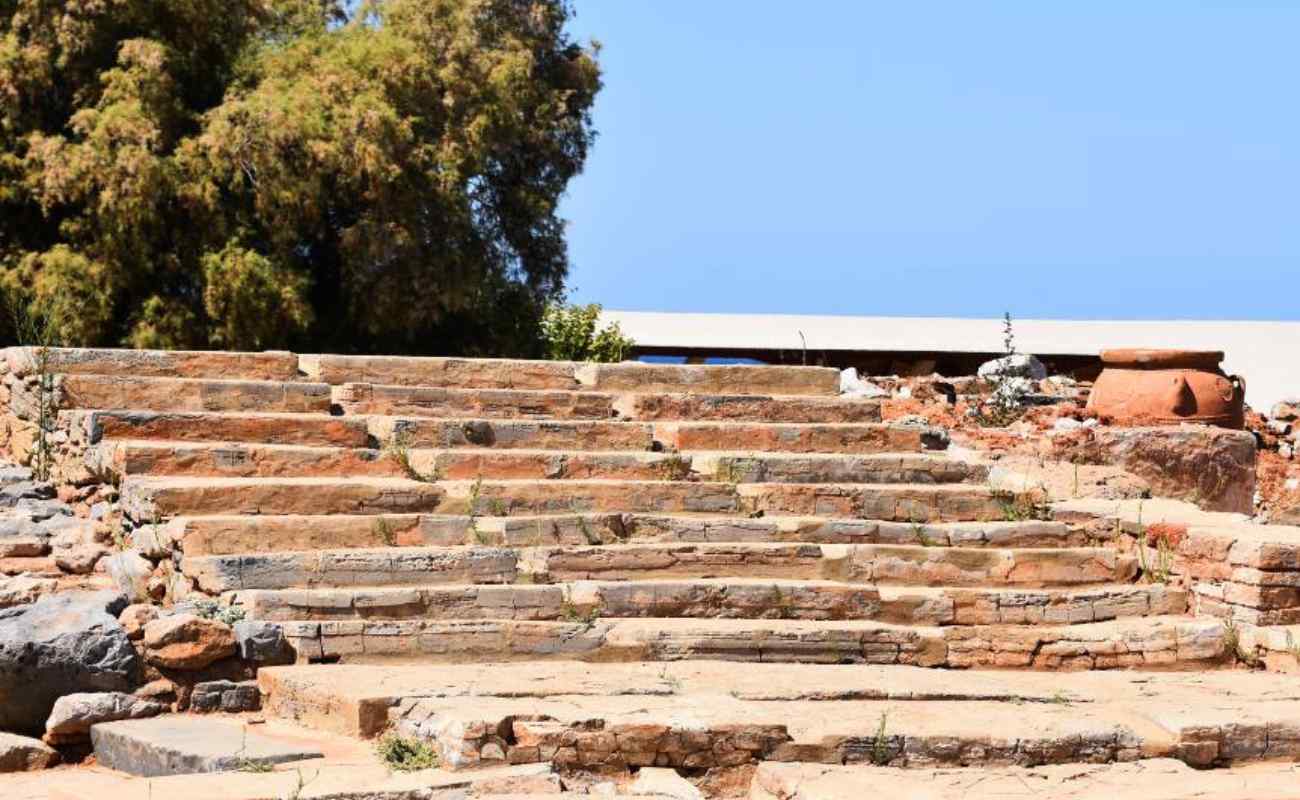
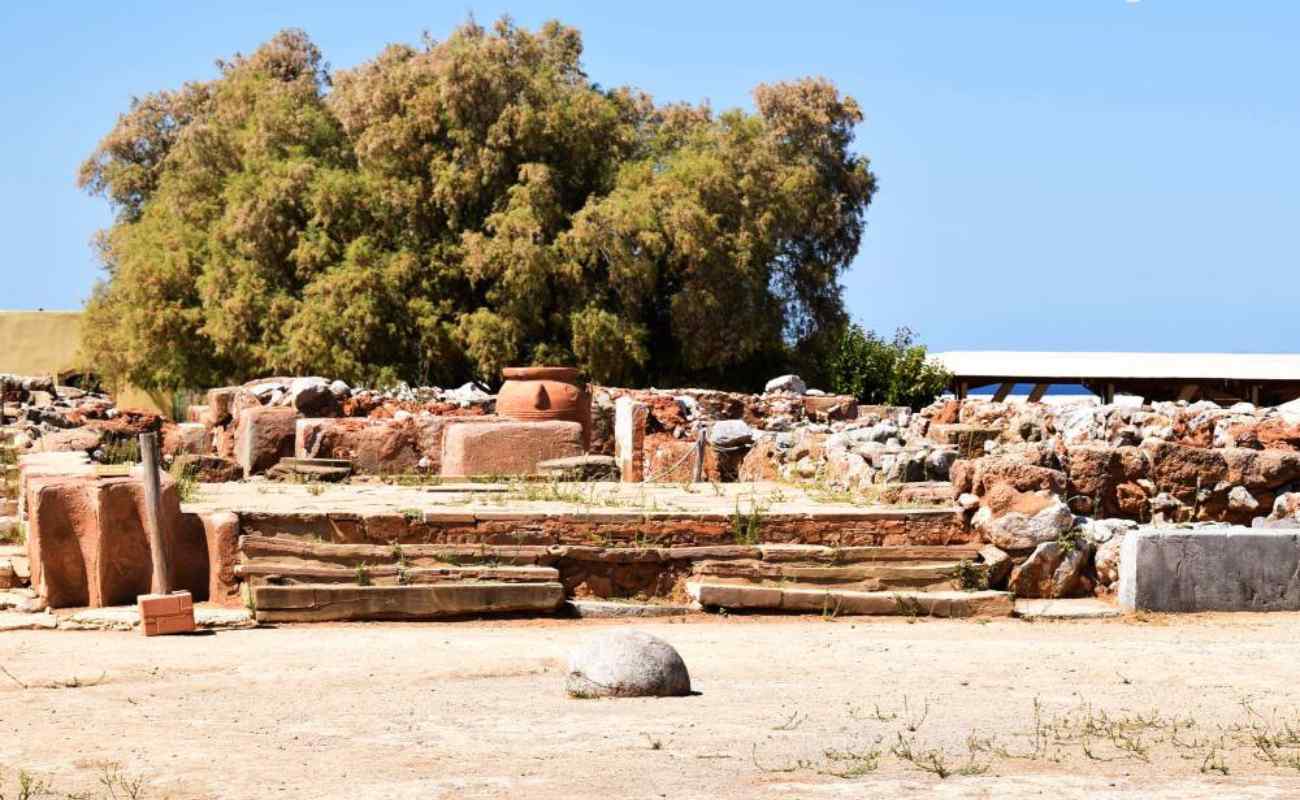
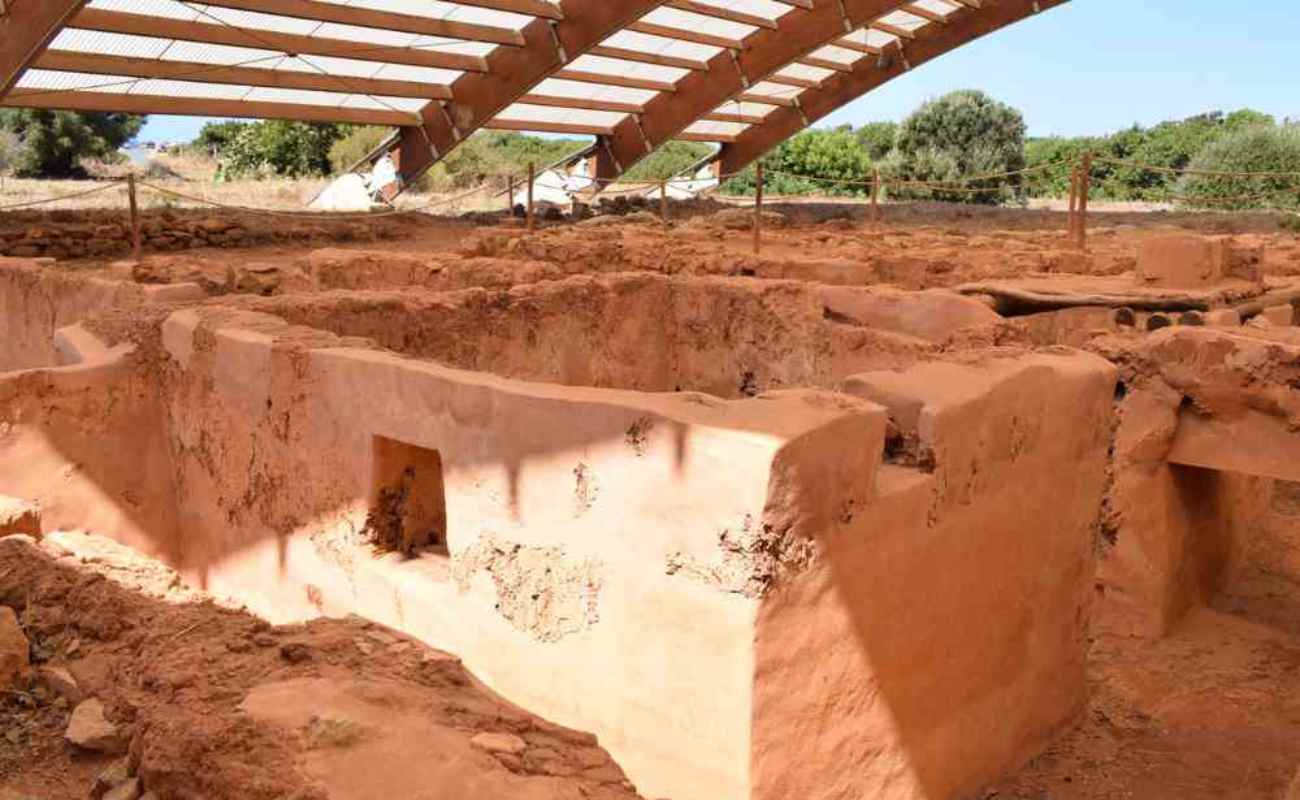
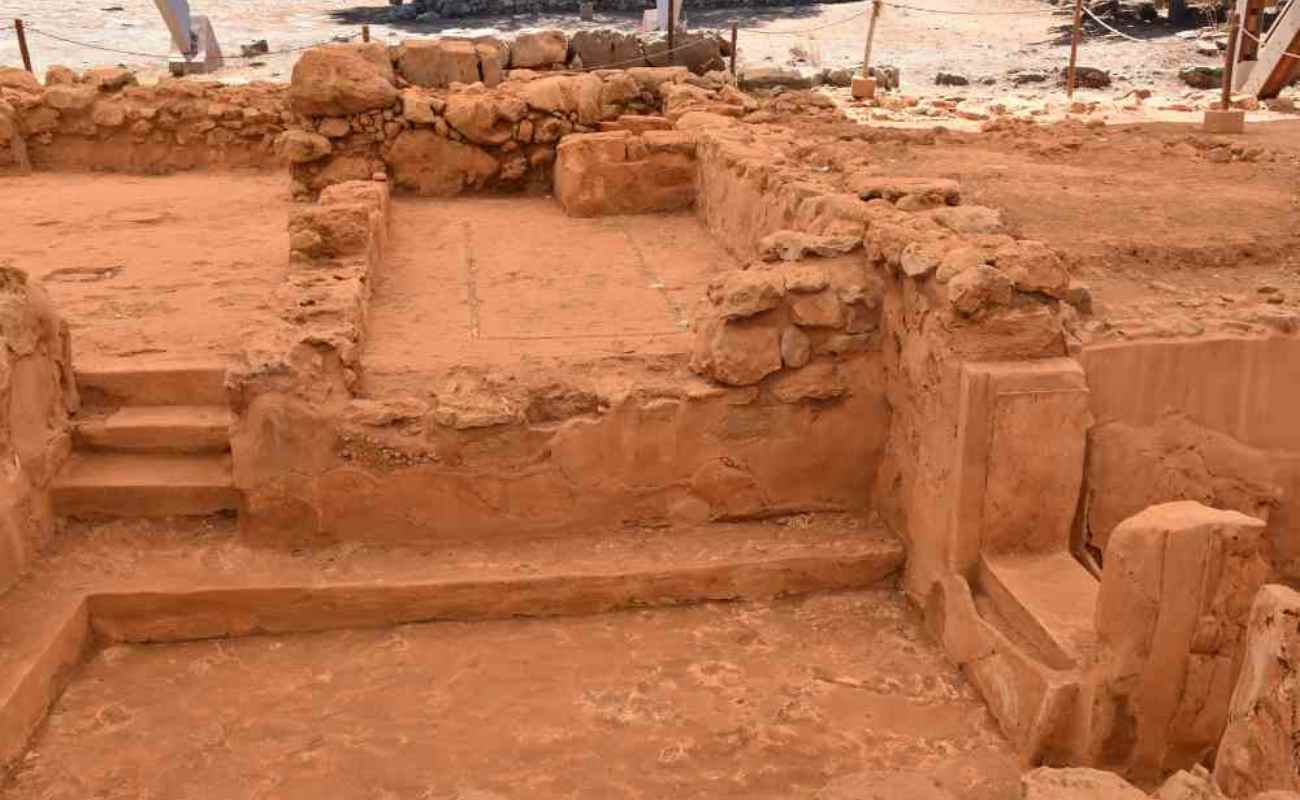
The major attraction of ancient Malia is no other than the ruins of the palace in the central court, which covers more than 1000 square meters. Imagine a two-story structure lined with wooden or stone pillars on the north and west sides.
Once you enter the palace, you’ll be greeted by tens of rooms, many of which remain a mystery for archaeologists trying to determine their past use.
And that has not been particularly easy, especially when they run into finds such as an unusual altar or eight mysterious circular structures, possibly working as water tanks or granaries.
Kernos
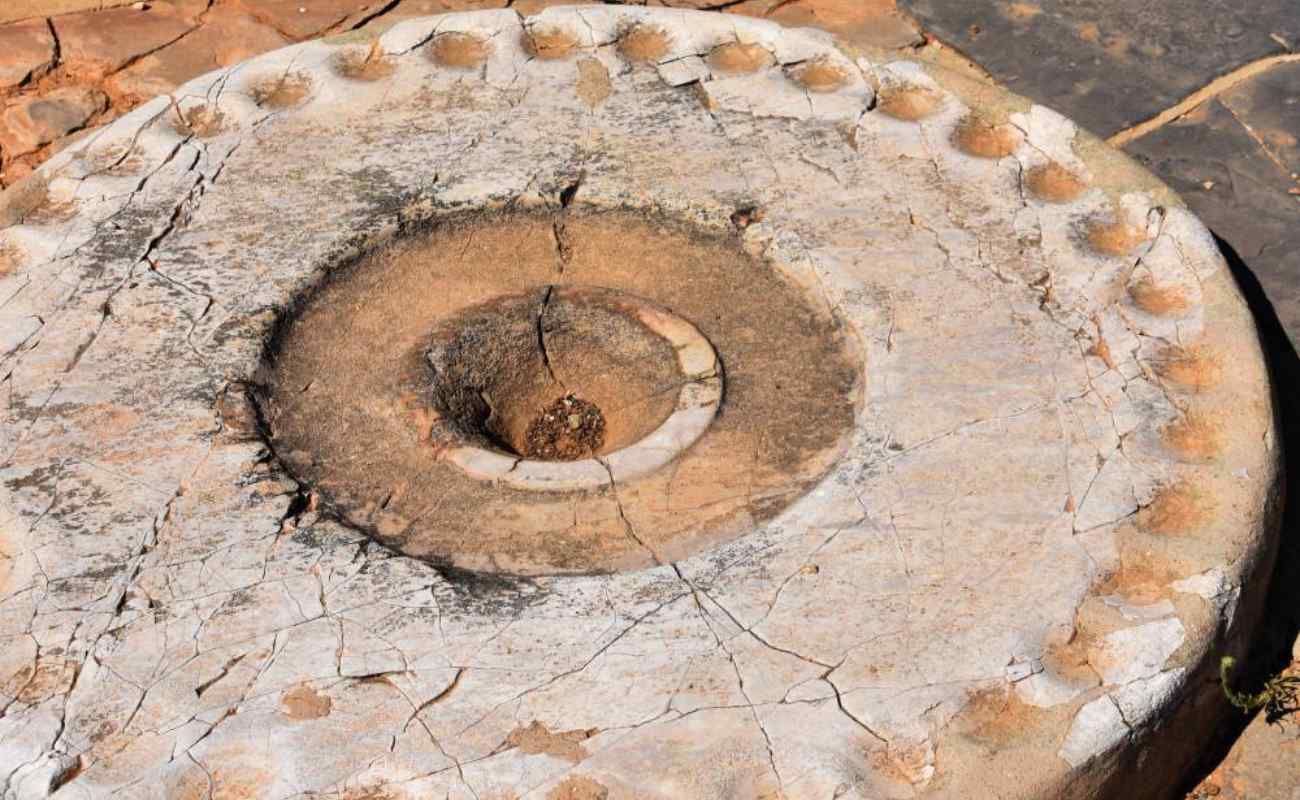
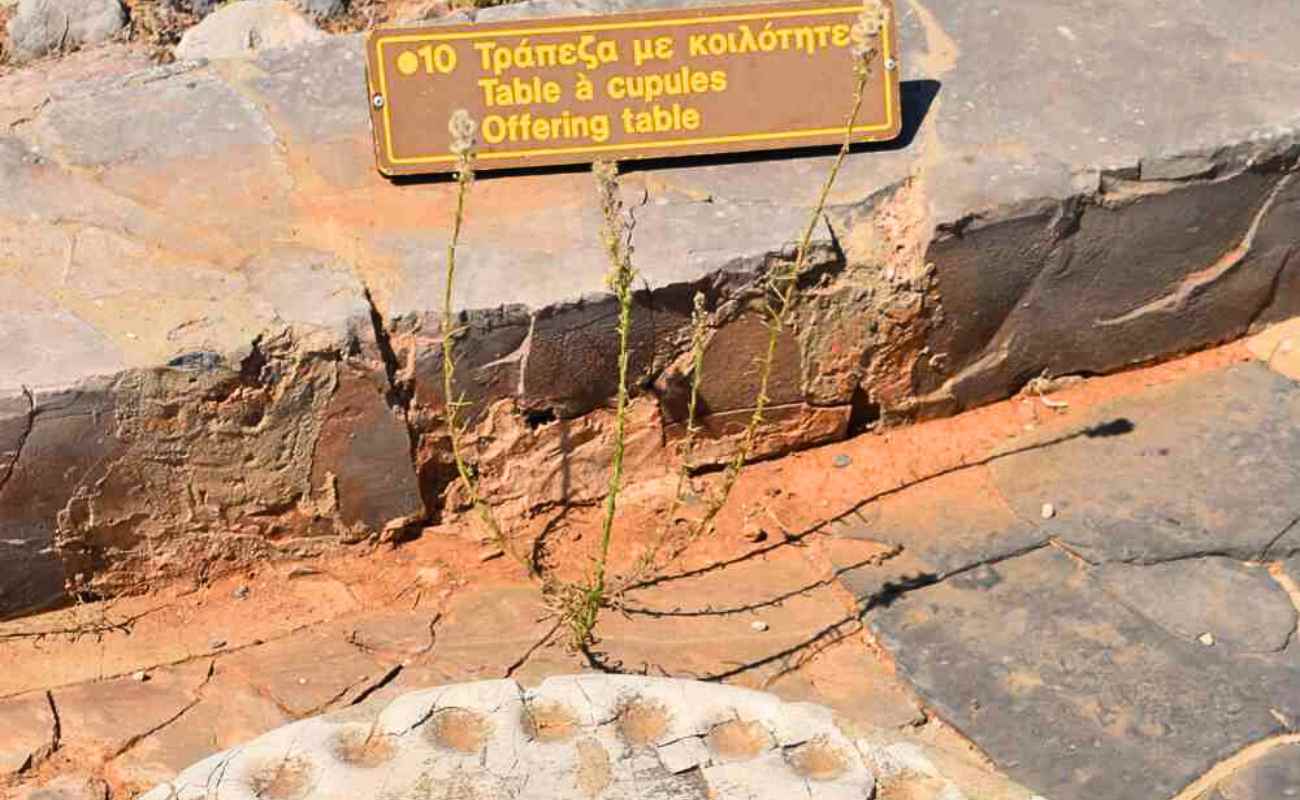
The excavations are still ongoing, and the ruins of Malia remain a real-life puzzle that you are invited to explore. Among the so-called holy apartments, storerooms, and endless corridors, a small round table known as Kernos has stolen the show.
This notorious table, which looks more like a big rock, is hollow and has 34 small holes around it.
Allegedly, the Minoans would use those holes to insert seeds to offer the gods a fruitful crop. However, we are unsure of its use, so feel free to let your imagination loose when you see it.
Other Places in the Site
Other points of interest include the throne chamber, a shrine room in the south wing, an assembly chamber with a lustral basin, the treasure room, and a big building called Loggia, where religious rites took place.
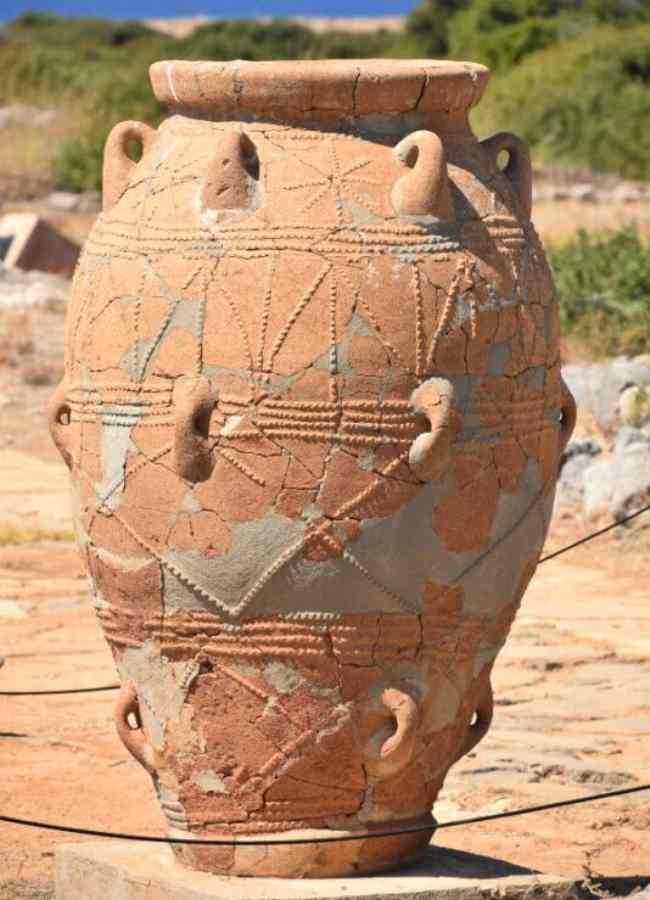
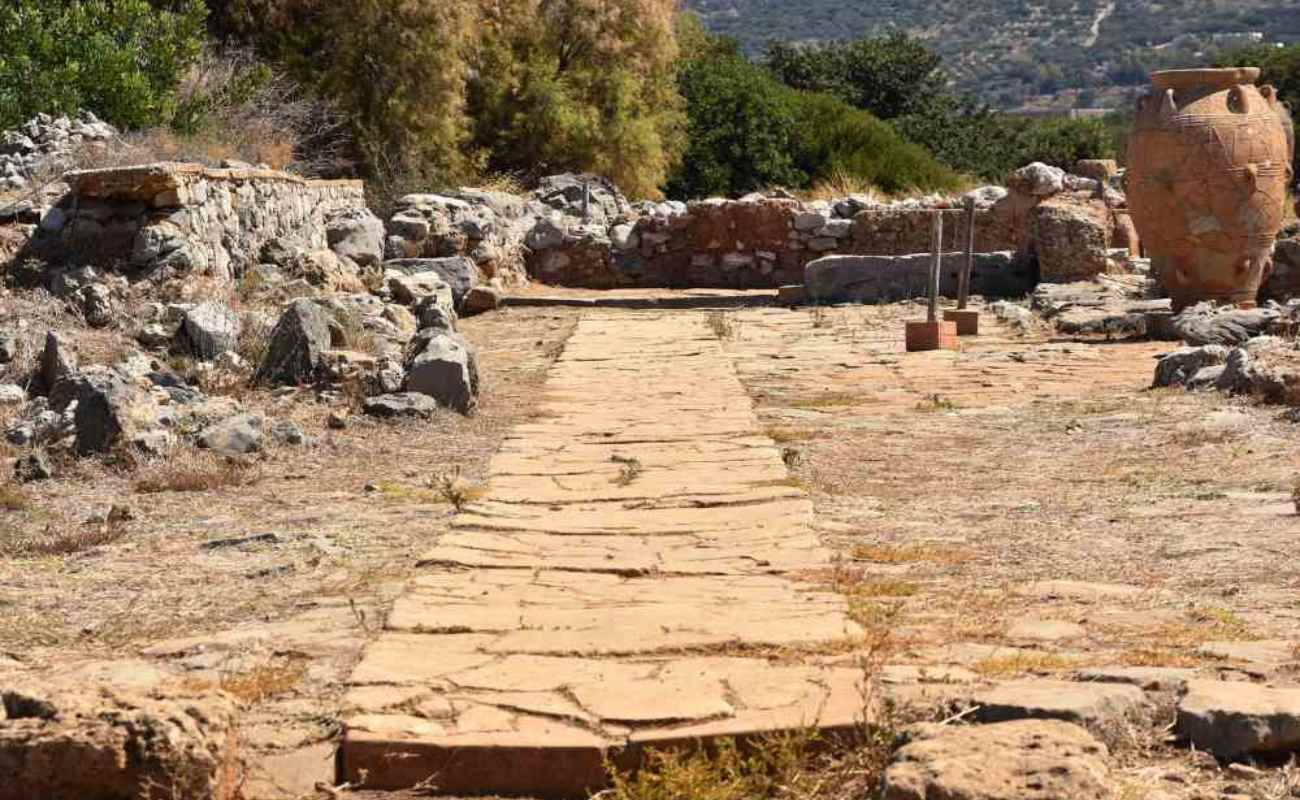
Nearby are the storage rooms called Magazines, where the famous vases Pithoi used to hold wine, oil, and cereals.
The Old City
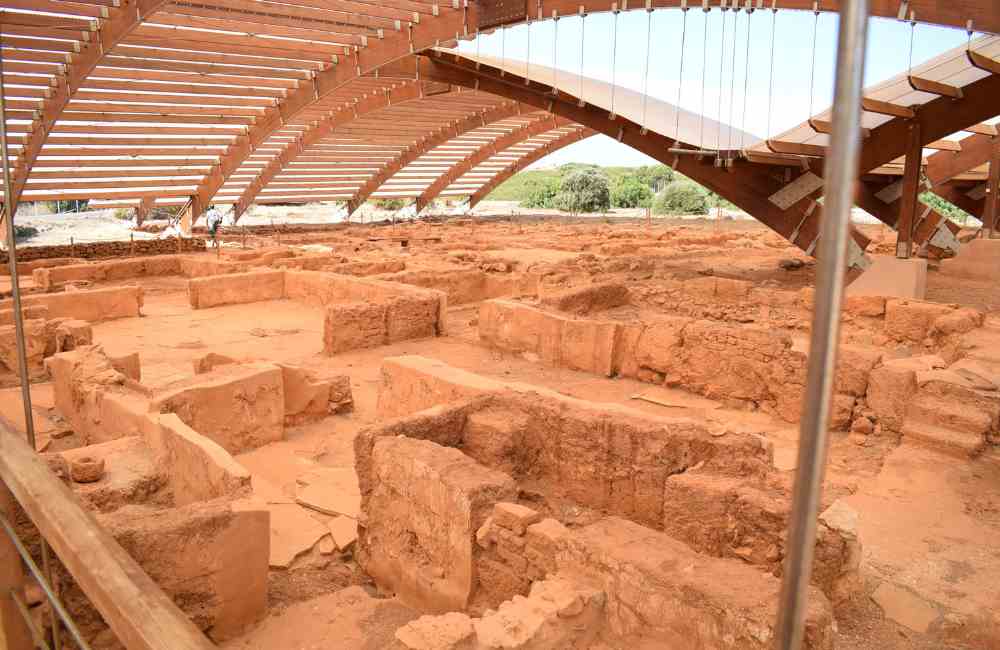
The north wing of the palace is facing the old city of Malia. So little is known about this area that archaeologists have yet to agree on its name. The most likely candidate is Quartier Mu. Doesn’t that sound somewhat Chinese, or is it just me?
Regardless, historians speculate that the city was dedicated to manufacturing pottery and had a separate life from the palace.
Hypostyle Crypt
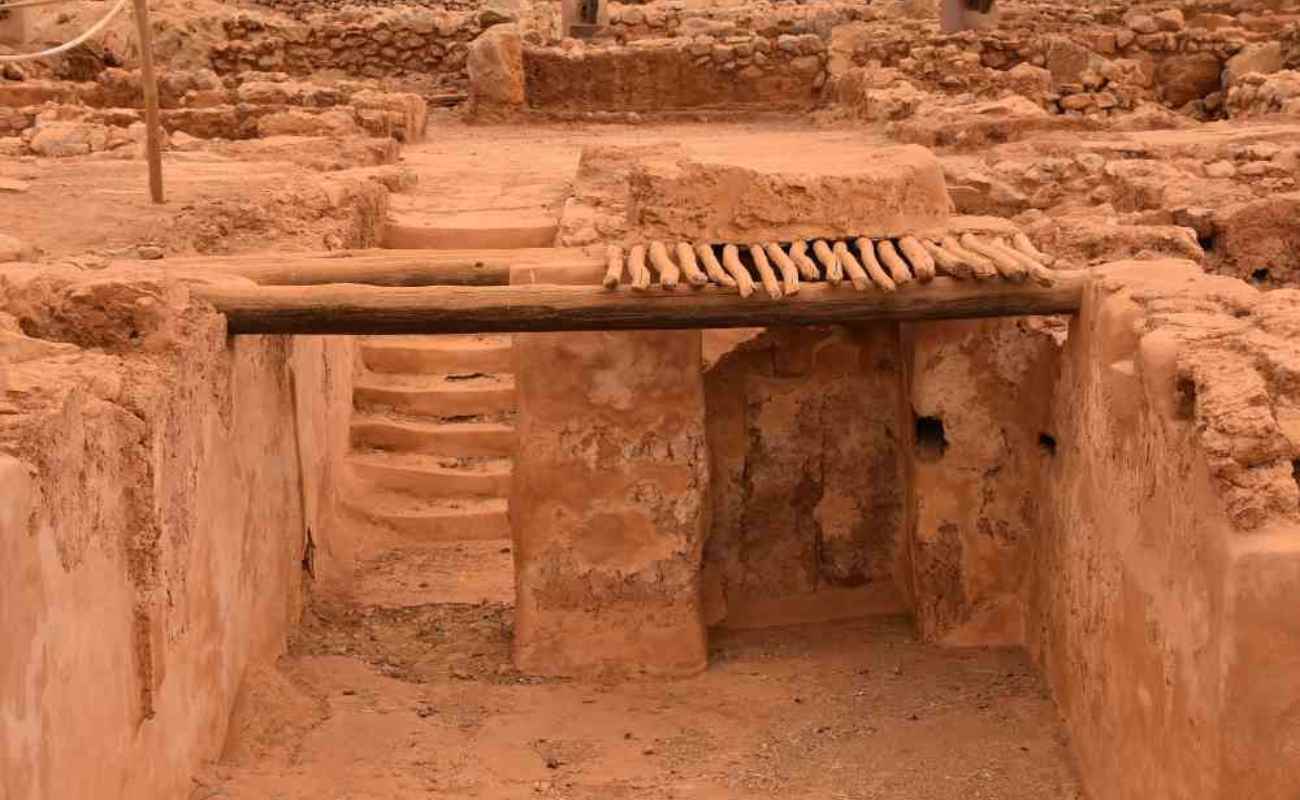
A mysterious building between the palace and the residential area gives way to more theories and speculations. The Hypostyle Crypt contained a large underground room where secretive meetings were said to occur.
Some suggest it was the gathering point for a town council, while others say it was used for commercial purposes. You are welcome to put forward your suggestions if you wish.
Chryssolakos
Finally, 500 meters north of the palace in the area now known as Chryssolakkos, you will find your way to the ancient graveyard, a grand house tomb with over 40 chambers.
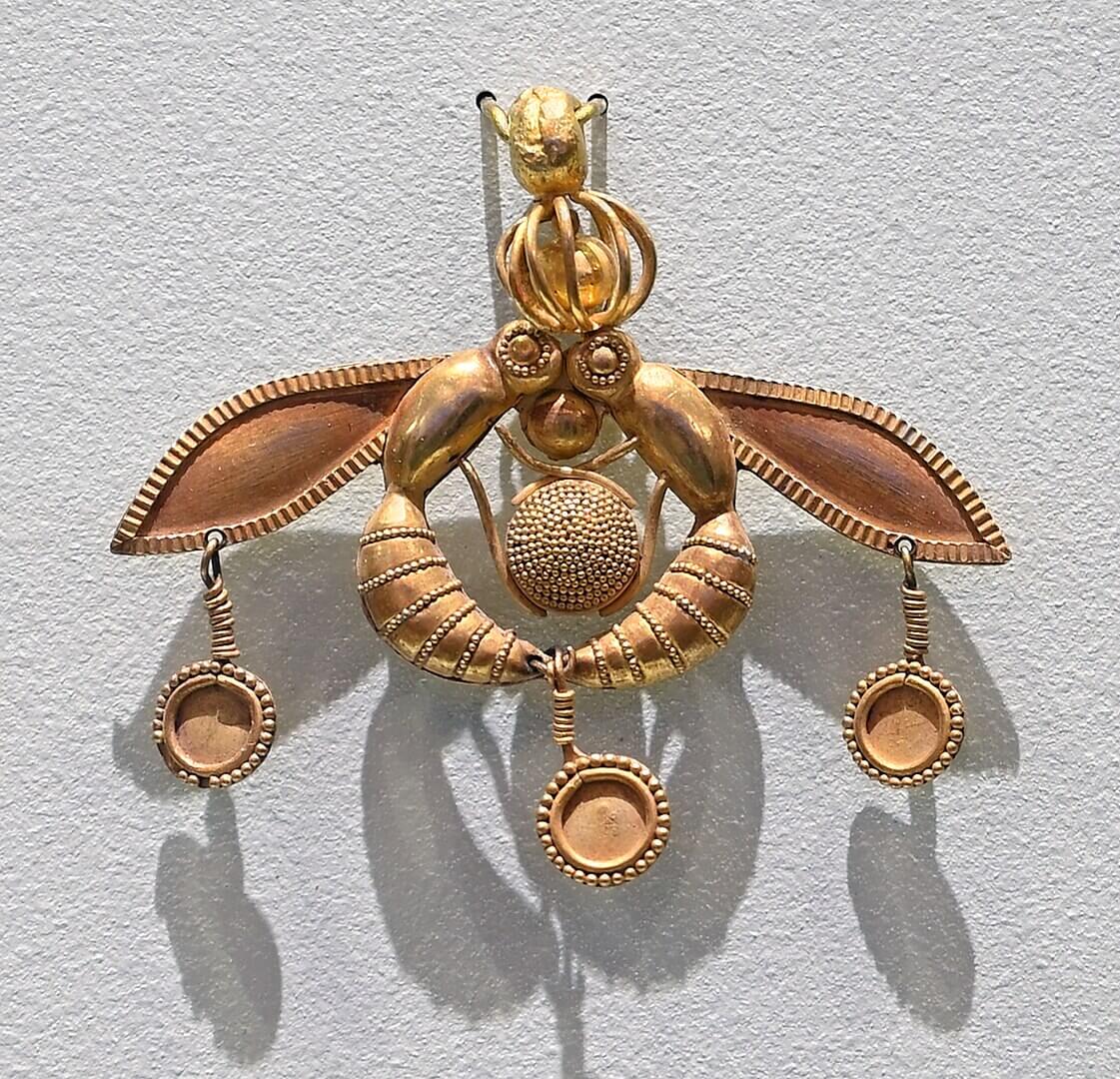
It was in those cemeteries that they uncovered one of the most exquisite Minoan finds. The Golden Bee Pendant, displayed in the Museum of Heraklion, is probably one of the most famous discoveries dating back to Minoan times.
The pendant features two bees depositing a drop of honey in their honeycomb. They are holding the round honeycomb between their legs and the drop of honey in their mouths. On their heads the bees carry a cage with a golden bead. Small discs hang from their wings and stings.
History of Malia Crete
While you roam through the ancient ruins of Malia, remind yourself that you are standing on land occupied already from the early Minoan period of 6000 to 2000 BC.
It was in 1900 BC when the first palace was built to be destroyed in 1700 BC when the ancient Minoans erected a new one.
We have little historical evidence but plenty of mythological stories that are associated with the Minoan palace of Malia. According to mythology, the third son of Zeus and Europa, Sarpedon, ruled here, and he was also a brother of the legendary King Minos.
Unfortunately, following the fate of the other prominent Minoan sites in Crete, Malia was again destroyed in 1450 BC—the ruins you see now date back to that time. And for more than two millennia, nobody knew of its existence.
So, about thirty-four centuries later, in 1880, the land owner of the Chrysolakkos area discovered a few sheets of buried gold. It wasn’t long till the news reached the ears of gold diggers who illegally excavated the wider region. Imagine how many artifacts got lost during that time.
Finally, in 1915, official excavations began by Joseph Hatzidakis. They continued by the French Archaeological School in 1921, when they found one gold jewel depicting bees, the Golden Bee Pendant.
What to Expect from Your Visit to the Malia Archaeological Site
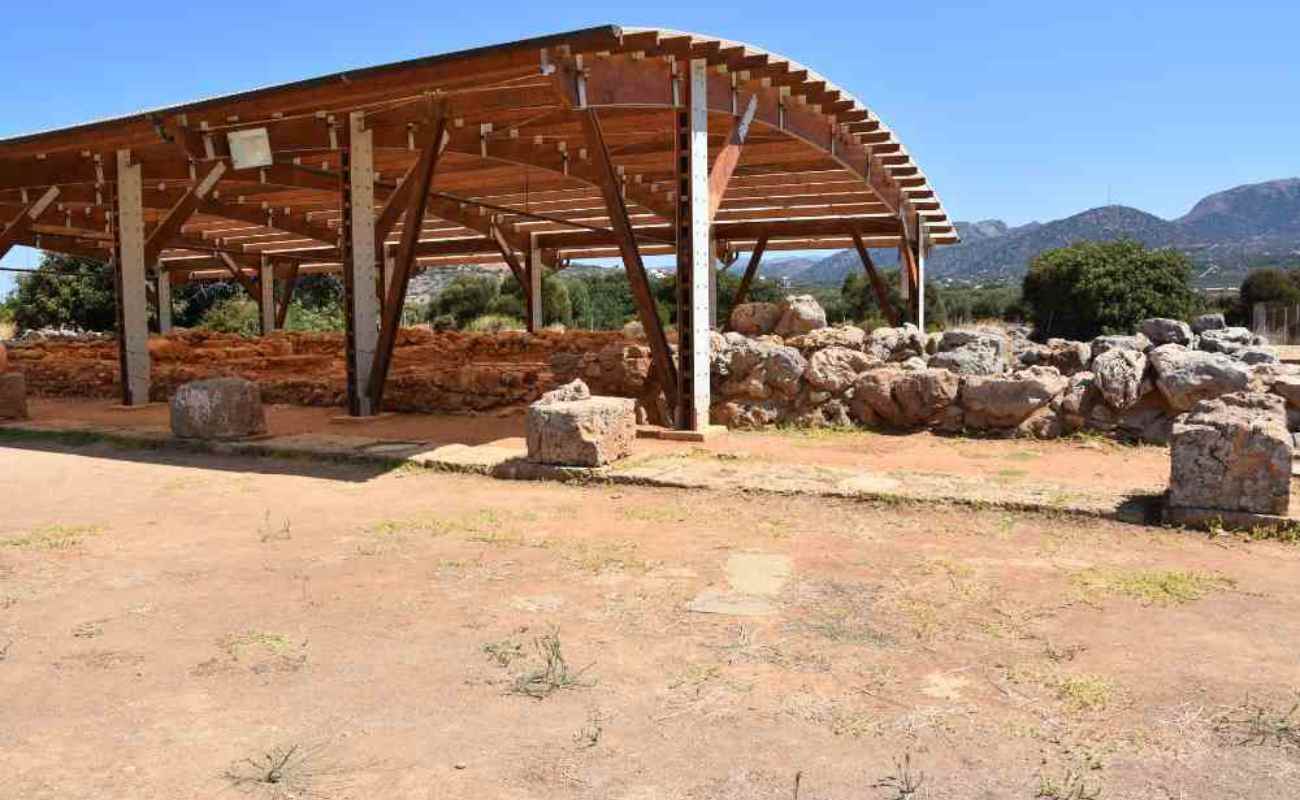
First things first, don’t expect a restored site like Knossos. Everything here is in its authentic form, the way time has made it. Still, ancient Malia is one of Crete’s finest and best-preserved ancient Minoan palaces.
It differs from its most prominent cousins, Knossos and Phaistos, because Malia was never reoccupied after its last destruction. That means everything here is almost unchanged, as the first Minoans dreamed it to be.
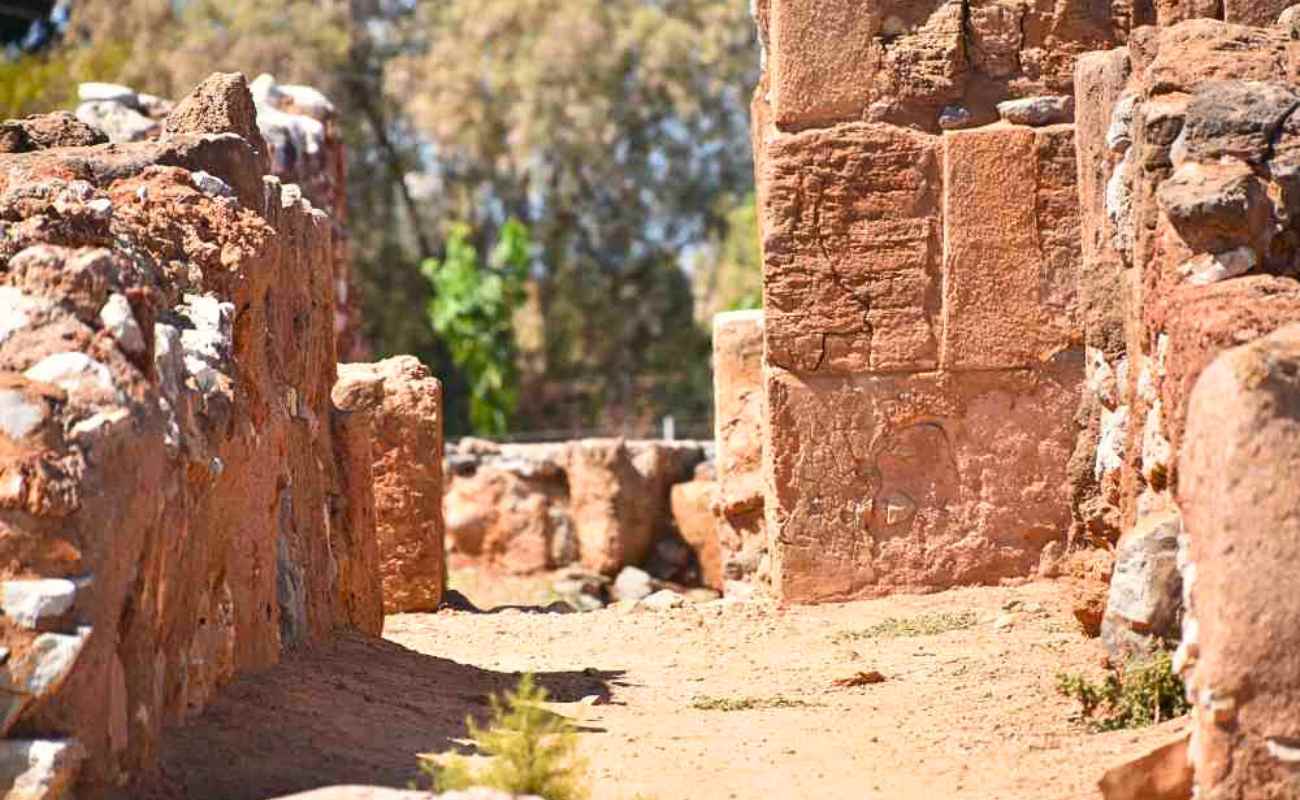
Of course, time and the elements have impacted, so don’t expect to see any standing buildings. Still, the remaining ruins and the ongoing excavations shed enough light on ancient Malia’s glorious past.

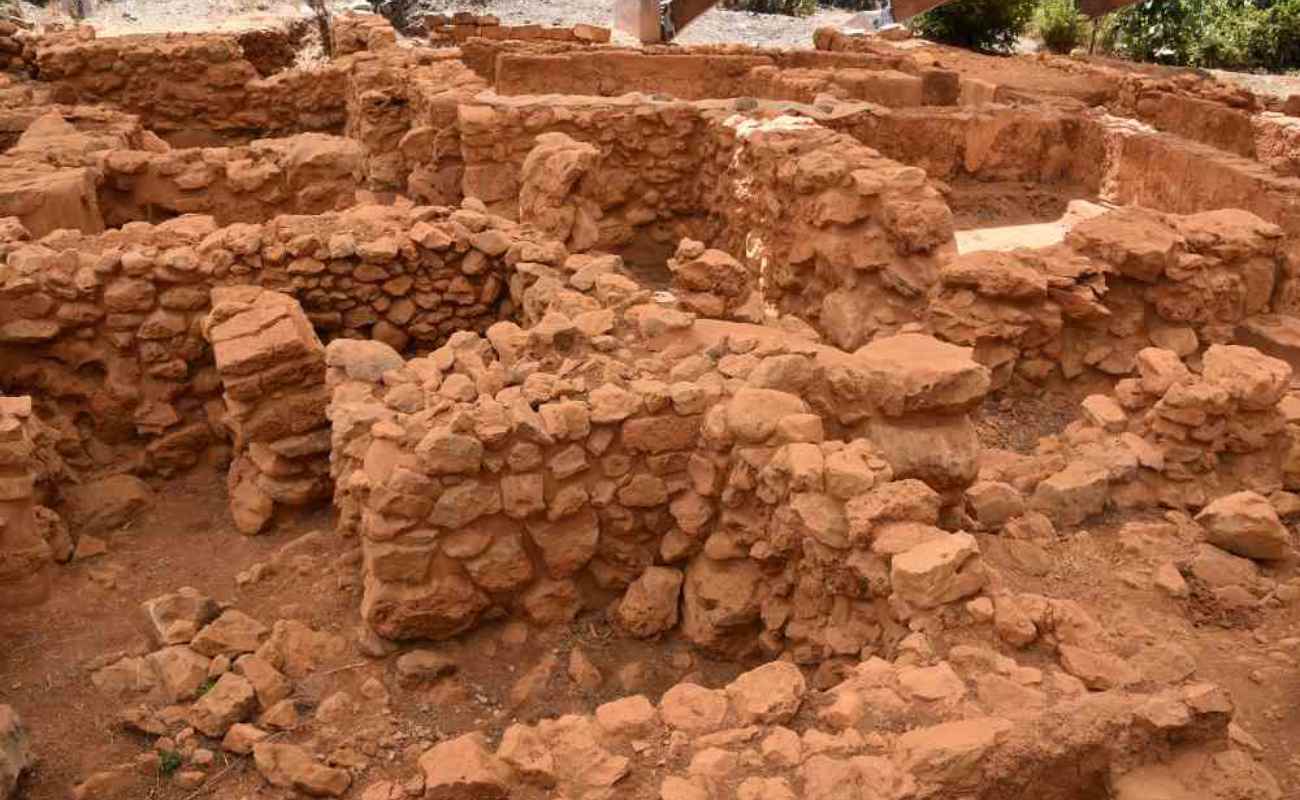
Finally, although the site is of unprecedented importance, there are few to no information boards explaining what you see. In other words, it is less of a theme park experience and more of a get-to-know-it-by-yourself endeavor.
Add in the picture that you’ll be walking in wide open fields filled with flowers, trees, and shrubs, and you are in for a treat.
Tips for Your Visit to Malia Crete
RESEARCH: If you want to enjoy your visit to Malia, Greece, the most crucial tip I can give is to research beforehand since there are few signs on-site.
You don’t want to be walking among ruins you know nothing about, but since you’re already reading this guide, I think you’re on the right track.
GUIDE: A guided tour is the best alternative if you don’t have the time or energy to read. However, you may need to arrange this well before your visit since guides are not always readily available. As a last resort, you could pull up this guide on your phone to have it in hand as you wander through the ruins.
HOW TO DRESS TO VISIT: While you explore the site, you’ll quickly realize the archaeological venue is quite big and spread out, with several different areas.
In other words, prepare to walk for a while if you plan to see the entirety of ancient Malia. And since many of the ruins are directly exposed to the sun, bring your hat or visit on a cloudy day.
This guide to what to wear in Summer in Crete’s archaeological sites will certainly give you a hand in finding a comfy outfit. Remember that most sites have big areas exposed to the sun.
MALIA OPENING HOURS: Although the opening times may vary, the archaeological site is usually open all year round despite the ongoing excavations.
Officially, the visiting times are 8 a.m. – 8 p.m. in summer and 8 a.m. – 3.30 p.m. except Monday in winter, but if you want my advice, call their number +30 2897 031597 for confirmation.
TICKET PRICES: The total ticket price is €6, which is a great deal if you are into history and willing to research before visiting. The reduced fare is €3, free for students under 25 from the European Union.
HOW TO GET TO MALIA: The Malia archaeological site is about three kilometers east of the resort town of Malia, so you can walk from the city if you wish.
Alternatively, hop on a bus from Stalis to the Malia Antiquities bus stop and walk less than 10 minutes to the site entry. Finally, if you’re based in Heraklion, you can reach ancient Malia by car in about 30 minutes.
Other Things to See near the Malia Palace
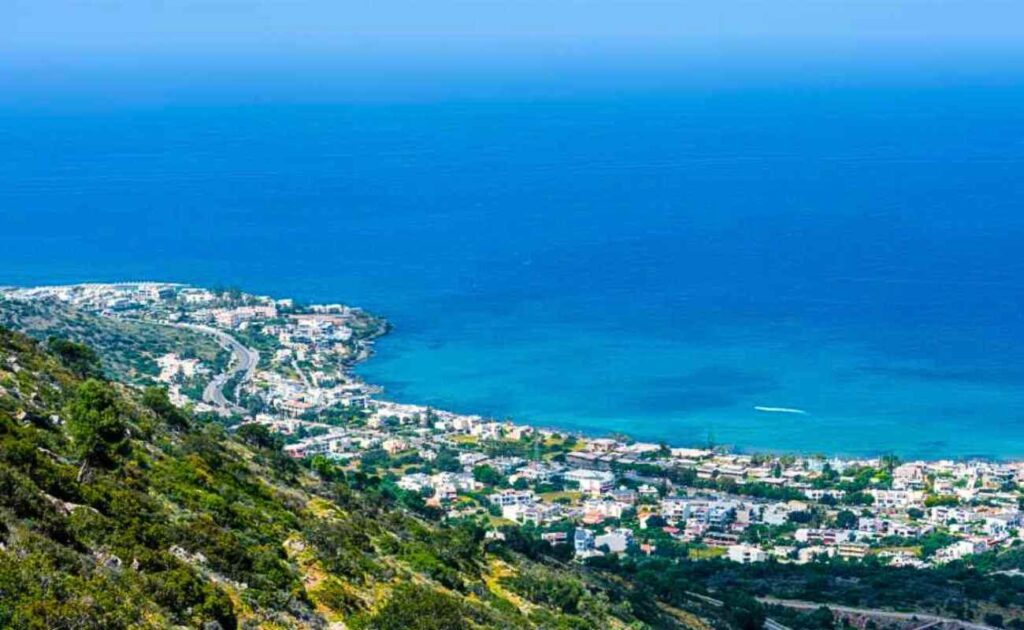
The modern city of Malia is a cosmopolitan resort known for its upbeat tempo and nightlife; worth a look if you’re in the area.
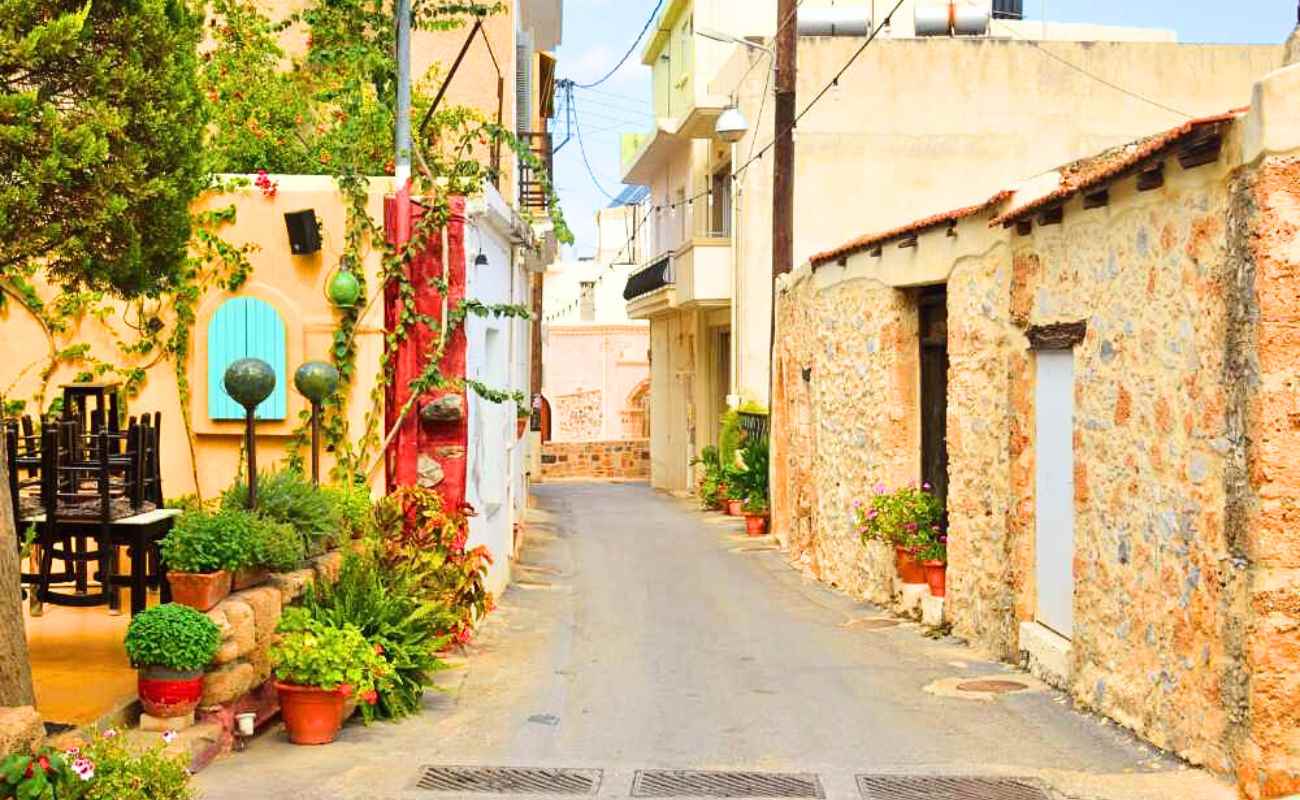
The gorgeous old part of Malia is another incredibly beautiful place to visit, especially if you enjoy quaint settlements with narrow alleys, colorful courtyards, and traditional taverns.
Just south of the town is the Cave of Maria – another historical landmark all cave lovers must visit. Then you have sites such as the Azilakon Forest, the windmill ruins of Milotopi, and the famous sandy beach of Malia.
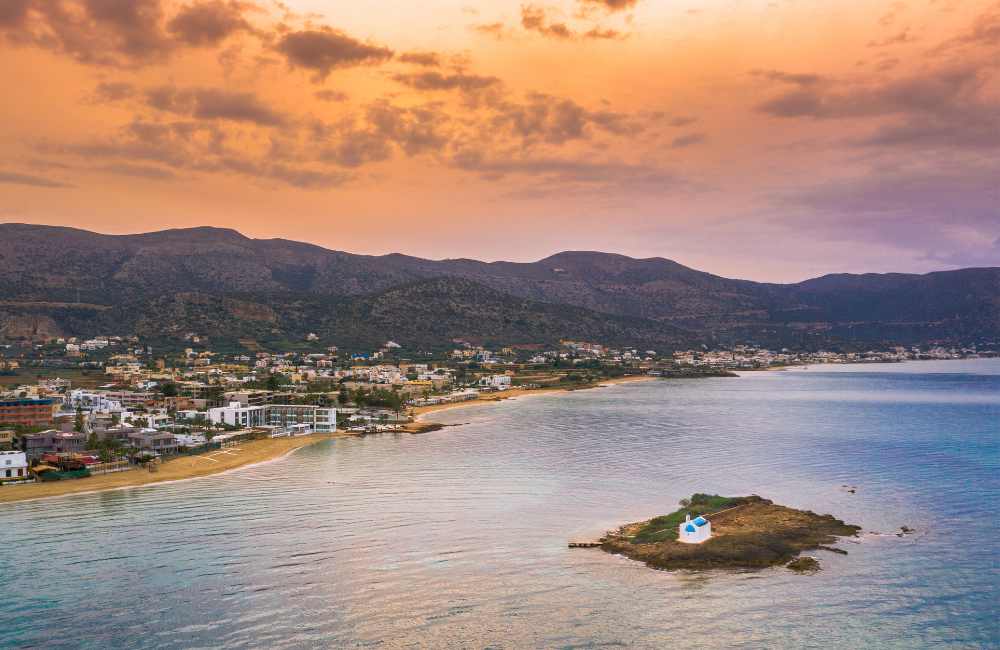
One of the most impressive sights in Malia is located opposite the main beach. It’s a tiny islet named Afendi Christos, which hosts the church of Metamorphosis tou Sotiros.
This is a small church where every year, on August 6th, many people gather to participate in the service and the church’s celebration. Near the church, there is a spring that, according to the locals, has holy water that helps women who want to conceive. The islet can be reached by swimming since it’s quite close to the coast
As you can see, a visit to the archaeological site of Malia can easily take a full day, especially if you also want to discover the wider area.
However, I highly urge you to devote at least three hours to exploring the ancient ruins of Malia. Do your research, and let your imagination loose. I promise you’ll love every second of being in this historical yet mysterious part of Crete.
Are you visiting the Archaeological Site of Malia any time soon? Let me know in the comments below!
Where to Stay Near Malia’s Archaeological Site
Although staying in Heraklion would be the obvious choice as it is the capital of the island and a place with plenty of things to do, many people stay in Malia to explore the eastern side of Crete.
This offers easy access to the archaeological site and a good choice of hotels, rooms to rent, and seaside resorts. Check these out before booking a stay in Malia:

- Sunshine Boutique Hotel: This Malia hotel offers a pool, a sun terrace, rooms with balconies, and a coffee machine. It’s near bars and restaurants and offers bike and car hire.
- Enorme Ammos Beach Resort: A 5-star resort near the beach featuring a restaurant, free private parking, and a bar. Selected rooms have a balcony with sea views.
- Drossia Palms Hotel and Nisos Beach Suites: One of the places I often recommend in Malia, this beautiful complex features a private beach area, a snack bar, and a large swimming pool. Rooms are spacious and have kitchenette facilities.
I hope this guide offered you helpful tips to visit Malia, a very interesting archaeological site in Crete.

Are you visiting Crete Soon?
Join my Facebook group for more tips, or plan your Crete itinerary with me!
Pin for Later!
How to Visit the Minoan Palace of Malia, in Crete

Gabi, the Crete Insider
Hi, I’m Gabi — your go-to local expert in Crete! I’ve been living in Chania, Crete since 2016, and I’ve turned my love for the island into a full-time passion — guiding travelers, writing for travel media, and curating local experiences.
I co-authored DK Eyewitness Top 10 Crete and other guides. I run the blogs The Tiny Book, Greece Planner, and My Cretan Recipe. Through this platform I help travelers design unforgettable trips to Crete.


