
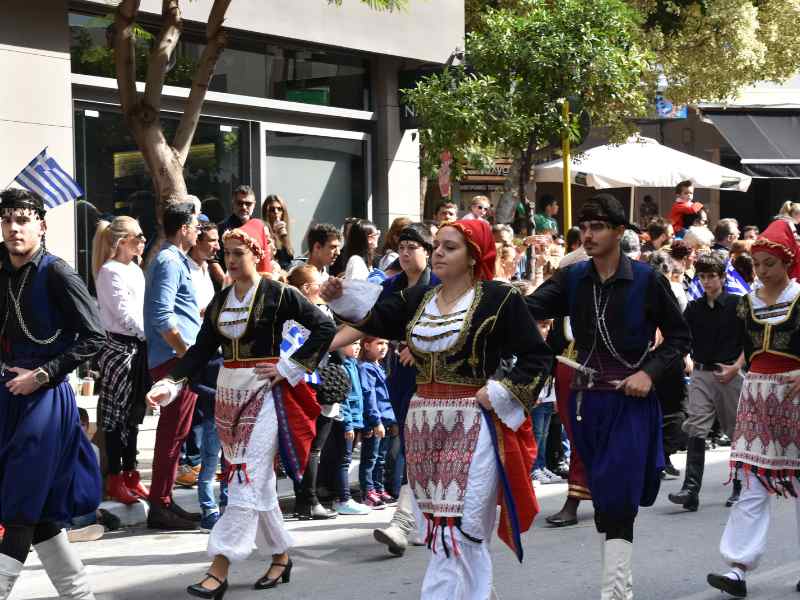
Oxi Day in Greece: History and Celebrations in Crete
Every year on October 28, Greece pauses to remember a pivotal moment in its history—Oxi Day. This day commemorates the resolute “No” (“Όχι”) uttered by Prime Minister Ioannis Metaxas in 1940, rejecting an ultimatum from Benito Mussolini’s Italy. That single word led Greece into the Second World War and ignited a spirit of resistance that still resonates today.
📍 Must-do: Balos Cruise 📍 Knossos Palace 📍 Check rental car rates for Crete 🚗
While the national significance of Oxi Day is widely recognized, the island of Crete adds its own layer of tradition and pride to the celebration.
Here, the day is not just remembered; it’s lived through parades, music, food, and heartfelt ceremonies that honor both history and heritage.

The history of Oxi Day
Oxi Day in a nutshell:
Επέτειος του Όχι,(Epéteios tou Óchi or Anniversary of the No ) is celebrated in Greece, Cyprus and the Greek communities around the world, commemorates the rejection by the Greek Ioannis Metaxas of the ultimatum made by Italian dictator Benito Mussolini on 28 October 1940 and the subsequent Hellenic counterattack against the invading Italian forces during the Greco-Italian War and Axis occupation.
(Source: Wikipedia)

In the early hours of October 28, 1940, the Italian ambassador presented Metaxas with an ultimatum: allow Axis forces to occupy Greek territory or face war. Metaxas’ response was swift and unequivocal: “Oxi!” (“No!”). This refusal led to Italy’s invasion of Greece, marking Greece’s entry into World War II.
Despite being outnumbered and less equipped, Greek forces mounted a formidable defense, pushing back the Italian army. This unexpected resistance earned Greece the admiration of Winston Churchill, who famously declared, “From now on, we will say that heroes fight like Greeks.”

Oxi Day represents more than a refusal: It celebrates bravery, national pride, and the unwavering spirit of the Greek people in the face of adversity.
Celebrations across Greece
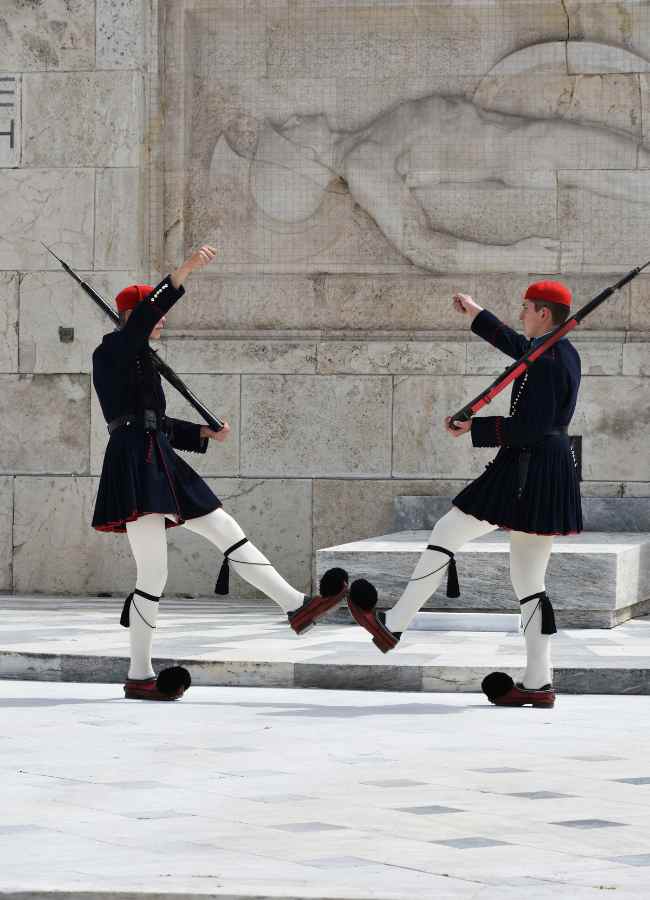
Across Greece, Oxi Day is marked by a combination of military parades, school ceremonies, and public commemorations. Cities large and small host parades with soldiers, students, and local organizations, all paying tribute to the sacrifices of those who defended Greece.
Students often participate in performances, reciting patriotic poems, singing traditional songs, and reenacting historical moments.
Families gather to reflect on the importance of the day, and flags are raised across the country, waving proudly to honor those who stood up against tyranny.
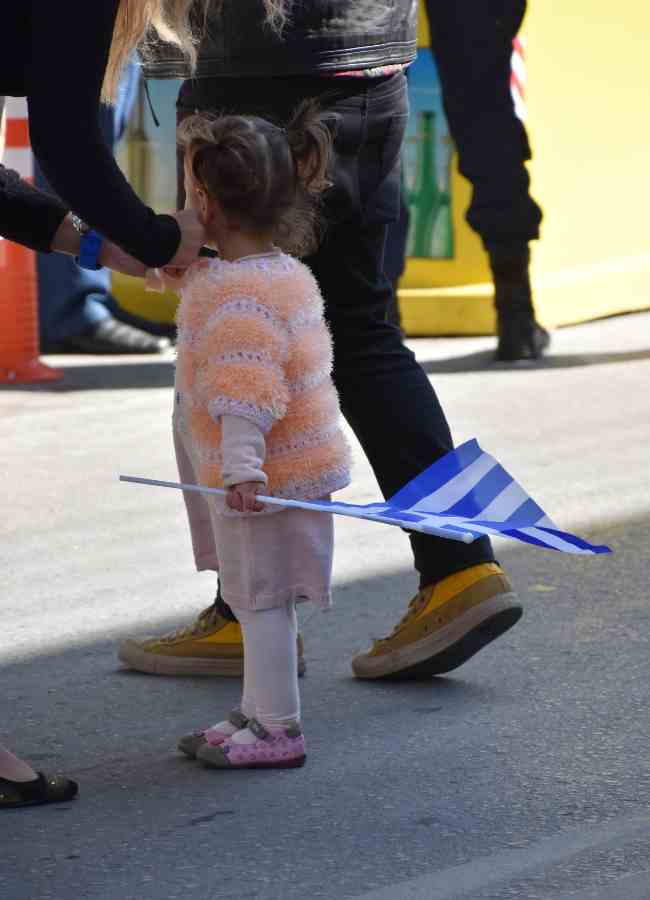
The day is a reminder not only of the historical event but also of the values of freedom, resilience, and unity, which resonate deeply in the Greek national consciousness.
Oxi Day in Crete: Unique traditions

Crete has a long-standing history of resistance and resilience. For instance, it’s enough to think about the struggles against the Ottoman Empire and later the Axis occupation during World War II.
It’s a well-known fact that Cretans have always valued courage and independence. This heritage makes Oxi Day particularly meaningful on the island.
In Crete, celebrations often combine formal ceremonies with local customs and cultural expressions, making the day both reflective and festive.
Here are some ways Oxi Day is observed across the island:
1. School parades and ceremonies
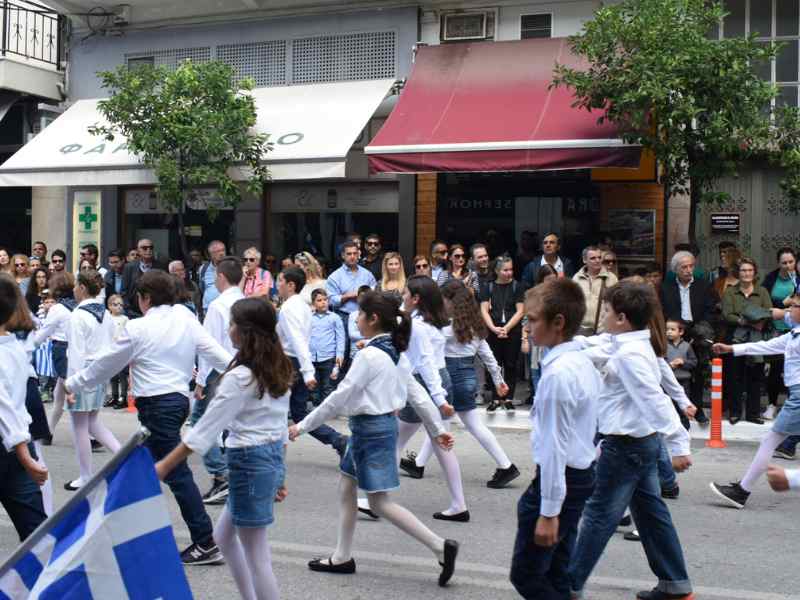
Like the rest of Greece, Cretan schools play a central role in Oxi Day celebrations. Students dress in elegant or traditional uniforms, perform patriotic dances, or join school parades.
On the days leading to October 28th, teachers often prepare lessons about the historical significance of the day, and children may recite poems celebrating Greek heroes and national pride.

In smaller towns and villages, these ceremonies are intimate yet deeply moving, bringing communities together in a shared remembrance of history. Parents and local residents often attend, creating a sense of unity that spans generations.
2. Military and municipal parades
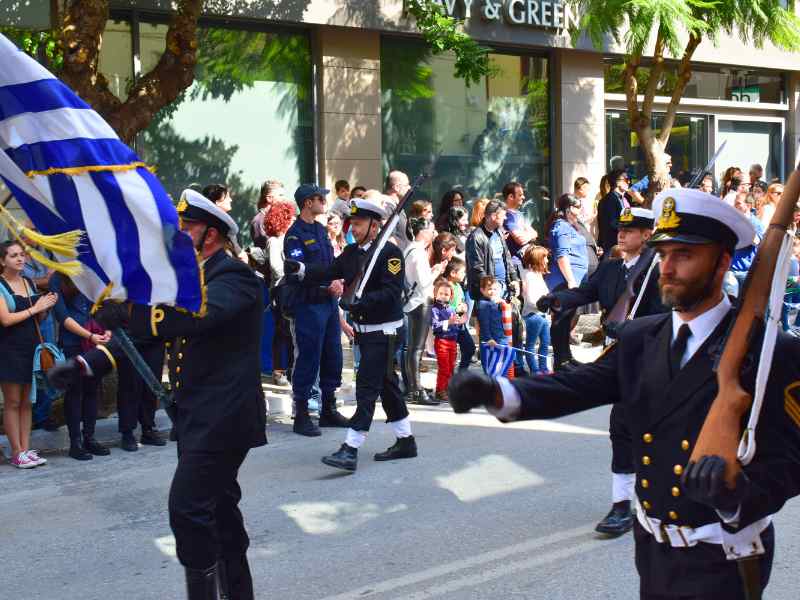
In larger cities like Heraklion, Chania, and Rethymno, Oxi Day is marked by parades, where school students, different associations, and soldiers march through the streets in ceremonial uniforms. Local officials, veterans, and community leaders often participate, honoring both historical and modern contributions to national defense.

Even in rural areas, small-scale parades may include local youth organizations, scouts, and cultural groups. Flags are displayed prominently, and speeches remind attendees of the bravery of Greek soldiers and civilians alike.
3. Traditional music and dance

Crete has some unique musical and dance traditions, and Oxi Day is no exception. Folk dances, accompanied by the lyra (a traditional Cretan string instrument) and lute, are performed in public squares and schoolyards. These performances often include scenes of resistance and heroism.
Traditional songs celebrating freedom, courage, and Greek identity are also sung, creating a festive yet solemn atmosphere.
4. Local festivals and community gatherings

In some Cretan towns, Oxi Day coincides with local festivals or community gatherings. Villagers may organize public meals, serve traditional Cretan dishes, and host cultural events. These gatherings are not only about remembrance but also about fostering a sense of community and continuity between generations.
Families often gather to enjoy Cretan specialties such as dakos, kalitsounia (cheese pastries), and local cheeses, emphasizing the link between cultural heritage and historical memory. Sharing food and stories becomes a living tribute to the values Oxi Day represents.
5. Visits to historical sites and museums
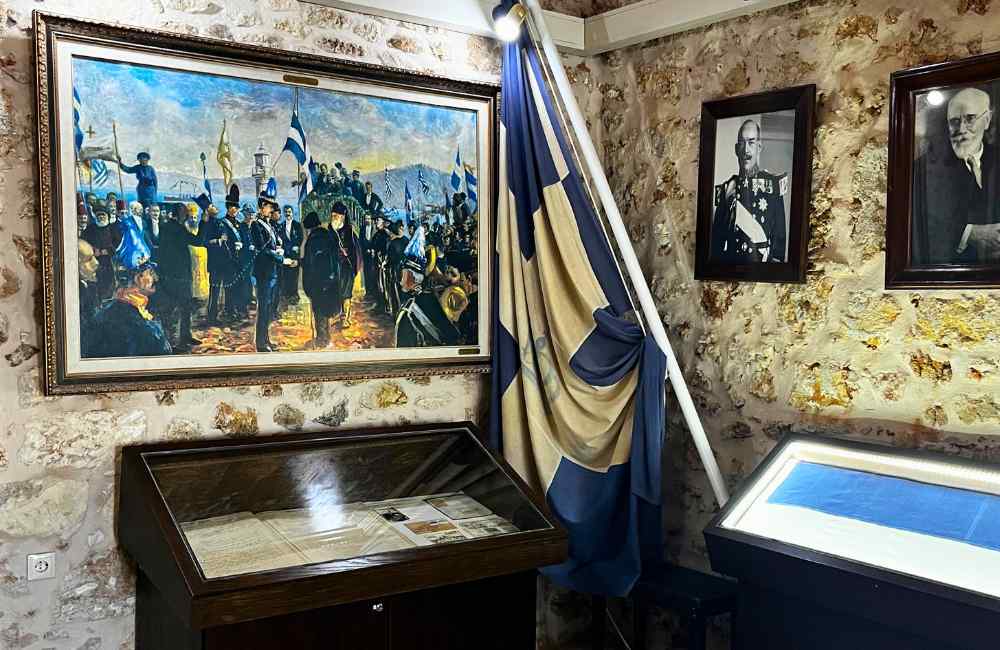
For those interested in history, Oxi Day is an opportunity to explore museums and historical sites related to World War II and Cretan resistance. The island has many monuments, memorials, and museums commemorating the sacrifices of local heroes.
For example:
- Arkadi Monastery in Rethymno is a symbol of Cretan resistance dating back to the Ottoman era, reminding visitors of the island’s enduring spirit.
- War memorials in Heraklion and Chania honor soldiers and civilians who fought during World War II.
- Museums often organize special exhibitions on October 28, highlighting stories of courage, resistance, and local heroes.
- Melidoni Cave, is a site of profound historical and archaeological significance in Rethymno. The place is perhaps most poignantly remembered for the tragic events of October 1823, during the Cretan Revolution against Ottoman rule, while site stands as a testament to the resilience and sacrifice of the Cretan people during their struggle for freedom.
Oxi Day and Cretan identity

Crete’s celebration of Oxi Day also reflects the island’s strong sense of identity, pride, and resilience.
In many ways, Oxi Day resonates with the Cretan ethos: courage in the face of adversity, respect for freedom, and commitment to community.
Experience Oxi Day in Crete as a visitor
If you’re visiting Crete in late October, Oxi Day offers a unique cultural experience. Unlike typical tourist attractions, the day provides an immersive glimpse into local traditions. My suggestion?
- Attend parades in towns such as Chania, Heraklion, or Rethymno.
- Explore historical sites and museums that host special exhibitions.
- Enjoy local Cretan cuisine at small villages and community gatherings.
- Participate in folk music and dance events, offering an authentic taste of Cretan culture.
Experiencing Oxi Day in Crete is not only educational but also deeply moving, providing insight into the enduring spirit of the Greek people.

Oxi Day is a reminder of universal values—courage, resilience, and the defense of freedom against oppression. In Crete, where history is lived and remembered with pride, the celebrations are especially heartfelt.
For visitors and locals alike, Oxi Day in Crete is a chance to honor the past, celebrate cultural heritage, and embrace the enduring spirit of freedom.

It is a day when history is not just remembered—it is experienced, lived, and shared, connecting generations and reminding everyone of the power of saying “Oxi” when it matters most.

Are you visiting Crete Soon?
Join my Facebook group for more tips, or plan your Crete itinerary with me!
Pin for Later!
Oxi Day Celebrations in Crete


Gabi, the Crete Insider
Hi, I’m Gabi — your go-to local expert in Crete! I’ve been living in Chania, Crete since 2016, and I’ve turned my love for the island into a full-time passion — guiding travelers, writing for travel media, and curating local experiences.
I co-authored DK Eyewitness Top 10 Crete and other guides. I run the blogs The Tiny Book, Greece Planner, and My Cretan Recipe. Through this platform I help travelers design unforgettable trips to Crete.
→ Book your 1:1 consultation with a local to plan your Crete escape
🚘 Trusted Car Rental in Crete
CAR RENTAL IN CRETE ~ Enjoy peace of mind by hiring a car from a local company. Rethymnon Cars offers excellent cars, full insurance with no excess, no credit card deposit, and no extras.