2 Days in Chania: Ideal 2-Day Itinerary to See the Best of Chania, Crete!
What to Do in Chania in 2 days. Check out the city landmarks, the market, and the best beaches. This local’s guide tells you the best things to do in Chania in two days.
📍 Must-do: Balos Cruise 📍 Knossos Palace 📍 Check rental car rates for Crete 🚗
Are you spending a holiday in Crete and have decided to spend two days in Chania? Or are you on a European city break in Crete and want to explore this unique destination?
This itinerary will help you choose what things to do in this gorgeous city of West Crete. Let’s see what you can see, do, and experience with 2 days in Chania!
2 days in Chania: A perfect city break in Crete

Chances are that you’ll be spending more than just 2 days in Crete’s second important city. However, if you’re seeing the region with an organized tour and have little free time available, you can still see a lot in just a few hours.
If you’ve arrived in Chania on a cruise ship or plan to spend a weekend in town, you won’t believe how many things you can do in Chania, starting by the old town and the romantic Venetian port. Here, you can discover buildings full of history and restaurants full of flavor.
Besides, the region is also known for some amazing beaches that you can easily visit on a day trip even if you’re in town for just a few days.
If your trip to Crete foresees just two days in Chania, choose some of the ideas from the following itinerary and enjoy the best of the city. Chania is the perfect destination for a short getaway. Whether you’re an avid explorer or a relaxed traveler, this 2-day itinerary will help you make the most of your time in Chania!
Day 1: Heritage & tastes
Morning: Explore Chania’s Municipal Market (Agora)

Start your day at the Agora, Chania’s vibrant municipal market located in Sofoklis Venizelos Square. This bustling hub is ideal for sampling local products like Graviera and Myzithra cheeses, thyme honey, and aromatic herbs. Vendors often offer tastings, making it an interactive culinary experience.
Why Visit? The Agora not only provides a glimpse into Cretan daily life but also divides the modern city from the old town, symbolizing Chania’s duality as both a historical and contemporary hub.
🫒 Hungry for the Real Crete?
Walk through markets, taste homemade dishes, and share a table with locals. My food-focused experiences in town bring you into the heart of Crete’s culture — one bite at a time.
🥙 Join a Culinary AdventureMid-Morning: Discover the Venetian Harbor

Exit the Agora and stroll west to Halidon Street, leading you to the magical Venetian Harbor. This iconic area, built during the Venetian rule, features two distinct basins:
- Western Basin: Where you can explore landmarks like the Firkas Fortress, a defensive structure built by the Venetians and used as barracks by the Turkish army. Here, you can check out the Greek flag pole on the watchtower, a perfect spot for panoramic views of the lighthouse.
- Eastern Basin: Here, you can see colorful fishing boats and the historic Venetian Arsenals, once used for repairing ships.
Must-See Highlights in the Harbor
The Firkas Fortress
Constructed in the early 17th century, this fortress played a pivotal role in Chania’s history. Originally built by the Venetians as Fortezza Rebellino del Porto, it it hosted the headquarters of the Venetian Army Commander in town.
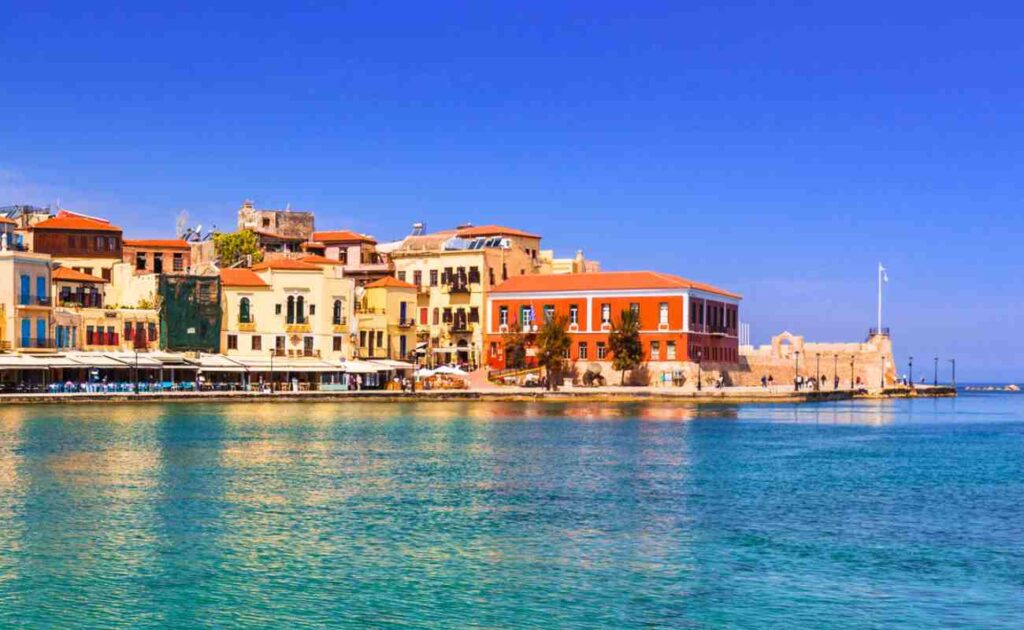
The structure was completed a few years before the Venetian city fell to the Ottoman Empire when it was used as barracks for the Ottoman soldiers, and it was then that it got the name of Firkas (which in Turkish means barrack).
Parts of the building were used as a prison for the revolutionary rebels during the Civil War. If you have extra time, visit the Maritime Museum of Chania inside the Fortress or walk towards the watchtower facing the lighthouse.
On the watchtower stands the Greek flag pole. It was here where the national flag was first raised on the island in 1913, after Enosis, the union of Crete with Greece. From this point, you will get the best views of the lighthouse.
The Mosque of the Janissaries (Yali Tzamisi)
Built in 1645, this pink-domed mosque is Chania’s oldest Ottoman structure. Originally a place of prayer for elite Ottoman soldiers, it now serves as an exhibition space for art and crafts.
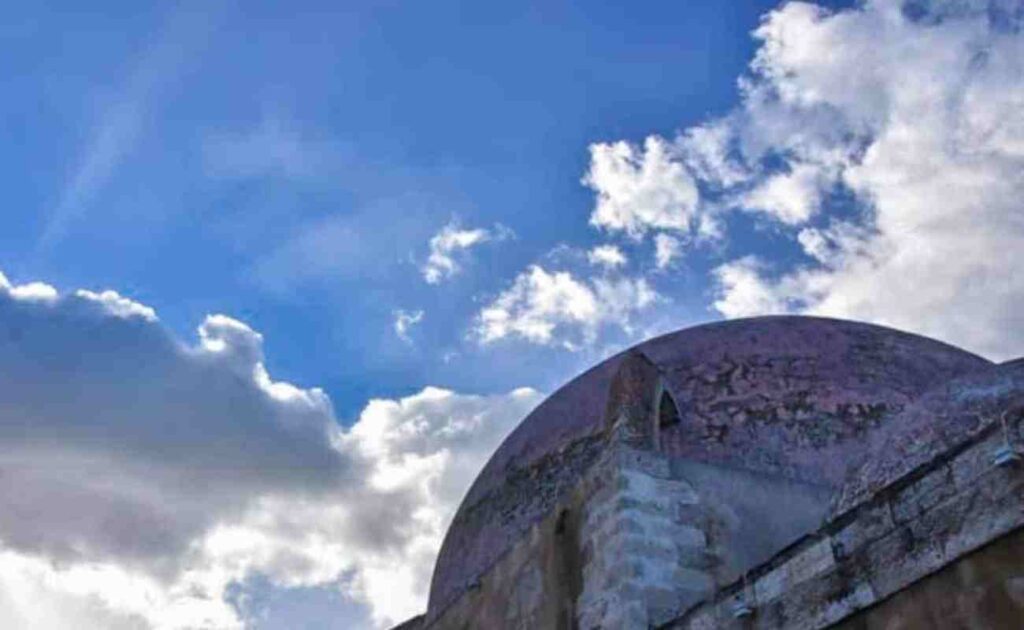
The mosque stands on the foundations of a former Venetian church. It is built in limestone and has typical Venetian architecture, such as arched doors and windows. On the south corner, it’s possible to observe the base of the former minaret, torn down in 1939. Also visible are the remains of a wall fountain with taps (çesme in Turkish) carved on the stone wall, remnants of its Ottoman past.
The former mosque, also known as Küçük Pasha Hasan Mosque (which can translate as the small mosque, as well as Yali Tzamisi, or the mosque by the sea, is the ildest Ottoman structure on the island (1645, the year when Chania fell to Ottoman domination) and was established as a religious prayer center for the Turkish soldiers known as the Janissaries during the Ottoman rule of Crete.
The mosque stands on the foundations of a former Venetian church. It is built in limestone and has typical Venetian architecture, such as arched doors and windows. On the south corner, it’s possible to observe the base of the former minaret, torn down in 1939. Also visible are the remains of a wall fountain with taps (çesme in Turkish) carved on the wall.
The Egyptian Lighthouse
Opposite the mosque, you can see the Egyptian Lighthouse, one of the oldest lighthouses in the world. This is another landmark built by the Venetians at the end of the 16th century. The lighthouse stands on a solid bedrock at the end of a mole erected to prevent the high tides that would otherwise reach the Arsenals when the wind blows.

Between 1830 and 1840, Crete was assigned to the regent of Egypt, and it was then that the lighthouse was reconstructed.
The lighthouse of Chania is 26 meters from the rock base (the lighthouse is just 21 meters plus a base that’s 5 meters tall). It clearly resembles the shape of a minaret. It also has an internal stairway with a glass tower leading to the top balcony. The structure has three clear sections: An octagonal base, a middle portion with sixteen different sides, and a circular top area.
The Venetian Arsenals (Arsenali)
These 16th-century shipyards were essential for maintaining the Venetian fleet. Today, they serve as a stunning backdrop for the eastern basin of the harbor. As you leave the mosque, keep walking east to reach the Marina. The ample sidewalk hosts a variety of restaurants, bars, and tavernas serving anything from cocktails to traditional Greek dishes, including seafood, high-end gastronomy, and even sushi.

However, the true character of the promenade is shaped by the imposing structure of the Venetian Arsenali, the dry docks built to house and repair the boats belonging to the extensive Venetian fleet. They were built between 1467 and 1599.
The structures were rectangular and about 50 m long, open on the seaside so that ships could be pulled inside and repaired. They have impressive vaulted ceilings, which are now closed to the public.
A refined building known as the Grand Arsenal stands out on the waterfront. It’s a newer structure with very thick walls made of stone to which the Ottomans added a second floor. Now, it’s home to an exhibition center.
Lunch: Savor Local Flavors
For a quick bite, visit:
- Souvlaki Oasis: Classic gyro pita, simple yet delicious.
- Bougatsa Iordanis: Treat yourself to bougatsa, a pastry filled with sweet mizithra cheese.
- Funky’s: Feeling like pizza? Here you can find the best Italian-style pizza in town.
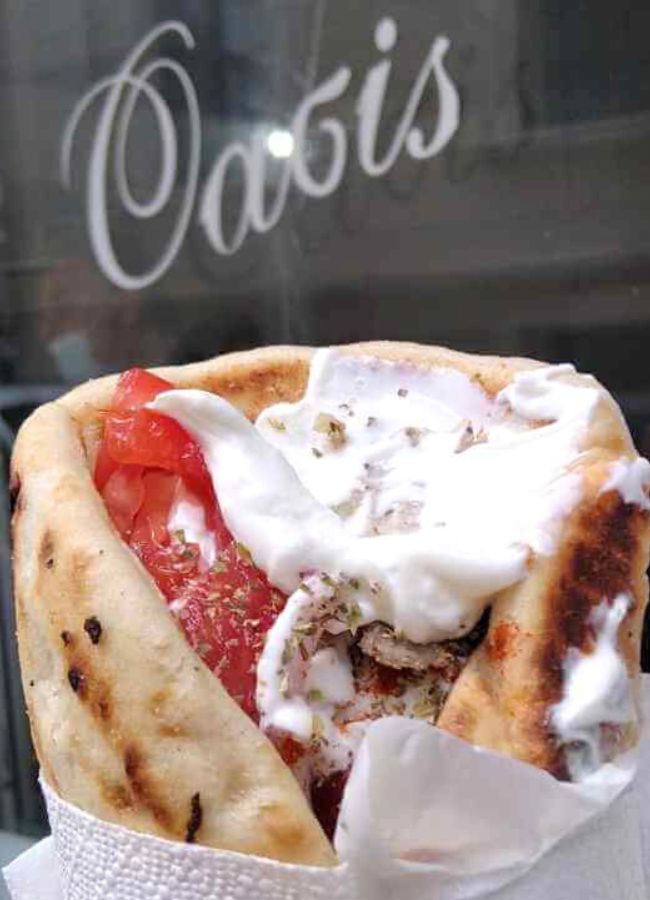
Afternoon: Wander Through Topanas District
This picturesque area showcases elegant Venetian mansions, charming churches, and fortified walls. Topanas, once home to Venetian elites, later became a Christian enclave under Ottoman rule. Topanas on the western edge of Chania’s Old Town, offers a blend of Venetian and Ottoman architecture, reflecting the city’s long and layered history.

In fact, during the Venetian period (13th-17th centuries), Topanas was the area where the wealthier Venetian elite lived, especially during the first 200 years of Venetian domination, and today, it is still possible to see many of the ancient Venetian palaces, large homes, and beautiful mansions.
The quarter got its name from the Turkish term tophane, or arsenal, as at the end of Theotokopoulou Street, the road that defines the western limit of the old town, there used to be an ammunition warehouse, parts of which are still visible today.
The area was well-fortified, as it was also home to military and naval officials who played a key role in defending Chania from external threats. When the Ottomans took control in the 17th century, Topanas became a hub for the Christian population, while the Turks settled in the eastern part of the city, mainly in the quarters of Kastelli and Splantzia.

The Topanas district is known for its Mannerist-style mansions and intricate Ottoman influences. The buildings are a testament to the blending of cultures in Chania, where Venetian and Ottoman architectural styles coexist beautifully.
- Notable Features: Look for Venetian stonework, grand doorways, arched windows, and tiled rooftops. The wooden balconies, typical of Ottoman-era architecture, are especially striking in this district.
- Cultural Evolution: When Chania fell to the Ottomans, many parts of the district were repurposed for different uses, including houses becoming mosques, and monasteries being used for different religious services. The neighborhood continued to evolve, and after Crete became part of Greece, the district housed various foreign consulates and embassies. This diverse history gives Topanas a rich cultural atmosphere and a sense of depth that is palpable when walking through its streets.
Today, Topanas is known for its historic boutique hotels, many of which are housed in beautifully restored buildings.
Evening: Sunset by the Venetian Harbor
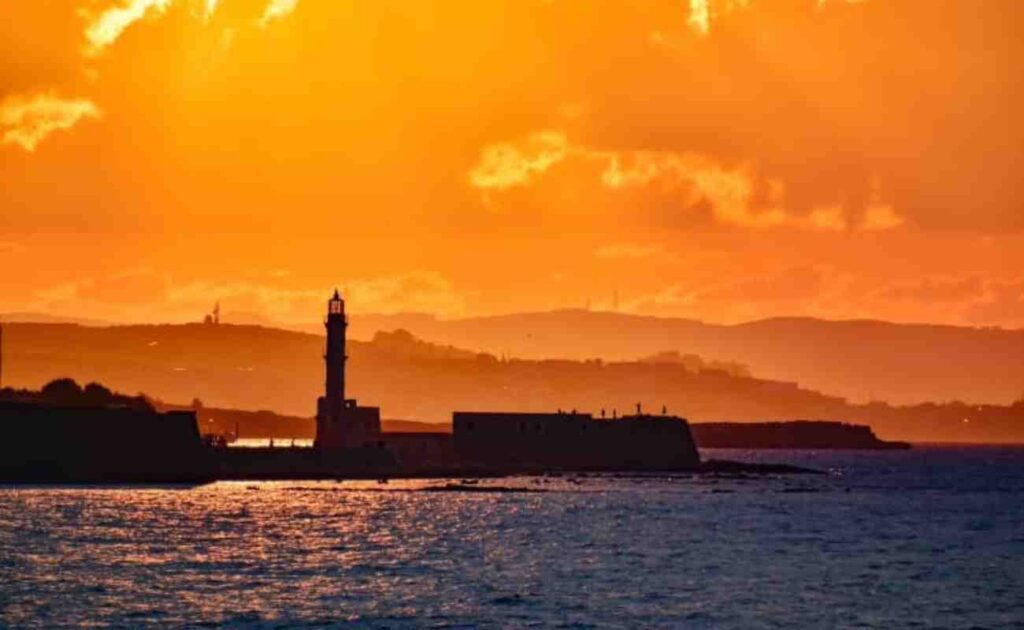
End your day with a romantic sunset by the Egyptian Lighthouse, one of the most iconic and historic landmarks of the city, standing proudly at the entrance of the Venetian Harbor. The Egyptian Lighthouse is one of the oldest lighthouses in the world, with parts of its structure dating back over 400 years.
Built by the Venetians in the 16th century, over the years, the lighthouse has undergone multiple restorations, the most significant being in the 19th century by the Egyptians during Egypt’s brief rule on the island when the structure got its characteristic minaret-inspired design that adds an exotic twist to the harbors.
Dinner Recommendation: Treat yourself at Chrisostomo, a local restaurant known for its innovative take on traditional Cretan dishes.
Day 2: Hidden gems
Morning: Historical and Cultural Gems
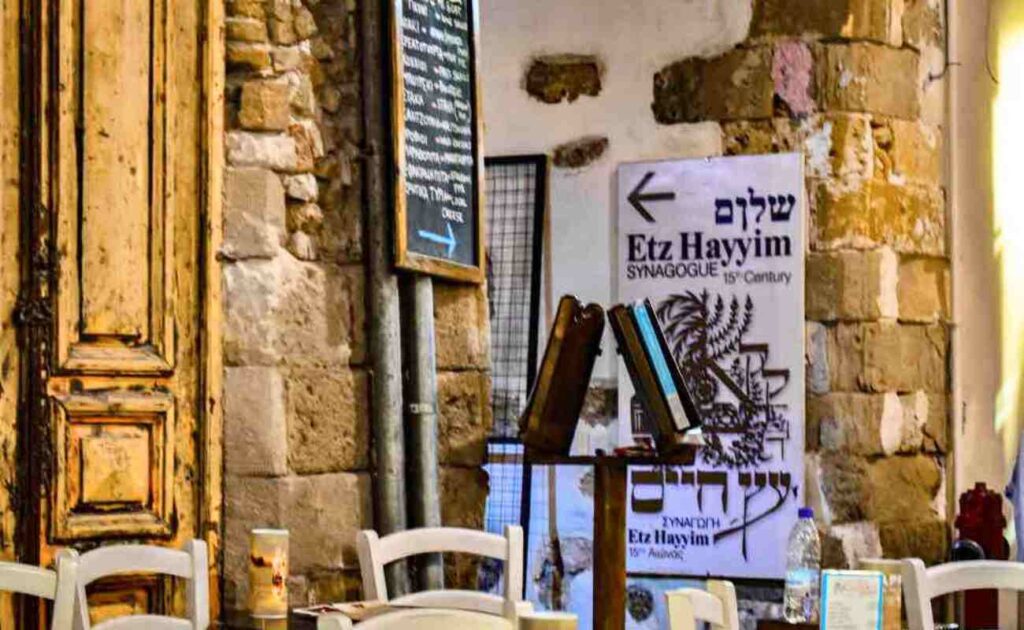
Kondilaki Street was the center of the Chania’s once-thriving Jewish community. Also known as Zudecca or Ebraiki, this neighborhood was home to a flourishing Romaniote community that lived in town for centuries. On a small parallel alley (Parodos Kondilaki), you can also visit Crete’s only and last-standing Synagogue built in a former Venetian church from the 15th century.
The building, which functioned as a Catholic church during the Venetian times, was handed to the Jewish community during the Ottoman times, and it became one of the two synagogues in the city. The other one, which was bigger and belonged to the Sefardi community, was destroyed during the Nazi bombing of the city in 1941. I’ve written a lot more about Etz Hayim Synagogue here.

From there, head to the Folklore Museum of Chania, located in the courtyard of the Catholic church on Halidon Street. This museum offers a deep dive into the island’s rural traditions, showcasing tools, crafts, and household items from the 18th and 19th centuries.
If time allows, take a short drive (or a taxi) and visit the new Archaeological Museum of Chania in Halepa for an impressive collection of artifacts from the ancient Minoan Kydonia to the Byzantine era, offering a comprehensive look at Crete’s past.
Lunch: Taste Authentic Crete
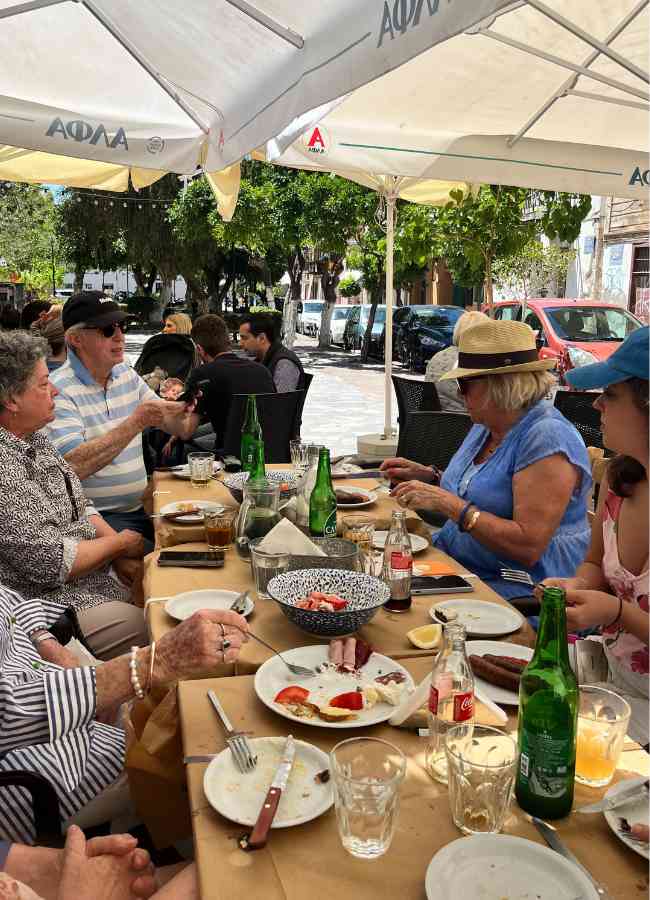
For a more leisurely meal, avoid the old harbor and visit a restaurant in the Splantzia neighborhood. You can enjoy a round of local mezedes at the old 1821 Square or visit the nearby Bourbos Kafenio, one of the most beloved places in town for local dishes and affordable prices.

Afternoon: Shop and Stroll in Stivanadika
Visit Skridlof Street, known for handmade leather goods. Look for authentic local craftsmanship in leather boots, bags, and wallets. Look for authentic Cretan craftsmanship, identifiable by its rustic leather and natural colors. This can become a great opportunity to purchase a souvenir to take back with you and get in touch with the local artisans.
You can also explore the nearby Road of the Knives (Maxairadika) on Sifaka Street and venture in the old-fashioned alleys of the Splantzia quarter, the former Turkish district in town.

Evening: Wrap Up in Style
Return to the Venetian Harbor for a relaxed evening. Watch the boats gently sway, walk along the seafront and, when it’s time for dinner, choose a seaside restaurant near the Marina. Soe of my favorite places to dine in the area include:
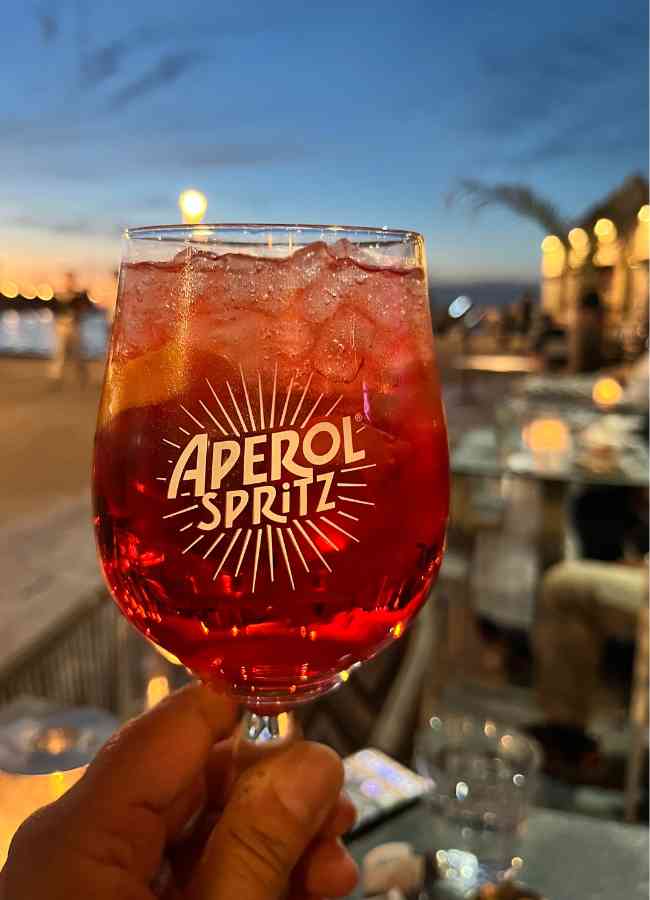
- Pallas
- Almyvita
- Señal
- Chania Sailing Club
Extra time in Chania?
If the city captures your attention, or you have a few more hours to spend in town, it will be easy to find more things to do. My suggestion would be to rent a car and explore some of the region. These are some of the alternative itineraries you can pick:
In town

Start the day with a Cretan breakfast at Aroma, at the old port. Then, walk east until you reach the city beach of Koum Kapi to spend the morning. Read this for more beaches near the old town.
On Sifaka Street, check the last remaining bladesmiths. Wander along the alleys of Splantzia, the Turkish quarter, and stop for a quick lunch in 1821 Square.
Head back to Koum Kapi and keep walking east by the sea until you arrive in Tabakaria, the quarter of the abandoned tanneries. This is a great spot to see a different side of the city skyline, especially at sunset.
For foodies
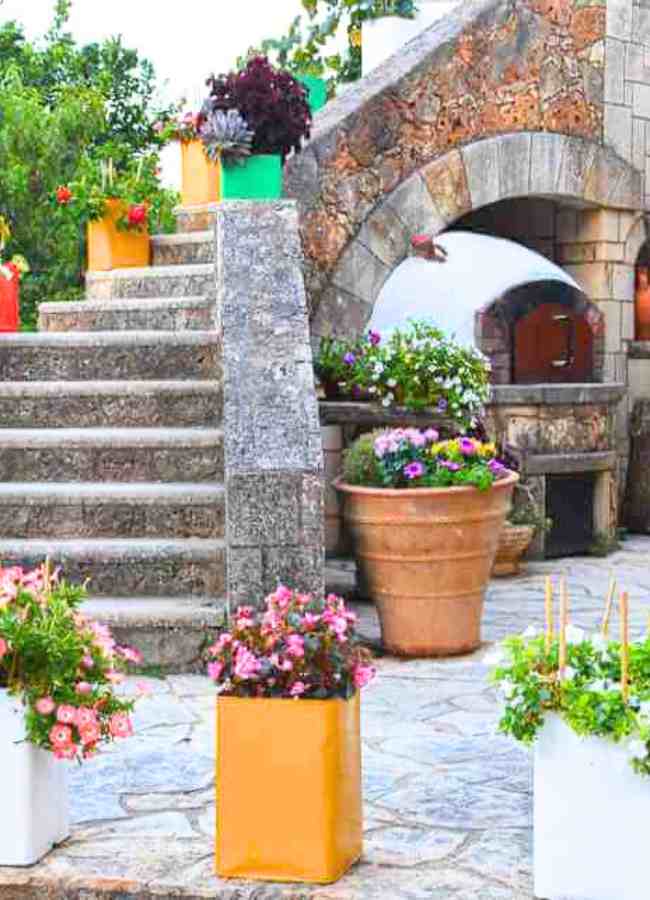
- The Botanical Park & Gardens of Crete is a great place to start the day. You can check the gardens, vineyards, and endemic plants. Stop at their restaurant for a treat before lunch.
- Reach the area of Therisos and drive through the gorge until you reach the village. Therisso played a vital role during the island’s fight for freedom. Stop for lunch in the village.
- Enjoy the sunset from the vineyards of Manousakis Winery, not far from Therisso. You will learn about grapes and wines of Crete.
Chania beaches

- Leave Chania early in the morning to reach Kissamos. Once there, you can venture on the dirt road that takes you to the spectacular Balos Beach and Lagoon, where you can spend either the morning or the whole day.
- It’s not impossible to squeeze in another excellent beach today. Falasarna is about an hour (or less) away from Balos and has a magnificent beach for water sports. Besides, Falassarna is also the place with the best sunsets on Crete.
- If there’s a place on Crete that combines excellent food and great views, it’s Taverna Spilios, overlooking the bay of Falassarna. You can spend a wonderful evening before returning to Chania.
Here’s my review of the restaurant.
Chania for adventure

- Hiking the Samaria Gorge (about 13 km) can take 4 to 7 hours, and it’s one of the most rewarding outdoor activities in Chania. If you prefer an easier hike, check out Imbros Gorge.
- At the end of the walk, head to Chora Sfakion and spend time in Loutro, one of the most enchanting fishing villages on southern Crete.
- Alterntaively, you can skipe Imbros Gorge and drive to Chora Sfakion where you can walk part of the E4 path to get to Loutro.
Chania for families

- Start early in the morning and head to the Akrotiri Peninsula. Your kids can swim on the safe beaches of Stavros Kalathas.
- At sunset, visit Venizelos’ Graves on a hill overlooking the old port of Chania. Kids can play in the park and even discover an abandoned statue.
- You can treat them with cake in the nearby cafe, Koukouvaia, or go for dinner with a view at Carte Postale in the same area.
Practical details to Spend swo days in Chania
- Check this guide to find accommodation in Chania if you’re still uncertain about where to stay on the island or decide to spend more time in Chania.
- How to Reach Chania Airport: The local bus company of Chania (KTEL) connects the city with Chania International Airport – Giannis Daskalogiannis – with a regular bus service. The bus departs opposite the arrivals-departures building. The ticket is €2.5.
- Souda Port is the commercial harbor serving the city of Chania. It gets daily arrivals from Athens and a number of cruise ships docking during the high season. You can reach Chania town by catching the local bus or by taxi. Depending on the traffic and the hour of the day, the trip can last from 15 to 30 minutes.
- The bus from the city center to the port departs from Central Market Square every 20 minutes (it runs from 6 am to 11 pm). The bus connecting Chania to Rethymnon and Heraklion also stops at Souda port. So you can catch that bus. Check prices and schedule here.

In just two days, Chania offers an unforgettable mix of history, culture, and culinary delights. You can explore its iconic harbor, taste authentic Cretan flavors, or spend time discovering its incredible architecture alonf the narrow, romantic alleys.
Planning a Crete itinerary that actually works
Because Crete is so large, planning a realistic route can make the difference between a relaxed trip and spending hours every day in the car.
If you’re unsure how to organize your itinerary, which regions to combine, or where to stay to minimize driving, you might find it helpful to start with a customized plan.
If you want help designing a realistic itinerary — including the best base towns, driving routes, and hidden places most visitors miss — you can book a Crete Trip Planning Consultation.
Book your consultation here

Are you visiting Crete Soon?
Join my Facebook group for more tips, or plan your Crete itinerary with me!
Pin for Later!
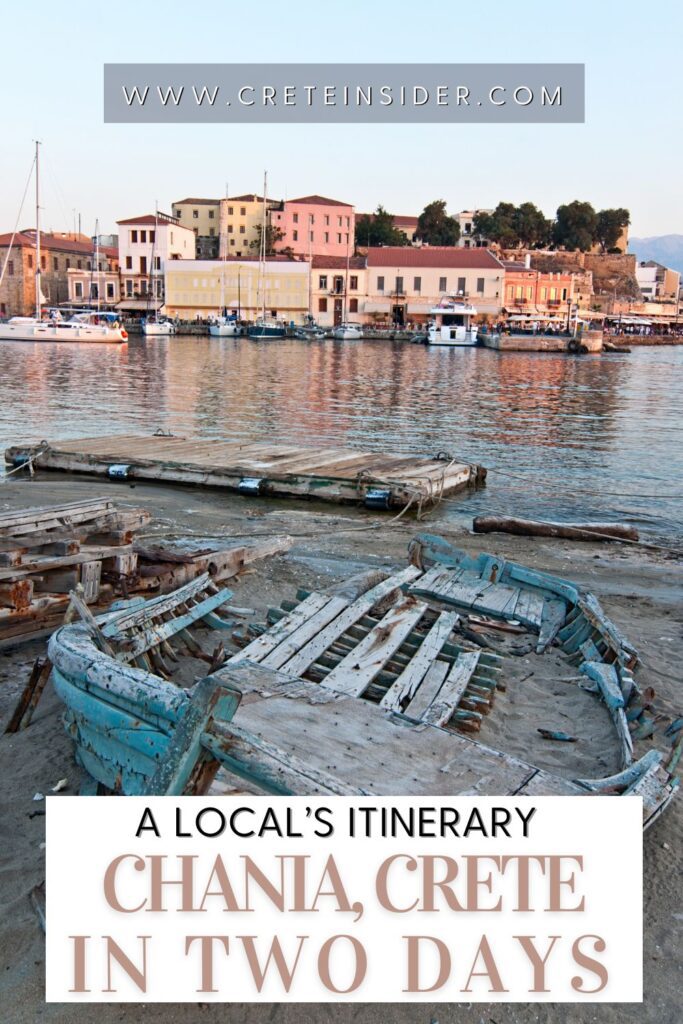
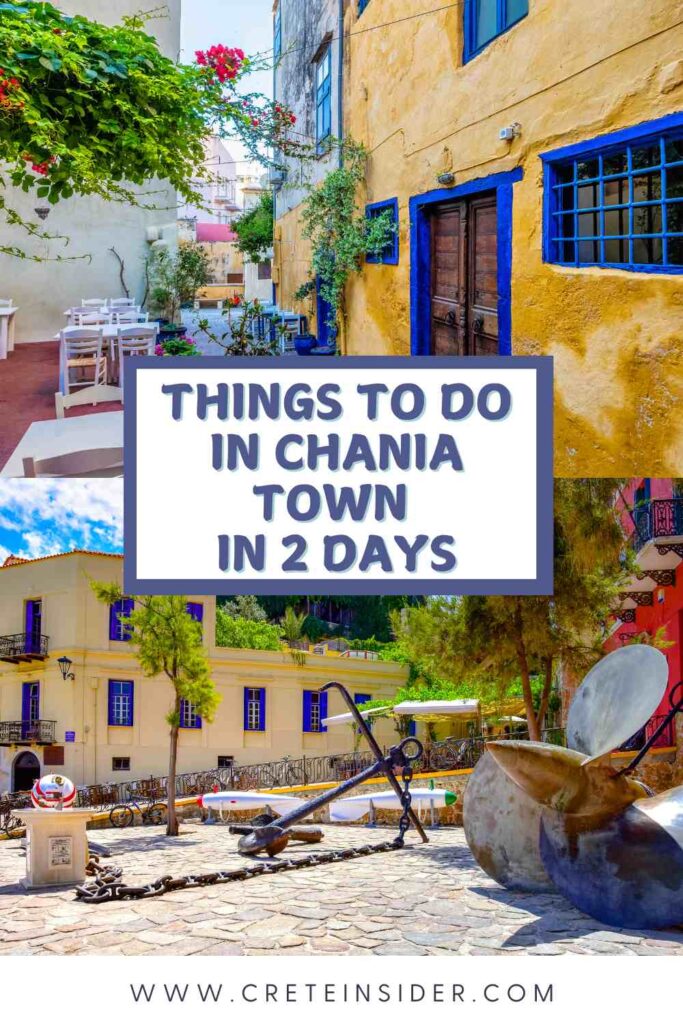
How to Spend 2 Days in Chania
Gabi, the Crete Insider
Hi, I’m Gabi — your go-to local expert in Crete! I’ve been living in Chania, Crete since 2016, and I’ve turned my love for the island into a full-time passion — guiding travelers, writing for travel media, and curating local experiences.
I co-authored DK Eyewitness Top 10 Crete and other guides. I run the blogs The Tiny Book, Greece Planner, and My Cretan Recipe. Through this platform I help travelers design unforgettable trips to Crete.
→ Book your 1:1 consultation with a local to plan your Crete escape
🚘 Trusted Car Rental in Crete
CAR RENTAL IN CRETE ~ Enjoy peace of mind by hiring a car from a local company. Rethymnon Cars offers excellent cars, full insurance with no excess, no credit card deposit, and no extras.


