
2 Days in Heraklion: Ideal 2-Day Itinerary to See the Best of Crete’s Capital!
What to Do in Heraklion in 2 days. Check out the city landmarks, the famous Koules, and the Morosini Fountain. Visit the best restaurants in Heraklion or head to the nearby beaches. This local’s guide tells you the best things to do in Heraklion in two days.
📍 Must-do: Balos Cruise 📍 Knossos Palace 📍 Check rental car rates for Crete 🚗
Are you heading to Crete and have 2 days to spend in Heraklion? There is more to do than you expect in Crete’s capital. Known as the main gate to Crete, Heraklion is one of those cities that visitors usually discard too fast from their itinerary, preferring more popular destinations.
However, Heraklion has a lot to offer. Not sure? Let me show you some of the best things you can do if you are planning to spend 2 days in Heraklion.
2 days in Heraklion: A fantastic city break in Crete’s capital
Heraklion has been recently choosen as one of the most popular European destination for a city break. Crete’s capital is easy to reach by plane from other European cities, and there’s always plenty to see and do no matter the season. Yes, a lot more than just visiting the archaeological site of Knossos.
If you plan to spend a weekend in Crete’s capital, you’ll find activities, fantastic gastronomy, unique architecture, and great day trips, that are also fantastic even for a short stay.
Instead, if you’re in the city for a layover or simply have 1 day in Heraklion, choose some of the ideas from this itinerary or read this one-day in Heraklion itinerary.
Day 1
Morning – Unmissable things to do in the city of Heraklion
There’re three must-do things you cannot skip even during a short visit to town, let’s see them one by one.
Start by heading to Lions Square where you can admire the ancient Venetian Morosini Fountain and sit at Kirkor, a traditional cafeteria opposite the fountain to try Cretan Bougatsa. The best way to start – or even end – your day in Heraklion is with a bite of a traditional local taste.
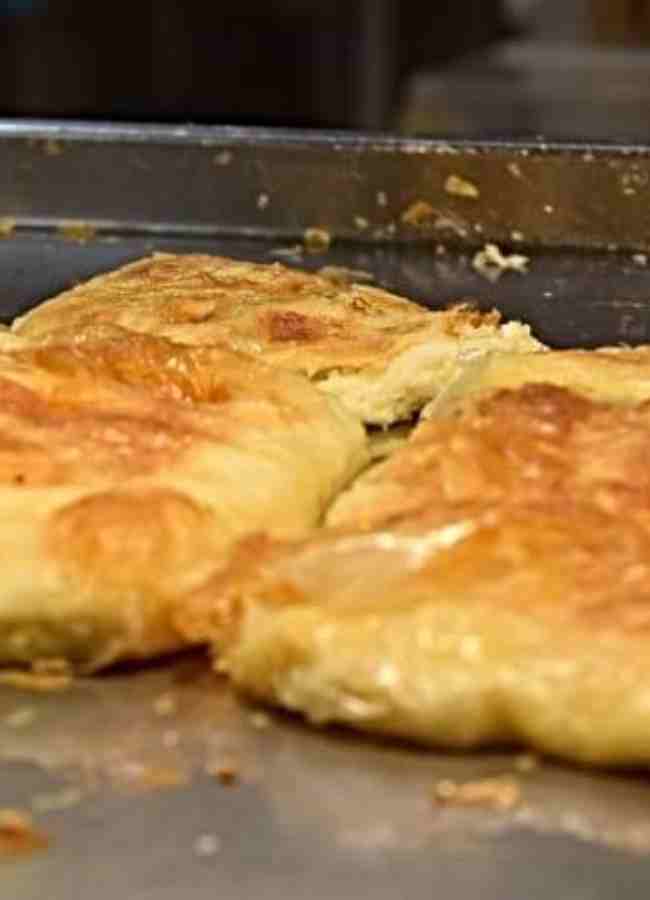
Bougatsa is part of Crete’s landmark breakfast and only a few places on the island know the art of this pie. This Greek phyllo pastry, usually stuffed with custard in the rest of Greece, acquires an original twist on the island due to the filling of local myzithra cheese. Much better if paired with Cretan thyme honey.
Heraklion’s Kirkor is the most famous place on the island to savor this dish, competing only with Chania’s Iordanis and Bougatsa Xanion, two other well-known bougatsa artisans in western Crete.
ℹ️ USEFUL INFO
→ Kirkor is in Plateia E. Venizelos 31.

After breakfast in Kirkor, remain in the area to visit some of the city landmarks. Opposite Kirkor, you will see the famous Morosini Fountain, known also as Liontaria. This beautiful square is simply the best place to start exploring the capital of Crete.
The area is also known as Morosini Fountain, The Lions Square, or simply The Lions. The area dates back to the Venetian times when it was known as Grain Square or Piazza delle Biade.
This 1628 Venetian Fontana was more than a decorative fountain. It was Heraklion’s source of drinking water, coming to the city from Archanes, in Mount Juktas. The water reached the fountain through an underground aqueduct about 15 km long. The altitude difference between Heraklion and Archanes made water flow naturally out of the mouths of the lions.
🧘♀️ Want a Trip That Flows Smoothly?
No more guesswork. Let a local guide help you plan a relaxing, meaningful journey through Crete’s landscapes, flavors, and culture.
🌿 Get a Personalized PlanWell-preserved and still gushing water from the four lions, the fountain counts eight lobes from where people could fill their jars. The landmark is decorated with mythical water beings and Venetian coats of arms.
Every day and night, no matter the season, the Square is the most vibrant place to be, both for locals and visitors.
Only a few meters from the square, the Venetian Loggia is another landmark and remarkable building on 25th of August Street. The building is a fine monument in the style of Palladio and a legacy of Crete’s Venetian past.

Also built by Francesco Morosini, the Loggia dates back to 1628. A meeting place for nobles and rulers, this building combines Doric and Ionian styles with unique elegance.
Two more landmarks you can visit close to the Loggia are Saint Mark’s Basilica and the Church of Agios Titos.
Saint Mark’s is a former basilica and another example of Venetian architecture, now hosting Heraklion’s Art Gallery. A few steps towards the sea, you can explore the spectacular church of Agios Titos, one of Crete’s most important religious buildings, originally dating back to the Second Byzantine Empire (about 961 A.D.).
It’s, in fact, one of Crete’s oldest churches although it underwent renovation in 1925. Inside, check the impressive stained glass windows that, on sunny days, color the interior of the building.
As many other religious buildings on the island, the basilica was made into a mosque during the Ottoman occupation of Crete and its bell tower transformed into a minaret. The local population tore the minaret down after Crete got rid of the Ottoman rule.
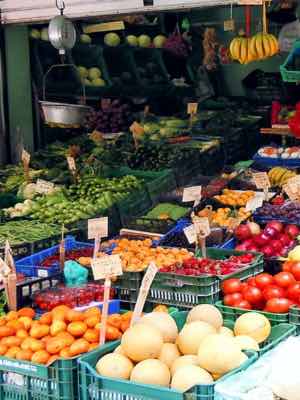
Next up, don’t miss 1866 Street, home to Heraklion’s famous open market. Here, you can try the best of the local produce or buy a few gastronomic souvenirs, such as olive oil or spices. Sit at a local café and savor a cup of authentic Greek coffee.
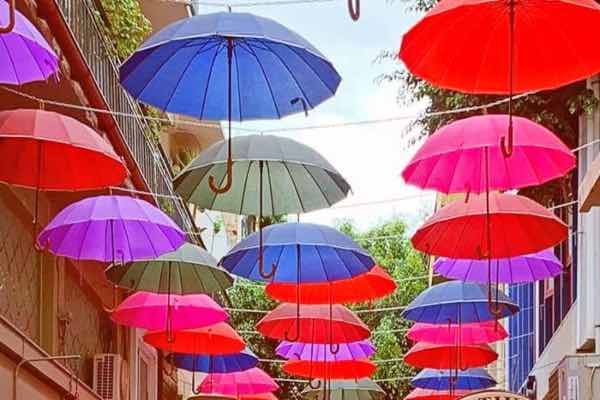
A few roads away, 1821 Street (to the right of the market), is another lane that you shouldn’t miss. The place has recently been decorated with colorful umbrellas, which makes it one of the most
If you’re interested in the old Venetian rule of Crete, the Old Port of Heraklion is another landmark you will enjoy visiting. At the entrance of the port, devote an hour to explore the Venetian Fortress, known as Koules (in Turkish) or Rocca a Mare, (in Italian).

The building was erected during the 16th century by the Republic of Venice and it’s open to the public. When you visit, check out the rooms housing ammunition and explore the roofs for a beautiful view of the Cretan Sea.
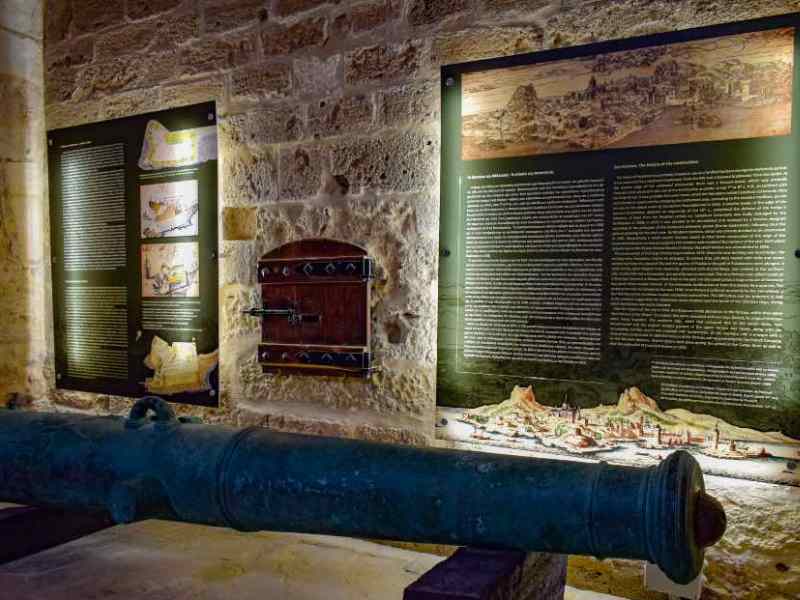
The square building boasts thick defensive walls and an entrance heavily protected by different wooden doors. Look up to admire the remarkable Saint Mark’s Lion.
The entrance fee is €2 and the building is open from 8 a.m. to 7 p.m. in summer (8 a.m. to 6 p.m. in winter) – Keep in mind that the closing hours vary in the shoulder season (September-October). The fortress is closed on Tuesdays. Check here for a detailed timetable.
Day 2
Skyline and traditions from Heraklion

On your second day, you can explore the city’s landscape by visiting a few key places. One of Crete’s most famous figures is Nikos Kazantzaki. He was the author of many books that define the Cretan character and portray every weakness and strength of human beings. His most famous work is probably Alexander Zorbas, which inspired the famous movie, Zorba the Greek.
The author was nominated for the Nobel Prize in Literature on nine different occasions. He was also a prolific travel writer and translator. Kazantzakis also wrote more controversial books, such as The Last Temptation of Christ, which led to his ex-communication back in 1955.
When he passed away in 1957, his funeral took place in Agios Minas cathedral, while – at the same time – religious fanatics were burning his books out of the church.
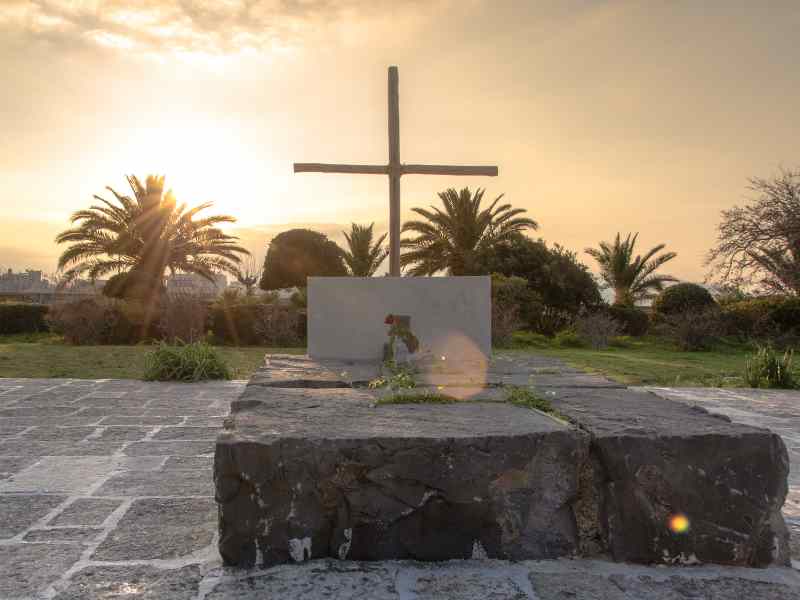
If you want to visit the grave of Nikos Kazantzakis, reach the top of Martinengo Bastion, the highest point of the Heraklion’s Walls. You will get an impressive birdseye view of the fourth largest city in Greece.
From here, it’s also possible to see the skyline of Crete, including the Pankritiko Stadium, the dome and bell towers of Agios Minas Cathedral (1862-1895), the seat of the Archbishop of Crete.
Kazantzakis’ grave is a famous place in the city, there are just a simple wooden cross and a gravestone with the well-known phrase I hope for nothing. I fear nothing. I’m free (Δεν ελπίζω τίποτα. Δε φοβούμαι τίποτα. Είμαι λέφτερος).
If you prefer to explore a more bohemian side to the city, then Lakkos neighborhood is an old district where you can take a look at the most authentic side of Heraklion.
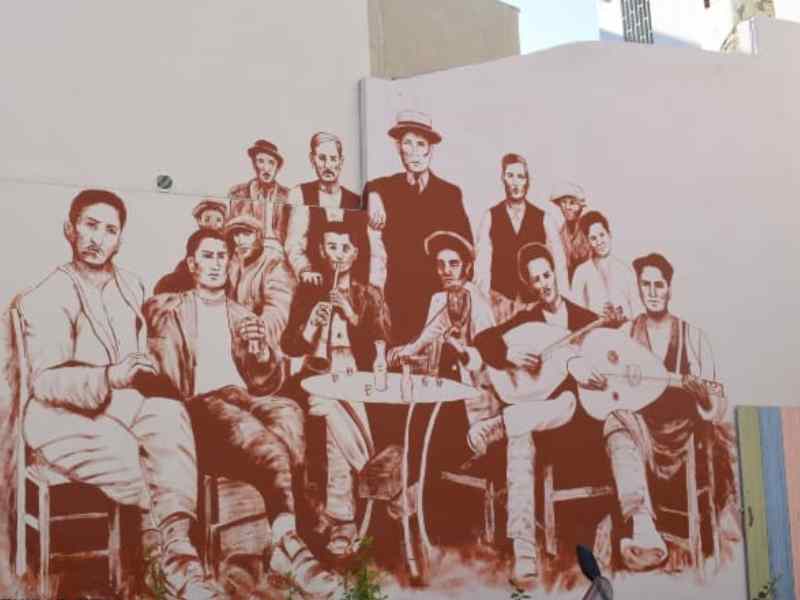
Lakkos is a fantastic place to totally immerse into the real Heraklion atmosphere. The area, which has gone through a remarkable requalification process in recent times, used to be Heraklion’s underground neighborhood in the previous century.
Lakkos was the place that would
A decree dating back to 1900 established that brothels were to be established in isolated areas, so Lakkos was the place designed for the Christian brothels (the Turkish ones were confined to a different area).
In Lakkos, hashish, raki, and crime were the norm, but also rebetiko music and bohemian artists. It was home to prostitutes, criminals, and pimps, representing everything that the (at that time) snobbish Heraklion society would despise.
During the population exchange between Greece and Turkey (the 1920s), Lakkos received many refugees from Asia Minor, a bit like Splantzia, in Chania. This helped the area to turn into a place for outcasts.
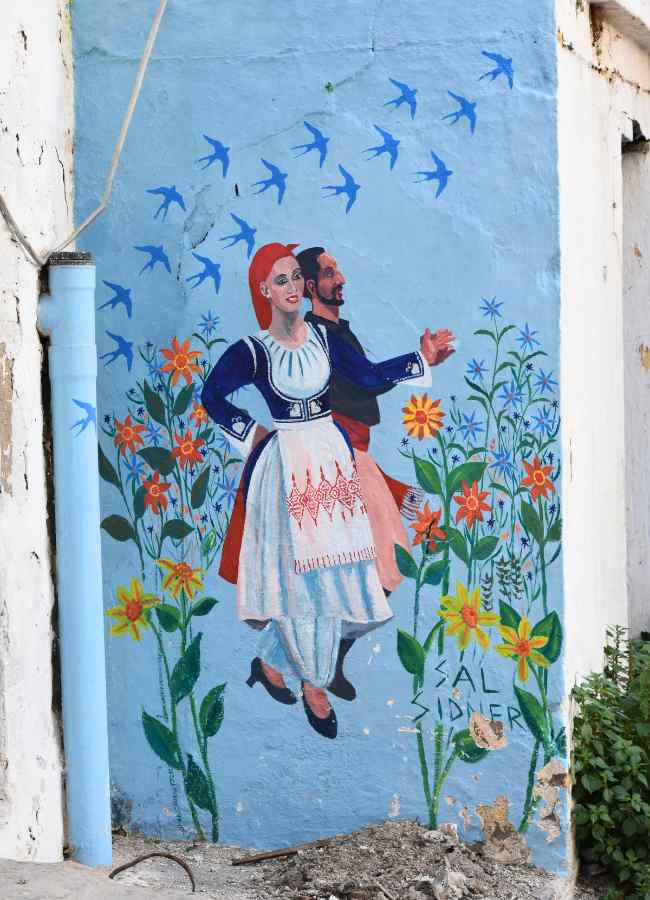
After World War II, during the Nazi occupation, Lakkos’ prostitutes were transferred to a central hotel to attend to the needs of German soldiers. And, little by little, the district was abandoned.
Today, and thanks to the Lakkos Project, the district has become a fantastic place to hang out. Many cafés and tavernas managed to preserve the local mystic atmosphere. Besides, the walls of many abandoned houses are a fantastic canvas for local graffiti.
Stop in Lakkos for an afternoon appetizer and a glass of Cretan beer before heading back to town for dinner.
Where to eat in Heraklion

Nothing better than ending the day with authentic Cretan dishes. As most visitors to the city, you might want to have dinner in Peskesi, one of Crete’s best-known restaurants, known for serving traditional Cretan food in an ancient townhouse of Heraklion.
The building, which was mentioned in one of Kazantzakis’ books, has dreamy open areas for dinner with aromatic herbs and pleasant decorations.
Their wine list highlights some of Crete’s best vineyards, and the dishes are superb. It’s a bit on the expensive side, but you won’t regret it. Be aware that you might need to book in advance.
If you want to remain on the traditional side of Cretan gastronomy, spending less but enjoying great food, try my personal favorite. The Kafenio O Tempelis is on
O Tempelis serves delicious Greek tapas. My favorite dishes are mushrooms saganaki, baked potatoes, and dakos. They also have great salads and fried fish. Prices are super convenient.
It would be a pity to visit Crete and choose ethnic food over local. However, you can do so as well. If you find yourself in the area of Liontaria, craving some Mexican, German, or Oriental food, walk along Chandakos Street.
Finally, for some typical Greek street food, such as gyros, souvlaki, or a juicy piece of grilled meat, no place beats Krasás in Plateia Eleftherias (Heraklion’s main square).
ℹ️ USEFUL INFO
→ If you’re about to board your plane, there’s a second Krasás in Nea Alikarnassos close to the airport.
Extra time in Heraklion?
If your stay extends a few more days, I suggest including one of the following alternative itineraries. You can rent a car to avoid relying on public transportation (which can be overcrowded in summer) and explore a lot more.
Hersonissos
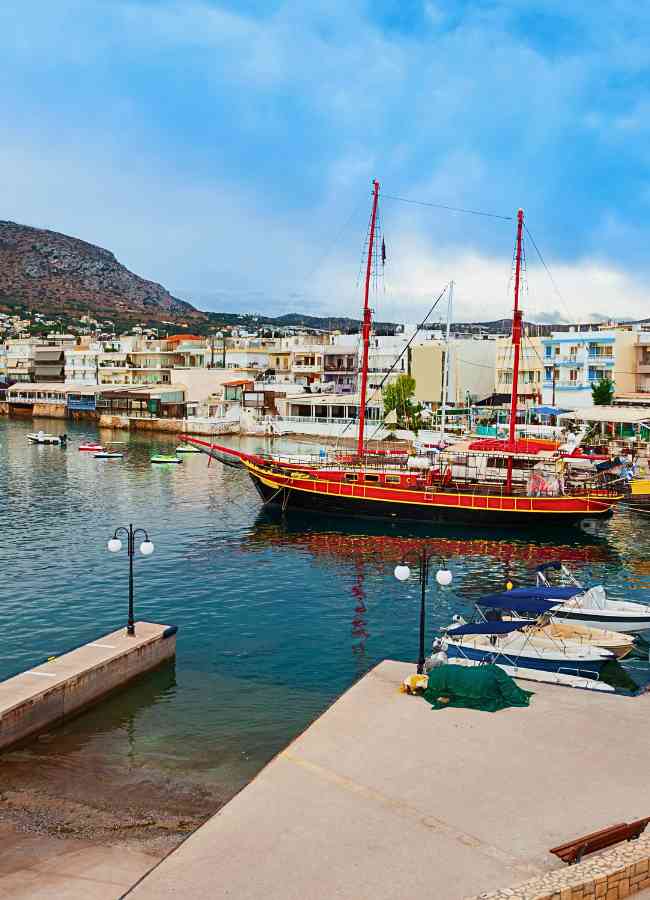
One of the most popular spots in Crete is Hersonissos (also spelled Chersonisos). This seaside resort is less than 30 km from Heraklion and caters to entertaining holidays, beach life, and cheap alcohol. However, Hersonissos is the place to be for many Europeans.
Noisy videogame arcades, crowded seaside restaurants, and not very original souvenir shops animate the village’s main road. It’s the place for package holidays, with all-inclusive seaside resorts for any pocket. Not a very authentic atmosphere. Hersonissos is my least favorite place in Crete but it’s favored by mass tourism. I can’t help it, but when I think about Crete, Hersonissos is not in the picture.
In the afternoon, you can visit the more picturesque Koutouloufari, overlooking Hersonissos. This traditional settlement rests on the slope of Mount Pyrgia (100 meters a.s.l.), a few hundred meters from Hersonissos main road.
Koutouloufari is a quaint little town with traditional Cretan architecture. It features limestone houses and cobblestone alleys. In the village, you can visit the Agios Vasilios church (from 1840). Picturesque tavernas offer great appetizers and a panoramic view of Hersonissos Bay.

For foodies
One of the best things you can do in Heraklion is drive through the wine region of Peza and visit some of the local wineries. Heraklion is the most important wine region of Crete, with 13 different unique grape varieties growing only in Crete, and outstanding production of remarkable quality.
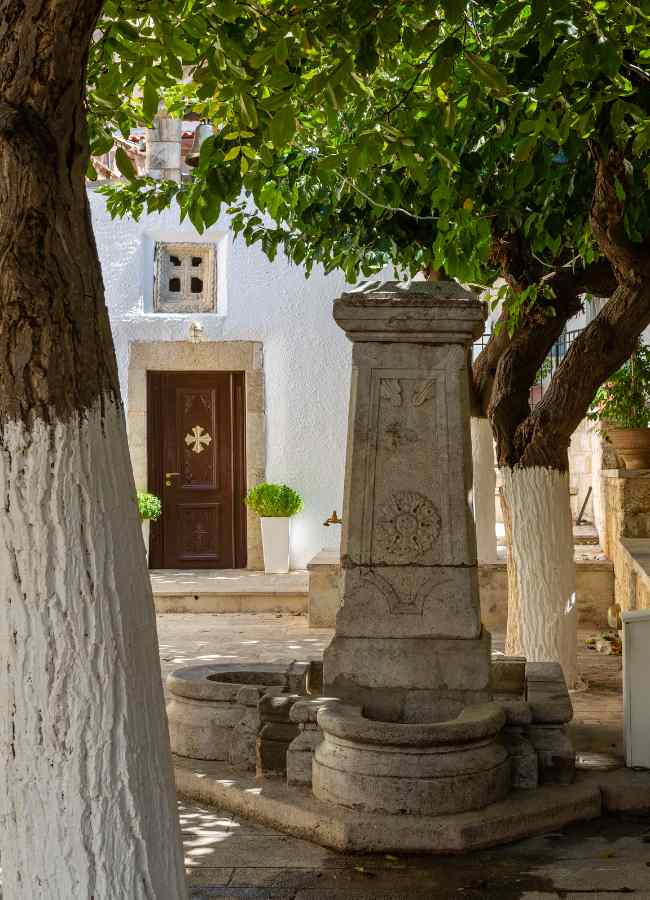
You can visit different wineries, including Lyrarakis Winery, one of the best-known ones in Crete, or Fragospito, a boutique family experience. I can also recommend you to visit Minos-Miliarakis and Silva Daskalaki, two of the best wine producers in Crete.
Your itinerary should also include a visit to Archanes. This is a gorgeous traditional village less than 15 kilometers from Heraklion that was restored with the aid of European and private funds.
In the settlement, it’s also possible to visit their museum, explore the surrounding green fields, and enjoy the local hospitality. There are several other incredible villages in this wine region. Most wineries offer lunch or appetizers, but local tavernas shouldn’t be overlooked.
In the village of Kyparissi, about half an hour from the city center, Yannis’ Taverna is a place that ticks every box for food, wine, and a unique atmosphere. The place lacks electricity, so you will eat strictly in a candlelight dim-lit dining room, surrounded by fragrant house wine barrels and Cretan music.
Beach Itinerary
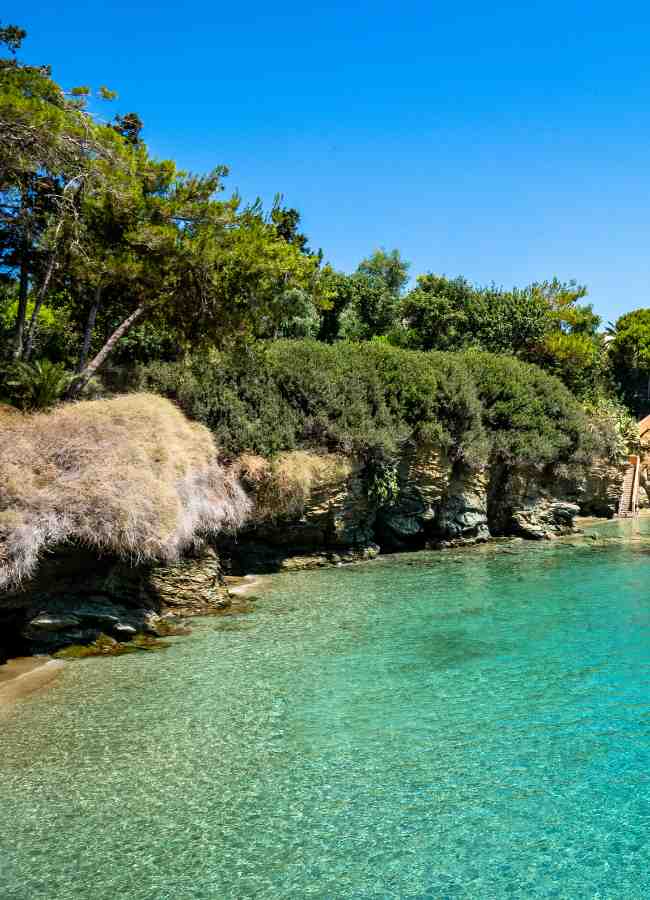
One of the most popular beaches in the area of Heraklion is definitely Agia Pelagia.
A few summers ago, I rented a small house up in the mountains in the village of Rogdia where I enjoyed a few days with the kids. The peaceful village is just a few minutes away from Agia Pelagia, which became the place to go every day after lunch.
Agia Pelagia is a tranquil fishing village made of different bays, more or less crowded. The shores are perfect for lazy afternoons by the beach, water sports, and sailing.
One of my favorite beaches is a relatively small pebbled beach, Psaromoura. Here, my kids enjoyed SUP surfing and kayaking, while the whole family went on a fantastic boat trip to visit nearby beaches only accessible by boat.
If you have some more time, it’s also a good idea to visit the nearby village of Fodele.
There’s an incredibly beautiful sandy bay ideal for swimming, thanks to its protected position, but it’s also a good idea to visit the village. It’s in the middle of orange groves, with fantastic craft shops, traditional tavernas for a lunch break, and old churches.

Once in Fodele, check out the Byzantine Church of the Panagia, dating back to the 11th century. The magnificent building is located about 1 km past the village, surrounded by orange trees, the characteristic fruit of Fodele.
The church stands on the foundations of a former Early Christian Church of the 6th century. Inside it’s possible to see beautiful frescoes and an ancient marble floor.
The church is in a somewhat high position, and you can spot it even from the road that leads to the village.
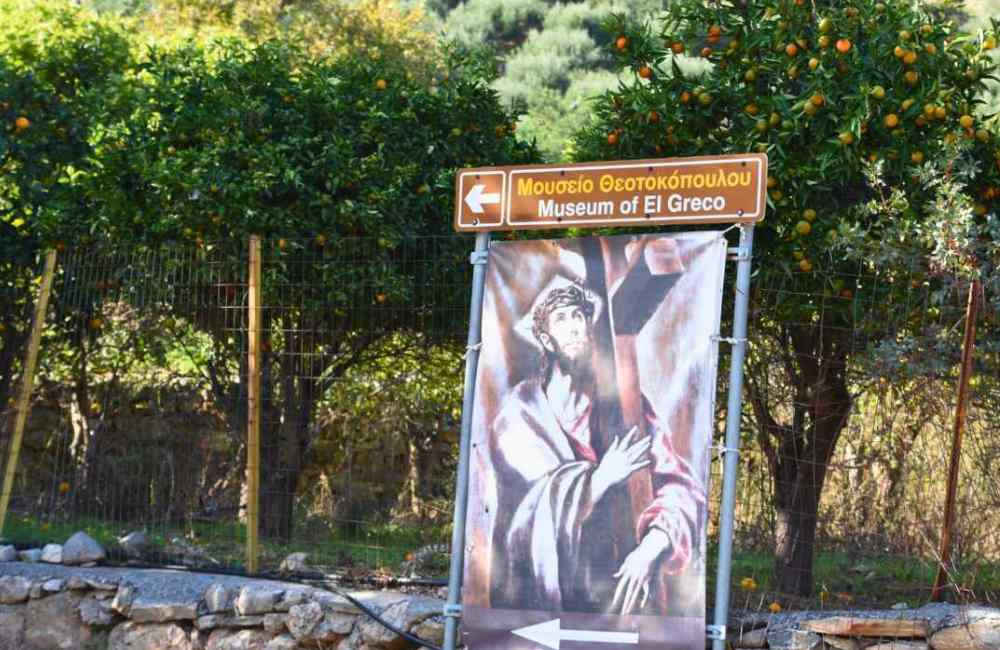
Always in Fodele, visit El Greco Museum, meters after the Church of the Panagia. Locals claim that Domenikos Theotokopolous El Greco, the important mannerist painter, was originally born in Fodele (1541). Later in life moved to Italy and then established and died in Spain.
ℹ️ USEFUL INFO
→ El Greco Museum opens daily, from 9.00 to 19.00 (from April until the end of October), and the entrance fee is 2.00 € for adults. Kids enter for free.
In the nearby area, you can hike to the fortress Paleokastro of Malevizio, a triangular castle still featuring its original walls. Despite being known as a Venetian building, it was initially built in 1206 by the Genoans.
Classic Heraklion

Knossos Palace is a classic destination when visiting Heraklion. The same goes for Heraklion’s Archaeological Museum. In fact, a combined visit to both places remains the most remarkable reason why people decide to stop in Heraklion for a day (or sometimes two).
The Archaeological Site of Knossos is about 15 minutes by bus from the town center. It’s also one of the most visited places in Greece.
→ Head to this post to find out how to get from the city center to Knossos.
You can visit with a guide or on your own. If you visit the place independently, I suggest getting a guidebook at the entrance or checking out my self-guided tour of Knossos.
→ Head to this post with downloadable activities if you are visiting Knossos with kids.
ℹ️ USEFUL INFO
→ Opening hours & closing dates
Winter (Nov – March) 8 am – 5 pm (Last admission at 16:45)
Summer (April – Oct) 8 am – 8 pm (Last admission at 19:45)
Tickets: Enquiry about combined passes with access to the Archaeological Museum of Heraklion
More info: Check out the official website here.
In the afternoon, you can devote a couple of hours to the Archaeological Museum. It will provide all the necessary background to understand better what you saw inside the Palace. A guided visit to the museum is something a bit more personal than a massive guided tour of the archaeological site.
Besides, it’s easier to ask as many questions as you want. I personally recommend this guided visit. The entrance fee is €15. With just one more euro, you can also visit the Archaeological site. The combined ticket lasts three days, so you don’t need to rush around. Excellent value for money.

Buying souvenirs in Heraklion
There are many shops for those souvenirs you want to take with you. Check the shops in the area of the Archaeological Museum for art replicas, trendy t-shirts, and alternative memories of Greece.

If you want to buy trendy clothing brands, cosmetics, shoes, and bags, try the shops on 25th August Street.
Bring home with you some local products such as spices and herbs, marmalades, liquors, and olive oil. Where to get all that? Try the biggest open market of Heraklion, on 1866 Street, or any of the smaller farmer’s markets around town.
Practical details to spend 2 days in Heraklion
- Check this guide to find the best hotels in Heraklion city. This other article offers a list with the best hotels in the region.
- If you prefer to stay in a modern city and on a budget, I suggest Sofia Hotel, a 3-star place to stay with a terrace and a pool.
- However, if you want something different, try accommodation in nearby areas. There are a few exciting budget places in Amoudara, one of the closest beaches to the city. This proves convenient if you’re looking for a seaside place still close to town
- As far as car rental concerns, you might want to read this Guide to car rental & driving in Crete.
Getting to Heraklion Airport
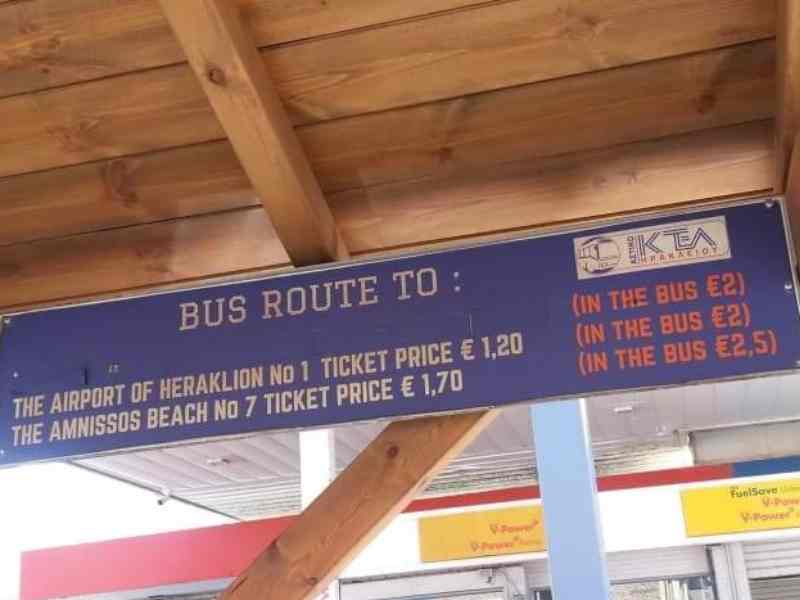
- Reach the new Bus Station of Heraklion, walk past it, and just around the corner, cross the street.
- At the gas station, you will see a wooden booth. This is where you take the bus to the Airport (Bus number 1). The bus from the airport to the city stops across the street.
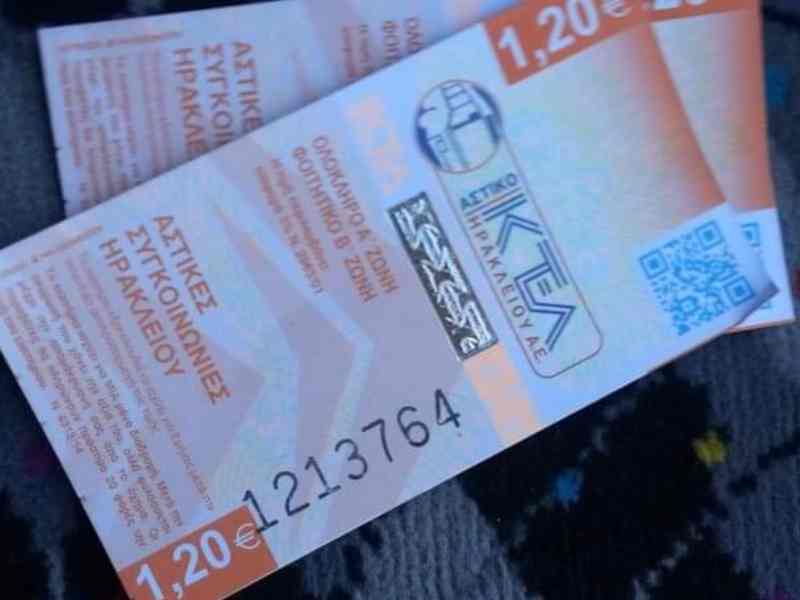
- Buy the ticket on the vending machine (or on the bus (for a small supplement).
- The ride takes from 10 to 15 minutes under normal traffic conditions. If you’re traveling with several bags or heavy luggage, riding a taxi or booking a private airport transfer might be wiser.
Arriving or departing by sea: The port of Heraklion
The Heraklion port is Greece’s third busiest port, so if you arrive or depart from here, prepare for some action. Crowds are not odd, so plan to arrive well ahead of departure.
Ferries leaving for Athens (Port of Piraeus) and others leaving for other Greek islands are mainly concentrated here (some ferries also depart from Chania). Some ships cover the route to Thessaloniki in northern Greece.
🌺 Discover the Best of Crete — Without the Overwhelm
Let a local help you plan a smooth, exciting itinerary that matches your vibe — whether it’s adventure, relaxation, or a bit of both.
✨ Book Your Custom Trip Plan
Are you visiting Crete Soon?
Join my Facebook group for more tips, or plan your Crete itinerary with me!
Pin for Later!
How to Spend 2 Days in Heraklion: Short Heraklion Itinerary
Gabi, the Crete Insider
Hi, I’m Gabi — your go-to local expert in Crete! I’ve been living in Chania, Crete since 2016, and I’ve turned my love for the island into a full-time passion — guiding travelers, writing for travel media, and curating local experiences.
I co-authored DK Eyewitness Top 10 Crete and other guides. I run the blogs The Tiny Book, Greece Planner, and My Cretan Recipe. Through this platform I help travelers design unforgettable trips to Crete.
→ Book your 1:1 consultation with a local to plan your Crete escape
🚘 Trusted Car Rental in Crete
CAR RENTAL IN CRETE ~ Enjoy peace of mind by hiring a car from a local company. Rethymnon Cars offers excellent cars, full insurance with no excess, no credit card deposit, and no extras.


