
Monasteries in Chania That You Will Love to Visit
How to visit the most important monasteries in Chania, including some of their history, practical information, opening hours, what to see and more.
Never too far from the sea and surrounded by the rugged mountains of Chania, the monasteries in west Crete invite you to step back in time and explore the profound influence of faith on the island. Each monastery is more than just a place of worship, they are living museums where to see Byzantine architecture, frescoes, and centuries-old manuscripts, but also a sample of different Cretan skills and traditions.
This article guides you to uncover some of the prettiest monasteries in Chania, either on the top of the mountains or by the sea. Bookmark this tips on what to see and what to expect, that will make it easier for you to experience the spiritual heritage that Chania’s monasteries hold.
📍 Must-do: Balos Cruise 📍 Knossos Palace 📍 Check rental car rates for Crete 🚗
Monasteries in Chania
If you’re eager to discover the most beautiful side of Chania, this centuries-old monasteries are a great place to start. Let’s begin with two of the most famous monasteries on the Akrotiri Peninsula, and then move forward to explore other monasteries in the region.
Agia Triada Tsagarolon Monastery (Akrotiri)
📍 35.560404 N, 24.135270 E
ℹ️ Summer (Apr-Oct) 8 a.m. – sunset | Winter (Nov–Mar) 8 a.m. – 4 p.m.
€ 4 (full ticket), free for kids and residents.
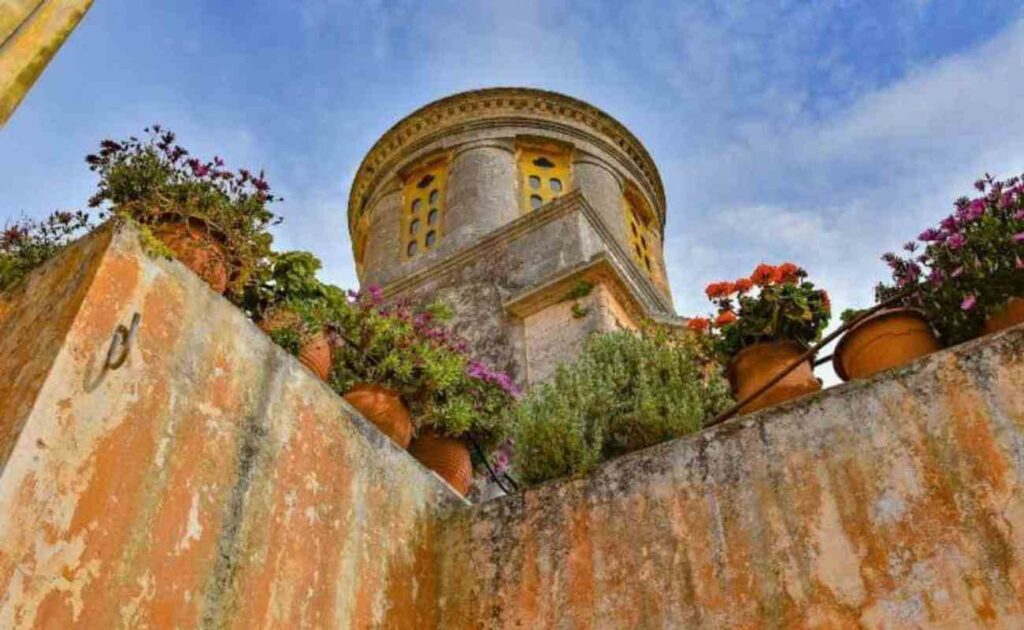
The Patriarchal Monastery of Agia Triada Tsagarolon was built during the last years of the Venetian rule, during the first half of the 17th century, probably on the site of a former monastery, by the Venetian-Cretan brothers, the Orthodox monks Ieremias and Laurentio Zangaroli. Agia Triada means Holy Trinity, while Tsagaralon refers to the founding brothers (Zangaroli in Italian).
Construction was interrupted during the Ottoman invasion while during the Greek Revolution against the Turks (1821), different monasteries in the region suffered attacks (in the area, the Nunnery of Korakies and Agia Triada Monastery were the objects of extreme violence). In particular, the Turks burned an impressive collection of manuscripts as well as several historical relics.
The monastery was completed after the revolution, but by the end of the Ottoman occupation, it had functioned as a hospital and headquarters for the local rebels.
AGIA TRIADA IN WWII
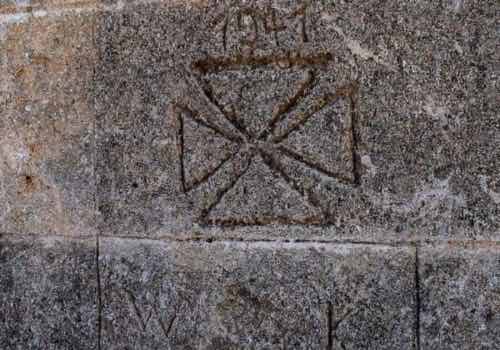
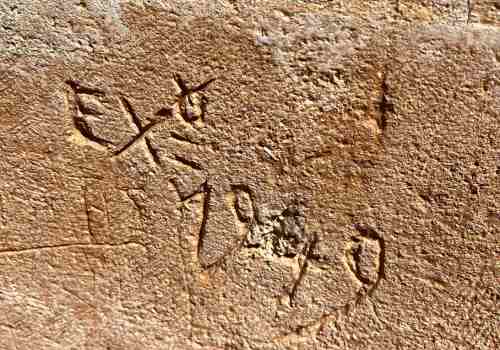
During the years of the Nazi occupation of the island, Agia Triada was used by the German soldiers as a place to store ammunition. The troops also established the School of the AAA in the place. If you climb to the roof, you can see the German carvings on the stones of the bell tower, probably made by the soldiers during the occupation.
THE COMPLEX
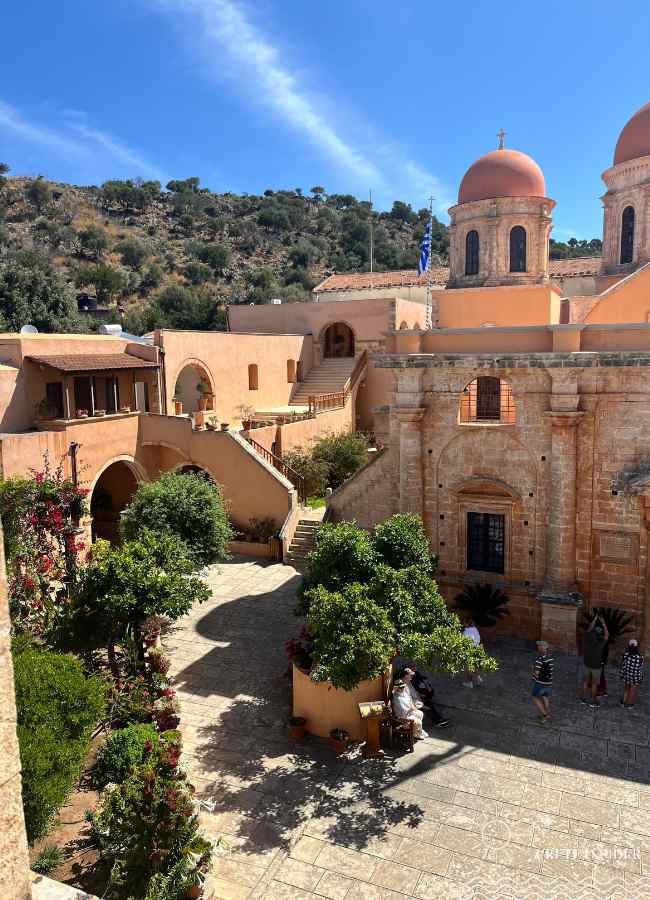
The monastery has a squared shape and is surrounded by high defensive walls. After climbing the imposing stairs at the entrance, a vaulted corridor leads you to a beautiful courtyard with fruit trees and flowers, a garden carefully maintained by the monks living in the monastery.
After climbing the imposing stairs at the entrance, a vaulted corridor leads you to a beautiful courtyard with fruit trees and beautiful flowers, a garden carefully maintained by the monks living in the monastery. The church has two chapels, one of them dedicated to Saint John the Theologian. It also has a characteristic dome and the bell tower is built opposite the church, right under the entrance.
Also visit the area of the museum, the library, and the cells of the monks… don’t miss the entrance road bordered by hundreds of cypress trees and marvel at the view of the extensive vineyards of the monastery.

GETTING TO AGIA TRIADA
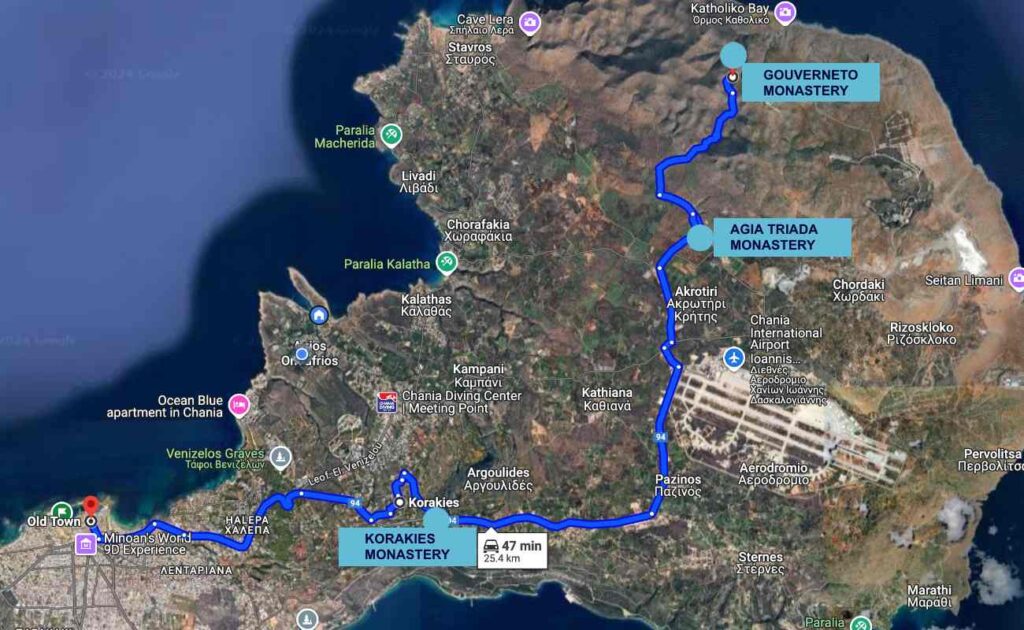
It’s very easy to reach Agia Triada by driving from the center of Chania. The trip is 30 minutes along the road that connects the center with the Akrotiri Peninsula. The road is known as Akrotiriou but the official name is Profiti Ilias-Moni Agias Triados). It’s also possible to reach Agia Triada by on the road to Chania airport.
AGIA TRIADA, THE WINERY
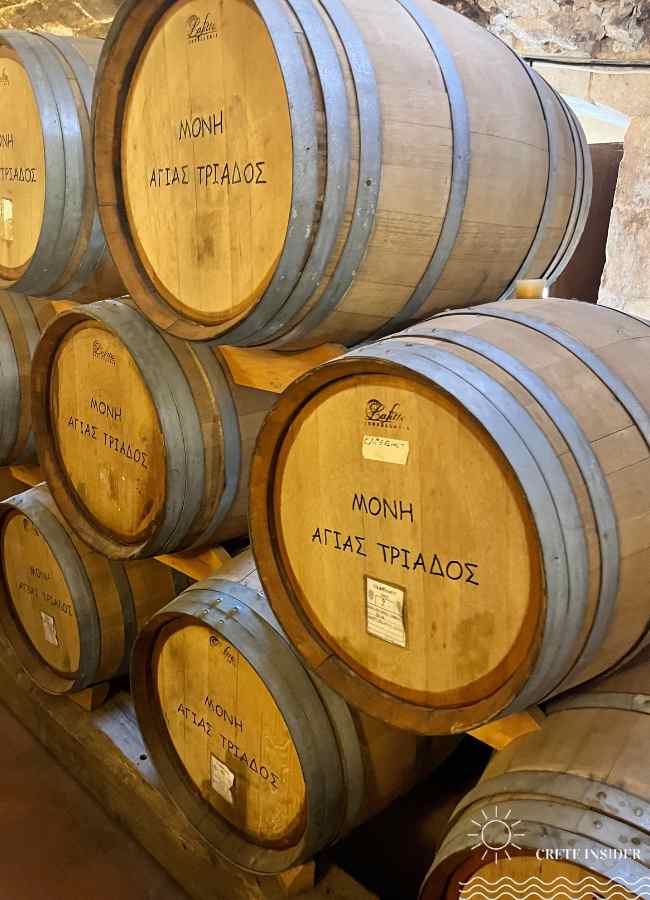
In Agia Triada, you can visit the ossuary, the religious mouseum, the wine cellars and a small exibition with work instruments and an ancient stone mill related the monastery. But the best part of the visit is that you can taste the wines and olive oil made in the monastery (do try their orange balsamic sauce!). They also produce a wide variety of carob products, vinegar, and extra virgin olive oil cosmetics.
Agia Triada was one of the few (if not the only!) wineries on the island making wine from the Chania grape variety Romeiko for a very long time. The Romeiko variety was once despised by local sommeliers and producers and usually considered a grape only good for low-quality, homemade wine. Today, however, Romeiko is widely used by many regional wineries to produce some of their top-selling labels.

VISIT AGIA TRIADA WITH ME
The monastery is very near my home, on Cape Akrotiri. I’ve visited countless times, and during summer, I even host a lunch and wine-tasting experience in the cellars. Join my Agia Triada Experience.
This is a private experience, customized to your taste, and therefore quoted on an individual basis.
📌 Are you skimming through the post and have no time to read it now? Save it on Pinterest and read it later!
Gouverneto Monastery (Akrotiri Peninsula)
📍 35.588160 N, 24.140674 E
ℹ️ 5 a.m. – 12 p.m and 5 p.m. – 7 p.m. (Sundays closing time is at 8 p.m.)
Gouverneto Monastery is 19 km north of Chania, and the entrance is free.

Not far from the main gate of Agia Triada Monastery, the road continues towards the mountains of Akrotiri and after about 4 km and a few tight turns, you find yourself at the main gate of Gouverneto Monastery, another religious center in the region of Chania, and one of the oldest monasteries in Crete.
Built in 1537, the official name of the temple is Moni Gouverneto or Our Lady of the Angels. The monastery stads atop oa a low hil and is clearly a fortified building bearing a resemblance to the shape of a castle and boasting a fantastic Venetian architectural style. It had towers on its four corners (only two are standing today), used to defend the monastery from invaders and pirate attacks, being it located not far from the sea.
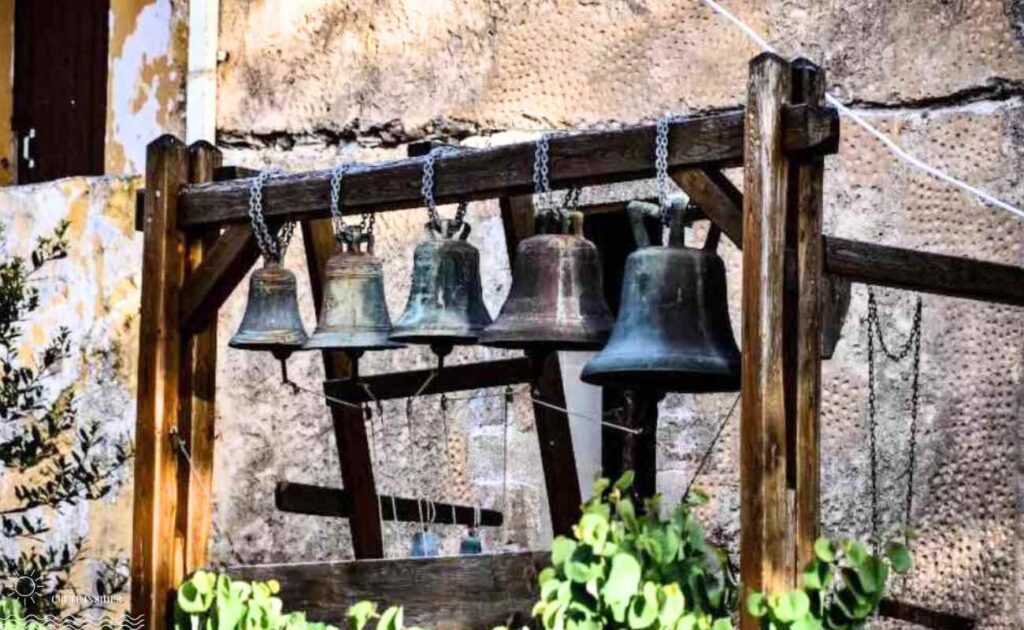
The cells of the monks are set on two different floors building and the yard has a beautiful garden and magnificent bells on one of its corners.
The church has a beautiful facade in Venetian Renaissance style and stunningly beautiful Baroque columns with fantastic beings and monsters carved in relief.
The work started being built during the Venetian period, but the Turkish occupation delayed its completion for centuries.

On both sides of the main church, there are two small chapels, one of them dedicated to the Ten Saints of Crete, while the other honors Saint John the Hermit who not only founded the monastery but who also lived in the nearby cave known as Arkoudospilios (The Cave of the Bear), right below the monastery, along the Gorge of Avlaki.
The monastery is very strict with visiting hours, does not tolerate inappropriate clothes (shorts, sleeveless shirts, swimming clothes), and is not enthusiastic about big groups of tourists. Cameras are not allowed in the church.
Arkoudospilios and Moni Katholiko
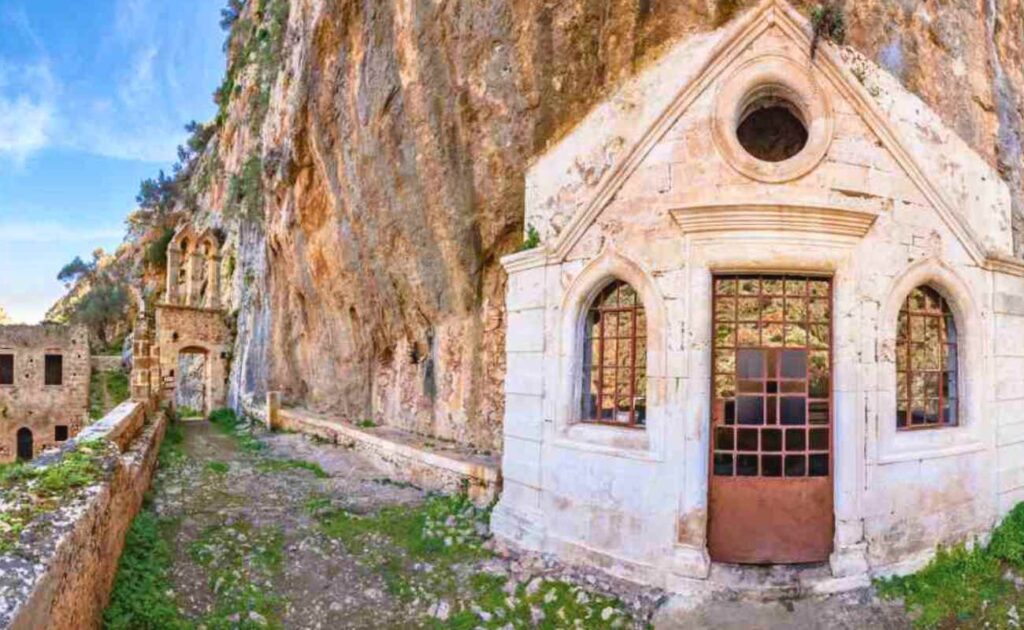
To visit the cave and pass in front of Moni Kathioliko, you need to hike a narrow path in the back of Moini Gouverneto, going down to the sea. The hike can take between 20 and 30 minutes and takes you though a gorge. Once Inside the cave, you can see a small chapel and beautiful natural formations. The most important of these is the one that names the cave since it has the aspect of a bear.
According to the legend, a bear entered the cave to drink water and the virgin transformed into a rock to protect the hermit. In fact, the rock looks like a bear that’s bending down to drink from a natural water basin.
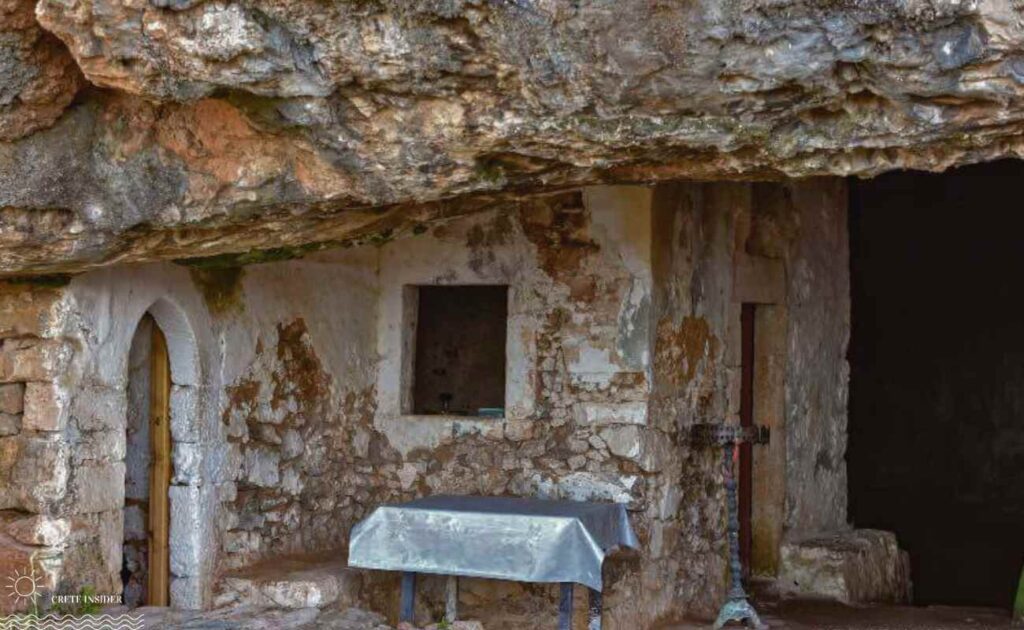
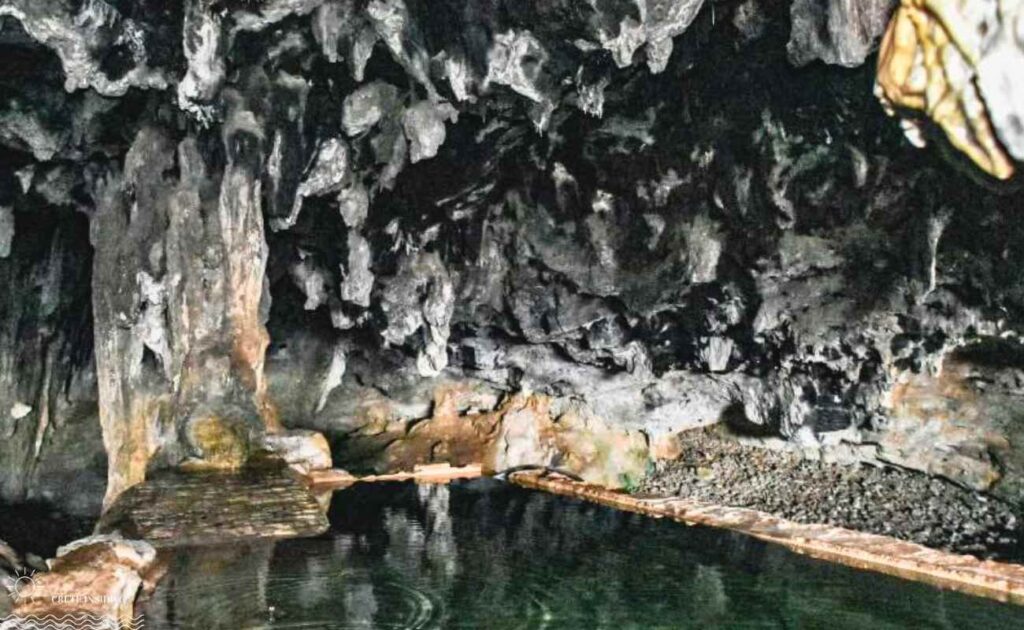
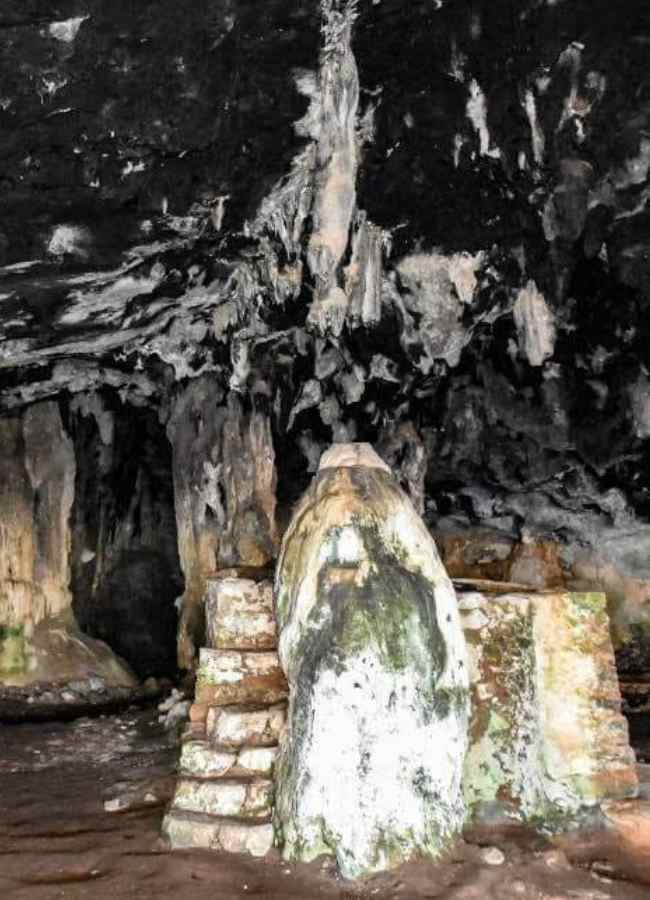
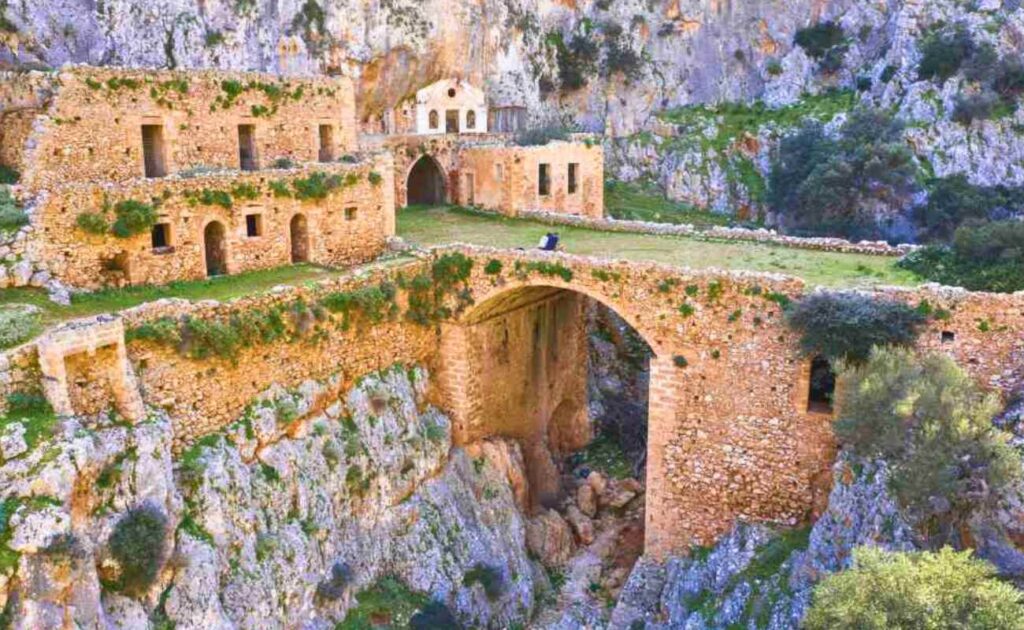
Walking for about 10 more minutes you will reach the abandoned Katholiko Monastery and the former church of Saint John the Hermit.
Finally, at the end of the trail, there’s a small cove that once functioned as a harbor. Despite being such a beautiful seaside spot, swimming is strictly forbidden by the monks in Gouverneto.
Chrisoskalithissa Monastery (Near Elafonisi)
📍 35.311309 N, 23.533355 E
ℹ️ Operating hours: 7 a.m. – 7.30 p.m.
Entrance fee: €2 (free for residents)
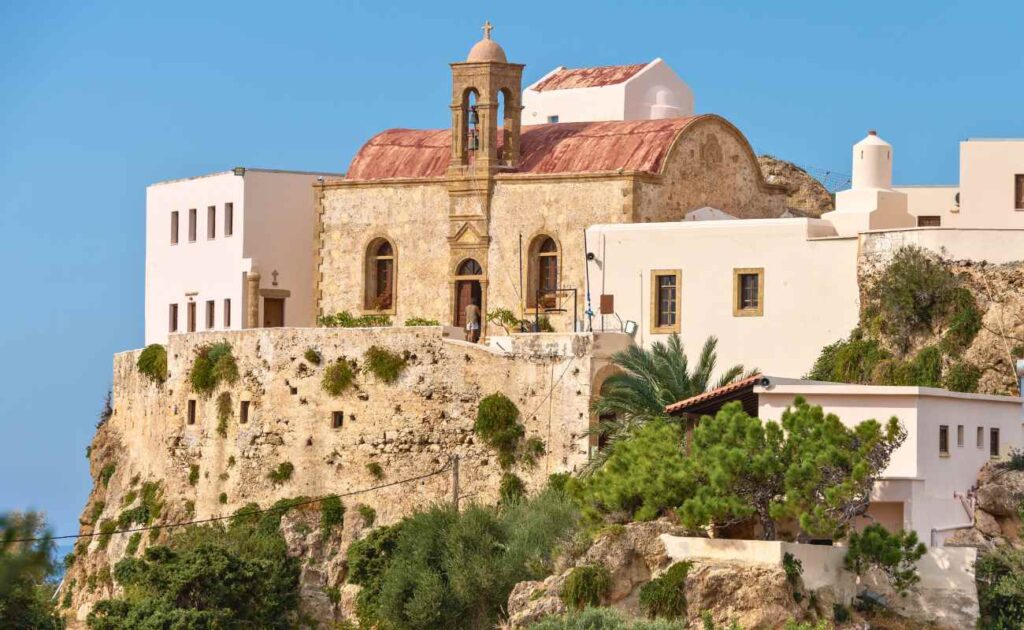
The Monastery of Panagia Chrisoskalithissa is about 71 km from Chania town, and approximately 5 km from the pink sand beach of Elafonisi.
The building, which stands on top of a steep rock (about 40 m high), dates back to the 17th century and the cells of the nuns are in a building close by. It was built as a fortress and dominates the landscape with an ample view of the Libyan Sea.
Inside the complex, it’s also possible to visit a small but interesting folklore museum that exhibits objects belonging to the everyday life of the monks and the nuns. There is also a Byzantine museum with religious exhibits. This museum is right before reaching the famous stairs that give the name to the monastery.
The name Panagia Chrisoskalithissa means Our Lady of the Golden Step. It’s said that the last of the 98 steps leading up to the church was made of gold, but only those pure of heart manage to see it.
The church (Katholiko) is dedicated to the Assumption of the Holy Virgin. It houses a famous icon of the Virgin which was hidden in the area to protect before the monastery was even built. The legend says that a few years after, a local was presented with a religious vision that led him to the rock to find the icon, and therefore the church was built in that place.
INSIDER’S TIP: Head to the rear of the monastery to get a glimpse of the Libyan Sea
Gonia Odigitria Monastery (Kolymbari)
📍 35.551050 N, 23.776779 E
ℹ️ Visiting hours: 9 a.m. – 1 p.m. and 2 p.m. – 7 p.m.
Entrance fee: €2 (free for residents)
The gorgeous Monastery of Our Lady of Gonia (also Panagia Odigitrias) stands less than 1 km from the town of Kolymbari and no more than 25 km from the center of Chania, at the base of Cape Rodopou. It’s in a magnificent elevated position, on a steep hill, facing the Gulf of Chania.
The monastery was originally founded during the 9th century, and it was located further inside the peninsula, close to the beach of Menies, and not far from the ancient ruins of a Minoan temple.
During the first years of the 15th century, while the island was under the control of the Republic of Venice, it was rebuilt in its present location with very typical Venetian traits in its architecture.
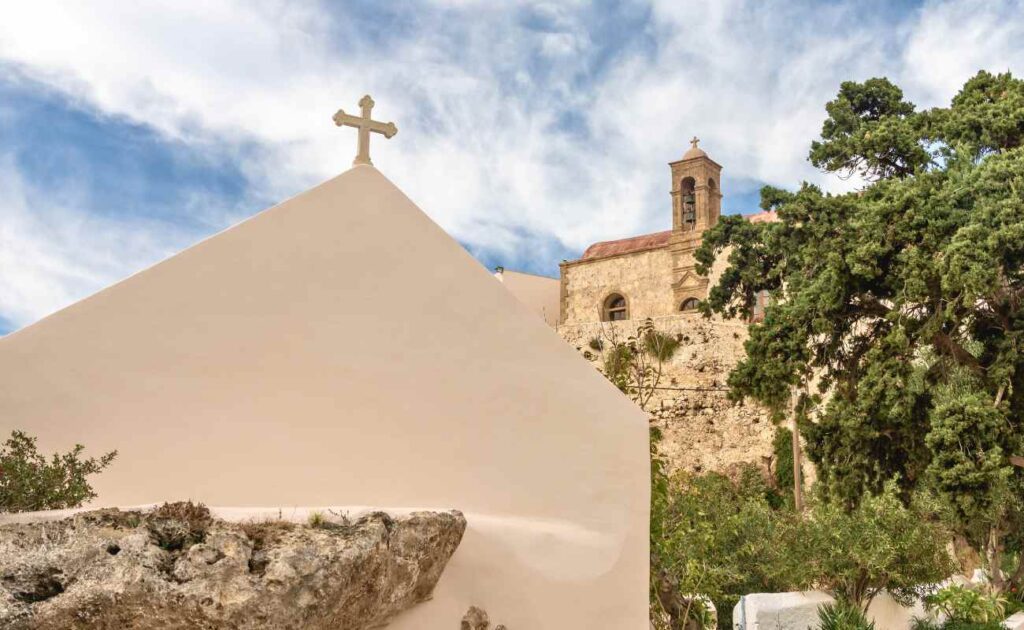
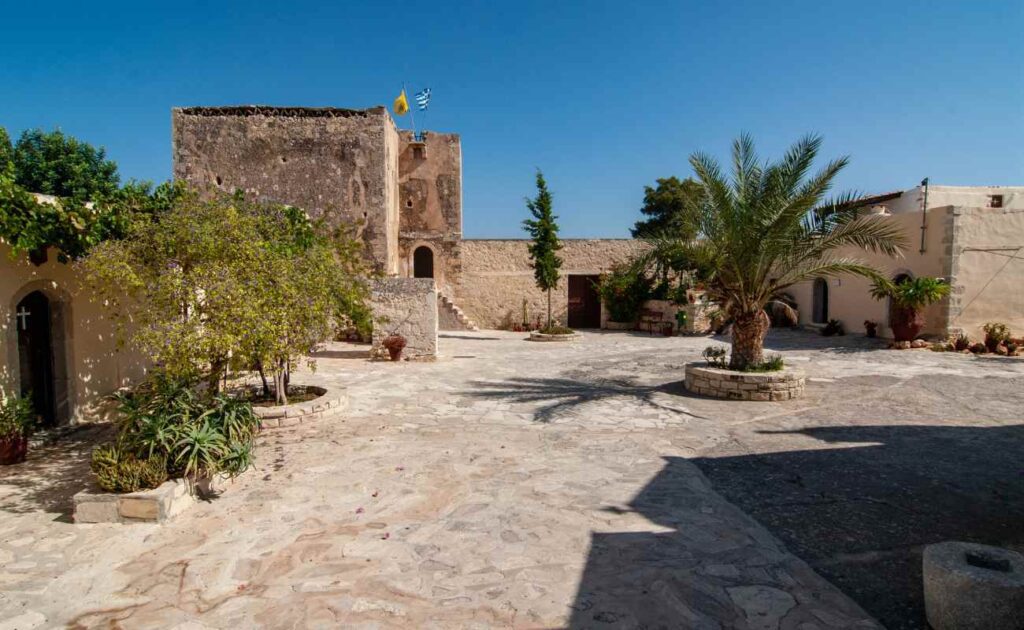
When you visit, don’t forget to check the fortified walls, the impressive courtyard opposite the church, and the surrounding cells of the monks. Also, take a look up at the belfry and the fountain at the entrance and pay a visit to the Byzantine Icon Museum.
Just like many other Cretan monasteries, it suffered continuous attacks and destruction attempts during the Ottoman rule, in fact, the remains of a cannonball can still be seen on one of the walls of the monastery.
It also suffered damages during the Nazi occupation (1941-1944), in fact, the monastery is located quite close to Maleme the place where the German paratroopers landed, invading Crete, giving origin to the Battle of Crete (1941). The monastery was even occupied by German soldiers who also imprisoned the monks, however, the area remained an active resistance center against the Germans.
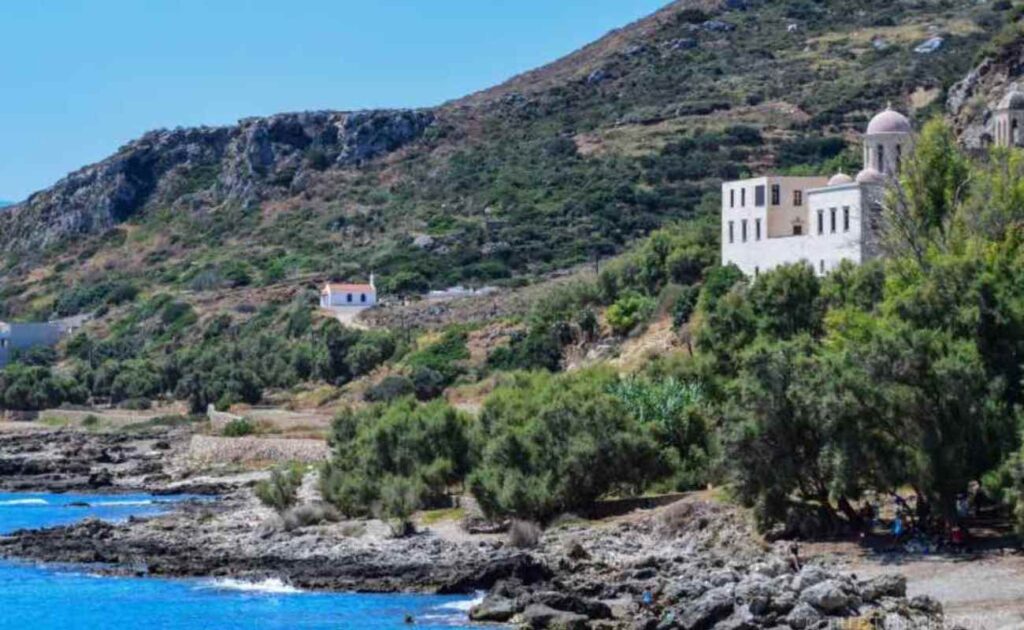
Korakies Monastery (Akrotiri Peninsula)
📍 35.522469 N, 24.076696 E
ℹ️ Visiting hours: 9 a.m. – 6 p.m. (Tuesdays closed)
Mostly unknown to tourists and visitors, Korakies is a nunnery on the Akrotiri Peninsula and one of Chania’s most beloved temples. It’s a traditional place of gathering for Orthodox Easter when the nuns take turns reading the Holy Scripts in several languages all night long.
The peninsula has always been a place with a distinctive monastic tradition, today, three monasteries remain in the area, the former two mentioned above, Gouverneto in the mountains, and Agia Triada at the foot of Mount Skloka, while Korakies is on a flat area of the cape.
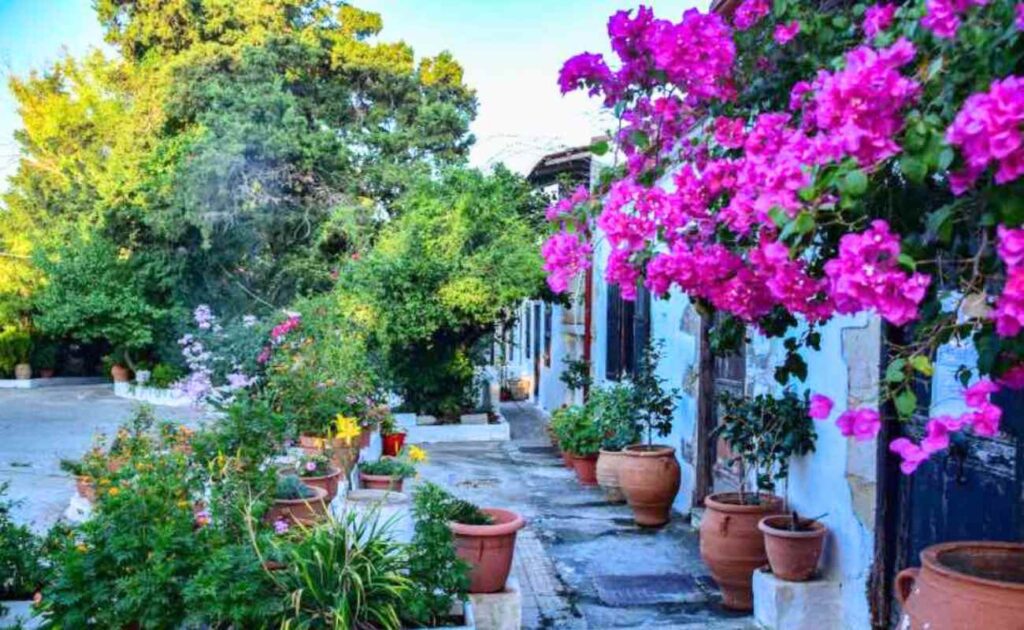
Those living in the Akrotiri Peninsula claim that this is the most traditional place in Chania to spend Easter. The official name of the monastery is Holy Convent of Saint John the Forerunner (Iera Moni Gioanni Prodromou) and its founding date is unknown since the archives of the convent were destroyed during the successive attacks during the Ottoman period.
After the Greek revolution against the Ottomans, in 1821, the convent was badly damaged and the nuns sought refuge in other religious buildings in the region. The monastery reopened in 1867, and some of the nuns played a significant role in the many Cretan battles against the Turks.
Once the island was finally set free from Ottoman rule, the nunnery became a well-known place of education for the young girls of Chania.
It hosted the Housekeeping School, where the future housewives learned different arts and techniques, such as the old tradition of kopaneli, a magnificent traditional craft from Crete to make lace.
The nuns in the school also produced and sold curtains, tablecloths, carpets, and more. During WWII the Germans ordered the nunnery to be abandoned, but some of the nuns remained to take care of the relics and icons housed in the building. Today it’s possible to visit the nunnery, walk through the wonderful gardens and discover the ancient crafts in the museum.
There are just a few nuns living in the monastery, and they’re extremely welcoming to foreigners and visitors wanting to discover the history of the Monastery in Korakies.
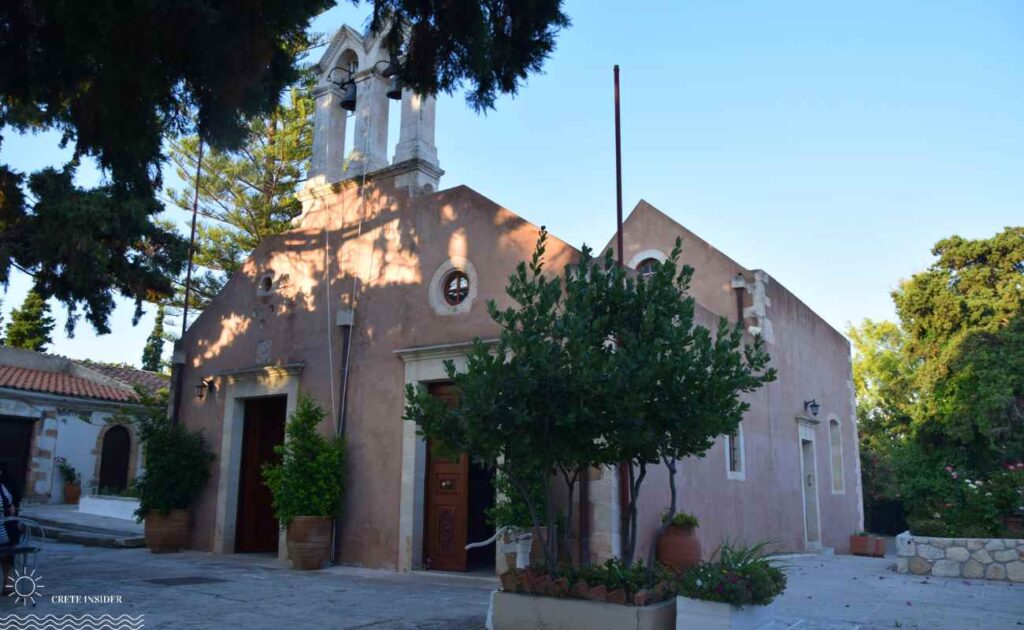
Karydi Monastery (Vamos, Apokoronas)
📍 35.391646 N, 24.204037 E
ℹ️ Visiting hours: 7:30 a.m. – 2:30 p.m. and 4:30 p.m. – 8:00 p.m.
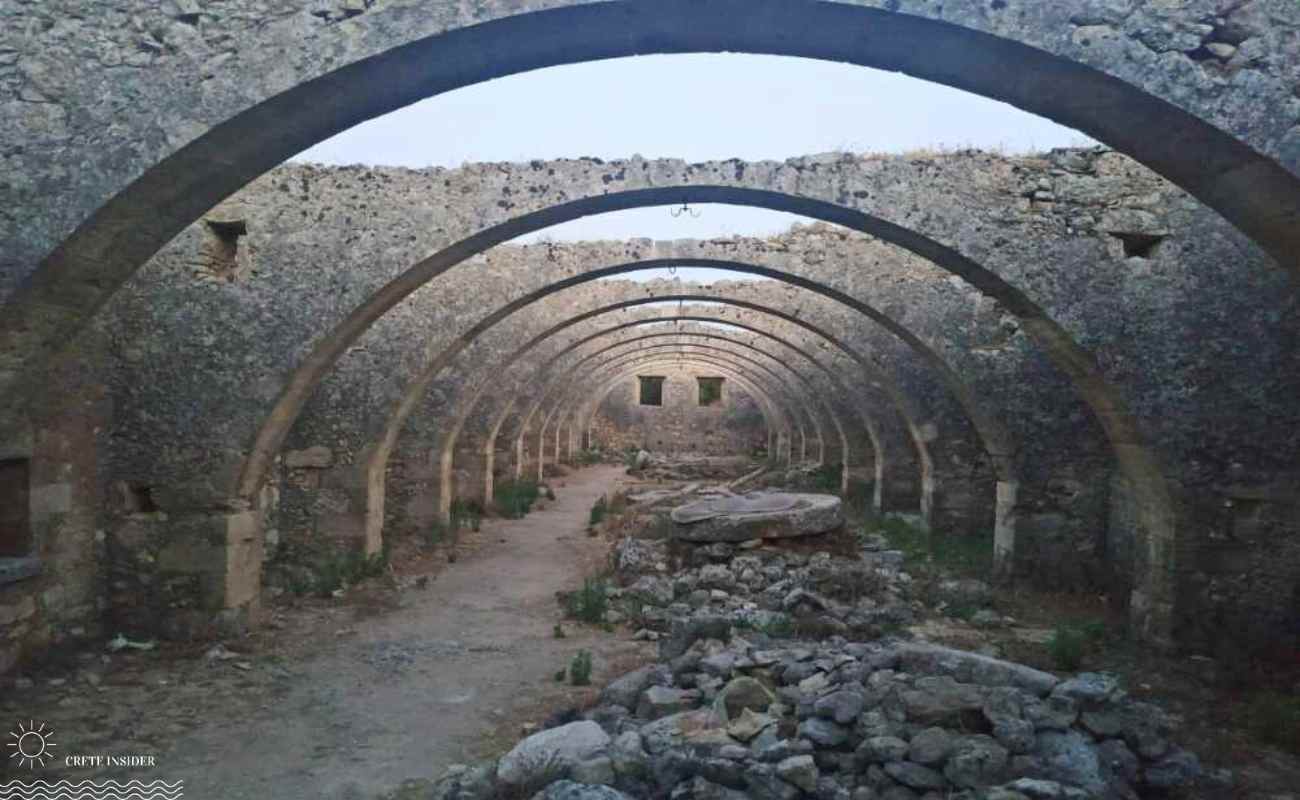
One of the most fascinating places in the Apokoronas region, in the small but lively village of Vamos, is the small active monastery of Agios Giorgos in Karydi, also known as Karydi Monastery. It’s less than five minutes from the center of Vamos (there are plenty of signs, so you won’t get lost).
This fantastic spot, which has been restored by the monks in recent years and is fully operative, was abandoned in the past and remained in ruins for several decades.
On the premises, you can check out the old church and get a real close-up look at the ruins of an authentic olive oil factory and its incredible twelve stone arches, and the base of four ancient olive mills. Since the roof at the olive oil factory has collapsed, visiting at dusk offers the opportunity for amazing photos.
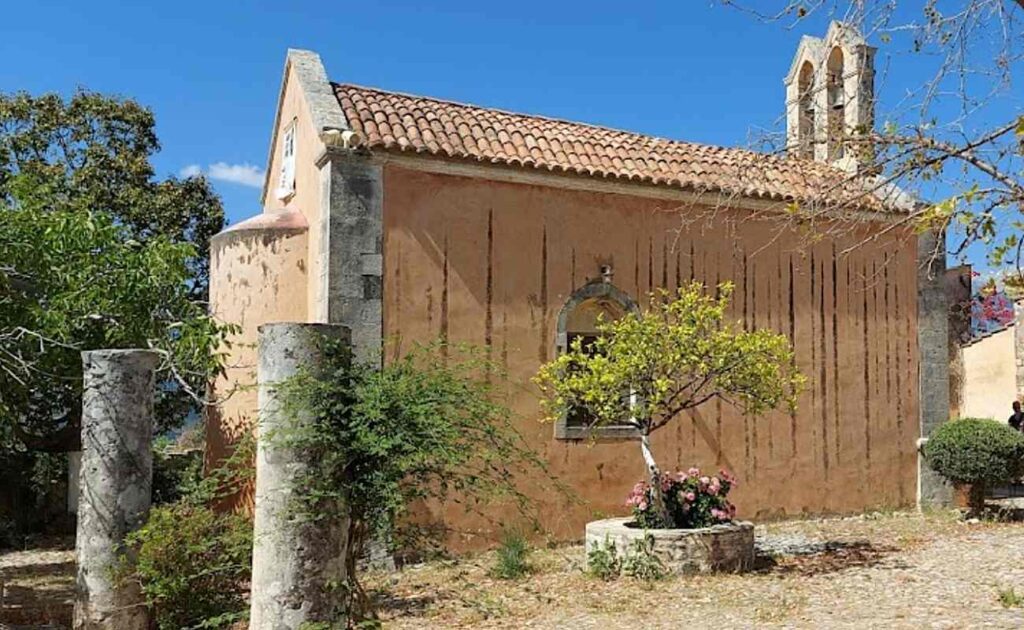
I hope that this guide to the most beautiful monasteries in Chania region has inspired you to explore the region and its unique landscape. I trust you can make good use of these insights and details to plan an journey through these sacred sites.

Are you visiting Crete Soon?
Join my Facebook group for more tips, or plan your Crete itinerary with me!
Pin for Later!
Stunning Monasteries in Chania, Crete
Gabi, the Crete Insider
Hi, I’m Gabi — your go-to local expert in Crete! I’ve been living in Chania, Crete since 2016, and I’ve turned my love for the island into a full-time passion — guiding travelers, writing for travel media, and curating local experiences.
I co-authored DK Eyewitness Top 10 Crete and other guides. I run the blogs The Tiny Book, Greece Planner, and My Cretan Recipe. Through this platform I help travelers design unforgettable trips to Crete.
🚘 THE BEST WAY TO SEE CRETE IS BY CAR 🚘
Compare international car companies in Crete, or trust a reliable local company like Retyhmnon Cars.


