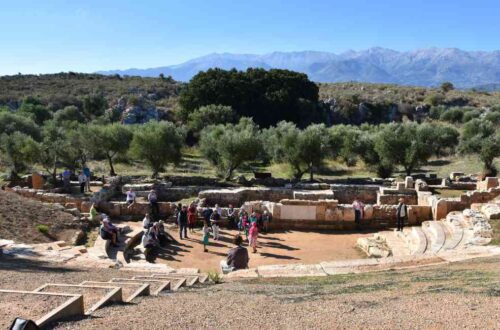

Guide to the Most Important Archaeological Sites in Crete
In this post, I focus on one of the main reasons people visit Crete: its past, complex history, and many archaeological sites. This article shows some famous archaeological sites in Crete, including the four Minoan Palaces, which you cannot miss when exploring the island.
📍 Must-do: Balos Cruise 📍 Knossos Palace 📍 Check rental car rates for Crete 🚗
They say it’s here where everything started… on this island. With a long and complex past, spanning from the Bronze Age to the last significant events of World War II, Crete concentrates thousands of years of the history of our Western civilization.
Crete is an island rich in learning opportunities when visiting the sites hosting the traces that several ancient civilizations left on the island. The following are some of Crete’s most remarkable archaeological sites. I’ve also included important tips to make the most of your visit. First, check their location on the map to better plan your itinerary.
📌 Are you skimming through the post and have no time to read it now? Save it on Pinterest and read it later!
Map of Crete’s Archaeological Sites

The map contains a few of the most famous archaeological sites in Crete.
Some of them are not included in this guide.
Crete’s Four Minoan Palaces
So far, four Minoan Palaces have been unearthed on Crete: Knossos, Phaistos (or Festos), Malia in the region of Heraklion, and Kato Zakros in Lasithi. However, there’s always a chance for a new discovery on such a big territory.
These palaces mostly concentrate on the eastern side of the island. If you look at those four spots on the map, it’s soon clear that at least one major center of power should be located west of Crete.
These palaces stand as an example of the organizational structure of ancient Crete, which shifted from a simpler village system (in the Neolithic) to a system of greater concentration of political power, religious authority, commerce, and wealth later on.
Experts believe that the Minoan Palace of Kydonia lies underneath the present city of Chania, a very densely populated area that cannot be excavated. Some parts of the ruins came indeed to light after the Nazi air raid of 1941. These are visible to the public in different spots in town.

The Minoan Palaces of Crete shared the following characteristics
- All of them have the same orientation (from north to south).
- None of them is fortified. They lack surrounding walls for protection.
- They are palatial complexes, an elaborate network of rooms and spaces more than just a single structure.
- The palaces had wings on the north, south, west, and east around a central court for light and ventilation.
- Workshops used to be on the east wing, while the west areas were sacred.
- They all have imposing staircases and columns, walls decorated with frescoes, and wood was widely used.
- The four palaces had a very advanced, complex drainage system with running water. The pipes were made of different materials (stone or clay) according to their function: flushing the toilets, diverting rainwater, and distributing drinking water.
These are the total areas of the Minoan Palaces
- Knossos – 22.000 square km (8.494 square miles)
- Phaistos – 18.000 square km (6.949 square miles)
- Zakros – 8.500 square km (3.281 square miles)
- Malia – 7.500 square km (2.895 square miles)
Minoan Palace of Knossos
📍 Heraklion region – about 15 minutes from the city center. (35.298127 N, 25.162829 E)
🚍 Bus Number 2 at the old bus station of Heraklion (Opposite the Megaron Hotel).
The bus runs 3-5 times per hour. Knossos is the final stop. The ticket is €1.50 one-way.
Running hours: from 8 a.m. to 7 p.m. (summer) and 8 a.m. to 3 p.m. (winter).
💰 Full ticket €15, reduced €8. A special package for €16 includes the entrance to the Archaeological Museum of Heraklion (Reduced €8). Reduced fees apply to:
- Greek citizens and citizens of other European countries over 65 years old (ID card or passport needed).
- Escorts on educational visits (primary schools).
- University Students (high education institutes or equivalent, student ID card needed).
- For free admission categories, check this site.
⏰ The archaeological site is open all year from 8 a.m. to 5 p.m. (winter) and from 8 a.m. to 8 p.m. (summer).
The last admission is always 15 minutes before closing, but you should estimate at least 2 hours as a reasonable time to visit.
The site is closed on January 1, March 25, May 1, Easter Sunday, August 15, December 25 & 26.
The site is open with a limited timetable on October 28, Easter Friday, and Easter Saturday.

Knossos Palace Organized Tour and Visits
- Knossos Palace and Archaeological Museum
It includes a skip-the-line ticket, a licensed guide’s guided tour, and a ticket for the Archaeological Museum.
>> BOOK HERE
- Affordable Knossos
It includes an e-ticket (skip the line) and a self-guided audio tour with offline content to prevent extra roaming charges.
>> BOOK HERE
- Knossos for Families
This kid-friendly tour shows Knossos through Mythology. The visit includes an iPad to use onsite with interactive activities.
>> BOOK HERE
- Private Tour
It includes a skip-the-line ticket, a private guided tour by a licensed archaeologist, and roundtrip transfers within the Heraklion area.
>> BOOK HERE

Things to Know About Knossos
- Dates: The first settlement dates back to 7000 BC, and the First Palace to 1900 BC.
- Civilization: Minoan.
What to See in Knossos
Central Court: The imposing central court is one of the palace’s most impressive areas. According to some archaeologists, this was where the bull-leaping ceremonies and other celebrations occurred.
Throne Room: Inside this room, you can see a stone seat close to the wall adorned with vivid frescoes and a perimetral bench along the sides. A sunken bath in the middle of the room is not connected to the drain system and was probably used during religious or ritual baths.
Queen Megaron: Here, you can admire the magnificent fresco with the dolphins, probably one of the most beautiful wall decorations in the palace.
Pithoi: Check out the impressive clay storage containers, which the Minoans probably used to store olive oil and grain.
>> Did you know that Knossos is considered Europe’s oldest city?

Preparing the Visit
- Whenever possible, combine a visit to the site with a visit to the Archaeological Museum (Heraklion) to get a complete idea of the site’s relevance.
- Devote at least two hours to see the site and three hours if you prefer a guided tour with an archaeologist.
- Since most of the site is exposed to direct sun, pack water, hat, and sunscreen. Did you forget any of these? There are different shops and kiosks near the entrance where you can get what you need.
- Wear comfortable clothes (light and breathable) and comfy shoes. Avoid flip-flops (remember that heels are forbidden in archaeological sites). Check this article to know more.
Minoan Palace of Phaistos
📍 Heraklion region – about one hour from the city center. (35.051812 N, 24.811950 E)
🚍 From Heraklion KTEL central station, and changing bus at Moires (for Matala). You don’t need to buy another ticket. The total fee for the trip is € 7.10
Heraklion-Moires: 1h, Moires-Phaistos: 15 m.
Make sure to ask the bus driver for the stop.
💰 Full ticket €6, reduced €3. A special package for €8 includes the Minoan Palace of Phaistos entrance and the Royal Villa of Agia Triada.
⏰ The archaeological site is open all year from 8.30 a.m. to 3 p.m. (winter) and from 8 a.m. to 8 p.m. (summer).
The last admission is always 15 minutes before closing, but you should estimate at least 2 hours as a reasonable time to visit.

Things to Know about Phaistos
- Dates: The first settlement dates from the Late Neolithic (approximately 3000 BC). The First Palace dates back to 1850 BC, while the New Palace dates from around 1700 BC.
- Civilization: Minoan.
What to See in Phaistos
Architecture: Festos is considered the finest and most typical Minoan palace and the best-preserved of all the Minoan palaces excavated on the island.
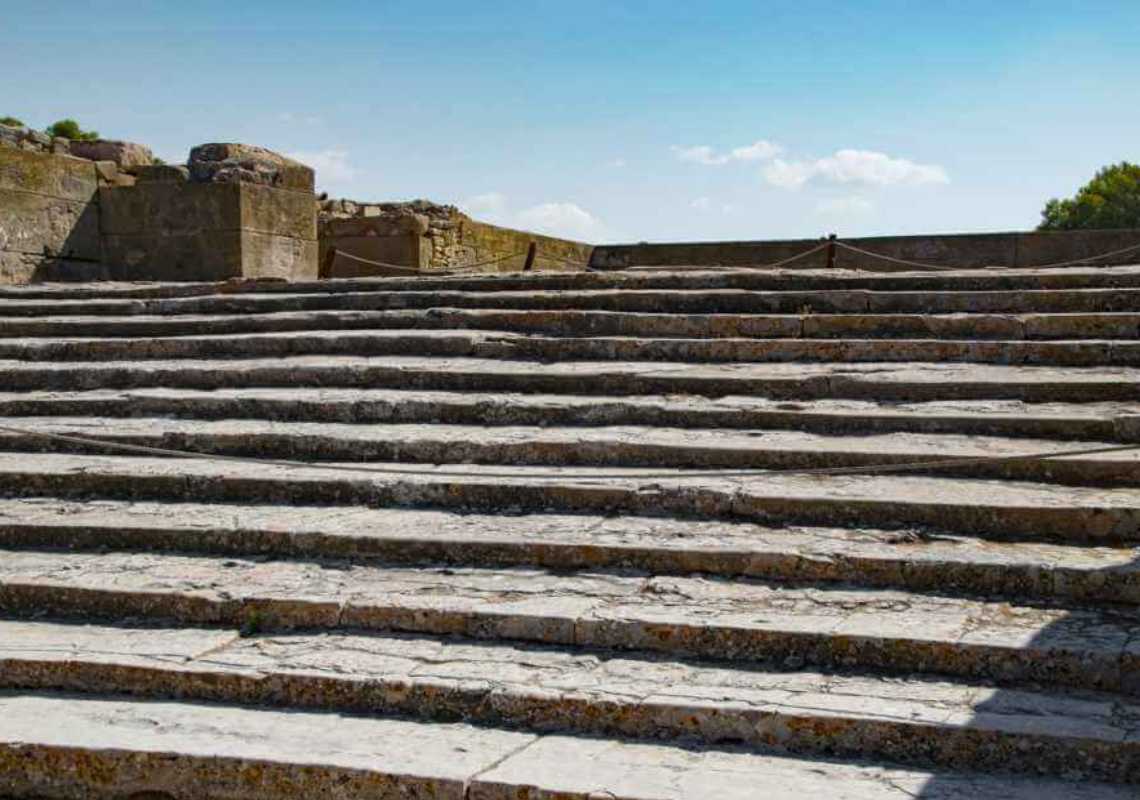
West Propylon: Check out the impressive entrance to the palace known as the West Propylon and the staircases.
Also, check the different terraces, the royal quarters, the storerooms, the pottery artifacts, and the workshops. You can also see where they found the famous Phaistos Disk. However, you must visit the Heraklion Archaeological Museum to see the disk.
>> According to mythology, Phaistos was the seat of King Radamanthis, brother of King Minos.
Preparing the Visit
- The archaeological site is 62 km south of Heraklion, about 100 m above sea level.
- If you drive there from Heraklion, take the road Moires-Timbaki. You can also access Phaistos from the south.
- If you travel by bus, check the summer/winter schedules at Heraklion’s bus station according to when you’re visiting.
RELATED ARTICLES:
~ What to See in the Minoan Palace of Phaistos
~ Things to Do in Matala
~ How to Get from Heraklion to Matala
~ Wikipedia: Phaistos
Minoan Palace of Malia
📍 Heraklion region – about 30 minutes from the city center, on the northern coast.
(35.293401 N, 25.492856 E)
🚍 There’s no public transport service. You can get there by car via VOAK/E75 (national road), 30 minutes from Heraklion (direction Agios Nikolaos – East), or private transfer.
💰 Full ticket €6, reduced €3.
⏰ The archaeological site is open all year from 8:30 a.m. to 3:30 p.m. Closed on Tuesdays. The last admission is always 15 minutes before closing time. Estimate at least one hour as a reasonable time to visit.

Things to Know about Malia
- Dates: The palace was inhabited from the Neolithic until the early Minoan period (6000- 2000 BC). The First Palace dates from 1900 BC, and the New Palace from 1700 BC.
- Civilization: Minoan.
What to See in Malia
Museum: The small museum is located right after the entrance. Most findings are housed at the Archaeological Museum of Heraklion. However, you can check the scale model that recreated the palatial complex of Malia.
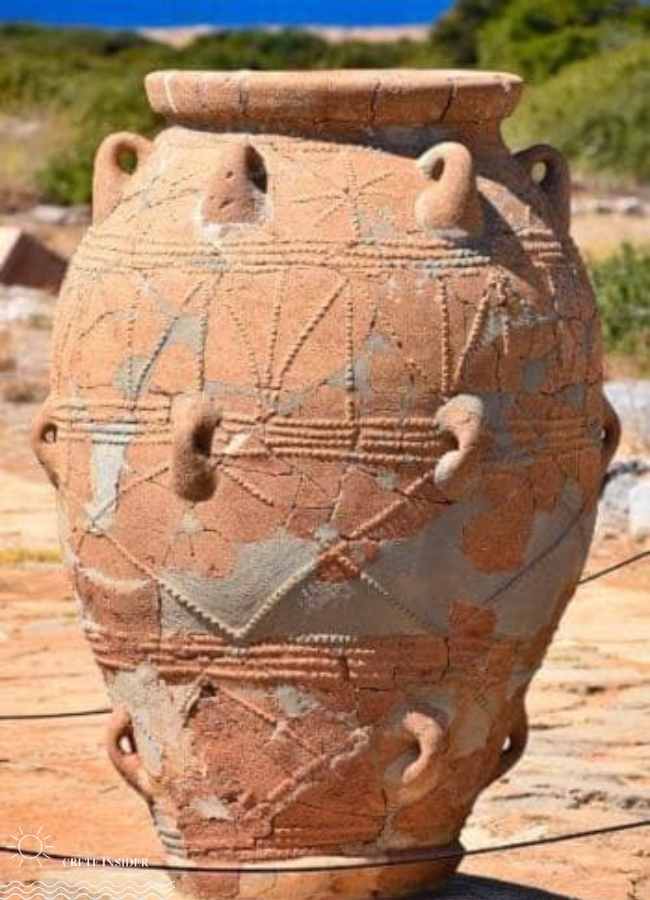
Magazines: These are located towards the east of the central court. Storage rooms lead to a common corridor where you can see the famous vases or pithoi normally used to store cereals, oil, and wine.
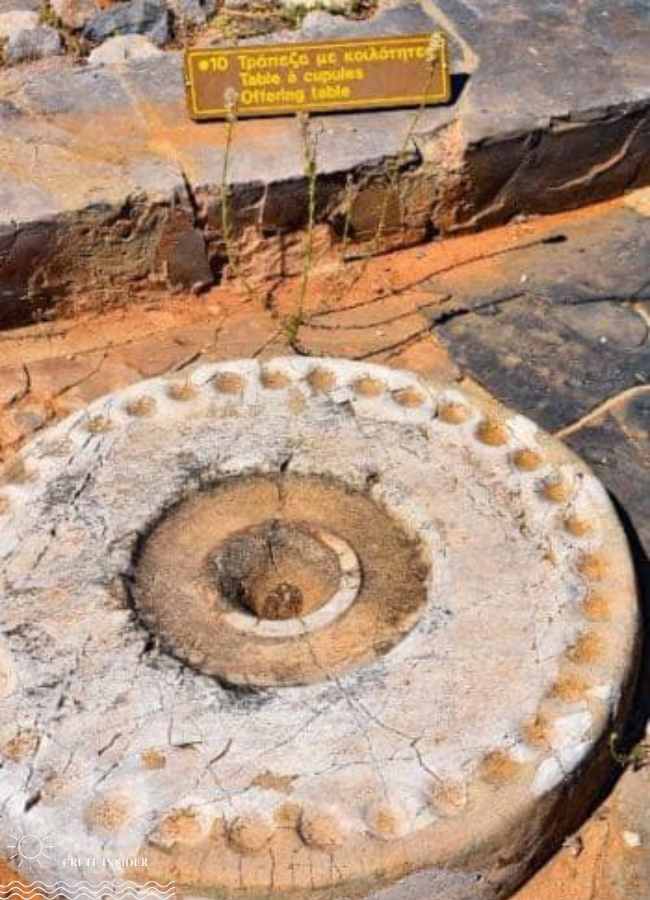
Kernos: Small round table with a central cavity and holes around the edge where the Minoans would put seeds as an offer to the gods for a prosperous crop.
Also, check out the staircase leading to the first floor of the palace, several jars or pithoi, pillars with Minoan inscriptions, and the Minoan town, also called Quartier Mu, which might have had an independent life, separated from the palace and might have been a place dedicated to the manufacture of pottery.
>> Malia is Crete’s third Minoan palace in size and importance. According to mythology, Sarpedon, another brother of the legendary King Minos, ruled here.
In Malia, archeologists found some of the most refined jewelry pieces made by the Minoans.
Preparing the Visit
- The archaeological site is about 3 km east of the resort town of Malia.
- Malia is another archaeological site that, pretty much like Knossos, has large areas under direct exposure to the sun, carrying a hat and sunscreen.
- Wear comfortable shoes. If you want, you can visit the nearby beach of Malia after the visit.
RELATED ARTICLES:
~ Tips to Discover the Archaeological Site of Malia in Crete
~ Best Party Hotels in Malia, Crete
~ What to Wear to Visit the Archaeological Sites in Crete
Minoan Palace of Kato Zakros
📍 Lasithi region – about 60 minutes from Sitia, eastern coast.
(35.097057 N, 26.260709 E)
🚍 You can get there by car from Sitia via Palekastro or private transfer. The nearest city is Sitia (44 km) via Sitias-Palekastrou-Vai road. The journey from Sitia takes about one hour (2 h 20 min. from Agios Nikolaos). You can also get there by the Sitia-Kato Zakros bus.
💰 Full ticket €6, reduced €3.
⏰ The archaeological site is open from 8.30 a.m. to 3.30 p.m. (winter) and 8.30 a.m. to 7 p.m. (summer). Closed on Tuesdays. The last admission is always 15 minutes before closing time. Estimate at least one hour as a reasonable time to visit.
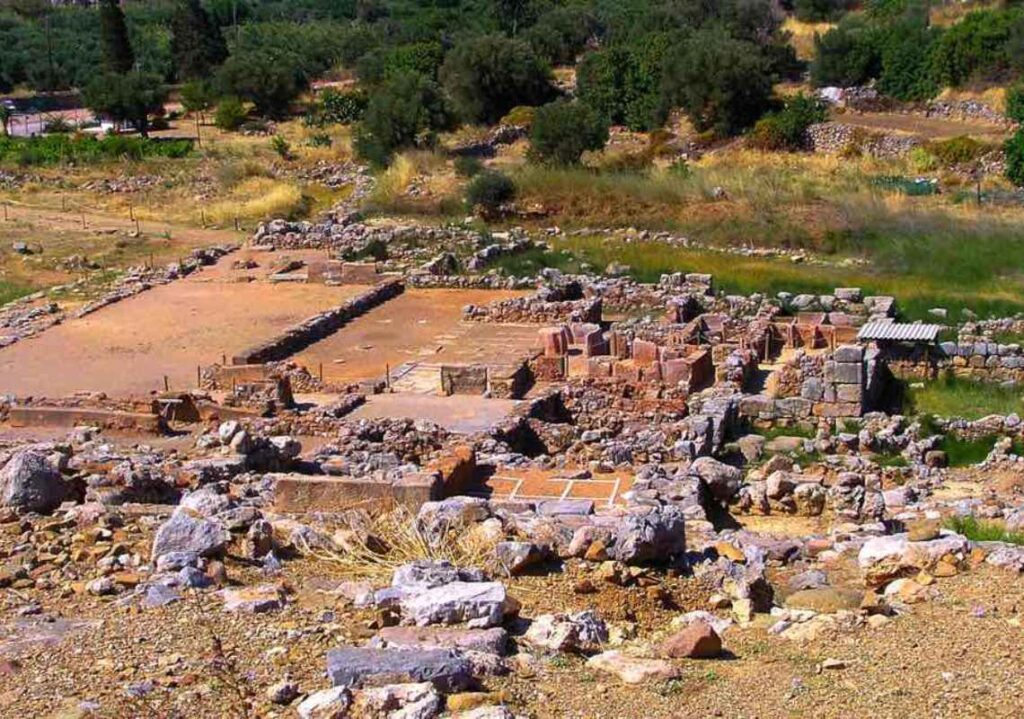
Things to Know about Kato Zakros
- Dates: The settlement was built around 1900 BC, and the ruins mostly date from the Neopalatial period.
- Civilization: Minoan.
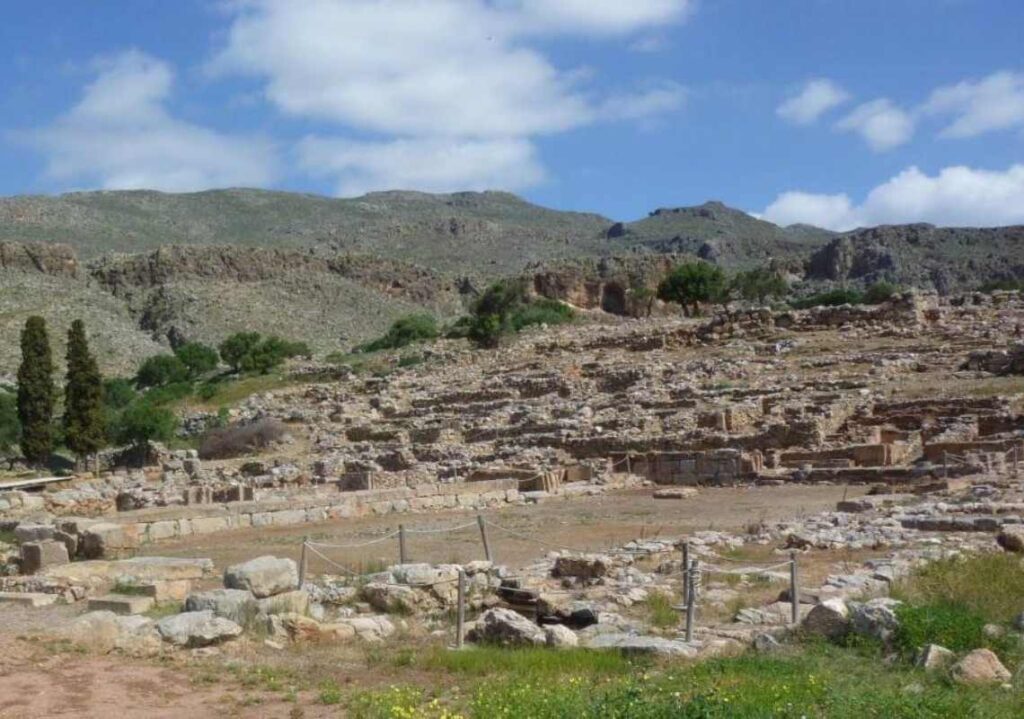
What to See in the Minoan Palace of Zakros
- Large central courtyard: It’s the place from where the paved road that leads to the sea begins.
- Other places to check include workshops, warehouses, the treasury vault, and the royal room.
The area is populated by wells with fresh water; the ones inside the Palace are home to different turtles, which children love to spot when they visit! The Palace stands at the exit of the Gorge of the Dead, which is called that because Zakros citizens used to bury their dead in the caves along the gorge’s walls.
Remember that the most important findings can be seen in the Archaeological Museum of Heraklion and in the smaller but still interesting Archaeological Museum of Sitia. Among these are beautiful pieces of pottery and refined jewelry. Some exhibits are in the Archaeological Museum of Agios Nikolaos.
Preparing the Visit
Practical tips:
- The settlement is one of the most remote archaeological sites on Crete. Get ready to be on the road for a while. However, this makes it one of the less crowded archaeological sites you can visit on Crete.
- There are virtually no places protected from the sun, so the same rules apply to visiting all archaeological sites: carry plenty of water, apply sunscreen, wear a hat, visit in the early or late hours of the day, and, as common sense would dictate, wear comfortable shoes.
RELATED ARTICLES:
~ Guide to Visit the Minoan Kato Zakros
~ Guide to Hike the Gorge of the Dead
~ Things to Do in Sitia
Other Archaeological Sites in Crete
These are other great archaeological sites and ancient ruins worth visiting in Crete. Take a look!
Ancient Phalassarna
📍 Chania region, 10 minutes Falasarna Beach. (35.511354 N, 23.570058 E)
🚍 Bus to Falasarna Beach (via Kissamos) and then a short walk to the archaeological site. Easy to reach by car too.
💰 Free entrance.
⏰ From 9 a.m. to 3 p.m. Closed on Mondays and weekends.

Ancient Phalassarna (also spelled Phalasarna and Falasarna) is about 15 km fromKissamos town and 55 km from the center of Chania. The settlement was one of Crete’s important city-states and a trading center during the Hellenistic period. The city minted its own coins with the initials ΦΑ (FA), a trident, and the shape of a woman on the opposite side.
Phalassarna’s most striking feature was its harbor. It was connected to the sea by intricate artificial channels. The city was perched atop a cape a hundred meters above the sea. The fortification walls, the harbor, the ancient baths, an altar, and the public roads all added to the grandeur of this ancient city.
Phalassarna, a bustling maritime center, was a prosperous center in constant rivalry with the city-states of Polyrrinia (near the present city of Kissamos) and Kydonia (modern-day Chania). However, they signed different peace treaties, one of which was on a stone tablet in the Archaeological Museum of Kissamos.
The city started slowly declining after a Roman invasion (about 69 BC). Yet, many consider that a violent earthquake was the real reason behind Phalassarna’s decline. Recent excavations confirmed a sudden change in the sea level (365 AD) due to the major quake and enormous tsunami waves.
RELATED ARTICLES:
~ Guide to Visit Falasarna Beach
~ Things to Do in Kissamos
Ancient Polyrrenia
📍 Chania region, 15 minutes from Kissamos. (35.455349 N, 23.651873 E)
🚍 You can reach the site by using the local bus from Kissamos.
💰 – ⏰ Open archaeological area that can be visited at any time.
Photo by Olaf Tausch (Wikimedia Commons).
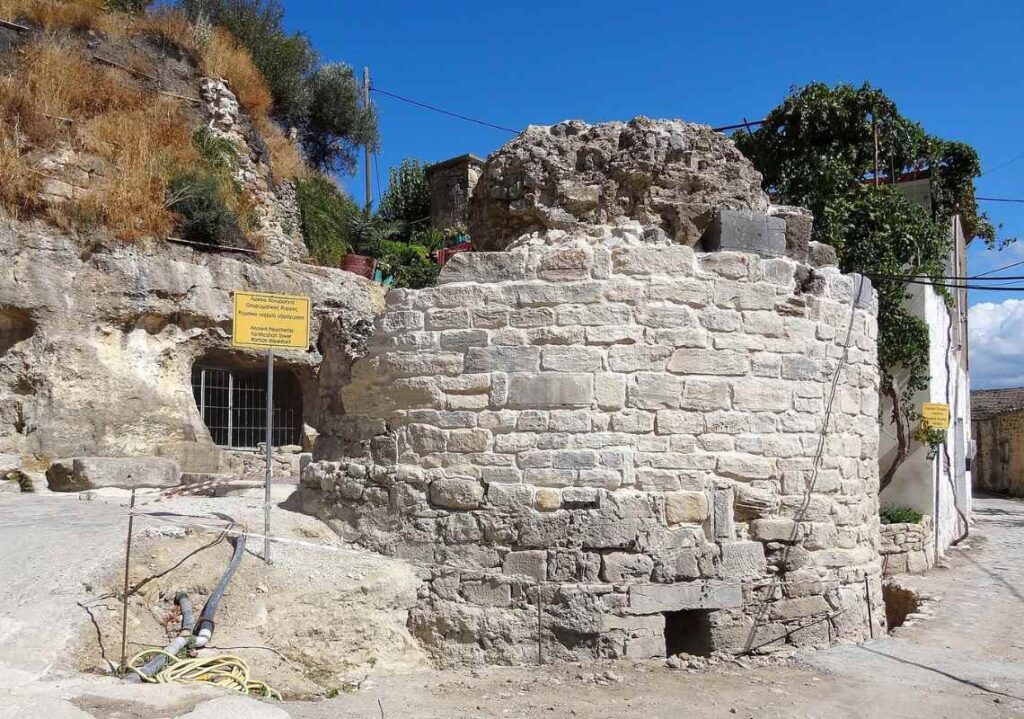
Ancient Polyrrenia (also spelled Polyrrinia) is an open-air archaeological site in the Chania region of Crete, no more than 7 km from the modern town of Kissamos. Polyrrenia was an important fortified city-state rival to the naval settlement of Phalassarna and engaged in continuous fights and rivalry with Knossos and Ancient Kydonia.
The ruins belong to different historical periods, showing a continuity of the settlement during the Hellenistic, Roman, and Byzantine periods.
Like other important city-states of the same period, Polyrrenia minted its own coins, exhibited in the Archaeological Museum of Kissamos. The city used to have imposing fortification walls, which are still visible in most of their extension. At the top of the acropolis (standing at about 400 meters a.s.l), there’s a well-preserved fortification of Byzantine origin.
If you visit, check out the fantastic Roman aqueducts and cisterns. These tunnels and cisterns are among the most remarkable remains. They were used to collect rainwater to distribute throughout the city through several public fountains.
RELATED ARTICLES:
~ Things to Do in Kissamos, Chania
~ Helpful Guide to Balos Beach, Crete
Ancient Aptera
📍 Chania region, opposite Souda Bay, about 20 minutes from Chania town. (35.463288 N, 24.141346 E)
🚍 There’s no public transport service. You can get there by car or private transfer.
💰 Full ticket €4, reduced €2.
⏰ Open from 8.30 a.m. to 6 p.m. Closed on Tuesdays.

The archaeological site of Aptera is about 200 meters above sea level and overlooks the natural bay of Souda on the northwestern coast of Crete. The site has Minoan origins (3500-1000 BC) and was located between two important ports: one down on the bay, currently the popular Marathi Beach (known as Minoa), and the other in the village of Kalyves (known as Kisamo).
The city was also an important settlement during the Geometric (1000-685 BC) and Hellenistic (323-67 BC) periods, as well as during the years of the Roman Empire (1000- 685 BC). Among the different things to see in and around Aptera, don’t miss the impressive Roman Aqueducts, the Ancient Theater, and the remains of an early Roman Villa.
Inside the site, you can also check out the small but beautiful theater, which has been fully restored. Just outside the palace, don’t forget to visit the Ottoman Fortress overlooking the Bay of Souda.
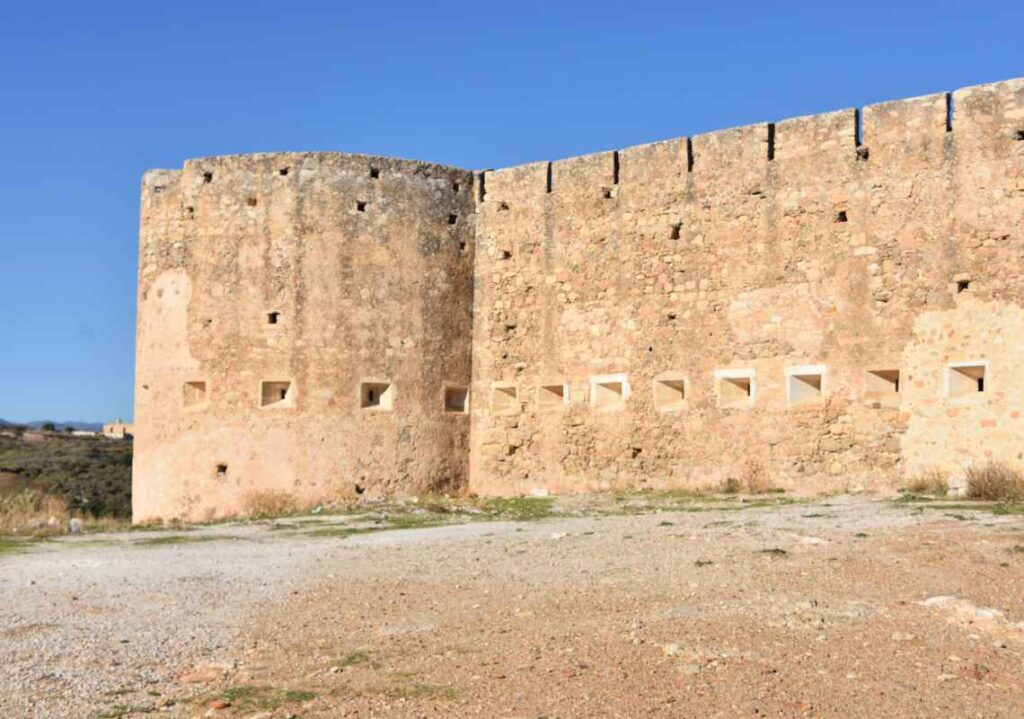
>> You can read more about the Theater of Aptera restoration process here.
>> Package ticket (€6) (gives access to Aptera, Archaeological Museum of Chania, Archaeological Museum of Kissamos, Byzantine and Postbyzantine Collection of Chania, which lasts for 3 days.
Ancient Eleftherna
📍 Rethymnon region, about 40 minutes southeast of Rethymno city. (35.323914 N, 24.677199 E)
🚍 There’s no public transport service. You can get there by car or private transfer.
💰 Museum and Archaeological site €8 (reduced €4. Only the museum €6 (reduced €3).
⏰ Open from 10 a.m. to 6 p.m. Closed on Tuesdays.
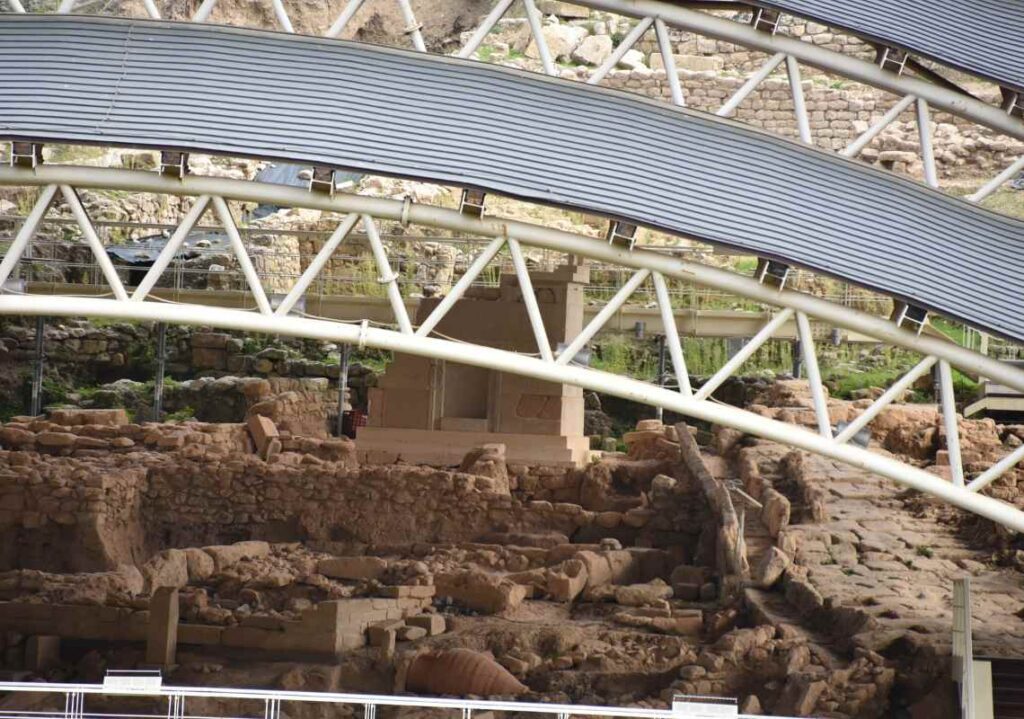
The settlement of Ancient Eleutherna stands about 380 m above sea level. The remains brought to light belong to different historical periods, dating from the Geometric period until the Early Byzantine era.
On the site, you can see the ruins of buildings dating back to the Hellenistic and Roman periods, an Early Christian Basilica, and a cemetery from the Archaic period. Archaeologists have found evidence of continuous human occupation since the early Minoan period.
Archaeological Museum of Eleftherna
The small but relevant Archaeological Museum of Eleftherna can be very helpful. It offers interesting interactive proposals and audiovisual aids to the exhibition.
It’s located just a few hundred meters from the site and is a great aid for learning about the civilizations that occupied the area. The museum website can help you plan your visit better.
Ancient City of Lato
📍 Lasithi region, about 20 minutes from Agios Nikolaos (35.179187 N, 25.654068 E)
🚍 There’s no public transport service. You can get there by car or private transfer.
💰 Free admission.
⏰ Open from 8.30 a.m. to 3 p.m. (winter), 8.30 a.m. to 6 p.m. (summer). Closed on Tuesdays.

The settlement of Lato was a city-state that flourished during the Dorian period (4th – 5th centuries B.C.), although it’s believed that previous civilizations were also established in the area. Regarding border issues, the settlement is believed to have been in continuous conflict with the neighboring city of Olous (now under the sea).
When you visit, check the agora, an open space probably devoted to commerce and trade, with a square cistern and a small rectangular temple. Lato used to have a port, Lato Pros Kamara, where today stands the modern Agios Nikolaos. Lato Pros Kamara was a striving settlement that, by the middle of the 2nd century A.D., had become Lato’s administrative town while the original settlement was abandoned.
RELATED ARTICLE: Wikipedia – Lato
Archaeological Site of Olous
(sunken city)
📍 Lasithi region, Elounda, 20 minutes from Agios Nikolaos. (35.256071 N, 25.732972 E)
💰 – ⏰ Open archaeological area that can be visited at any time.
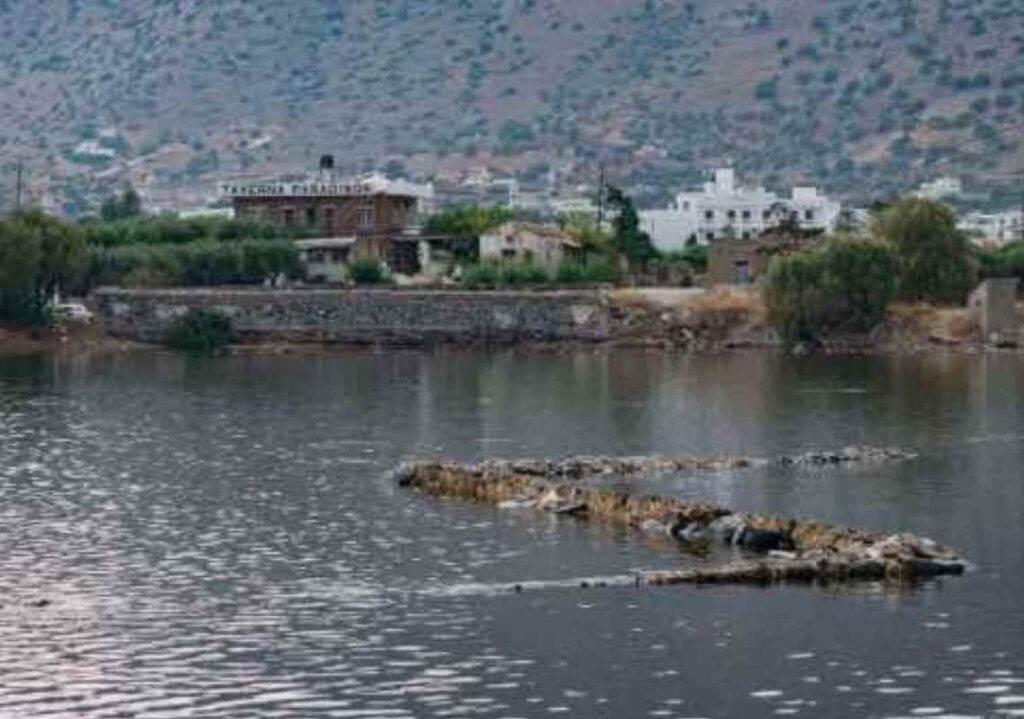
The Sunken City of Olous was one of the most important cities of Crete during the Minoan period. Olous minted its own coins, which featured images of the gods Artemis and Zeus holding a dolphin or an eagle. Today, the rest of the settlement remains under the sea and can be seen along the path connecting the city of Elounda with the Kolokitha peninsula.
Going snorkeling in the area is a great idea, although several parts of the site can be seen from the sea’s surface on a clear day.
>> Check out this guided snorkeling adventure to discover Olous Sunken City.
RELATED ARTICLE: Wikipedia – Olous
Archaeological Town of Gournias
📍Lasithi region, facing Mirabello Bay, is on the narrowest point to cross the island from north to south. (35.109389 N, 25.792623 E)
🚍 There’s no public transport service. You can get there by car or private transfer.
💰 Full ticket €3, reduced €2.
⏰ Open from 8.30 a.m to 3.30 p.m. Closed on Tuesdays.
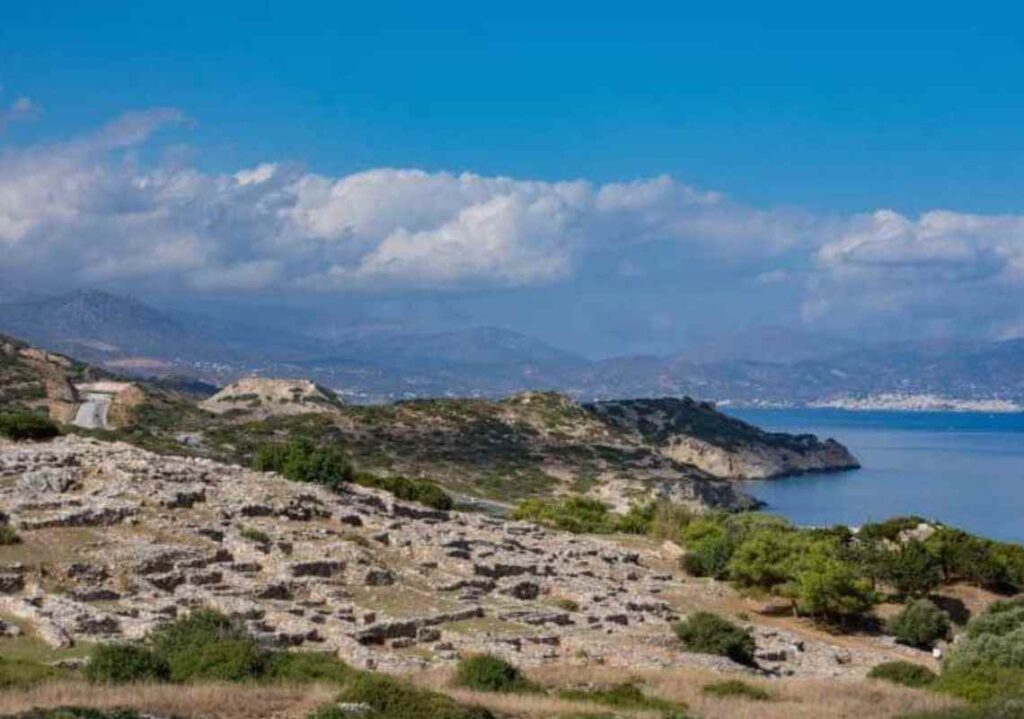
Gournia is a late Minoan town that has been fully excavated. Although the settlement’s original name remains unknown, it gets its present name from the hollow vessels found on the site, some of which are still in place. The settlement is very close to the sea, on Mirabello Bay.
According to archaeologists, the town can be divided into different neighborhoods, and two roads surround the settlement’s lower and upper areas.
Ancient City of Itanos
📍 Lasithi region, overlooking Itanos Beach. (35.263262 N, 26.264362 E)
🚍 There’s no public transport service. You can get there by car or private transfer.
💰 Free entrance.
⏰ Open from 8.30 a.m to 3.30 p.m. Closed on Tuesdays.
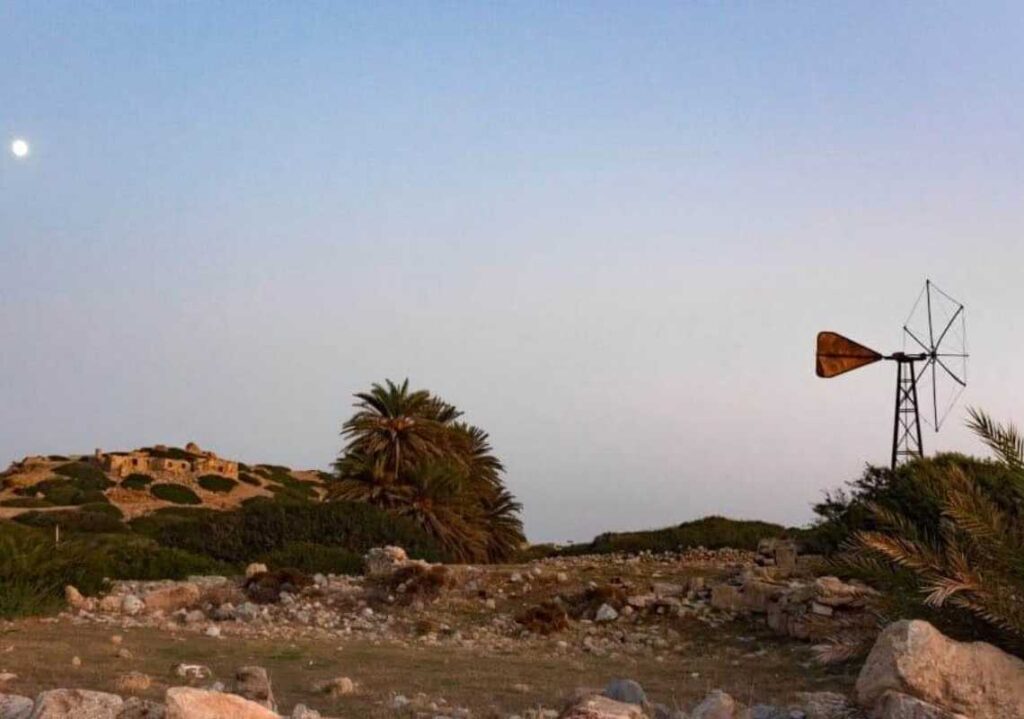
The ancient settlement of Itanos was an important city harbor in the Lasithi region on the island’s east coast. Although part of the ruins of Itanos can also be found below sea level, when you visit the settlement, you can see the ruins of houses and the walls surrounding the city. According to archaeologists, the site was occupied from the 10th Century B.C. to the 6th Century A.D.
One of the most remarkable findings in the settlement is a necropolis from the Hellenistic period and earlier funerary activities (Geometric period). The site overlooks Itanos Beach, a few minutes away from the famous palm tree beach of Vai.
RELATED ARTICLE: Best Beaches in Lasithi (East Crete).

Are you visiting Crete Soon?
Join my Facebook group for more tips, or plan your Crete itinerary with me!
Don’t Leave without Pinning!
Crete’s Archaeological Sites

Gabi, the Crete Insider
Hi, I’m Gabi — your go-to local expert in Crete! I’ve been living in Chania, Crete since 2016, and I’ve turned my love for the island into a full-time passion — guiding travelers, writing for travel media, and curating local experiences.
I co-authored DK Eyewitness Top 10 Crete and other guides. I run the blogs The Tiny Book, Greece Planner, and My Cretan Recipe. Through this platform I help travelers design unforgettable trips to Crete.