

Bus Travel in Crete: How to Move Around the Island without Renting a Car
Bus travel in Crete: This guide was written for travelers who plan to visit Crete without renting a car. Complete guide to public transport on Crete. How far can you go, how much will you spend, pros & cons, and a lot more!
Ever wonder if it’s possible to travel to Crete by bus? Although the answer depends on your holiday style, we have some good news. Crete is navigable by bus, at least to the main settlements. Exploring the Crete without needing a rental car is easier than you might think. This guide on traveling in Crete using the bus will help you navigate the island’s extensive public transport system. Discover public transport in Crete, move around in Crete without a rental car, and fully explore the local culture and breathtaking landscapes.
📍 Must-do: Balos Cruise 📍 Knossos Palace 📍 Check rental car rates for Crete 🚗
First, buses are your only option for traveling around Crete with public transport. There is no train system on the island. Thankfully, the bus services on the island are reliable, and the roads are in good condition, at least the most important ones.
Of course, there will often be mountains you must cross or go around. Although not every village or remote beach is accessible by public transport, the bus services in Crete have an excellent reputation.
The coaches are new, the buses arrive on time, and there are short—and long-distance connections, mainly in the island’s northern part.
Sometimes, the buses are so efficient and reliable that it might seem like you’re not in Greece anymore. I’m sure you’ll appreciate that German-like punctuality. Want to know more? Let’s dive deeper into the world of Cretan buses!


📌 Are you skimming through the post and have no time to read it now? Save it on Pinterest and read it later!
The Bus Network in Crete
Imagine two worlds: a flat plateau in the north and mountainous terrain in the south. Cretan buses view the island this way and mostly stay in the north, just like our long-forgotten transport buddies, donkeys, would.
In short, if you want to travel around Crete without a car, sticking to the north and avoiding the south is easier. Traveling along the southern part of the island would mean a lot of backtracking along routes with infrequent bus services. After all, the main bus stations are in the northern cities of Chania, Rethymno, Heraklion, and Agios Nikolaos.
So, if you are a city bird, you’re in for a treat. There are several daily connections between those main destinations. At the same time, you’ll also find regular buses to the largest villages and tourist hubs.


Most Common Bus Routes in Crete
If you’re traveling in Crete by bus, you should know that the most common bus service in Crete is between Heraklion and Chania since both cities have international airports. You can catch a bus every hour from 5 a.m. to 9 p.m.
If there is no traffic, the trip will take 2 hours and 45 minutes, but chances are it will be around 3 hours, especially during peak hours.
The bus also stops along the way, with Rethymno being the most important one. Here, many passengers will get off, and more will join.
Other common bus routes from Heraklion are the services that take you south to Matala or east to Agios Nikolaos. From Agios Nikolaos, you can easily reach Ierapetra, another known destination.
Finally, there are less frequent but popular bus services from Chania to the South. Paleochora is the main terminal in the island’s southwest, and most tourists ask about getting to Elafonisi by bus. Depending on the season, you might find a direct 2-hour bus to Elafonisi that leaves the Chania station at 9 a.m. and returns at 4 p.m.

Bus Stations in Crete
Almost every large town has one bus station, usually centrally located. The only exception is the capital, Heraklion, which has two.
The central bus station serves the north coastline of Crete and is only a five-minute walk from the ferry port. The second Heraklion bus station serves local destinations such as Knossos, Rogdia, and Gortys.
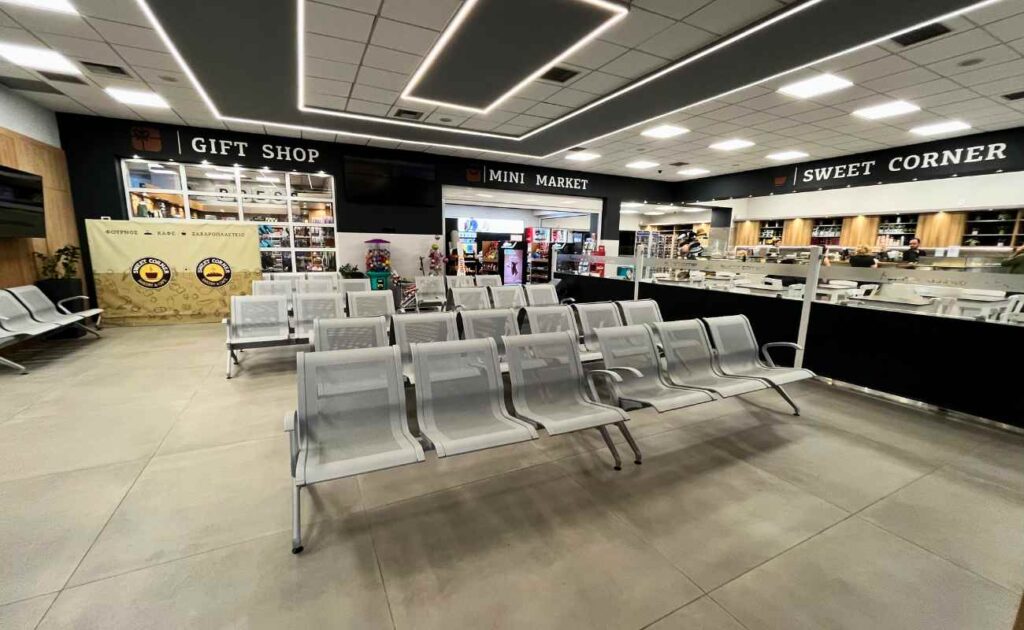
Finally, don’t expect to find many amenities at most bus stations. They usually lack services you’d expect in large towns, including mini-marts, luggage lockers, and toilets. Stations in small villages might be as big as an isolated kiosk or sign at the side of the road.
However, the new bus station in Heraklio has luggage lockers, a restaurant, and a few other amenities. But this station is brand new… and it’s the exception! Likewise, the main bus stations in other important cities have been recently renewed (including Chania and Rethymnon), and more (and better services) will be available.


The Urban Bus Network in Crete
While most intercity buses are green (or white), you might encounter some blue buses while walking around the streets. Those are local buses that serve the settlements of Chania, Rethymnon, Heraklion, and Agios Nikolaos, the four largest cities in Crete.
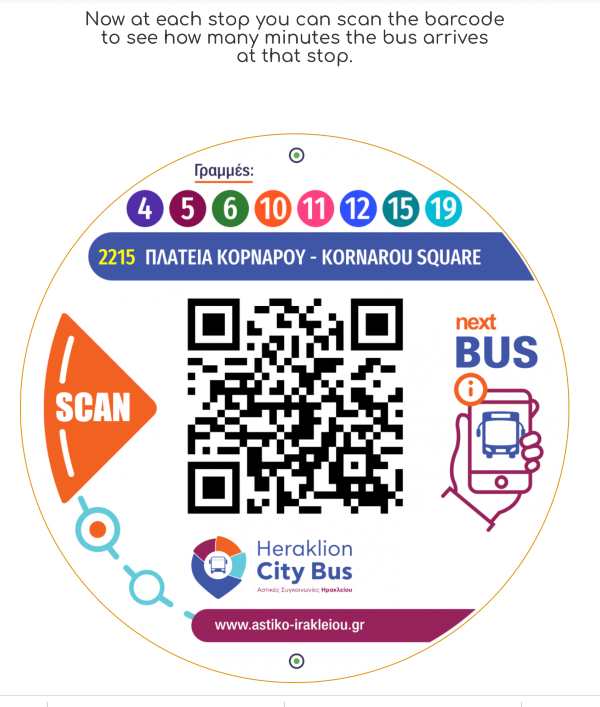
Although the urban buses won’t go far from the city center, they are an excellent solution for visiting the suburbs. For example, in Heraklion, you can hop on Bus No2 to visit the archaeological site of Knossos.
Just remember to buy a ticket from a kiosk before boarding the bus and always keep the ticket with you; controls are not rare, especially in summer.
- For Heraklion buses, always check this website
- Your contact point for Chania buses will be this page.


Tips to Travel in Crete by Bus
Keep these suggestions in mind when navigating the island on a bus…
Check the timetable in advance
Although there is no unified Crete bus app, you can find some schedules here. Still, the most reliable way to know the Crete bus timetable is old-fashioned; this means viewing the itinerary from the posters on bus stations. I know it’s pretty archaic, but it is exceptionally reliable.
Keep an eye out for street bus stops
You don’t always need to walk to a normal-looking bus station to catch a bus. As long as you stand on the right side of the bus route, you only have to locate the closest bus stop.
Feel free to hail the bus from the roadside if all else fails. The driver may be kind enough to make a special stop for you.
Watch out for changes in the timetable during the holidays
Next to tracking the seasonal updates in the Crete bus timetable, you must be extra careful if you travel on a public holiday. For example, the 15th of August is a national celebration, so many public services have unique itineraries. Similar dates include the 1st of May, the 28th of October, and Greek Easter.

Sit on the window facing the coastal side of the bus
If you travel along the northern coastline, sit closer to the ocean. The views along the way can be incredible at times, so be ready for them. Even if the sun faces your way, remember that all the Cretan buses are air-conditioned so you won’t get hot easily.

Bring cash on the bus
Although you can use a card to buy tickets at central bus stations, always remember to bring cash, especially if you take the bus from a village. Although the main stations offer the possibility of purchasing your ticket with a debit or credit card, this might not always be the case in small towns and remote locations.

Crete bus prices may be reasonable since they are government-regulated but have kept increasing. If you want an estimate, a short bus trip may cost around 5-10 euros, whereas a long-distance service will set you off from 10 to 20 euros.

Consider using both buses and car rentals
Many travelers think they should travel only by car or public transport in Crete. However, mixing the two strategies may save you a ton while giving you the freedom to get to more remote places.
In other words, you can find affordable car rentals for specific activities that are only part of your holiday. In short, if you want to travel to Crete by bus, you will love the island’s efficient public transport. Use the bus to save on transport costs, and feel free to rent a car if you want to go off the beaten path.



Are you visiting Crete Soon?
Join my Facebook group for more tips, or plan your Crete itinerary with me!
Pin for Later
Complete Guide to Travel in Crete By Bus



Gabi, the Crete Insider
Hi, I’m Gabi — your go-to local expert in Crete! I’ve been living in Chania, Crete since 2016, and I’ve turned my love for the island into a full-time passion — guiding travelers, writing for travel media, and curating local experiences.
I co-authored DK Eyewitness Top 10 Crete and other guides. I run the blogs The Tiny Book, Greece Planner, and My Cretan Recipe. Through this platform I help travelers design unforgettable trips to Crete.


