
Visitor’s Guide to Gortyna (Gortyn): A City That Shaped the History of Crete
Although often overlooked, Gortyna is one of the most important archaeological sites in Crete. Located in the Messara Plain (Heraklion region), the site tells the story of over 3,000 years of history. Gortyna was once the island’s Roman capital, home to Europe’s oldest written law code, and a place of power long before Heraklion rose to fame. This guide to visit Gortyna helps you walk through layers of Minoan roots, Classical law, Roman grandeur, and early Christian faith—all in one place.
📍 Must-do: Balos Cruise 📍 Knossos Palace 📍 Check rental car rates for Crete 🚗
Gortyna, Gortys, and even Gortyn, one of Crete’s premier archaeological sites. It’s located 45 km south of Heraklion and houses the famous Gortyn Code, among other interesting things to see.
If you take a look at my article about important moments in Crete’s history, you’ll see how this hidden spot holds a unique place as one of the few sites that maintained its importance across multiple major historical periods, from the Minoan era through the Roman and Byzantine times.
Gortyna through Times
The site, located a few minutes from Phaistos, in Crete’s Minoa Pediada area, is part of an era that shaped the foundations of Greek civilization.

1. Early and Minoan Origins
Evidence shows that Gortyna was inhabited as early as the Neolithic period, around 7000 BC. Archaeological finds—including tools and pottery—indicate continuous human presence through the Minoan era (2600–1100 BC).
We know today that Gortyna was not one of the main Minoan centers, yet it was clearly an active settlement during this time. Artifacts from the Early Iron Age (around 1100 BC) also show that the site remained occupied after the fall of the Minoan civilization, laying the foundation for its later rise as a powerful Dorian city-state.
2. Dorian and Classical Importance

After the Dorian invasion (c. 1100 BCE), Gortyn grew into one of the major city-states of Crete. By the Classical and Hellenistic periods, it had become a powerful and independent polis.
From this period, we still can see on site, the Gortyn Law Code, a monumental inscription carved into a wall in the 5th century BCE. This is the oldest and most complete example of Greek law we have, and it offers invaluable insights into ancient legal systems, gender roles, slavery, and family life.

The Gortyn Code
Written in the Dorian dialect, is the most complete surviving example of ancient Greek law outside of Athens and offers insight into the legal traditions of Crete. Dating from around 525–400 BCE, it’s inscribed on stone in the agora of Gortyna.
The Code covers several legal matters, including property rights, marriage, inheritance, and class distinctions. It reflects a society with strict social hierarchies and evolving legal norms. It imposes fines for offenses related to personal conduct and family matters, with penalties based on social status. The text also shows protections against unlawful detention before trial.
3. Roman Capital of Crete and Cyrenaica

Under Roman rule, Gortyna flourished as the capital of the Roman province of Creta et Cyrenaica (which included part of modern-day Libya).
It became the largest city on the island, with a population in the tens of thousands. The city had baths, temples, theaters, aqueducts, and a grand agora, a synonym of wealth and strategic importance.

✈️ Not Sure How to Fit It All In?
Let’s make your Crete trip stress-free! A local expert can map out the perfect itinerary based on what you love — no generic plans here.
🗺️ Let’s Plan Together4. Early Christian and Byzantine Center

Gortyna also became a center of early Christianity. It was the seat of the first bishopric on Crete, and according to tradition, St. Titus, a disciple of St. Paul, served as its first bishop.
On the site, you can still visit the impressive ruins of a large basilica dedicated to St. Titus (6th century AD), reflecting its religious significance during the early Byzantine period.
5. Final Decline
Gortyna remained important well into the first Byzantine period, when, from the 4th century, was the capital of a separate province of Crete.
But it was eventually destroyed by Arab raids in the 9th century AD (following the Arab conquest of Crete in 824). After that, it never fully recovered, and nearby Heraklion began to rise in prominence.
What to See in Gortyna

Once a thriving center of administration and culture, the ruins can be easily visited if you get there from Phaistos, Matala, or even Heraklion.
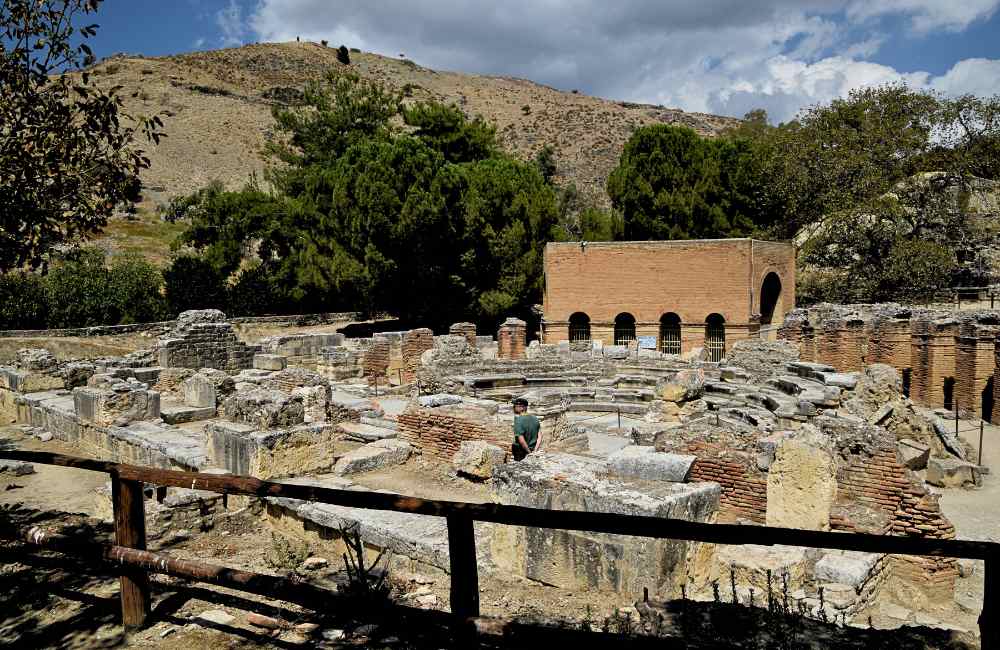
Excavations shows the site was inhabited from the Neolithic period with an area was fortified with walls. On the citadel hilltop, you can see the remains of a 7th-century BC temple, where many artifacts like clay figurines, paintings, and sculptures have been found. Graves from the geometric period lie just south of the citadel.

Down below, the most remarkable structure is the ancient agora and the nearby temple of Pythian Apollo as well as ruins of a sanctuary dedicated to Demeter.
The Roman period left a rich architectural legacy in Gortyna, centered around the Praetorium (from the 1st century AD), which was the seat of the Roman governor. There are also ruins of Roman baths and a temple dedicated to Apollo.

I suggest walking through the remains of a Roman theater and reach the law code inscription, carved on large stone slabs, just behind the theater.
Many pieces of this law code are housed in local and international museums, but some remain visible in a modern shelter built over the ruined Odeon.

Throughout the site, you can also see sophisticated cisterns and channels engineered by early inhabitants as well as the urban layout with streets and communal spaces offering insights into early daily life.
The site also hosts a collection of Roman copies of Greek statues from the 1st to the 3rd century AD.

Gortyna in Greek Mythology
Gortyna is tied to Greek mythology as the legendary site where Zeus, disguised as a bull, abducted Europa. This myth gave birth to three legendary rulers connected to Crete’s Minoan palaces.
Also, according to Homer’s Odyssey, Menelaus and his fleet were shipwrecked off the coast of Gortyna on their return from Troy, linking the city to epic Greek storytelling.
How to Get There
The easiest way to reach Gortys is by car. The drive from Heraklion takes roughly one hour. The site located in Agioi Deka, can also be visited after a trip to nearby Phaistos Minoan Palace, which is no more than 20-minutes away. There’s dedicated parking area near the entrance (free).

Opening Hours
- Summer Season: 8 a.m. to 7 p.m. (Opening times change during the season and on special holidays and events. Always check the for the latest information here or call the site before the visit (+30 28920 31144).
- Winter Season: 8 a.m. to 3 p.m.
Ticket Fees
- Check out the official website for updated prices.
Important Notice on Entrance Fees
Visitor fees at archaeological sites across Crete have seen significant increases. Gortyna now costs €10 (previously €4), a 150% rise. Knossos has increased from €15 to €20 (33.3%), and Spinalonga from €8 to €20 (150%).
We strongly recommend confirming ticket prices directly on-site or via official channels before your visit, as recent increases have been substantial and, in many cases, unexpected.
While supporting heritage conservation is important, the sharp scale of these changes understandably raises concern among travelers and culture lovers alike.
Although I try to keep guides updated, it's often impossible to track every price change across the dozens of archaeological sites on the island. Please always verify current fees before planning your visit.
Food Area
For a quick refreshment, there is an on-site kiosk offering a selection of snacks, coffee, and soft drinks. This spot is perfect for a short break during your exploration of the ruins. Over here, you can also find books about Gortyna and souvenirs.

Near Gortyna You Can Also Visit...
Phaistos Palace
One of the most significant Minoan palace complexes on Crete. Here, you can explore the intricate layout of the second-most important Minoan Palace on the island.
Matala
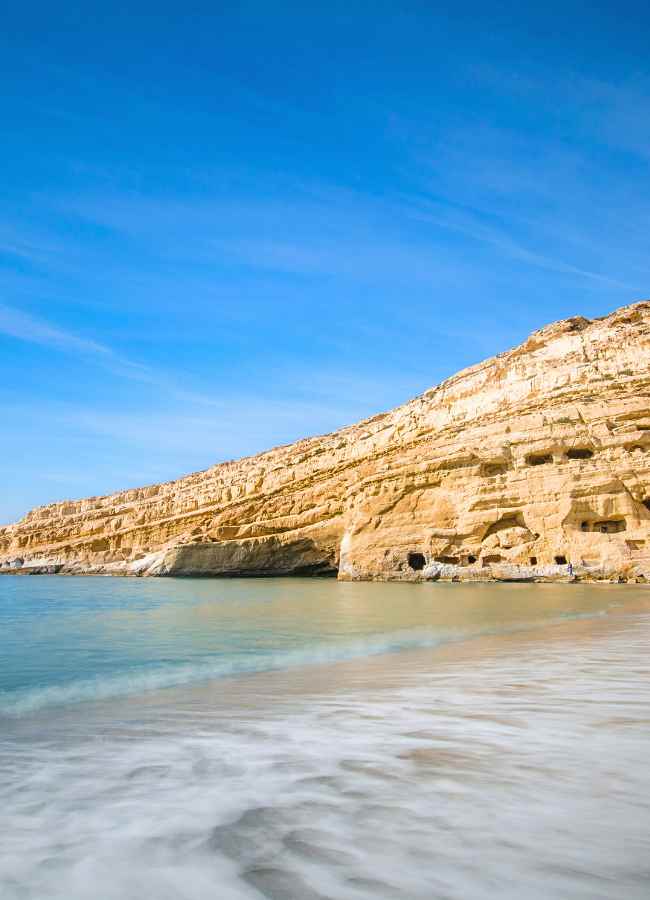
Matala, once popular among 1960s hippies, is a coastal village with ancient cliffside caves, which also served as makeshift homes for bohemian communities.
Agia Triada Archaeological Site
A short journey from Gortyna, Agia Triada is another important archaeological site offering valuable insights into the spiritual practices and artistic achievements of ancient Crete.
Kommos Site
Situated on Crete’s south coast near Matala, Kommos was once a Minoan harbor. You can see the remains of docks, storerooms, and public buildings that speak about the importance of maritime trade in ancient times.

Are you visiting Crete Soon?
Join my Facebook group for more tips, or plan your Crete itinerary with me!
Pin for Later!
How to Visit Gortyna Archaeological Site in Crete



Gabi, the Crete Insider
Hi, I’m Gabi — your go-to local expert in Crete! I’ve been living in Chania, Crete since 2016, and I’ve turned my love for the island into a full-time passion — guiding travelers, writing for travel media, and curating local experiences.
I co-authored DK Eyewitness Top 10 Crete and other guides. I run the blogs The Tiny Book, Greece Planner, and My Cretan Recipe. Through this platform I help travelers design unforgettable trips to Crete.
→ Book your 1:1 consultation with a local to plan your Crete escape
🚘 Trusted Car Rental in Crete
CAR RENTAL IN CRETE ~ Enjoy peace of mind by hiring a car from a local company. Rethymnon Cars offers excellent cars, full insurance with no excess, no credit card deposit, and no extras.


