
Museums in Lasithi (East Crete) That You Will Enjoy Visiting
Discover the history, art, and folk culture culture of East Crete in these must-visit museums in Lasithi, where ancient artifacts, traditional crafts, and fascinating exhibits await.
Crete will fascinate you not only with its spectacular landscape but also with its long and rich history. And there is no better way to discover it all than visiting a museum wherever you are on the island. Now, if you happen to be in Lasithi, you are in for a treat. This article will show you the most worth-visiting museums in East Crete!
📍 Must-do: Balos Cruise 📍 Knossos Palace 📍 Check rental car rates for Crete 🚗
Lasithi Museums You Should Visit
When spending time in the eastern region of Lasithi, in Crete, there will be so much to add to your to-do list that you could feel a bit overwhelmed. However, with some planning and organization, it is possible to fit a visit to some of these museums into your itinerary. These are just some of the museums in Lasithi that you should definitely visit!
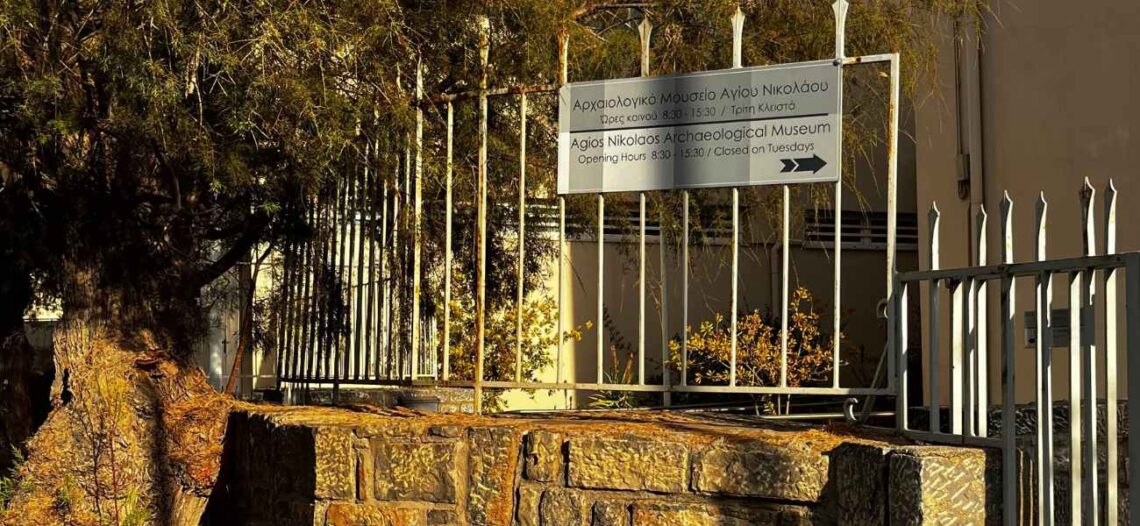
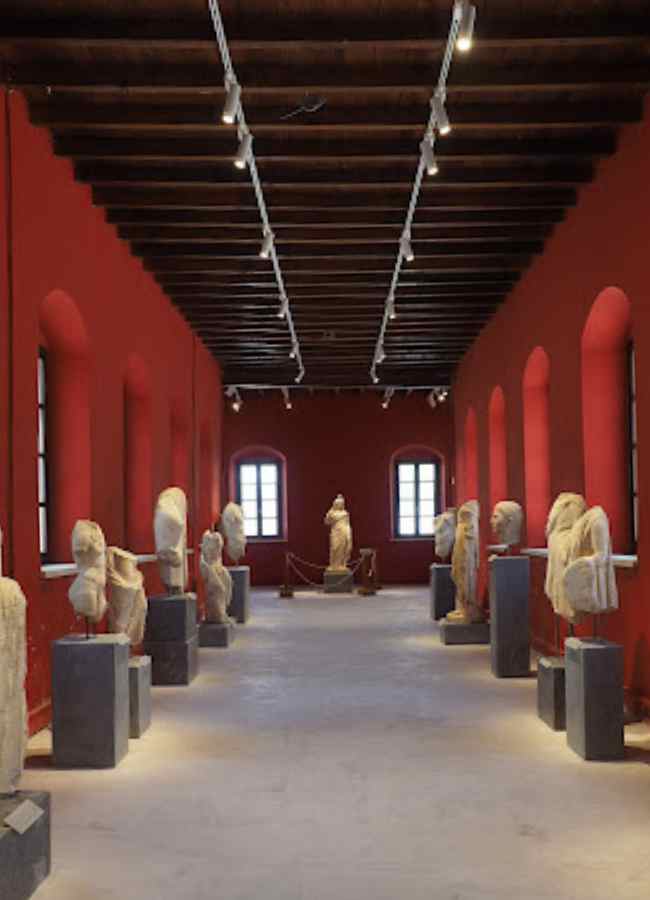
Archaeological Museum of Agios Nikolaos
📍 74, Konstantinou Palaiologou Street, Agios Nikolaos.
Cretan history is so rich that almost every city, town, and village has a dedicated museum to showcase an aspect of the island’s past. And if you are in Agios Nikolaos, you do not want to miss a visit to their archaeological museum which has recently opened after years of works.
The museum features antiquities from Eastern Crete (from the Neolithic era until the Roman times) including the impressive grave goods from the early Minoan cemetery of Agia Fotia and finds from the Minoan Palace of Malia.
Opening Hours
Mon and Wed-Sun: 8.30 a.m. – 3.30 p.m.
Tue: closed.
❄️ In the winter season all visitors are entitled to a reduced ticket.
Prices
The entrance ticket is € 6 (total price), and the reduced ticket is € 3.
Special ticket package: 15€ (valid for 3 days)
With access also to: Spinalonga, Archaeological Site of Lato, Panagia Kera Church.
Special ticket package 8€ (valid for 3 days)
With access also to: Archaeological Museum of Sitia, Archaeological Collection of Ierapetra.


📌 Are you skimming through the post and have no time to read it now? Save it on Pinterest and read it later!
Archaeological Museum of Sitia
📍 Sitia National Road, Piskokephalos, Sitia.
The port town of Sitia houses one of the most important archaeological museums in Lasithi. Here, you will find a unique collection of sculptures, mosaics, and artifacts from Eastern Crete. In short, it is one of the best museums in Sitia to teach you all about local history.
Among its most remarkable exhibits you can find Minoan artifacts, including a gold and ivory statue from Palekastro, from the pre-classical era- a 3500-year-old sculpture of Kouros. It also houses finds from the Minoan Palace of Kato Zakros and an ivory pyxis from Mochlos. In this museum, there are also amazing exhibits from former Hellenistic cities in eastern Crete.
Opening Hours
Mon and Wed-Sun: 8.30 a.m. – 3.30 p.m.
Tue: closed.
❄️ In the winter season all visitors are entitled to a reduced ticket.
Price
€ 2.
Special ticket package 8€ (valid for 3 days)
With access also to: Archaeological Museum of Agios Nikolaos, Archaeological Collection of Ierapetra.

Folklore Museum of Agios Nikolaos
📍 1 Konstantinou Palaiologou Street, Agios Nikolaos.
Museums in Agios Nikolaos and Crete are not only about archaeology. Folklore is another common subject among Cretan museums. And Agios Nikolaos is home to one of the most prestigious folklore museums in Crete.
Located in the center of Agios Nikolaos, the museum houses authentic items of Cretan art that reflect traditional life on the island. Since 2018, the entrance to the museum is free-of-charge, but you are welcome to leave a voluntary donation.
Although the exhibits are not many, you can easily spend hours examining every object and learning more about its history. It is an ideal way to get an understanding of the old Cretan way of life.
Opening Hours
Mon and Wed-Sun: 2 p.m. – 630 p.m.
Free of charge.

Folklore Museum of Neapolis
📍 Plateia E. Venizelou, Neapoli.
If learning about recent Cretan history fascinates you, make sure to spend some time at the Neapoli Folk Museum. You will get to explore almost every aspect of life in the area since the 1800s. After all, the museum features a rich collection of pictures, wood carvings, and household objects dating as far back as the 19th century.
The entrance is free, courtesy of the village community that invites you to learn more about Neapoli and its development over the past 200 years.
This little museum is a testimony that there is a story to be told in every corner of Crete. This museum in particular is hosted in am 1870’s historic building originally built to house a hospital but it actually houses Neapoli’s high school for over a century. If you happen to be in the region, make the time for this museum -you won’t regret it.
Opening Summer Hours
Daily 10 a.m. – 1 p.m. & 8 p.m. – 9 p.m.
❄️ In the winter you must book the visit in advance.
Price
€ 2.
Special ticket package 8€ (valid for 3 days)
With access also to: Archaeological Museum of Agios Nikolaos, Archaeological Collection of Ierapetra.

🎯 LOCALS KNOW BETTER: Check before you visit, opening hours of this and many other small museums on the island may vary according to the season.
Archaeological Collection of Ierapetra
📍 National Resistance and Democracy Square, Ierapetra.
In the south of Crete, the seaside town of Ierapetra hides another secret worth exploring. The Archaeological Collection of Ierapetra is your doorway to discovering all about ancient Cretan life. It is housesd in the building of an Ottoman School from 1899.
The art displays, pottery figurines, and ancient statues make this establishment one of the best Museums in Ierapetra.
At just €2, you will have the opportunity to get an in-depth look at ancient Cretan art. Although it is a great place to visit in the region, this museum is under renovation and can be closed when you get there.
The good news is that the building is downtown, so you will probably pass through it during your visit to Ierapetra. If you find it open, do not miss the chance and visit it.
Opening Hours
Mon and Wed-Sun: 8.30 a.m. – 3.30 p.m.
Tue: closed.
❄️ In the winter season all visitors are entitled to a reduced ticket.
Prices
Full ticket € 3, reduced ticket € 2.
Special ticket package 8€ (valid for 3 days)
With access also to: Archaeological Museum of Agios Nikolaos, Archaeological Museum of Sitia.
Rodanthi Museum
📍 78 Ioannou Klontza St., Kritsa.
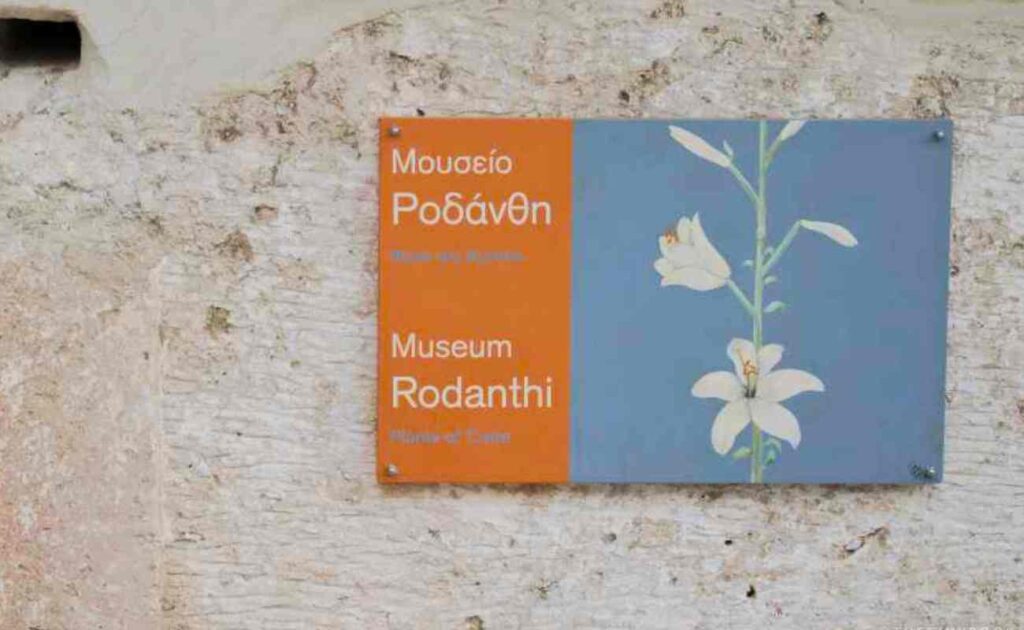
The mountain village of Kritsa houses one of the most unique and well-attended museums in the Lasithi Plateau. Rodanthi Museum is an invitation to explore a rare collection of plants, herbs, and fossils dating back millions of years.
After your visit here, you will fall in love with Crete even more, if that is possible. Not only will you admire the natural dyes, smell, and taste of the museum exhibits, but you will also have the opportunity to participate in various activities that will connect you with nature and leave you in awe of its glory.
All these would not be possible without the love and determination of the naturalist and host of the museum, Giorgos Afordakos. The exhibitions are hosted in a historical building with preserved areas such as a traditional kitchen. Over here, you can take a look at ancient tools, and learn about ancient food preservation methods.
Opening Hours
Daily: 9 a.m. – 7 p.m.
Free admission.
Kritsotopoula Museum
📍 168 Kritsotopoula Street, Kritsa.
Rodanthi is not the only museum in the tiny village of Kritsa. The name Rodanthi comes from a female figure in the history of the island and Kritsa.
Kritsitopoula Museum tells the story of Rodanthi through the eyes and guidance of one of her ancestors, named Maria. Rodanthi was a village resident who killed a Turk politician during the Greek uprising in 1817 and joined the rebel group of Lasithi Plateau dressed as a man.
Used as a nickname for Rodanthi, Kritsotopoula roughly translates as the Daughter of Kritsa. So, yes, Rodanthi and Kritsotopoula museums are two entirely different museums that share the same name in a way. But only the latter tells the story of this figure. At the same time, it also invites you to explore Cretan life in the early 19th century when Greeks were rising against Turkish occupation.
Opening Summer Hours
Mon-Sat 10 a.m. – 4 p.m.
❄️ In the winter you must book the visit in advance.
Free admission.

Archaeological and Folklore Collection of Myrtos
📍 Myrtos 246, Myrtos.
In the south of Crete, the seaside village of Myrtos is home to one of the most fantastic museums in Lasithi. The Archaeological and Folklore Collection of Myrtos features a rich collection of Minoan finds, Roman sculptures, and coins from the 3rd up to the 20th century.
There is even a room dedicated to the village’s history, focusing on the Second World War. Not to mention the live reconstruction of a nearby Minoan village.
In short, this small museum will take you on a trip through the ancient history of Myrtos, Crete, and the Minoans. It is a must-visit if you are in the area.
Opening Hours
Mon-Sat 8.30 a.m. – 1 p.m.
Free admission.

Zakros Water Museum
📍 Zakros Village.
Near the lush Greek Springs of Zakros village, the Museum of Water and Hydraulic is a thematic museum that aims to showcase the importance of water in Cretan life through ordinary objects of the past. Its vision is to educate and motivate the audience to use water rationally and with respect.
The museum is housed in one of the eleven watermills that used to supply water to the entirety of Eastern Crete.
Some of its highlights include the 8-meter-long well, old vases, and various tools that the Cretans have used to bring water into their fields and homes. You will certainly remember this visit!

Opening Summer (May – October) Hours
Daily 10 a.m. – 1.30 p.m. & 6 pp.m. – 8 p.m
Price
€ 2.
Folklore Museum of Palekastro
📍 Evropis 52, Palekastro.
All the way to the easternmost region of Crete, the Folklore Museum of Palekastro will give you a glimpse into the lifestyle of ancient Cretans.
Your visit will start with a perfect view of an authentic Cretan home, filled with furniture and utensils of the past.
Then, you will see a series of tools and machinery used by locals from the Turkish denomination to 1960. You will even witness authentic costumes and clothing of the past.
Opening Summer (May – October) Hours
Daily 10 a.m. – 1.30 p.m. & 6 p.m. – 8 p.m.
Price
€ 2.

Toplou Monastery Museum
📍 Toplou, Lasithi.
A few kilometers to the north of Palekastro, the area around Toplou Monastery is renowned for its landscape and its nearby Vai Beach. However, the building and its museum stand out among all. The Toplou Monastery Museum is dedicated to Byzantine art and religious relics. In other words, you will walk between valuable paints and pictures of holy men within Christianity.
There is also a very interesting section in the museum dedicated to the exhibition of war objects including weapons, helmets, and a very unique radio used to communicate during the times of the occupation of the island.
The entrance fee is € 2.5 and includes visiting both the monastery and the museum. In short, the museum is well worth exploring on your way to discovering the rough beauty of the Cretan landscape and beaches in the area.
Opening Hours
Mon – Sun: 9 a.m. – 1 p.m. & 2 p.m. – 6 p.m.
Price
€ 2.5.

Folklore Museum of Hamezi
📍 Chamezi, Lasithi.
A few kilometers outside Sitia not far from Richtis Gorge, the traditional village of Hamezi has one of the most unique folklore museums on the island. Here you will get an in-depth look at traditional life in Crete during the last century. All displays are located within an authentic Cretan house with archways, typical of the local architecture.
The use of arches naturally divides the building into four functional rooms without breaking the integrity of the whole. Among the many displays on the house, you cannot but admire the simplicity and raw beauty of common everyday items, such as the lovely set of chairs with a low dining table.
Opening Hours
Mon, Wed, Fri 10 a.m. – 1 p.m.
For other hours, you must book the visit in advance.
Price
€ 1.5.

In short, museums in East Crete may not have the publicity as the museums of Heraklion or Chania, but they have all the world’s charm. Thankfully, wherever you go in Crete, there is a story to hear. Look for the nearest museum and experience the beauty of Cretan history firsthand! Are you thinking about visiting any of these East Crete museums?

Are you visiting Crete Soon?
Join my Facebook group for more tips, or plan your Crete itinerary with me!
Are you visiting Crete Soon?
Join my Facebook group for more tips, or plan your Crete itinerary with me!
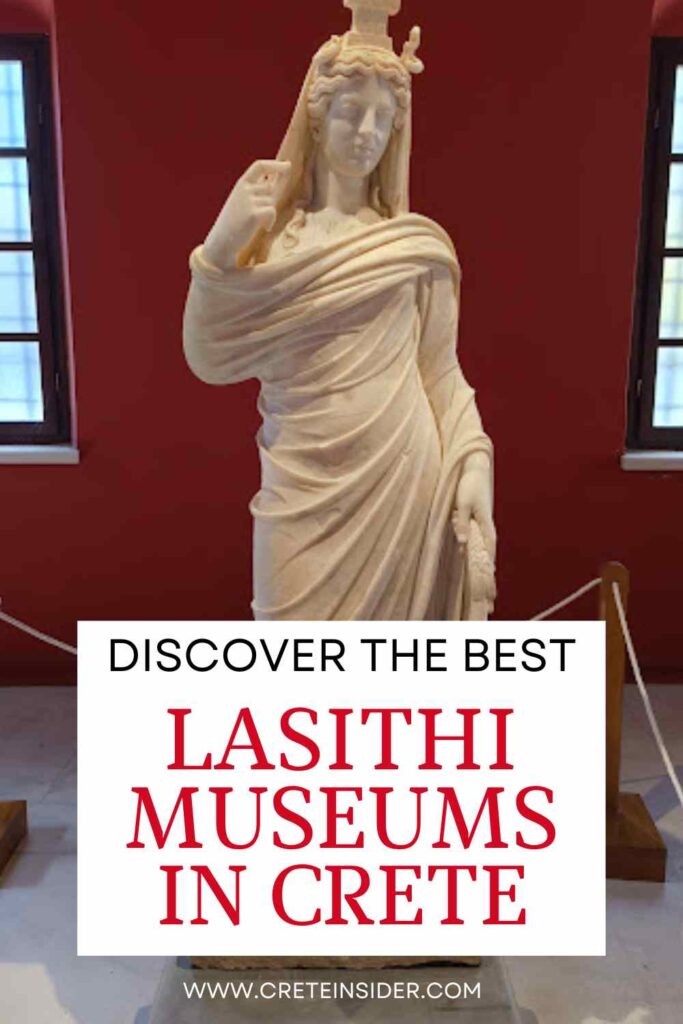
Pin for Later!
Guide to the Best Museums in Lasithi

Gabi, the Crete Insider
Hi, I’m Gabi — your go-to local expert in Crete! I’ve been living in Chania, Crete since 2016, and I’ve turned my love for the island into a full-time passion — guiding travelers, writing for travel media, and curating local experiences.
I co-authored DK Eyewitness Top 10 Crete and other guides. I run the blogs The Tiny Book, Greece Planner, and My Cretan Recipe. Through this platform I help travelers design unforgettable trips to Crete.
🚘 THE BEST WAY TO SEE CRETE IS BY CAR 🚘
Compare international car companies in Crete, or trust a reliable local company like Retyhmnon Cars.
Gabi, the Crete Insider
Hi, I’m Gabi — your go-to local expert in Crete! I’ve been living in Chania, Crete since 2016, and I’ve turned my love for the island into a full-time passion — guiding travelers, writing for travel media, and curating local experiences.
I co-authored DK Eyewitness Top 10 Crete and other guides. I run the blogs The Tiny Book, Greece Planner, and My Cretan Recipe. Through this platform I help travelers design unforgettable trips to Crete.


