

Guide to Driving in Crete + Tips for Car Rental
Driving in Crete and renting a car in Crete: Everything you need to know to explore the island at your pace, without relying on bus schedules and reaching every corner of Crete!
Before moving to the island, we would travel to Crete every year and explore off-the-beaten-track areas on road trips. The only way to discover the best of Crete is by car, this gives you a sense of independence that has nothing to do with bus schedules or pre-booked transfers. Once we moved to Crete, having our car was essential. Driving in Crete became second nature. Since I always recommend renting a car to explore the island, here’s all you need to know about renting a car and driving in Crete.
📍 Must-do: Balos Cruise 📍 Knossos Palace 📍 Check rental car rates for Crete 🚗
Why You Should Drive in Crete
There are many reasons why driving is the best way to explore Crete. It is the biggest Greek island and has a unique natural landscape; getting on the road can be the best way to appreciate that.
Crete is long and narrow, stretching for 260 km (160 miles) from west to east. Following that axis can take 4 to 5 hours. You can bet there’s a lot to see.
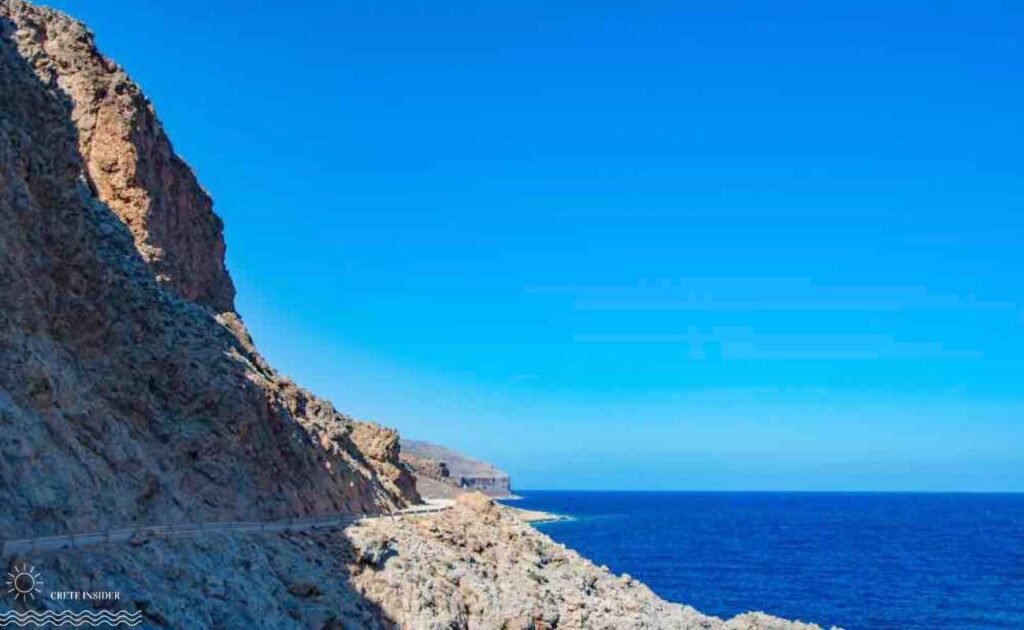
Stunning coastal drives, winding mountain roads, traditional villages, and undiscovered hidden spots are worth the drive. Besides, a car can take you where a limited bus schedule doesn’t go!
If you rely on public transport to move around, you will depend on the -often seasonal- bus timetable. You will also miss beautiful hidden beaches and spend most of your time on the tourist northern coast.

📌 Are you skimming through the post and have no time to read it now? Save it on Pinterest and read it later!
Are You Ready to Drive on Crete?
Driving in Greece, in general, and on Crete, in particular, is a controversial issue. Greece has long been known for its chaotic traffic, high rate of road accidents, and bad drivers.
European statistics prove all of the above. However, things are improving, and driving conditions seem to be changing slowly.
When it comes to Crete, though, some bad driving habits remain. Locals live by the siga siga philosophy (taking it easy) every day but then experience a sudden rush to arrive (no matter where or how) when they get on the road. Siga siga or “take it easy” is a typical trait of the Cretan character, except on the road!
Moreover, some roads could really use some improvement, whether their conditions or actual size. Crete is a mountainous, rather narrow island. As a consequence, our roads are very narrow. Some say that it’s a question of lack of space. I’d say it has more to do with political will. But let’s not get on that road (if you allow the pun).
Some roads need serious widening works more than just the usual pre-seasonal facelift. We could also do it with better signage—at least bigger, clearer, and more visible!

>> You can also read this road trip packing list for Crete.
In any case, believe me, you can — and will — enjoy driving on Crete. Especially if you avoid visiting Crete’s most overcrowded tourist landmarks during the peak season.
Driving in Crete can be a pleasant experience. You will create unforgettable memories, admire spectacular landscapes, and stop whenever you want to enjoy the island at your own pace.
>> USEFUL DRIVING GUIDES
– How to get from Heraklion to Agios Nikolaos
– How to Get from Heraklion to Chania
Should I Rent a Car in Crete?
I enjoy and support independent and slow road trips on Crete. This blog is not about all-inclusive holidays, fast day trips, or rushing from one tourist spot to the other. I want you to discover a different side of Crete. And the only way you can get there is by car… So yes, you definitely should rent a car in Crete. From day one, if possible!
Renting a car in Crete is fairly simple. First, consider when you’re planning to visit:
- If traveling during peak season (July-August-September), you should book well before the departure date to get better fees and save some money.
Booking in advance should allow you to get a compact (and more affordable) model. If you wait until the last minute, you’ll probably only find vehicles of a higher category that are normally more expensive.
- If you travel to Crete at the beginning of the season (May and June) or at the end (October and November), it will be easier to find a car even upon arrival. Don’t push it, though. If you can book in advance, do it.
- In both cases, arrange to pick up the vehicle at the airport (or port). Nothing can beat the comfort of having a car from the beginning. Besides, who wants to lug bags on a public bus?
- Finally, most local companies let you choose a different city for pick-up and drop-off. Check this possibility online beforehand.
>> I recommend Discover Cars to compare fees and find cheap rentals among hundreds of local and international car rental agencies on the island.
>> I suggest checking with Rethymnon Cars if you prefer a local company. They offer great value for money and no hidden fees!
General Information About Driving in Crete
So, you’ve rented a car and are now ready to drive on Crete. Remember the following details to have a safe holiday on the road. Driving in Crete is not as hard as many say it is. Remember that to enjoy your ride, you must relax but remain alert and aware.
DRIVING ON THE RIGHT SIDE OF THE ROAD
The first rule to remember is that cars are driven on the right side of the road in Crete. This is especially important for those from the UK, Australia, or Cyprus, to mention a few countries where this rule doesn’t apply. This also means that cars will have the right of way when coming from the right.
ROAD SIGNS
This is a pet peeve on Cretan roads. I personally find signs to appear always too late. They’re not always visible soon enough for you to leave the highway without missing an exit or making a turn.
Reading a bit of Greek (at least understanding the alphabet) could help. Most road signs in English are preceded by a few meters by the same signs in Greek. Take advantage of the double alert in both languages whenever you can.
Remember that the English transcription of most words doesn’t follow any coherence rule. You can find the same city written in different ways on different signs:
- Chania/Xania
- Rethymno /Rethimnon
- Iraklio/Heraklion, and so on…
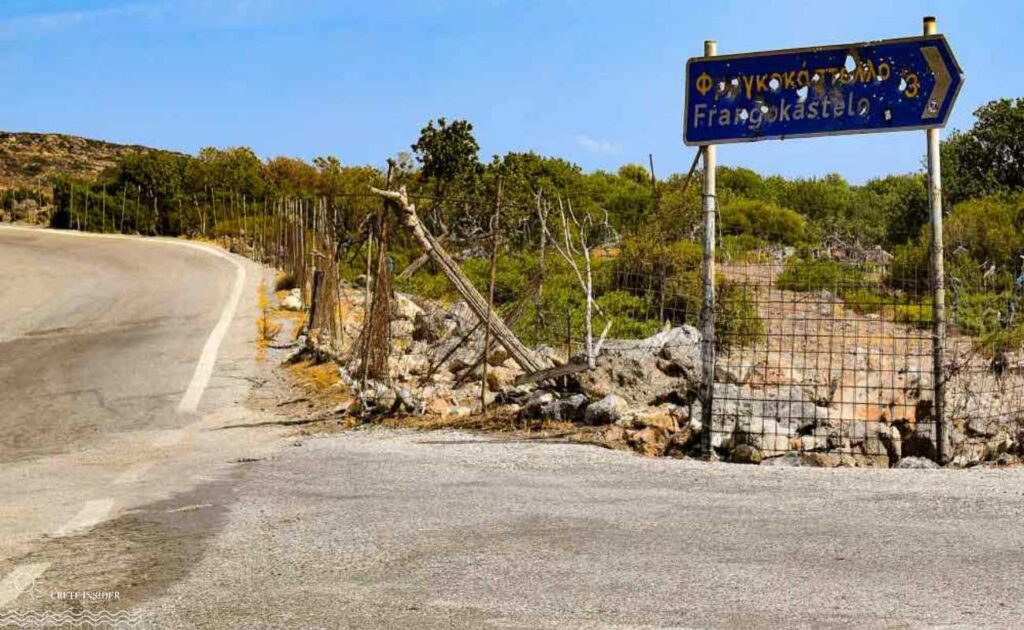
Some signs have been heavily damaged by graffiti, while a few villages on Crete are famous for using their road signs as bullet targets (Cretans love to shoot …but that’s another article!). Many road signs are old and impossible to read, so keeping a GPS or map handy is not bad.
BUSHES
Be aware of bushes. Crete is a very lush island, and plants often grow excessively on the side of the road (mainly in early Summer, after all the winter rain).
Bushes usually hide signs, and you might miss an exit. They also hide bends, other cars, pedestrians, and goats. Be careful and stay a safe distance away from them.
OVERTAKING
Don’t be surprised if locals ignore road markings. Cretans will usually overtake in the presence of a double solid white line. And they won’t respect the speed limits either. Don’t let that put you off; move towards the emergency lane and let the ones in a rush overpass you.
This tip usually surprises visitors. After years of having friends over and dealing with tourists daily, I’ve decided to put this in writing because people normally don’t take this piece of advice seriously.
But trust me, it’s really important, and it shouldn’t be overlooked.
GOOD TO KNOW: OVERTAKING ON CRETAN ROADS
>> Driving on the emergency lane on the National Road: If someone wants to overtake you, don’t hesitate to move into the emergency lane to give them way. This is imperative if you want to have a relaxing experience.
>> Except if the road is curving to the right. In that case, please do not move to the emergency lane! This would dramatically reduce your visibility and might cause an accident if someone parked on the emergency lane ahead of you, out of immediate sight. In this case, the driver behind you will need to wait.
FLASHLIGHTS (AND HORNS)
They are there for a reason. Use them!
- If you’re overtaking, it’s good to flash your headlights at the car ahead to let him know you’re about to pass him.
- If they do the same to you, they tell you they will overtake you. Please gently move to the emergency lane and let them pass.
- If a driver coming in the opposite direction quickly flashes twice at you, this is a friendly warning: There might be an obstruction ahead or simply a police control. Don’t ignore the warning.
TRAFFIC POLICE
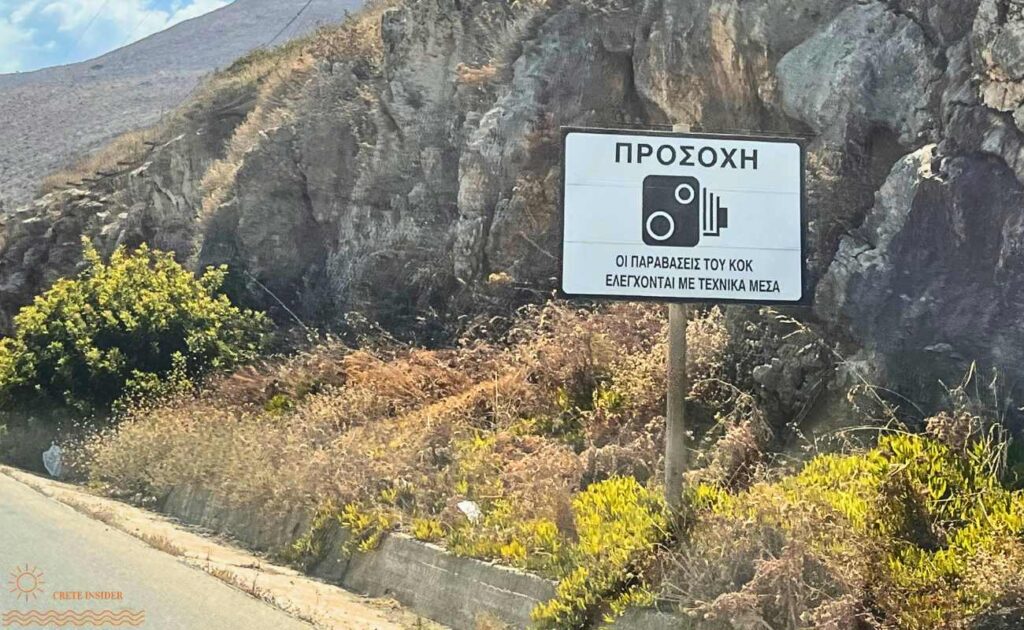
You won’t need any special suggestions if you follow the rules and respect the traffic regulations.
Speed controls are common, mainly during the high season.
The main national road (from Kissamos to Sitia) has speed radars and cameras. If you pay attention, you will spot the signs (photo above). When on holiday, there’s no need to rush. Avoid unpleasant situations and take it slow.
At night, especially during the weekends, it’s common to find traffic police checking alcohol levels on drivers, usually near big cities. Don’t expect the police to take control of you just because you’re a tourist. Worry not, most policemen speak English!
Drinking and driving is illegal in Greece, so don’t get in trouble. Consider adding an extra driver to your rental contract. This way, if you decide to have one more shot of raki, someone else can take your place at the wheel.
BEWARE OF GOATS
… and sheep, many of them! As well as pigs, hens, you name it!

Goats and sheep populate the Cretan roads in the mountains and small villages.
Animals can unpredictably materialize at the turn of a bend, often refusing to budge from the road. It’s crucial to maintain a calm pace and refrain from speeding (not that you can speed in the mountains).
Goats might be less common in villages than sheep, pigs, and geese. I’m not joking!
My neighbors keep both hens and geese, and I’ve often had to dodge them with my car more frequently than I’d prefer. The same applies to pigs, which I’ve encountered several times in various villages.
Be mindful of the numerous stray dogs and cats. During the summer, hedgehogs are also commonly seen in the middle of the road.
Should I Rent an Off-Road Vehicle?
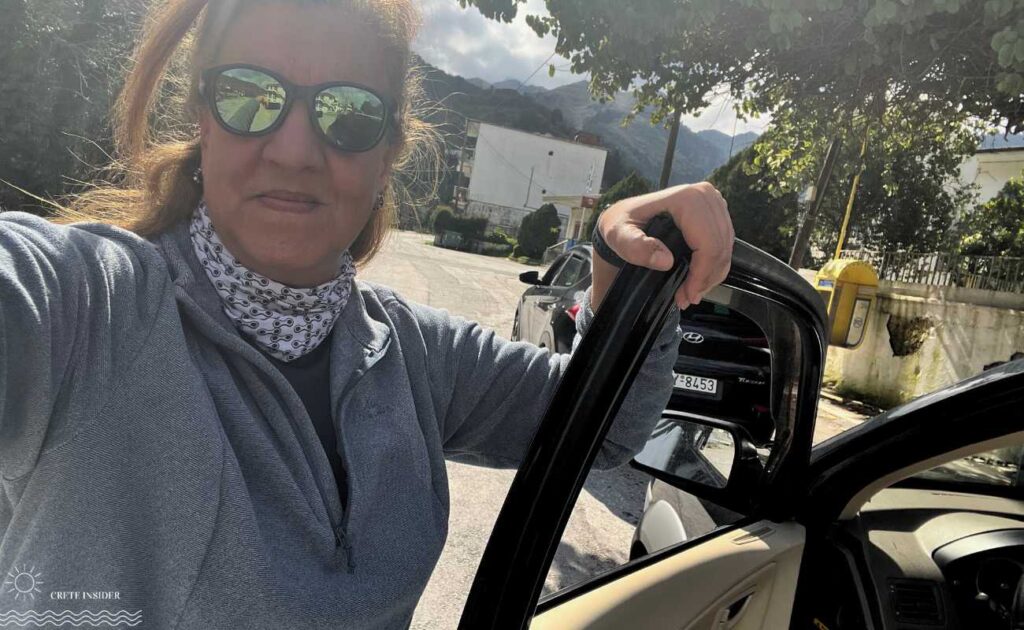
This is another frequent question, especially by friends who know I used to drive an off-road vehicle in Italy. The truth is, after moving to Crete, I never thought about going back to 4WD. You really don’t need it, not even in the mountains. However, I gave in last year and got a new off-road vehicle. But you really don’t need one.
If you’re a careful driver, a compact car will take you anywhere (spending less on fuel). I drove a small car for over six years and never had a problem.

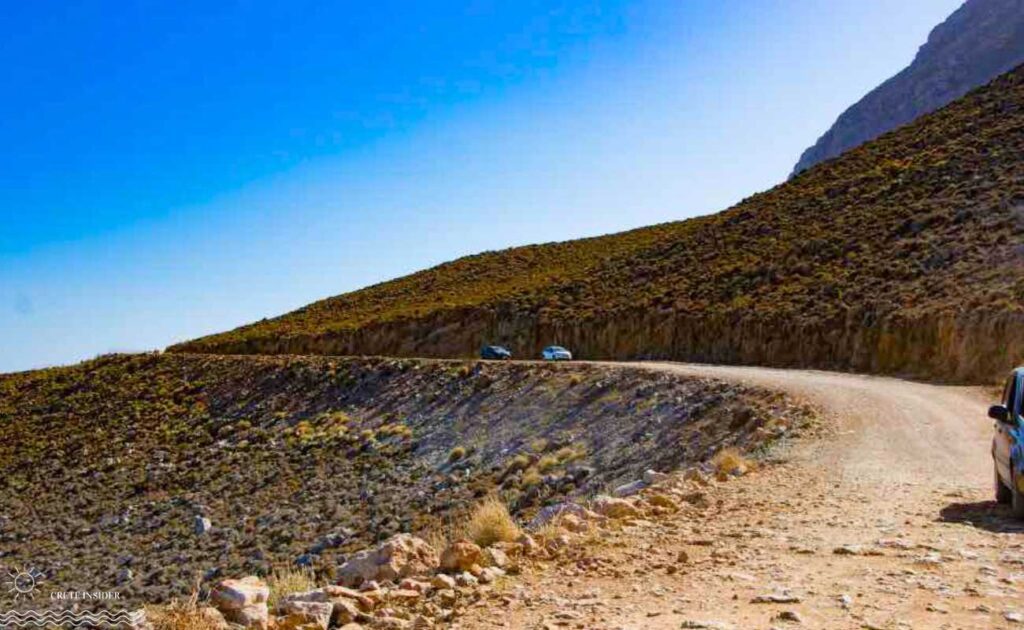
Small cars do just fine, even on difficult roads such as the way to Balos Beach, the scenic but narrow road to Elafonisi, or even on the way up to Anopoli in Sfakia.
Remember, most locals go after small cars. Looking at what locals drive will help you decide (and I don’t mean farmers with trucks!). Besides, many small villages have pretty narrow roads as well.
If you’re still unsure, small cars are highly requested by most car rental companies, and tourists take these same cars all over the island. Those who can afford the extra price tag for more space should go for it! Driving a 4WD can be great fun. However, be aware that most rental companies don’t include off-road insurance.
On the other hand, if you’re on a budget, there’s no need to worry. A small car will take you everywhere.
- Fiat Panda
- Hyundai i10 or i20
- Citroën C1
- Suzuki Celerio
- Peugeot 108
- All these are small models and the most popular rental cars on the island.
Roads on Crete
CRETE NORTHERN HIGHWAY (BOAK)
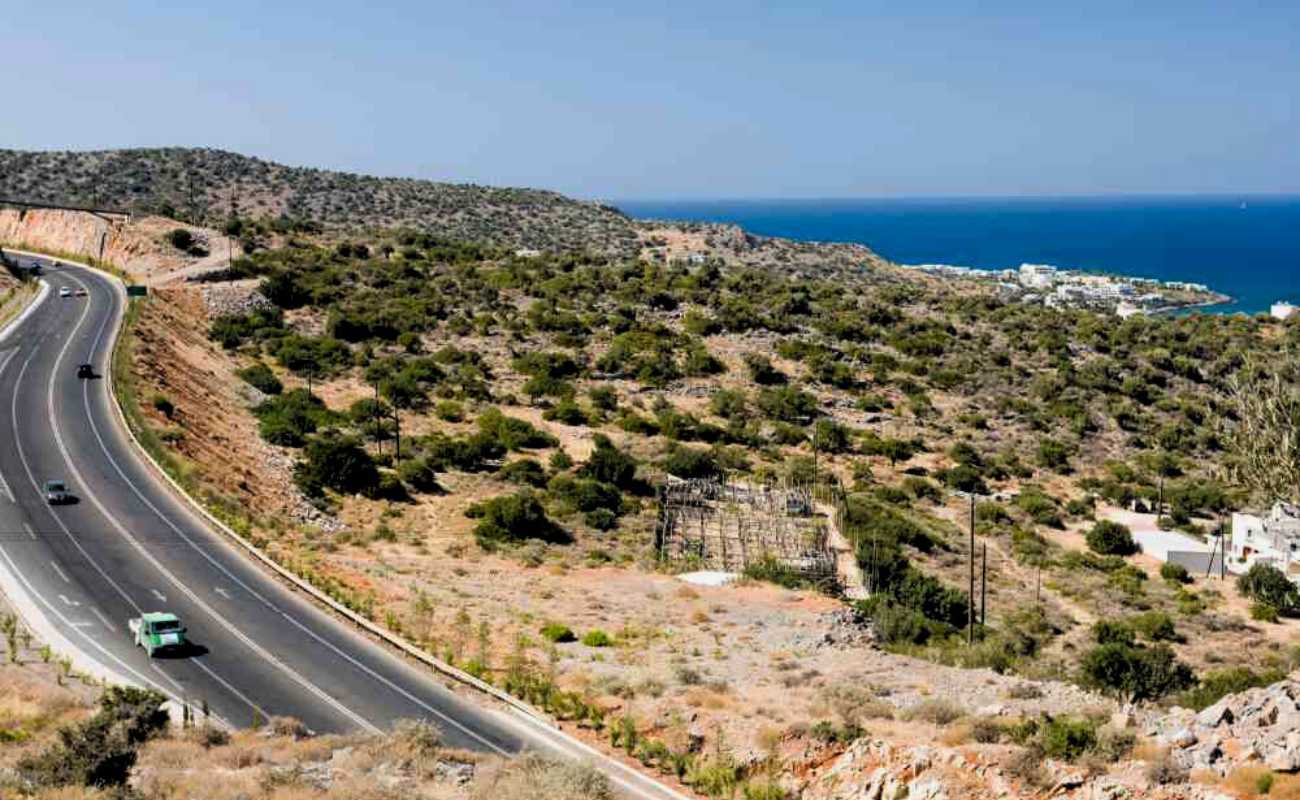
Crete has only one highway, the Greek National Road 90 (BOAK or A90 on road signs), known as Crete’s Northern Highway. Locals simply refer to it as “the National Road.”
It connects the western city of Kissamos to the eastern city of Sitia, passing next to the capital cities of each region: Chania, Rethymnon, Heraklion, and Agios Nikolaos. If you’re not interested in exploring the hinterland, this is the only road you will drive.
Mountain Roads of Crete
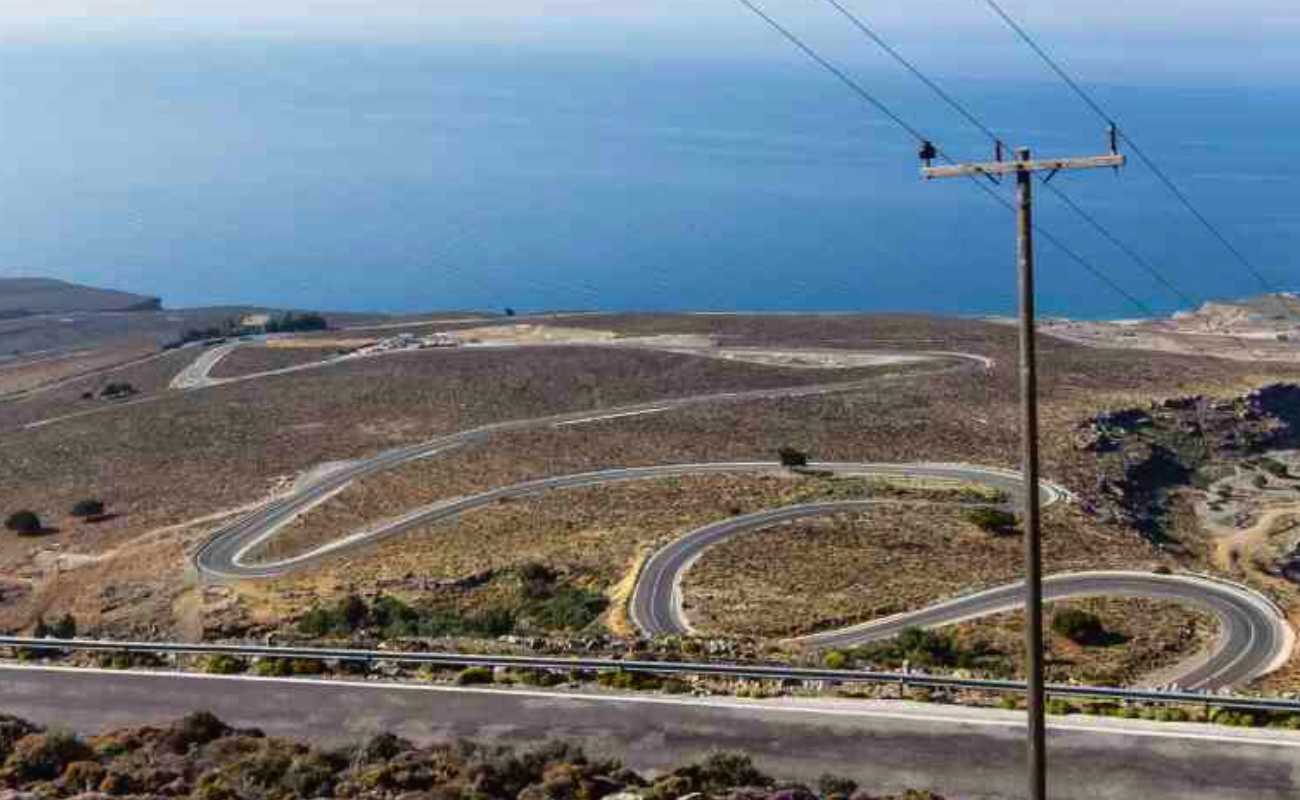
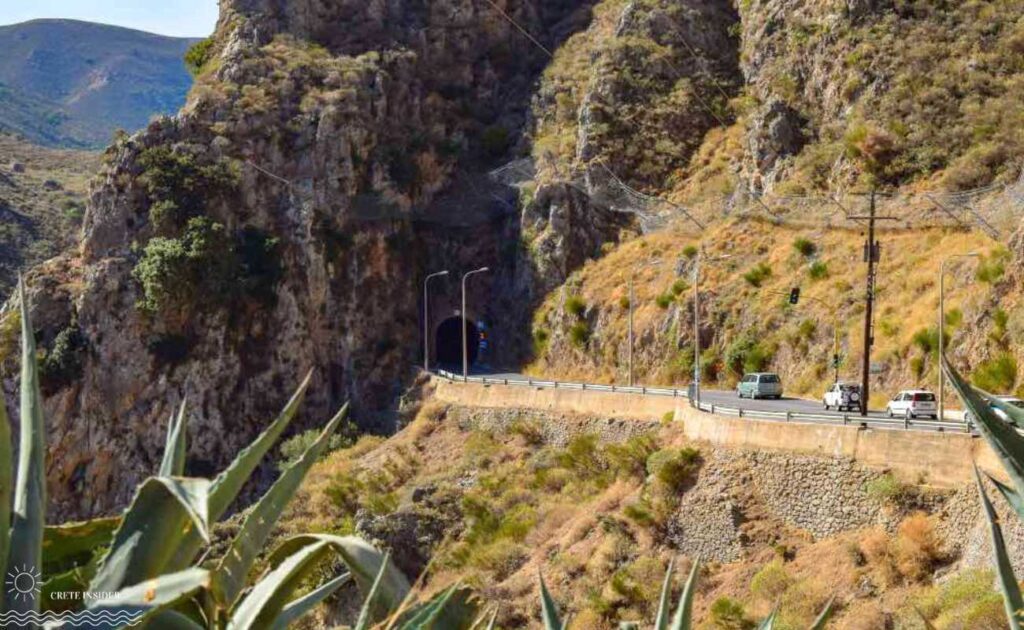
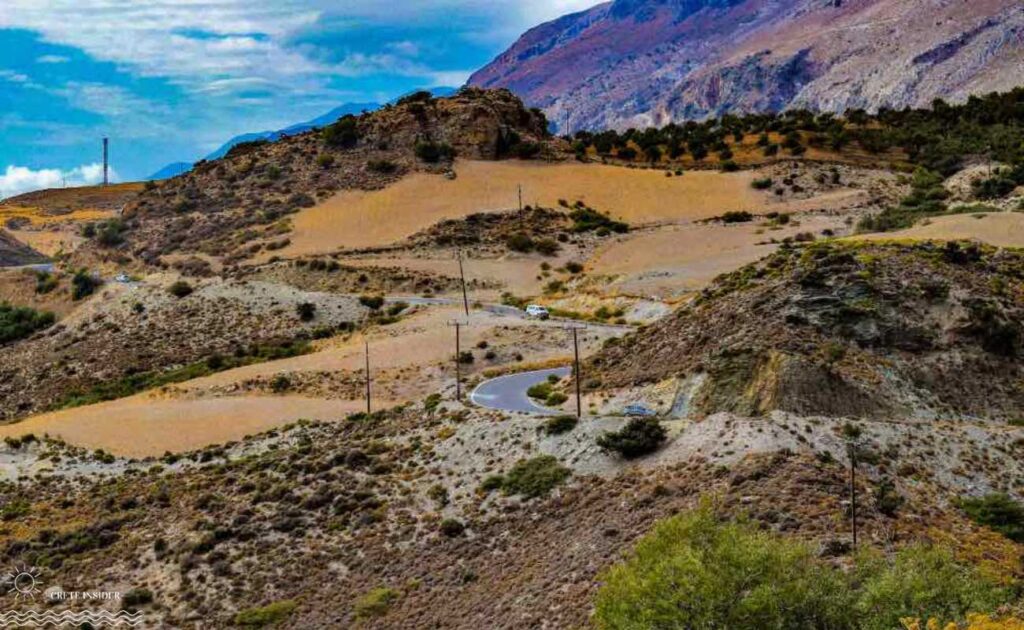
To reach the famous beaches in south Crete or some beaches in the West, enchanting hidden villages, wineries, archaeological sites, or far-off monasteries, you must leave the National Road behind and venture into the mountains.
When in the mountains, watch out for falling rocks. Although there are some nets, they aren’t everywhere. You can find rocks and pebbles on the side of the road, especially if the island went through a very wet winter.
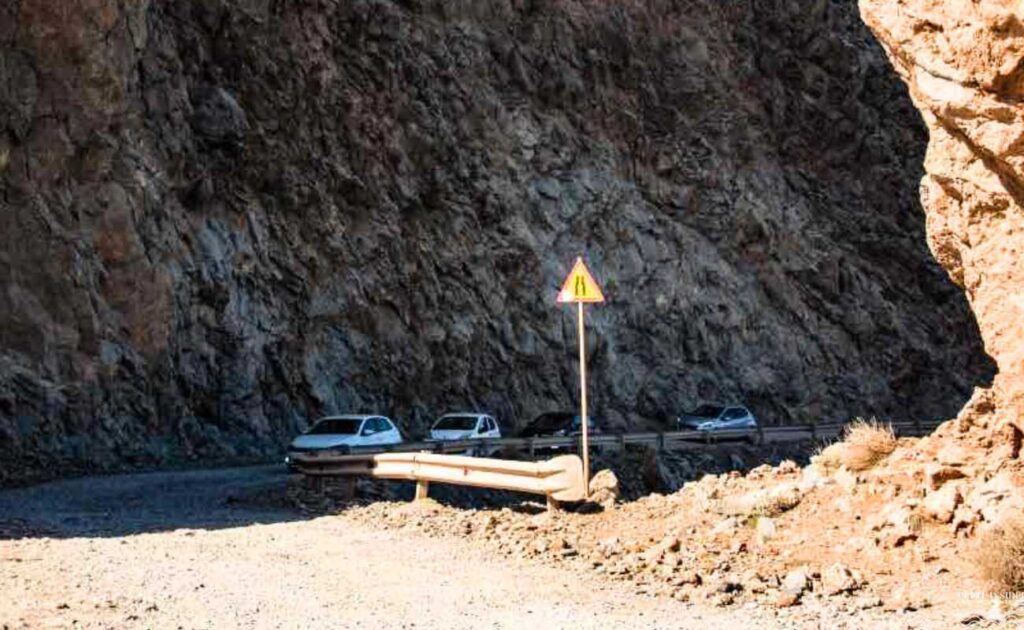
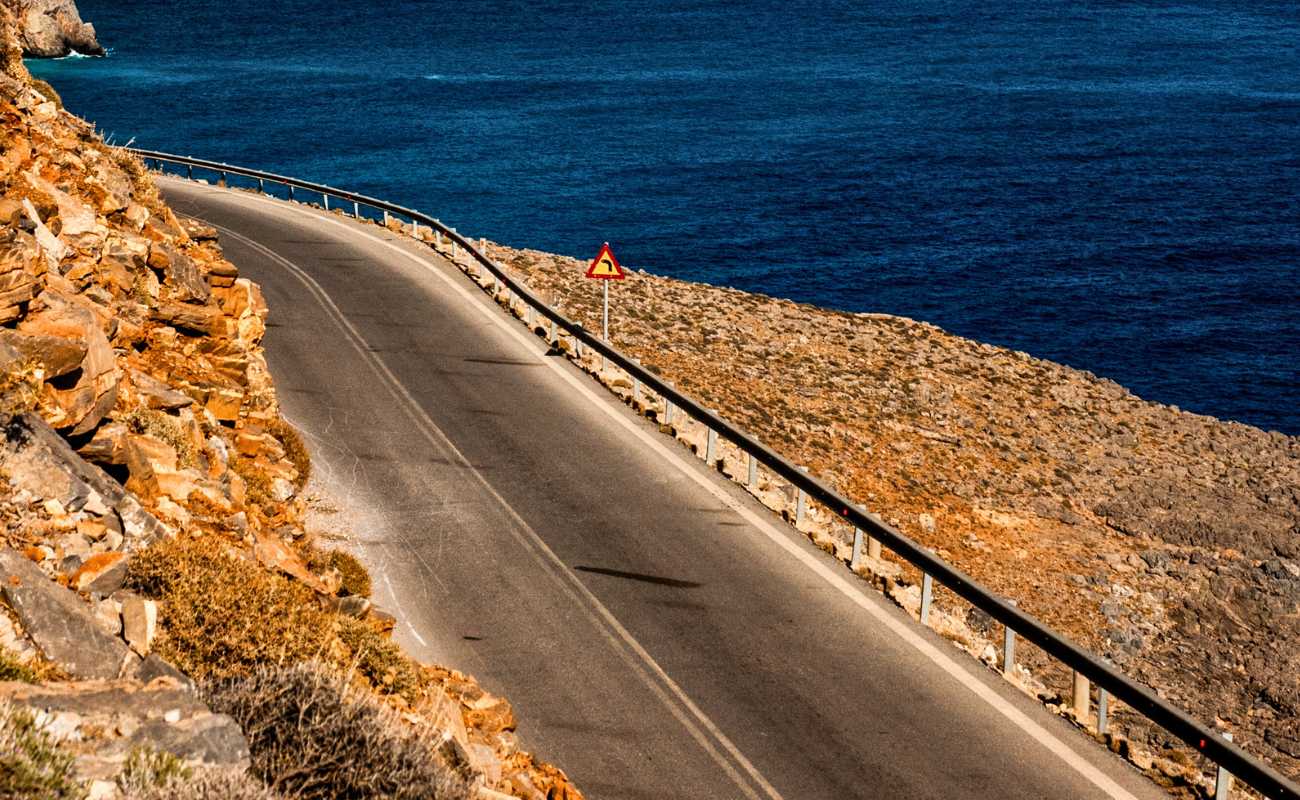
Most mountain roads are paved and generally in good condition. While some lack guardrails or other protective features, they are not genuinely hazardous if you drive cautiously.
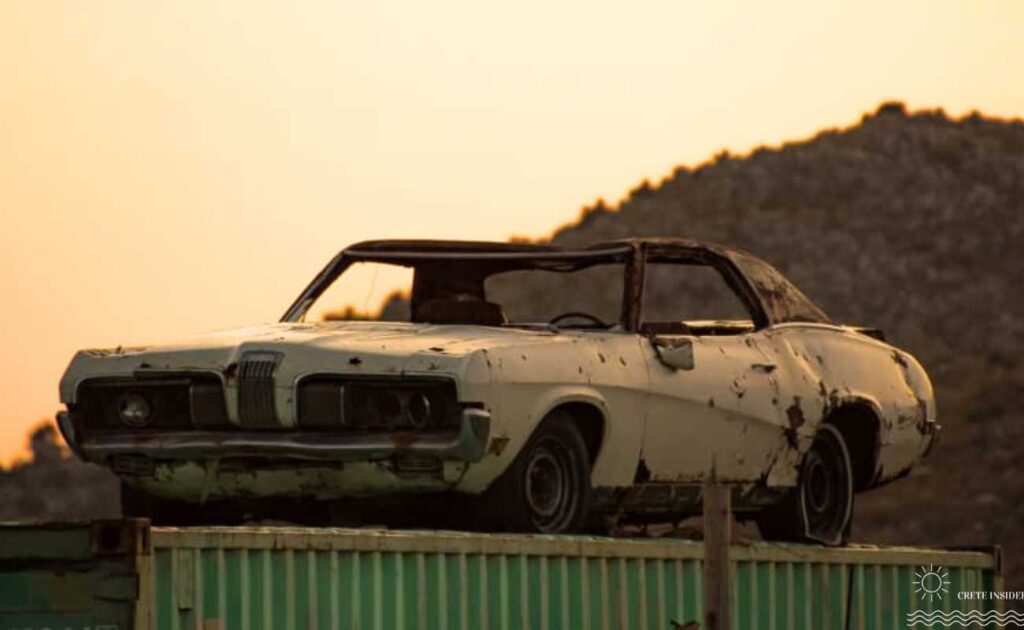
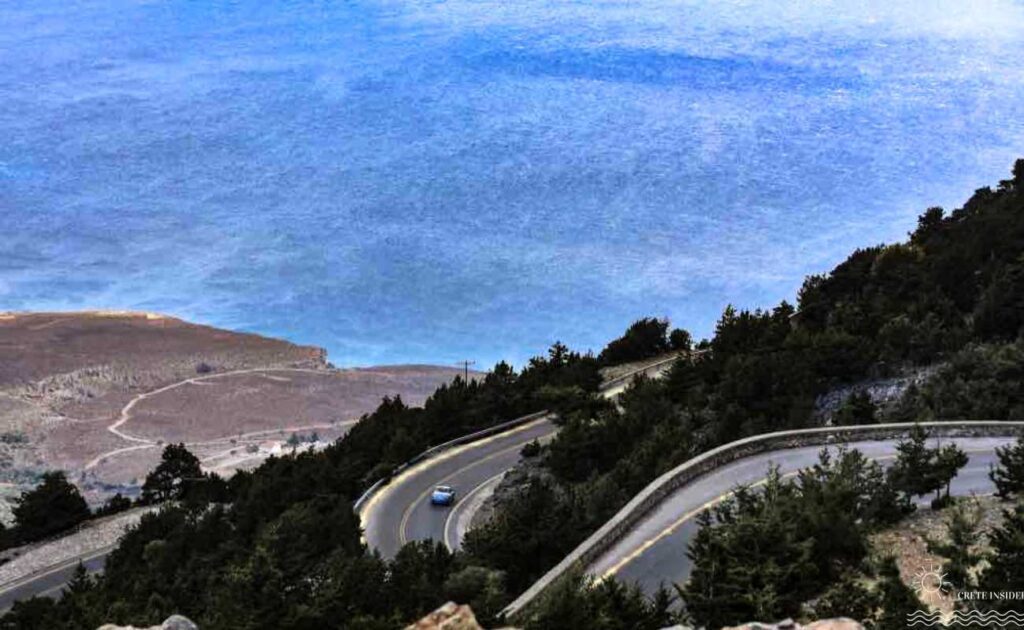
If you suffer from vertigo or mountain roads look scary, and you hold a valid driver’s license, try changing the passenger seat for the wheel.
Driving will put you “in control” of the situation, and you won’t suffer the experience.
I suffer from vertigo in the mountains, and I hate bends. Trust me… if I can drive on Crete, anybody can drive on Crete!
Driving in Big Cities
Crete cities tend to be trafficked. They’re even more crowded in summer when hundreds of tourists add to the already large number of cars on Crete.
Traffic won’t be an issue when driving off the beaten track, but in big towns, things tend to be chaotic, mostly in the evening, when people leave the beach and try finding a place to park before going to dinner or for a walk in the old town.
Remember that if you hate heavy traffic, going to town by car in the middle of the day is a good alternative. When everyone is on the beach, the roads are less busy. The city will be easier to explore too!

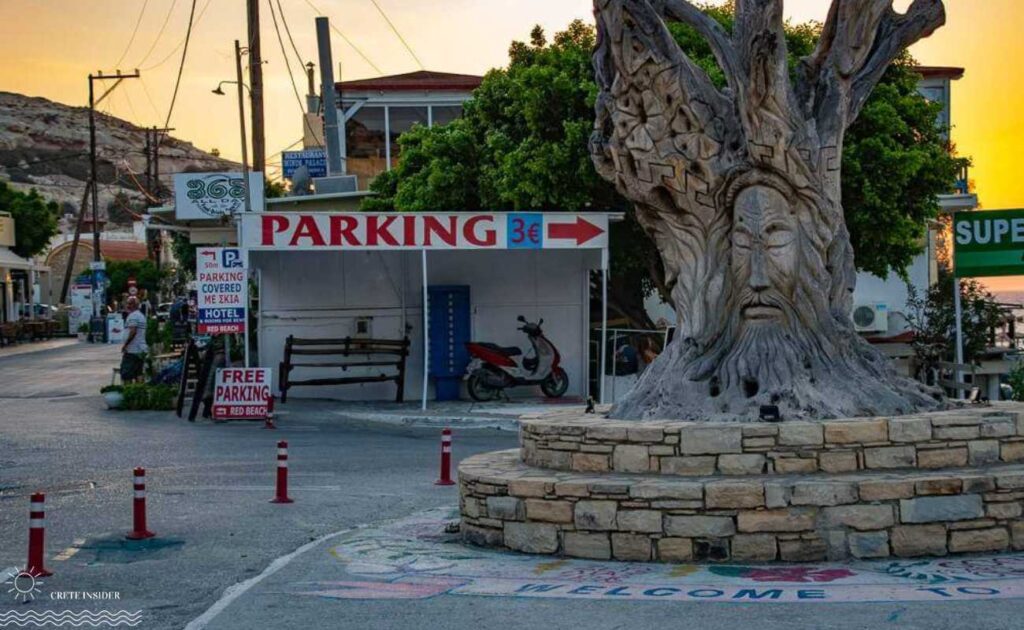
In most main cities, some areas are restricted to traffic (most old towns are pedestrian-only), so finding a free parking spot on the outskirts of any pedestrian zone can be a nightmare.
For instance, there’s no old town in Agios Nikolaos. However, the city was built on somewhat hilly terrain, so you might have to park on steep lanes sometimes.
In any case, remember that our island is still fairly quiet regarding traffic. Driving in Crete will not be like driving in New York or Milan—trust me, you’ll be more than fine!
A Word on Parking
Many beaches, archaeological sites, and monasteries have designated parking spots that you can use for free. In some popular areas, you must pay a small parking fee during the high season.
When trying to find a place to park in a big city, look for a private parking facility if you need to familiarize yourself with the area. It will save you from finding a parking ticket on your windscreen.
PARKING FINES
I’ve received a few parking tickets for not having coins to pay (I know… my bad!). Parking in some public spaces requires paying the fee through a vending machine that only accepts coins. Don’t make my mistake—always keep a few coins handy (usually €1 for one-hour parking).
It’s important to note that parking fines in downtown Chania used to be quite low; I never paid more than €10. However, the new administration has significantly increased parking fees, reduced free parking spots, and introduced a new parking app.
If you get a parking ticket, you can pay it online (also in English) or at the municipality, and credit cards are accepted.
Safety Tips to Drive in Crete
- Common sense should prevail. If you use it, you’ll be safe.
- At the same time, don’t trust that other drivers will be using common sense. Locals are known for “forgetting” to indicate they’re turning or suddenly stopping without warning. Again, as long as you’re focused, you’ll be ok.
- Seat belts and special driving seats for children are obligatory. Use them!
- Respect the speed limits (even if locals don’t). The speed limit in urban and suburban areas is 50 km per hour (32 mph). The National Highway’s limit is 90 km per hour (56 mph).
- The minimum driving age is 18. However, some rental companies will require you to be older or have a second driver.
- Don’t drink and drive. Remember that the alcohol limit is 0.05% (so it’s fairly easy to go over it with just a couple of beers and a bit more than a glass of wine).
- Don’t use drugs and drive.

Necessary Documents to Rent a Car in Crete
Ensure you have all the documents you need to rent a car and drive in Crete a few months before your trip. Extra time will allow you to renew any document without rushing at the last minute.
>> European citizens: A regular and valid European driver’s license will be enough to drive in Greece.
>> Citizens from countries outside the EU: You need an international driver’s license. Check with your local authorities and the rental company.
Be aware: Even when some car rental companies will only need your international license, Greek Law states that you must also present your valid country license. Don’t leave it at home.
Always carry an official identity document (identity card for European citizens or passport).
A credit card is a must for international car rental companies.
It can be necessary for some local rental companies. Check this detail in advance.
Local Car Rental vs. International Companies
I only speak from experience. And my experience is… Try to go local!
We’ve traveled by car for years on the island and have always hired cars from local companies. Prices are better, conditions flexible, and it’s common to get some extra advantages, such as a no-excess policy for a very small fee.
Even after we moved to Crete, I bought my first car after a while of living on the island. For the first six months, I used to rent a small car from a Cretan company.
I’ve used different companies on the island but compared and booked using a car rental search engine.
>> Unfortunately, the first car I bought in Crete turned out to be a piece of sh!t… so I ended up renting a car more often than I would have wanted until I could sell that car! Trust my word when it comes to car rental on Crete. I’ve been there… more than once!

>> Use a car rental search engine that searches Crete’s most trusted local rental companies and finds the best deal for you. >> You can compare prices for rental cars in Crete here.
Final Considerations about Renting a Car and Driving in Crete
After what you’ve read, you might still wonder how safe driving on Crete really is. It’s always safe to follow some basic rules, avoid excessive drinking, and conform to local etiquette regardong overtaking, for instance.
Touring Crete by car has always been my favorite way of discovering hidden spots, some deliverately and others by chance. Are you ready to drive in Crete?


Are you visiting Crete Soon?
Join my Facebook group for more tips, or plan your Crete itinerary with me!
Pin for Later
Guide to Driving in Crete!



Gabi, the Crete Insider
Hi, I’m Gabi — your go-to local expert in Crete! I’ve been living in Chania, Crete since 2016, and I’ve turned my love for the island into a full-time passion — guiding travelers, writing for travel media, and curating local experiences.
I co-authored DK Eyewitness Top 10 Crete and other guides. I run the blogs The Tiny Book, Greece Planner, and My Cretan Recipe. Through this platform I help travelers design unforgettable trips to Crete.
→ Book your 1:1 consultation with a local to plan your Crete escape
🚘 Trusted Car Rental in Crete
CAR RENTAL IN CRETE ~ Enjoy peace of mind by hiring a car from a local company. Rethymnon Cars offers excellent cars, full insurance with no excess, no credit card deposit, and no extras.


