

When is the Best Time of the Year to Visit Crete
Are you planning to visit Crete but need help determining the best time to explore the island? Then you’re in the right place to find out. This post discusses every detail you need to know to decide the best time to visit Crete. Let’s go!
📍 Must-do: Balos Cruise 📍 Knossos Palace 📍 Check rental car rates for Crete 🚗
When to Visit Crete?
As usual, the best time to visit Crete will depend on your interests and the climate you enjoy the most.
If you’re a fan of long, hot summer days, and high temperatures don’t bother you, July and August will be the ideal months to travel to Crete. On the downside, these are the most crowded months, and prices tend to be higher.
The most popular times to visit are the end of April to the beginning of June and the last weeks of September through the end of October.
These are the months when the weather is warm and often sunny, showers tend to disappear, and the island is not as crowded as in summer.
These two periods—from April to June and September to October—are known as shoulder season. It’s a time of the year that’s particularly warm in Crete, with pleasant weather that allows outdoor activities to be enjoyed without breaking a sweat.
You can comfortably hike in the mountains, go sightseeing in the old towns, visit traditional villages and archaeological sites, and – of course – go to the beach.
Especially during September and October, and after a long hot summer, the sea temperature is pleasantly warm and perfect for swimming!

📌 Are you skimming through the post and have no time to read it now? Save it on Pinterest and read it later!
The Weather in Crete Year Round … As Seen by a Local!
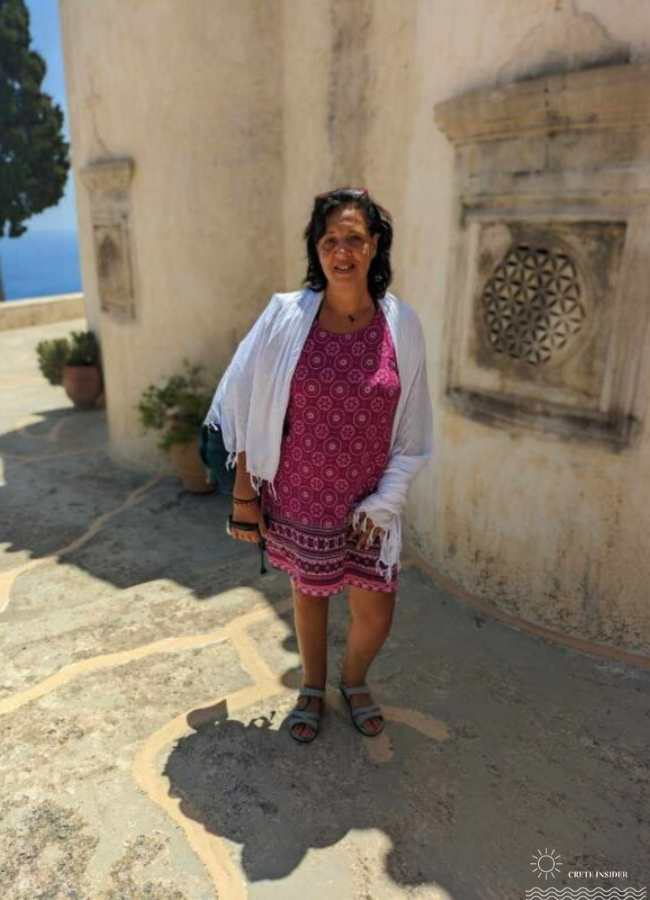
Since I moved to the island, I’ve experienced that September is the best time to enjoy Crete to the fullest.
And even when some bloggers recommend visiting in June, I believe the temperatures have started going quite up in June, especially in the last years, making June feel a lot like July… aka scorching hot!
The island generally has pleasant, quite mild weather all year round. Crete is a fantastic year-round destination with warm winters… compared to the rest of Europe.
Yet, do not expect hot winters or long days on the beach in December! Depending on the area of the island you are in, winters can be long, windy, very cloudy, and rainy, minus the odd sunny day with temperatures around 20 C – I repeat, this is not the norm.
As a general rule, the east of the island has lower rainfall than Chania (the high White Mountains play a key role in keeping the weather in Chania colder and rainy all the winter), the south and the eastern areas of Crete have more sunshine and hotter temperatures in winter than the west.

Seasons in Crete
Let’s now see what the weather looks like in Crete each season.
Summer in Crete (June, July, and August)
Summer is the season preferred by beach enthusiasts. This is when Crete starts receiving visitors from all over Europe and the rest of the world.
Most Cretan cities and other popular areas in the south get busier while traffic intensifies on the coastal road. Keep this guide to driving in Crete at hand.
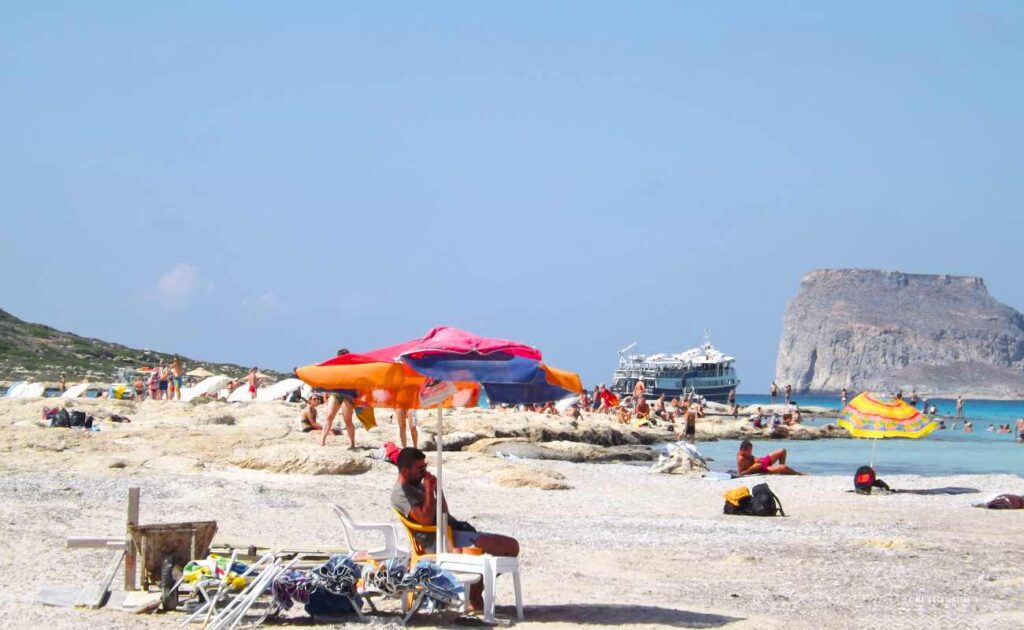
Since the island offers plenty of different shores, you will certainly find the beach you prefer- fine sand or pebbles- ideal for snorkeling, sunbathing, or naturist-friendly.
For instance, Balos and Elafonisi are two of the most popular beaches on the island, and hundreds of visitors visit them during the whole season. Other beaches might be less famous (Vai, Falassarna, and Matalaa) but can still be overcrowded, especially on the weekends, when the locals also go to the beach.
There are more hidden beaches and seaside gems in the Akrotiri Peninsula in western Crete, on the East Coast of Crete, and countless beaches for naturists. My absolute favorite beaches on the island are located on the West Coast.
Summer is also the perfect moment to visit any farmer’s market and taste our famous greens at accessible prices.
If you’re looking for festivities, summer is the season of festivals (locally known as panigiri). For instance, on August 15th, Crete celebrates the Assumption of the Virgin, an important day on the island. The grape harvest often begins at the end of August, and many wineries open their doors to celebrate this important event.
Finally, since days can be really hot and most archaeological sites are open, try to visit early in the morning or late in the evening. This way, you will also find fewer crowds.

SUMMER IN CRETE
(Overview)
- From late June to the end of August (well into September), Crete experiences the high season, with very hot weather, sunny days, and many water activities to enjoy.
- Prices are also higher during this time, yet it won’t be difficult to find ferries to visit other islands since the frequencies are also higher.
- The sea temperature is warmer, especially from August to September. This is also the best time to enjoy the island’s nightlife.
- The weather is very hot, and many travelers seek relief in the mountains. On some days, there might be strong winds.
Spring in Crete (March, April, and May)
The atmosphere that invades Crete during Spring is, at the very least, festive. Summer is in the air, and locals will ensure you won’t forget by organizing plenty of celebrations.
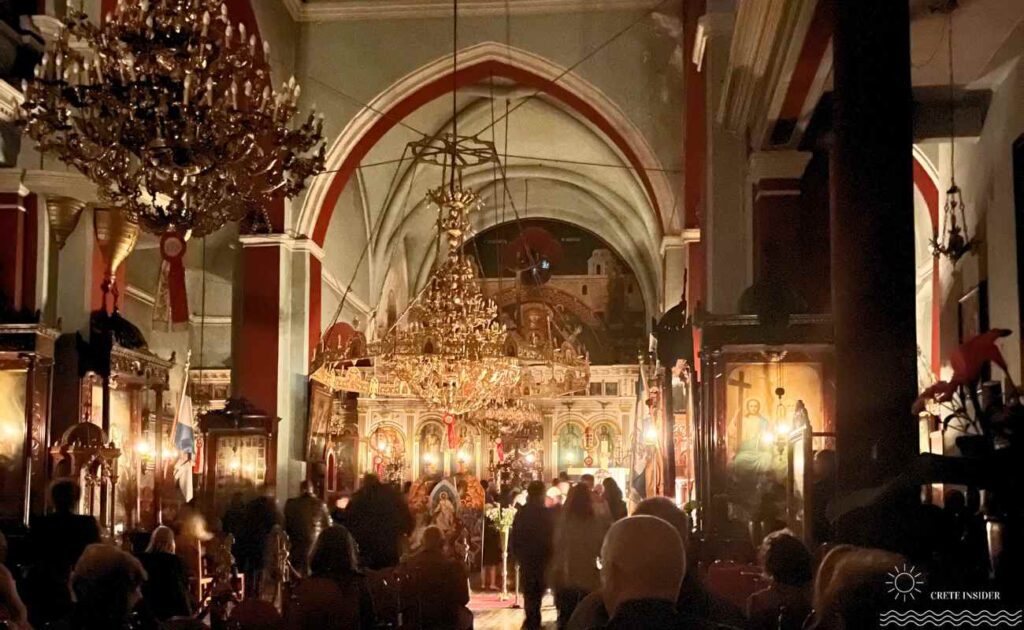
On the island, the fields blossom with wildflowers, and everyone is getting ready for Easter, the major religious celebration in the Greek Orthodox calendar. If you are on the island during this time, you will love the atmosphere.
For instance, you can attend the candlelit processions on Friday night or witness the spectacular fireworks of Easter Saturday at midnight, after mass.
It won’t be difficult to find accommodation in the weeks before Easter, yet most hotels and tourist activities open right during the week of Easter or a few days after.
If you look at the weather, this is a great time to visit the beach if you enjoy deserted shores. Overall, days start to get longer, and it’s not rare to find people swimming (usually not Cretans!).
By May, the weather is better, with warmer temperatures that allow for outdoor trips, while the most intrepid ones start visiting the local sandy beaches for an early tan. There might be occasional showers, but not daily.
SPRING IN CRETE
(Overview)
- Due to its geographical position (the south Mediterranean), the weather is often warmer than in the rest of Europe. Yet swimming at the end of May might not be for everyone, as the sea temperatures can still be low!
- Road trips can be most enjoyed during this time since it won’t be scorching hot, and you can enjoy driving even during the hottest hours of the day.
- Hotels tend to be cheaper during March, April, and May, and there will be more availability. However, fewer activities are available, and most museums or archaeological sites often operate with reduced hours.
Autumn in Crete (September, October, and November)
The island starts gaining a more tranquil vibe at the beginning of September, with schools opening around the tenth of the month. In October, most activities are back to normal, and many seasonal activities (souvenir shops and some eateries) start to close.
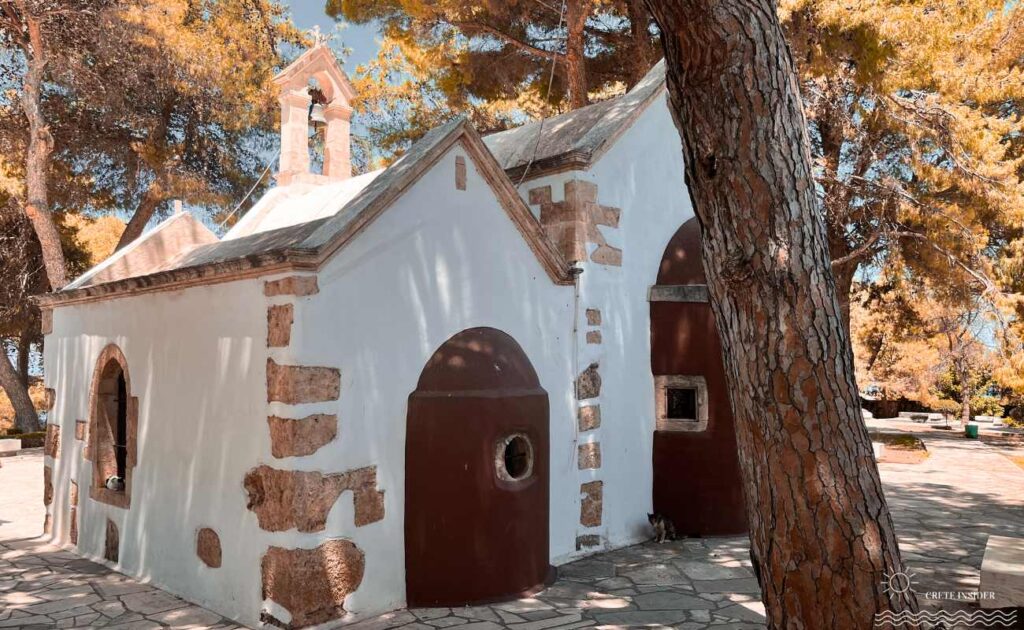
From the end of October, expect to find many resorts and seaside hotels closing their doors – although as years go by, many hotels tend to operate all year round. In the fields, locals get ready to harvest the grapes and start the winemaking season.
If you’re looking for pleasant weather, with plenty of sunny days and beach time, then September is the month for you.
This is when the island is less crowded, but there’s still a lot to do and plenty of activities to attend. September is the best month for holidays on the island with small kids and for the elderly as well. The sun’s rays are still strong, but the temperatures are not so high, so there’s less risk of heatstroke.
During September, you will find the warmest sea temperature of the year. Nights can be a bit cooler, but that brings a lot of relief.
If you enjoy local celebrations, don’t miss the parade on October 28th to commemorate Oxi Day, the famous “no” that the Greeks answered to Mussolini upon his request to allow the Italian troops to enter Greek territory. The date marks the entrance of Greece in the II World War.
The end of October and a good part of November are dedicated to producing the delicious Cretan spirit, tsikoudia (or raki).
>> Check what things you can do in Crete in September and the best things to do in Crete in October.
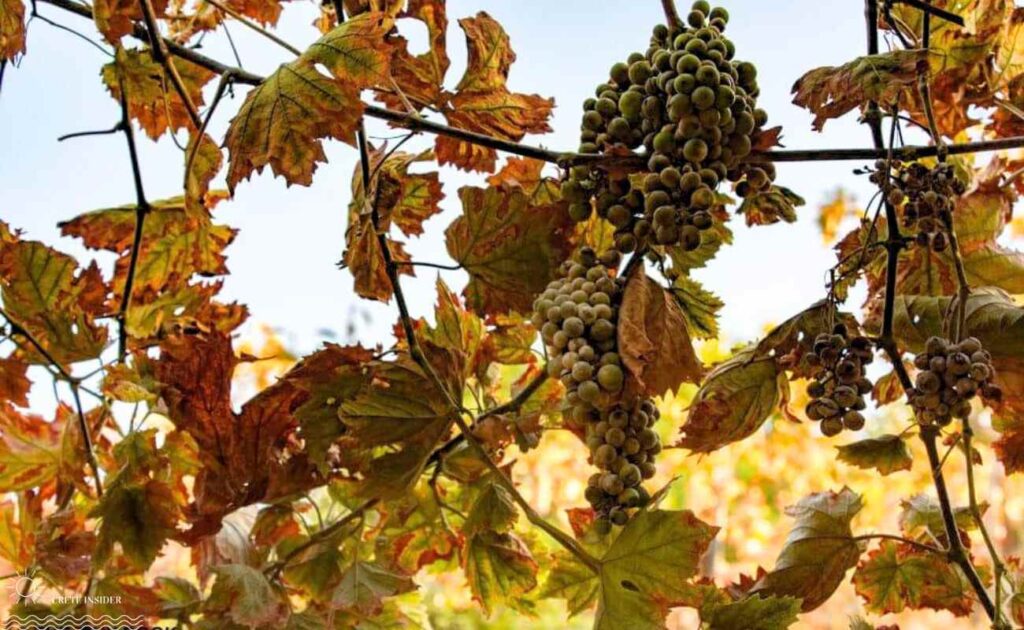
AUTUMN IN CRETE
(Overview)
- The weather is still warm, the days are sunny, and temperatures won’t be as high as they are between July and August, making a stay on the island more bearable.
- The sea temperature is very warm, especially in September (after months of basking under the sun), which makes it perfect for kids who love to swim but don’t enjoy cold waters.
- Since tourism on the island has increased exponentially in September during the last months, prices won’t be as convenient as in October. Prices in September and in summer are similar.
- The first rains of the year start around mid-September, but they aren’t as copious as they become by the end of November. Pack accordingly, yet you might not encounter more than one or two rainy days.
Winter in Crete (December, January, and February)
Since Greece is mostly known as a summer destination, visiting Crete in winter is unusual. Besides, flights are often reduced during the season. However, regular ferries still connect Crete to Athens, making visiting possible.
In winter, days tend to get shorter and colder; sometimes, it can be windy. Rains are common, mostly on the west side of the island.
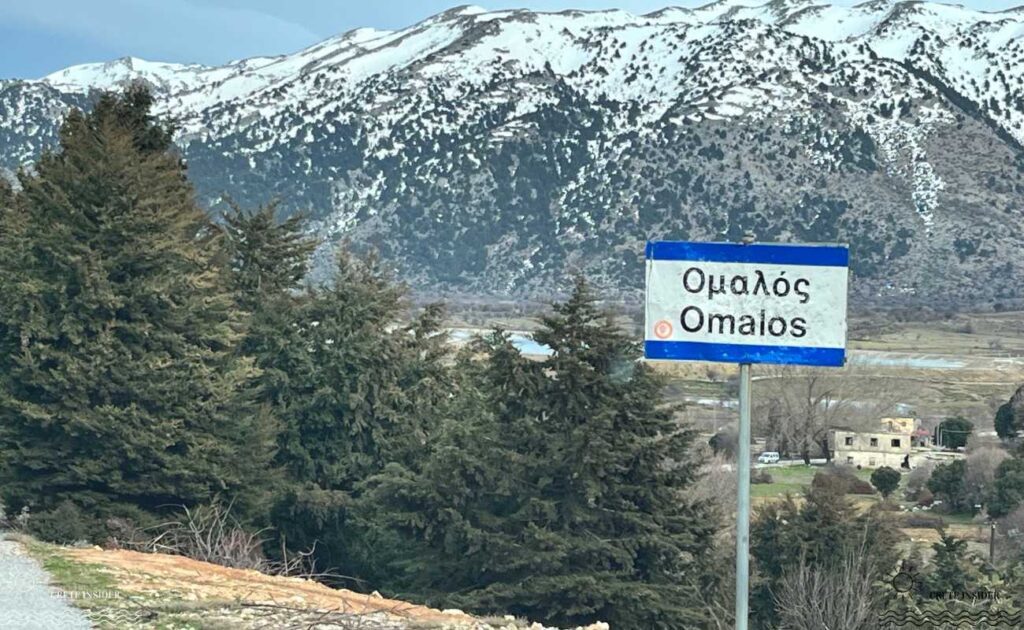
However, there are plenty of reasons to visit Crete in winter. The island has a unique charm, and when you compare Crete to the rest of Europe, the island’s winters are quite mild, with temperatures that rarely go below zero. The average winter temperatures range around 10°C (about 50°F).
There is snow in the mountains, and many gorges, including Samaria Gorge, are closed. There are no ski runs, but many locals head to the plateaus to play with the snow… while still seeing the sea from the top of the mountains!
With this weather, you can also focus on indoor activities and explore museums and monasteries. Besides, the entrance fees might be lower but visiting hours will certainly be reduced too.
Locals are busy working in the vast olive groves. Olive trees are full of olives, and local people are very busy since olive oil production is in full swing.

WINTER IN CRETE
(Overview)
- The island is big enough to have a life of its own. There are tons of schools and several universities, making the most important towns feel alive and active.
- Especially in West Crete, the skies are grey, the weather is cooler, and it rains often. If you head southeast, the weather is warmer.
- The capitals of the four regions, Heraklion, Chania, Rethymno, Agios Nikolaos, and the city of Ierapetra, have large local populations, and you will always find cultural activities that locals enjoy.
Weather in Crete Month By Month
January
The island is not very crowded, with just a few visitors in the main towns. The weather can be cold and windy and gets very humid close to the shores. On the island, the coldest days go from Christmas until the end of January.
Many hotels are closed, yet some work all year round, especially in the cities. Fancy restaurants might be closed, but excellent taverns are in many cities and important villages. Snow is common in the mountains.
Temperatures range from 5°C to 15°C, with some days featuring lower temperatures.
Rainfall is common and abundant in the regions of Chania and Rethymnon.
February
Although the weather is not as rigid as it can be in January, February is still a cold month with several cloudy days. Big cities have a normal pace of life, while southern towns can feel empty during winter.
Temperatures range from 5°C to 18°C, with some days featuring lower temperatures.
Rainfall is present but not as rainy as in January, and sunny days are more common.
March
The weather changes, and more people arrive on the island. There are more sunny than rainy days. Yet, it can get quite windy sometimes.
March is an excellent month to enjoy the mountains. However, hiking and trekking could be dangerous if rains were abundant in the previous months, so always check with expert local guides before venturing into the mountains.
Nights are still cold, and heating is still needed in most homes and hotels.
Temperatures go noticeably up, with averages between 12°C and 18°C, although early mornings and nights often feature lower temperatures.
Rainfall is not as common as from December to February, but it’s not absent.
April
Although Crete’s most important gorge (Samaria Gorge) is still closed, plenty of other mountain paths are available, and this is the right time to enjoy them since temperatures go up enough to make walks pleasant.
This is also a favorite moment for wine enthusiasts as most wineries have bottled their end-of-summer harvests and are ready for you to taste them. Going to the beach can be ok if you’re not a fan of hot days, although the sea might feel cold.
Hotels and restaurants are slowly opening to the public, yet finding the right seaside resort can still be difficult. Finding rental homes might be easier.
Temperatures stay around 15°C-19°C, and rainfall decreases on the whole island.
May
Crete starts feeling busy since many visitors reach the island. However, most low-cost carriers have not resumed their summer flights to Crete. There are frequent visitors from the rest of Europe, mostly people who have visited the island in the past.
Although the beginning of May can feature colder days with frequent clouds, by the end of the month, you will certainly start feeling it’s a lot more like summer (warm and often sunny).
Temperatures start going up, with an average of around 18°C-22°C.
Rainfall decreases dramatically and can rain about 3 to 5 days a month.
June
As direct and charter flights from the rest of Europe open up, the island starts receiving crowds. Although Crete is not fully busy, this is the month you will feel the summer has begun.
The days are very hot, and there’s almost no rain. Ninety percent of resorts and hotels are now open to the public and might be up to 80% booked.
Temperatures in June range from 20°C to 28°C. It virtually doesn’t rain.
July
The island is crowded. The days are longer, sunny, and extremely hot, with July tending to be the hottest month.
July is one of the busiest months on the island, receiving tourists from every corner of the world. Therefore, I strongly advise you to book your accommodation a few months ahead. if you want to stay in a popular tourist location in Crete
Temperatures are often around 35°C but can reach 38°C-42°C.
It’s safe to say it does not rain on the island in July.
Climate change is happening, and we are seeing a change in the weather pattern on the island, for instance, with more rain in May and higher temperatures in July.
August
Most resorts and hotels are fully booked, and you will feel the crowds on the streets, in museums and archaeological sites, and the traffic.
Days are often hot and very sunny, although it can be windy (since the end of July. Occasional Meltemi winds (typical in the Aegean Sea) are not uncommon, and they can be quite strong, canceling ferries and making it impossible to visit certain beaches.
Booking accommodation at least 4-5 months in advance is essential to enjoy this month on Crete.
Temperatures are often around 35°C but can reach 38°C-40°C.
It’s safe to say it does not rain in Crete in August.
September
September is less crowded than July and August, yet very hot and sunny. A few cloudy days and cooler nights make it easier to sleep and rest.
Remember that this is the best month if you enjoy long swims with the sea temperature at its best! It’s not as windy as the rest of the summer, and crowds are not as common as from the second week of the month since school resumes in most European countries (and Greece, too!)
September is becoming the most popular month to visit the island; therefore, booking in advance is still advised, and prices won’t differ greatly from the summer.
Temperatures range from 28°C to 35°C, although nights can be cooler.
First rainfall starts by the end of September, but often rain doesn’t last long.
October
October is a month that still welcomes tourists to the island since the weather is great to explore. Usually, by the end of the month, most European carriers stop their direct flights to Crete. Therefore, traveling Via Athens will be the norm.
Although the first week of October is still warm and quite dry, by the end of the month, you will find days get visibly shorter, are cloudier, and temperatures start going down, with nights becoming quite chilly.
Temperatures range from 25°C to 28°C with clouds and cooler evenings.
It rains more often. October can feature from 8 to 12 rainy days.
November
Although the island is not so crowded, European travelers are still trying to escape the colder winter temperatures. Crete is easy to reach, so it makes total sense to visit. Besides, the island has become an important destination for worldwide digital nomads, making the quest for accommodation a bit harder.
You might find a few warm days during the beginning of the month when wearing a T-shirt is the norm, but don’t venture to the mountains without a raincoat or a light jacket.
Although most beach resorts can be closed during the period, city hotels and rental homes are a valid alternative in the capital, Heraklion, and bigger cities (Chania, Ierapetra, Rethymnon, and Agios Nikolaos).
Historic landmarks, monasteries, museums, and archaeological sites can be visited, although the hours are often reduced.
The temperatures range from 14°C to 20°C with colder nights.
Clouds and rainfall are common, especially on the northwestern coast.
December
The island is not crowded with international tourists, yet some travelers from other regions of Greece reach Crete mostly during the holidays.
Snow is common in the mountains but rare (although it can occur) in the cities. December can be a rainy month, featuring cold and cloudy days. Yet, when the sun does shine, it can be quite warm.
Most activities are concentrated in big towns (mostly Heraklion and Chania), and beach resorts are closed during the season.
The temperatures range from 5°C to 15°C, with some days featuring lower temperatures (about 1-3°C).
Rainfall is common and can be abundant in the regions of Chania and Rethymnon.
Final Thoughts about the Best Season to Visit Crete

Despite being traditionally considered a summer destination, the island is big enough to offer interesting experiences all year round and never really feels closed for winter.
Crete is a great destination in April and May to experience Easter, enjoy the 1st May celebrations, go sightseeing, and discover the old towns. It’s also a great time to visit the mountains and small villages.
Crete is a unique alternative winter destination if you want to experience olive harvesting or for Christmas and New Year.
Crete is also perfect for outdoor activities in September and October and a great place for budget travelers during the shoulder season, mostly in May and October -when prices are lower.

Finally, and this goes without saying, Crete is a stunning summer destination with plenty of incredible beaches and amazing resorts by the sea.
Its unique mountain landscape offers beautiful hiking trails and gorges, and the cooler temperatures in the mountains help you cope better with scorching summer days. What season are you visiting Crete?

Are you visiting Crete Soon?
Join my Facebook group for more tips, or plan your Crete itinerary with me!
Pin for Later
Local’s Guide to the Best Time to Visit Crete



Gabi, the Crete Insider
Hi, I’m Gabi — your go-to local expert in Crete! I’ve been living in Chania, Crete since 2016, and I’ve turned my love for the island into a full-time passion — guiding travelers, writing for travel media, and curating local experiences.
I co-authored DK Eyewitness Top 10 Crete and other guides. I run the blogs The Tiny Book, Greece Planner, and My Cretan Recipe. Through this platform I help travelers design unforgettable trips to Crete.


