
Guide to Discover The Former Mosques in Rethymnon, Crete
Imagine walking through the charming streets of Rethymnon, Crete, when you notice peculiar mosques calling for attention. Before long, you learn that the so-called former mosques in Rethymno whisper tales of a history that will enchant you. Sounds interesting? Here’s an insider’s guide to all you need to know about the marvelous secrets of the former mosques in Rethymnon and the stories they tell.
📍 Must-do: Balos Cruise 📍 Knossos Palace 📍 Check rental car rates for Crete 🚗
Former Mosques in Rethymnon: History and Significance of The Buildings
If you look at a map of Crete, you’ll quickly notice that the island (and consequently also Rethymnon) is strategically located between Europe and the Middle East. As a result, various civilizations have shaped Crete’s complex history over the centuries.
One of them, the Ottoman Empire, built religious centers that influenced the townspeople for centuries. This is especially visible in Rethymnon, where the Turks ruled for almost three centuries, from 1646 to 1897. Back in those days, the town was known as Resmo.
During the Ottoman Rule, the former mosques of Rethymno served as spiritual hubs, gathering places, and symbols of power. They were not only places of worship but also architectural masterpieces that showcased the skill and creativity of their builders.

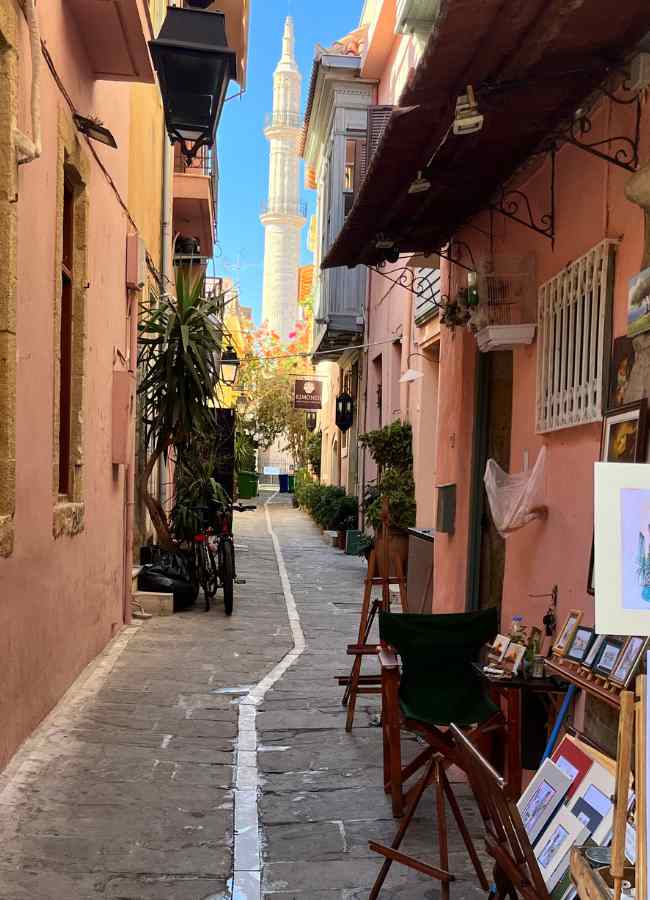
Former Mosques Transformed into Churches
Many former mosques in Rethymnon underwent significant transformation due to political and religious changes over the centuries. Each shift was related to who was in charge.
Italian and Christian rulers naturally wanted more churches and fewer mosques. However, most Venetian churches were converted into mosques when the Ottomans conquered the city in the 17th century. Finally, when the Turks left the island at the end of the 1800s, most mosques were made back into churches, but this time belonging to the Greek Orthodox faith.
Today, you can still notice the fusion of Islamic and Christian architectural elements on the walls of most religious buildings. Do you want to see for yourself? Let’s examine some of the former mosques in Rethymno.
Former mosques:
- Neratze Mosque
- Valide Sultana Mosque
- Kucuk Haci Ibrahim Aga Mosque
- Kara Musa Pasha Mosque
- Sultan Ibrahim Han Mosque
- Veli Pasha Mosque
- Ibrahim Mosque
Finally, the Church of Our Lady of the Angels, in the center of the old town, was also a mosque during the Ottoman rule known as the Anghebat Ahmed Pasha Mosque.

Neratze Mosque: From Augustinian Monastery to Municipal Odeon
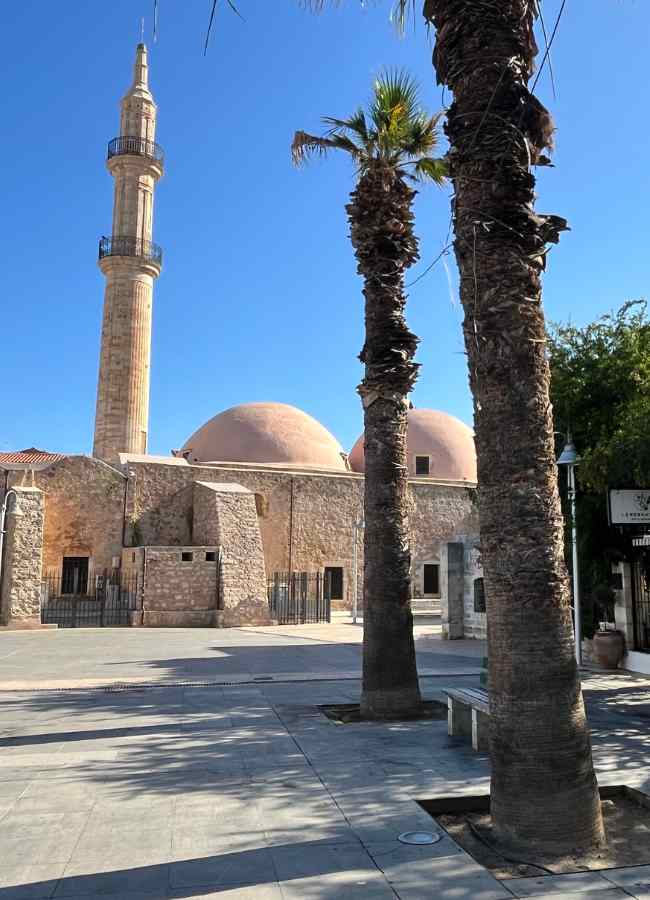
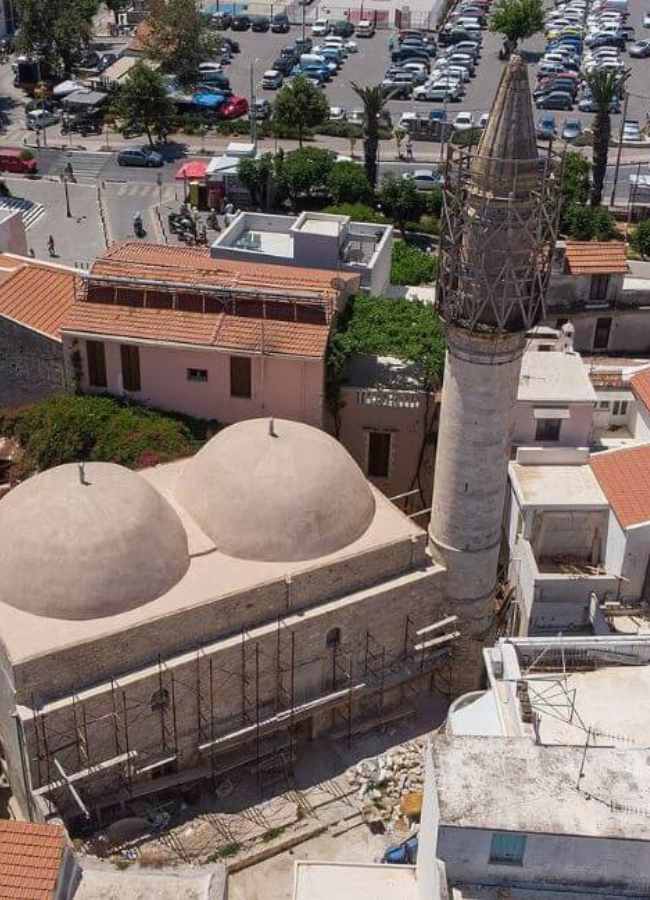
Among the former mosques in Rethymnon, Neratze Mosque holds a unique place. The story of Neratze Mosque begins with its construction as the Augustine Monastery by the Venetians. Founded in the late 16th century, the monastery was a place of contemplation and religious devotion.
The monastery featured the Santa Maria church, dedicated to Mary of the Augustinians. After Rethymnon was conquered by the Turks, the church was turned into a mosque (1657). The church had been one of the most important churches in Rethymnon during the Venetian period.
The conversion involved replacing its tiled roof with three semi-circular domes and other architectural modifications, such as removing Christian symbols and naming the building Gazi Housein or Neratze. The building also served as an Ottoman seminary.
A large minaret with two stone balconies was added back in 1890. This remains the tallest and most impressive construction in Rethymnon’s old town, reaching 33 meters in height.
When the island was free from Turkish rule, the mosque was again made into a church dedicated to Agios Nikolaos. Since 1957, the former Neratze Mosque has housed the Municipal Odeon (a conservatory) and is a vibrant cultural center. The building celebrates the town’s history and frequently hosts art shows and exhibitions.
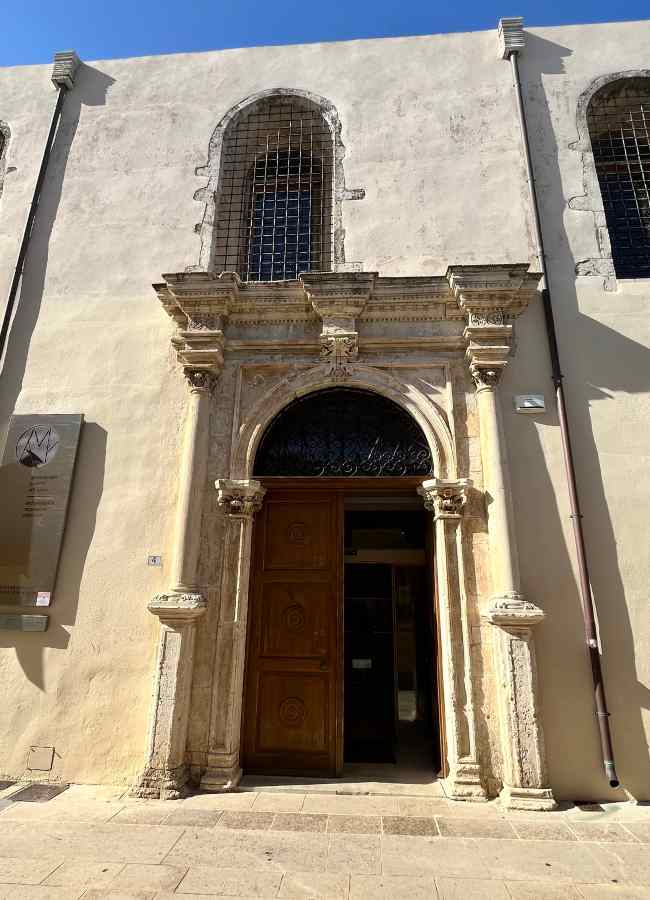
Only steps from the mosque, the former Church of Saint Francis, was a basilica and church of a Franciscan Monastery built around 1530 and the seat of the Brotherhood of the Virgin Mary of the Carmelite Order. The church was annexed to the Neratze Mosque complex during the Ottoman Period and housed a hospice (imsret). Today it’s home to Rethymnon’s Archaeological Museum.
>> This Old Town and Food Tasting Private Tour is perfect for tasting the most authentic street food in town and discovering Rethymnon’s spectacular Ottoman buildings.

📌 Are you skimming through the post and have no time to read it now? Save it on Pinterest and read it later!
Valide Sultana: A Reminder of Ottoman Influence
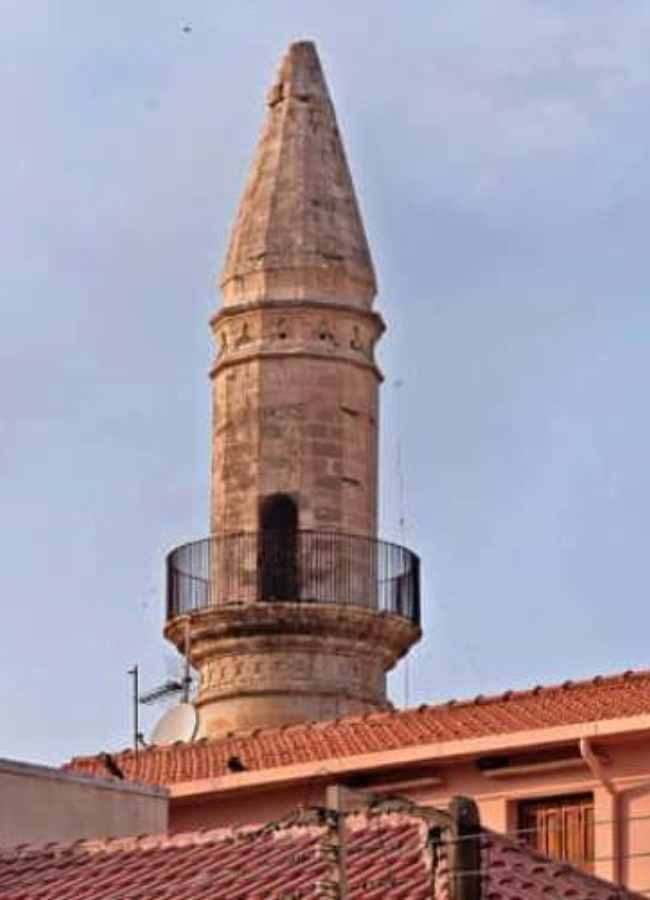
Another remarkable former mosque in Rethymnon is the Valide Sultana Mosque. Built during the 17th century, after Rethymnon fell under Ottoman rule, it is today hidden by more modern buildings, and only the minaret is visible.
Also known as the Turhan Hatice Mosque, the impressive minaret-topped building is located in the old town of Rethymnon, right next to the Porta Guora, the Great Gate.
This was Turhan Hadice’s turf, part of Sultan Ibrahim’s harem. When her son ascended to the throne (1648), she became a Valide Sultana, and among her accomplishments was the construction of Rethymnon’s Turkish School (today, Rethymnon’s First Primary School).
The building functioned as a mosque until the population exchange between Greece and Turkey in 1925, after which it was abandoned. The entrance features an inscription from 1816 that refers to restoration works by Hilmi Ibrahim Pasha.
It has two minarets, including an old one with a cylindrical balcony and a pyramid cover. The mihrab columns have two inverted Corinthian capitals and a semicircular arch with an inscription containing a verse from the Quran.
A few meters from the building, a store features an ancient fountain from the 18th century, with nine small pillars and relief half-moons.
LOCALS KNOW: If you visit Rethymnon looking for this mosque, head to the Porta Guora and go through it to access the old town. Make a turn right on Tombazi Street, a small alley from where you can spot parts of the old structure.
Kucuk Haci Ibrahim Aga Mosque: The Loggia’s Transformation
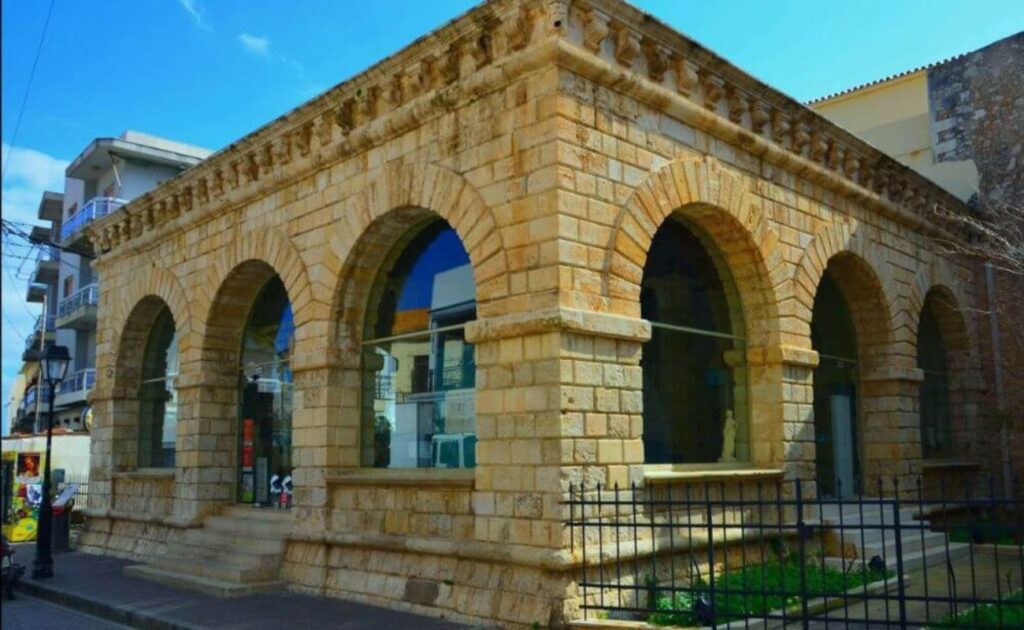
Located in the heart of Rethymnon, on the corner of Arkadiou Street and Paleologou Street, the Kucuk Haci Ibrahim Aga Mosque is a thrilling example of architectural transformation.
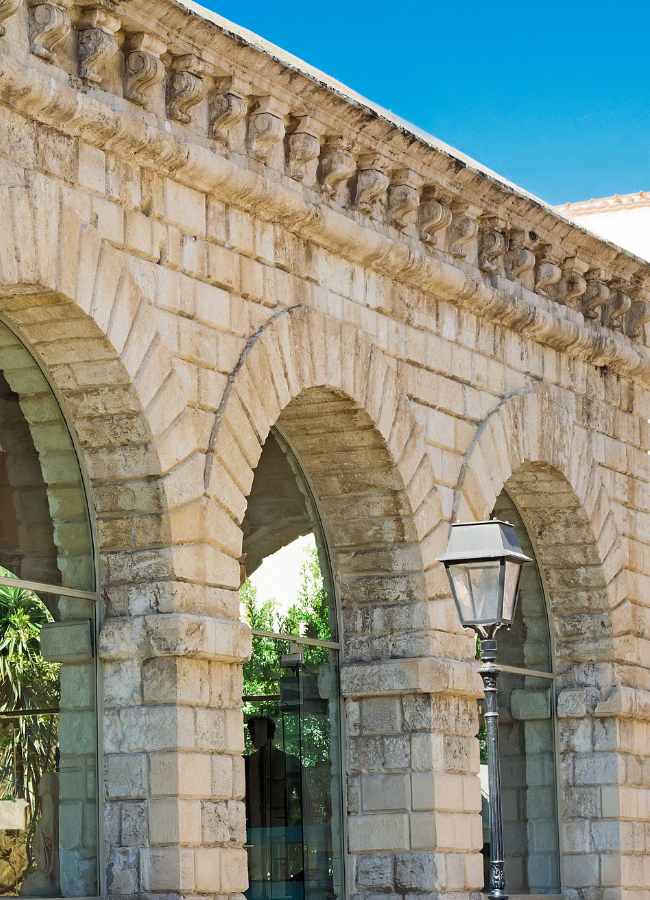
Although originally built in the 16th century as Rethymnon’s Venetian Loggia by the famous Venetian architect Michel Sanmicheli, this was a covered public space used to discuss political and social affairs. Upon the Ottoman conquest of the island, it was converted into a mosque.
The Turks changed the loggia’s structure to accommodate Islamic worship by adding a prayer hall and a minaret on the north side. At the foot of the minaret, there was also a fountain with the inscription of a prayer.
The result? A remarkable blend of Venetian and Ottoman architectural styles. However, once the Turks left the island, the mosque was abandoned, and its minaret fell into ruins.
For decades, Rethymnon’s Loggia housed the Archaeological Museum of Rethymnon. However, the museum is now in a different building, while Loggia is home to the museum’s shop.

RELATED ARTICLE:
– The Best Museums in Rethymnon.
Kara Musa Pasha Mosque: Vestige of the Ottoman Rule
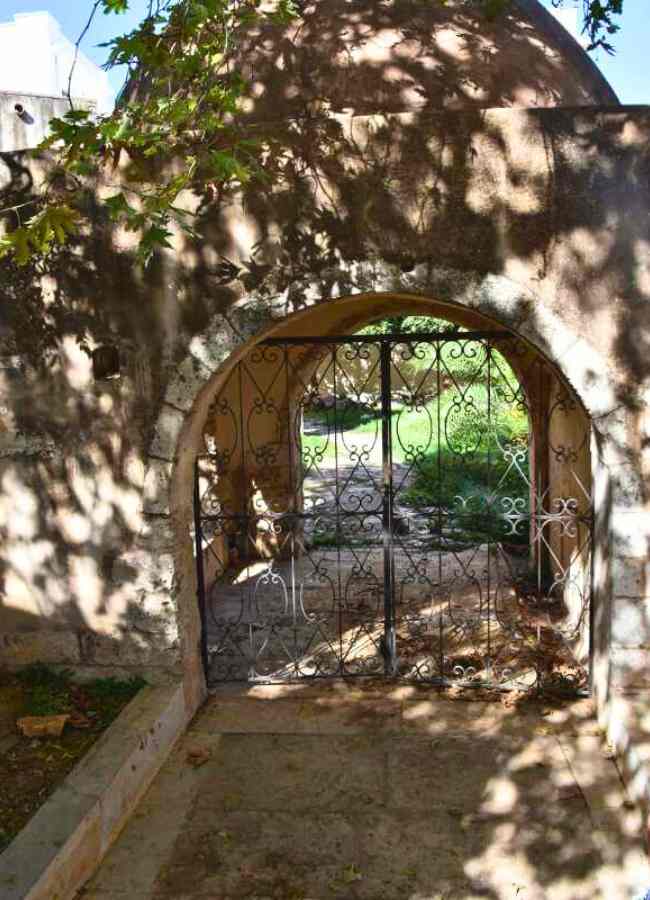
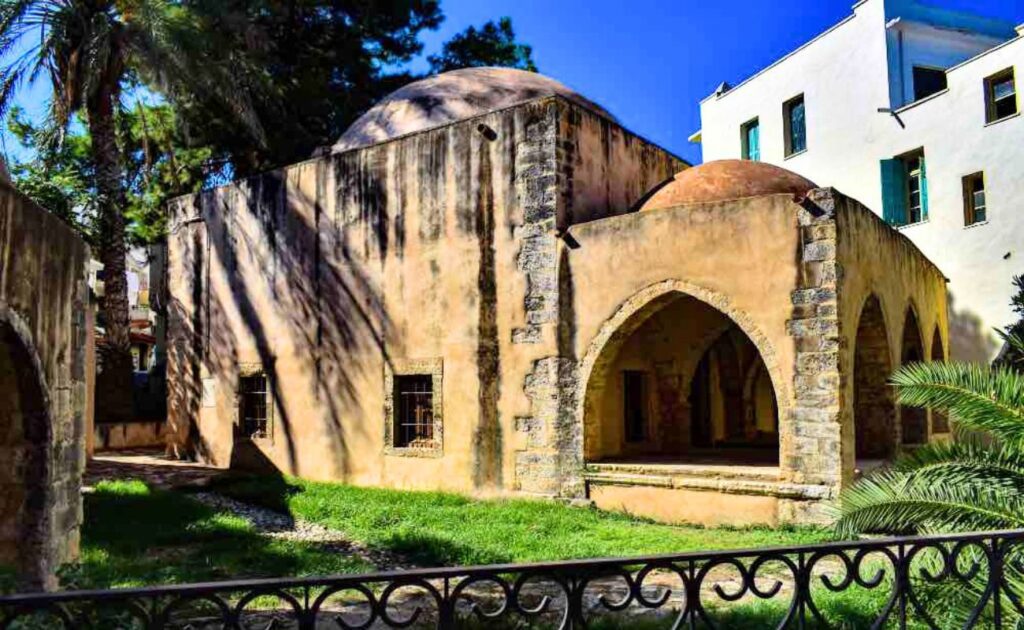
As you explore Rethymnon further, you cannot miss the Kara Musa Pasha Mosque, a shining glimmer of Ottoman rule. This former mosque, built in the 17th century on the grounds of the former Saint Barbara Monastery, features a striking black-and-white façade that sets it apart from other former mosques.
The mosque’s name comes from Kara Musa Pasha, an Ottoman commander who invaded Rethymno in the name of the Sultan. After his successful conquest, he converted this church into the mosque of Kara Musa Pasha.
The abandoned building is located on one of the most beautiful corners in town; it features a mihrab oriented towards Mecca, a domed mausoleum with three vaults, the remnants of a minaret showing signs of time, and a vaulted fountain. It has a gorgeous courtyard with embellished columns, once towering over Turkish graves.

Sultan Ibrahim Han Mosque in Rethymnon’s Fortezza
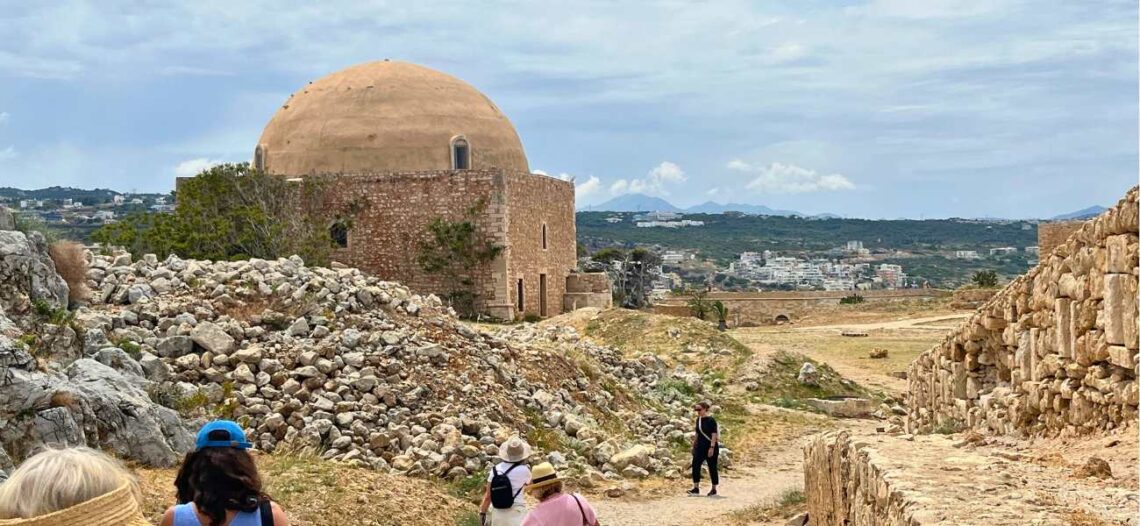
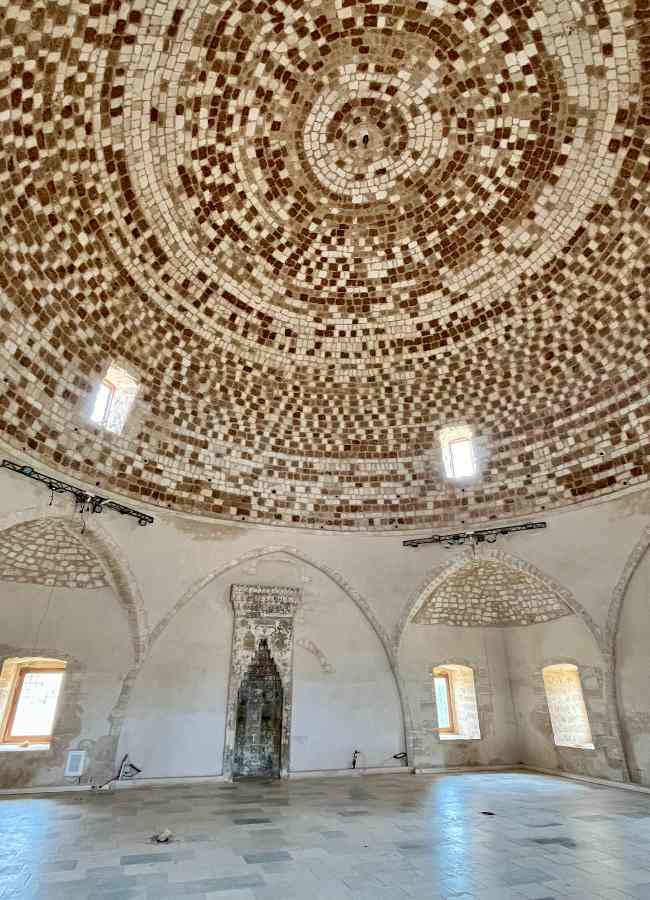
Commanding a central position inside Rethymnon’s Fortress – Fortezza – the Sultan Ibrahim Han Mosque stood adjacent to the former residence of the Venetian Rector (governor). Originating in the 1580s, this mosque began its architectural journey as the Venetian Cathedral of Saint Nicholas.
However, following the Turkish capture of Rethymnon in 1646, the cathedral within the Fortezza transformed into an Ottoman mosque, a conversion orchestrated by Sultan Ibrahim Han, who lent his name to the newly repurposed structure.
Characterized by solid craftsmanship, the mosque is a robust square building with an impressive dome measuring 11 meters in diameter.
The mihrab is at the center of the southeastern wall, oriented towards Mecca. Standing at a height of two meters, the mihrab boasts embossed decorations resembling stalactites and cylindrical rosettes, with a Quranic text adorning the upper portion.



Veli Pasha Mosque: Bridging Cultures through Architecture
Veli Pasha Mosque is an architectural marvel that bridges cultures and eras. Originally built as a Catholic church during the Venetian period, it was later converted into a mosque under Ottoman rule.
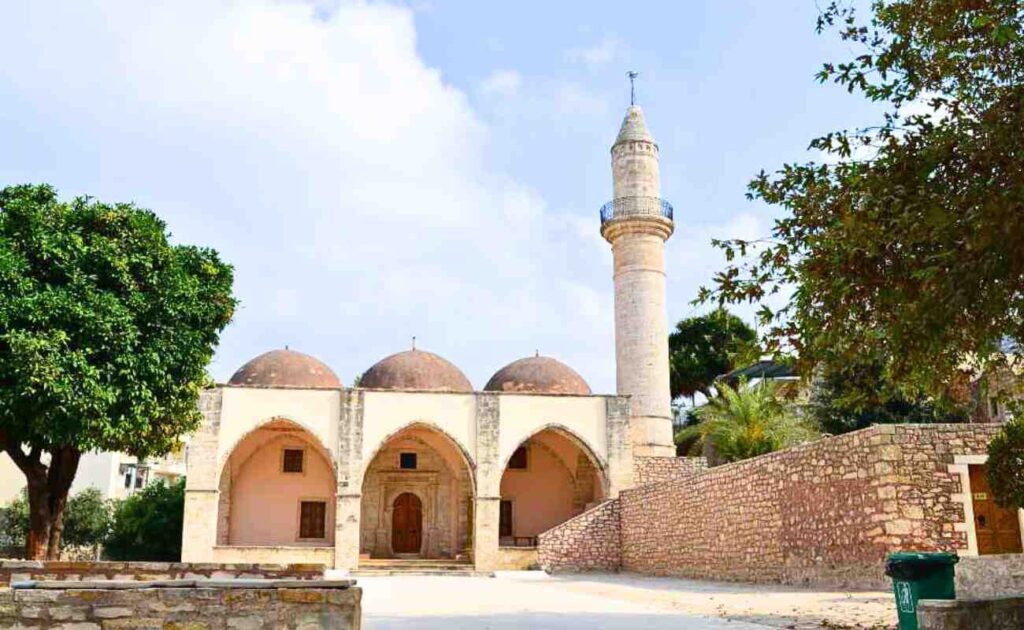
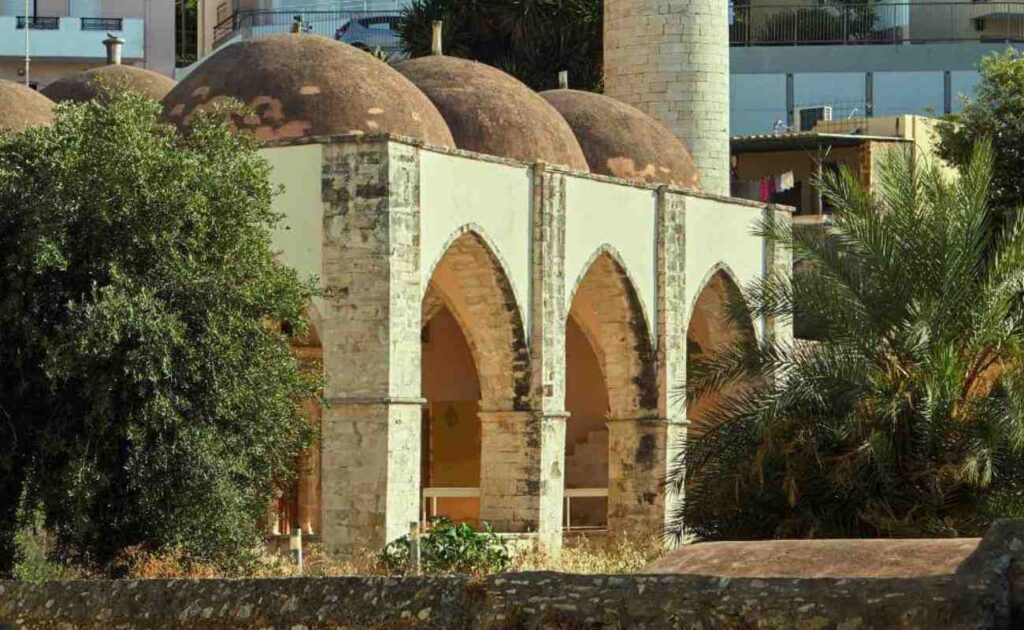
The Veli Pasha Mosque, also known as the Mastaba Mosque, has its roots atop the former Venetian Church of Saint Onophrio. The mosque served as a home to a madrasah. Some distinctive architectural elements include an array of nine small domes and a Tuscan-style entrance featuring a frieze adorned with an intricately carved vine in relief.
Especially significant is the stumpy minaret, erected in 1789, making it the oldest in Rethymnon. Adorned with two string courses, a circular gallery, and a truncated, pyramidal roof, this minaret adds to the mosque’s structural charm. The mosque’s design seamlessly blends Venetian and Ottoman architectural elements. When you visit the location, remember that you are admiring the shared history between different civilizations.
RELATED ARTICLE:
– Best Hotels in Rethymnon Old Town.
Ibrahim Mosque and Its Sufi Legacy
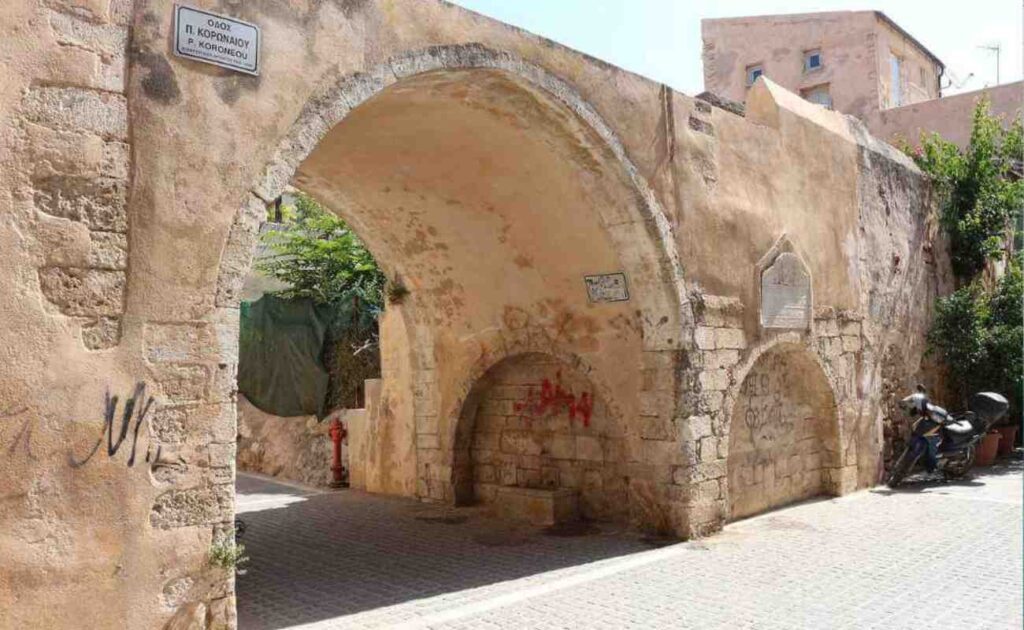
The Ibrahim Mosque is a hidden gem in Rethymnon. Once a remarkable church devoted to Agia Sophia, this twin-aisled building was transformed into a mosque after the Ottomans captured Rethymnon. Janissary (Ottoman official) Yahya Ibrahim contributed to the town’s development.
It is said that the mosque had an 8-meter wooden minaret and strategically designed windows that allowed to peek into the interior during prayer times.
However, what makes this mosque unique is its association with Sufism, a mystical branch of Islam. Local tales say Ibrahim Mosque was a gathering place for Sufi practitioners who sought spiritual enlightenment and connection with the divine.
The Architecture of Rethymno’s Mosques
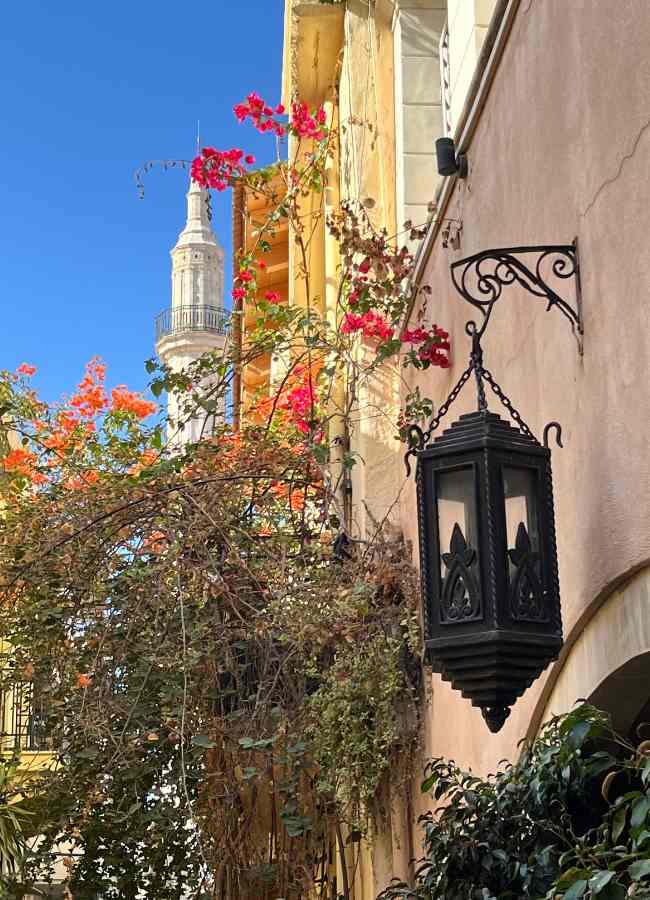
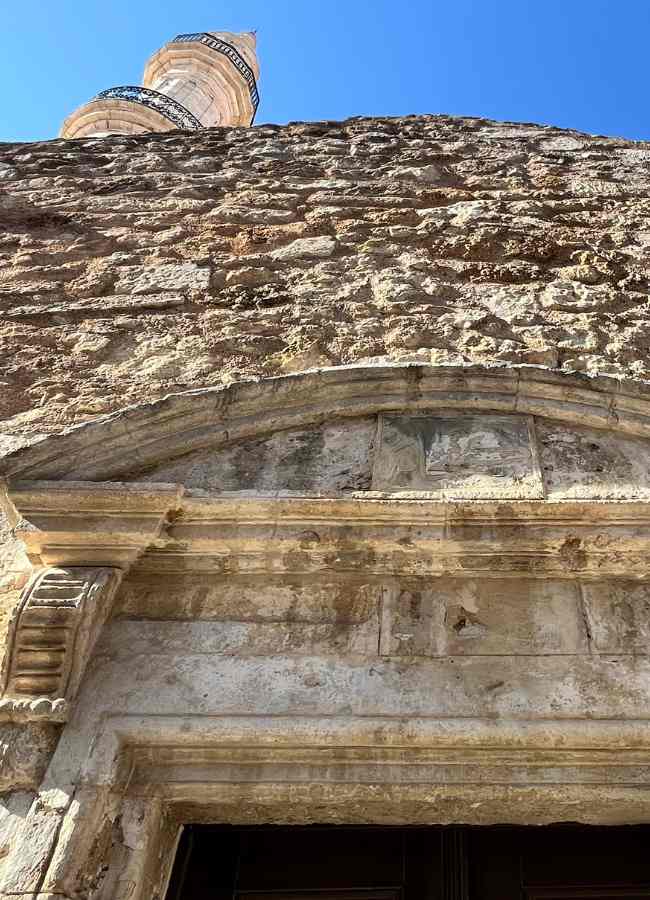
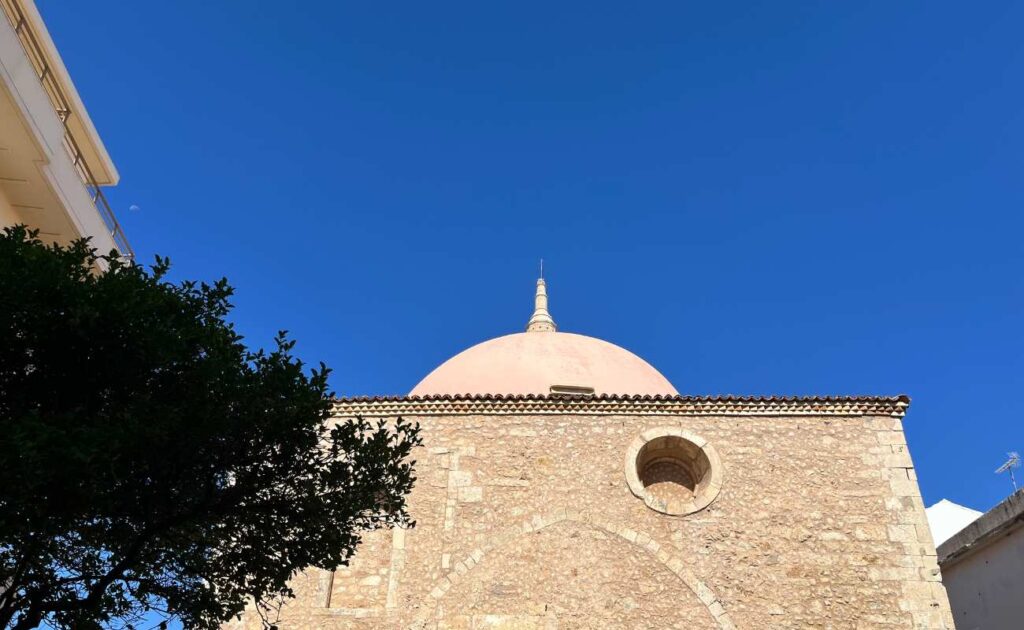
Thanks to Rethymno’s complex history, the former mosques of Rethymno share several exquisite architectural styles. From the grand domes and minarets to the intricate decorations and arches, each mosque tells a unique story through its design.
The fusion of Venetian, Ottoman, and Islamic influences creates a rare visual that will entertain you the more you look around.
Exploring the architecture of former mosques in Rethymnon is like embarking on a journey through time, where each structure unveils a different chapter in the town’s history.
The Fascinating Stories Behind Rethymnon’s Ancient Mosques
Beyond their architectural beauty, Rethymnon’s former mosques hold captivating tales that bring the past to life. Think of stories that date back centuries and connect the town’s present with its rich heritage.
From tales of conquest and religious transformation to the resilience of communities, the stories behind these mosques offer a glimpse into the lives of those who once worshiped within their walls. So, whenever you visit a former mosque in Rethymno, remember to ask for local tales – your visit will be much more entertaining.

Preservation and Restoration Efforts for the Former Mosques in Rethymnon
Preserving and restoring former mosques in Rethymnon is vital but not easy. Various organizations and institutions are actively working toward that goal, so these architectural treasures continue to inspire and educate future generations.
The restoration process involves careful research, architectural expertise, and community engagement.
You can now witness such historical and architectural marvels through these collective efforts. Remember that when you visit the former mosques in Rethymno, I’m sure you’ll appreciate your visit even more.

How to Visit and Appreciate Rethymnon’s Former Mosques: Tips and Recommendations
If you plan to visit Rethymnon, exploring the former mosques should be on your list. To make the most of your experience, here are a few tips and recommendations:
- Research the history and significance of each mosque before your visit to gain a deeper understanding.
- Whenever you visit some of the mosques open to the public, Dress modestly and respect the cultural and religious importance of these sites, even if they’re not active mosques today.
- Consider joining a guided tour or hiring a knowledgeable local guide who can provide insights into the mosques’ stories and architecture.
- Take your time to appreciate each mosque’s exquisite details and unique features.
- Capture the beauty of these mosques through photography, but remember to be mindful of others.

The Enduring Legacy of Rethymnon’s Former Mosques
As you see, the former mosques in Rethymno carry echoes of the past and the beauty of cultural exchange. These architectural gems stand as a testament to the town’s rich history and the resilience of its people.
So, are you ready to discover a world where different cultures and religions used to coexist? Rethymno is ready to welcome you!

Are you visiting Crete Soon?
Join my Facebook group for more tips, or plan your Crete itinerary with me!
Pin for Later
Guide to Visit the Most Beautiful Mosques in Rethymnon, Crete


Gabi, the Crete Insider
Hi, I’m Gabi — your go-to local expert in Crete! I’ve been living in Chania, Crete since 2016, and I’ve turned my love for the island into a full-time passion — guiding travelers, writing for travel media, and curating local experiences.
I co-authored DK Eyewitness Top 10 Crete and other guides. I run the blogs The Tiny Book, Greece Planner, and My Cretan Recipe. Through this platform I help travelers design unforgettable trips to Crete.


