

Practical Travel Guide to Visit Crete (Written by a Local)
Learn everything you need to know to visit Crete like a pro with this Crete Travel Guide written by a local! Crete guide with practical tips for your holidays in Crete. It includes important information about Crete’s landscape, weather, activities, beaches, villages, food & wine, archaeological sites, traditions, and a lot more!
📍 Must-do: Balos Cruise 📍 Knossos Palace 📍 Check rental car rates for Crete 🚗
Crete is one of the biggest islands in the Mediterranean and the largest island in Greece. It’s a palette of stunning colors, pink sand beaches, turquoise seas, brown mountains, and green olive groves. A land with an ideal climate all year round and incredible natural wonders. It is also the cradle of one of the healthiest diets in the world, the Cretan diet.
All of these put Crete at the center of tourist interest, making it a popular Greek island for vacations. Whether it’s your first time or not, check this ultimate guide with practical Crete travel tips to plan your trip!
Crete Travel Tips: General Information about the Island of Crete
Crete is a very large island that can take years to discover. It’s, in fact, the largest Greek island and stands in the southernmost area of the country. It’s located closer to North Africa than Greece’s capital, Athens.

Crete is at the crossroads of three continents: Europe, Asia, and Africa, so the connections with Middle Eastern traditions are not minor.
Right in the center of the Mediterranean, Crete has a rich history. It has been inhabited since ancient times and occupied by diverse civilizations over the centuries; among the most prominent are the Venetian Republic (1212- 1669) and the Ottoman Empire (1671-1898).
Every civilization that ruled on the island left a strong heritage that shaped Crete’s present identity. Crete is known as the cradle of civilization, but it was also a land craved by invaders, foreign occupants, and pirates.
TIMELINE
HISTORY OF CRETE
| The unconditional surrender of Germany | Bronze Age (remnants of this period found in Knossos) |
| 2700 – 1450 BC | MINOAN CIVILIZATION – 1650 Volcanic Eruption in Thira (Santorini) MYCENEANS |
| 9th Century BC | First Greek-City States |
| 3rd Century BC | Settlements of Gortyn, Ployrrinia, and Kydonia (present Chania) |
| 69 BC | ROMAN, BYZANTINE, AND ARAB CRETE The island is conquered by the Eastern Roman Byzantine Empire |
| Year 0 | |
| 820 AD | EMIRATE OF CRETE Piratical Emirate Iberian Muslims build Handax (present Heraklion) |
| 961 AD | BYZANTINE EMPIRE reconquests Crete |
| 1204-1212 | The island is disputed between the Genoans and the Venetians |
| 1212-1669 | REGNO DI CANDIA (CRETE IS CONQUERED BY THE VENETIAN REPUBLIC) Cretan Renaissance |
| 1669-1898 | OTTOMAN EMPIRE DOMINATION – 1821 Greek War of Independence – 1866 Great Cretan Revolt |
| 21 December 1898 | AUTONOMOUS CRETAN STATE |
| 1913 | UNIFICATION WITH GREECE (Enosis) – The Greek Flag is raised in Firkas Fortress, Chania |
| 1941 | II WORLD WAR – Axis Powers invade Greece – May 1941: Operation Mercury (Major airborne assault on Crete) – Cretan Resistance |
| 10 May 1945 | Unconditional surrender of Germany |
| Timeline – History of Crete. |
📌 Are you skimming through the post and have no time to read it now? Save it on Pinterest and read it later!
Landscape
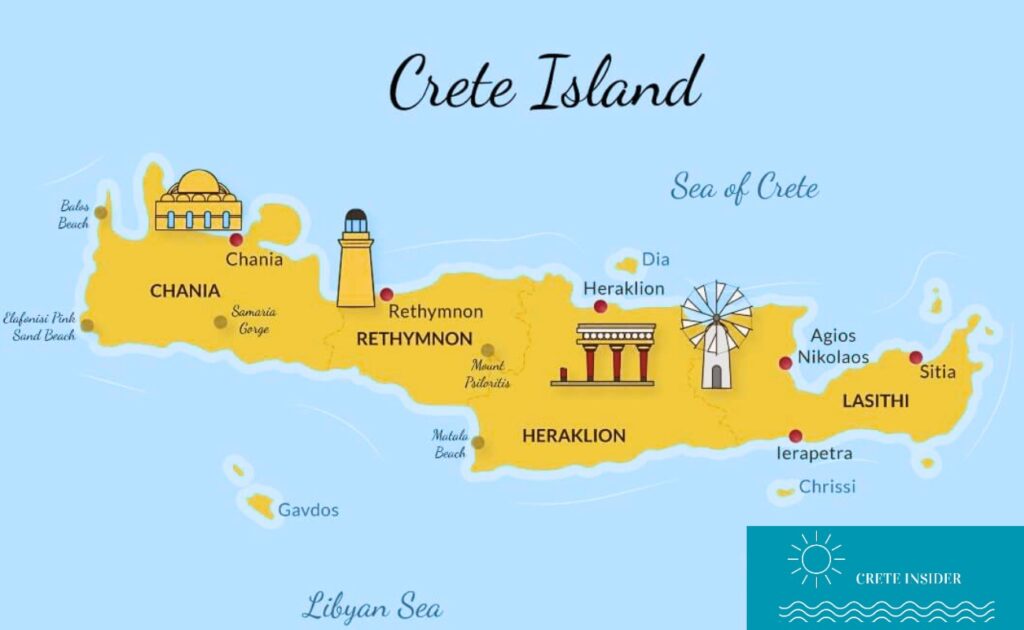
SEAS: The Sea of Crete washes the coasts of Crete on the north coast and the Libyan Sea in the south. The eastern coast is bathed by the Carpathian Sea and the Myrtoan Sea in the West. However, most people still refer to the sea on the island’s northern part as the Aegean.
REGIONS: From west to east, Crete is divided into four regions: Chania, Rethymnon, Heraklion, and Lasithi.
CAPITAL: Heraklion is the island’s capital and the same region’s capital. Heraklion is also the largest city in Crete, followed by Chania (capital of the Chania region), Rethymno (capital of the Rethymnon region), Ierapetra (in Lasithi), and Agios Nikolaos (capital of the Lasithi region).
MOUNTAINS: Crete has a mountainous landscape with deep gorges and high mountains. Mount Ida (or Mount Psiloritis) is the highest peak, 2.456 meters above the sea. Seven mountain ranges divide the island into two different areas: the more developed north coast and a pretty isolated southern portion. The island’s widest point is 60 km, while its narrowest point is only 12 km.
Driving from the westernmost coast to the extreme east can take 4 to 6 hours.
Weather in Crete
Crete lies between two different climatic zones; the northern coast has typical Mediterranean weather, while the south is subtropical.
In general, summers are very hot and extended with scarce rains, while winters tend to be short and mild on the entire island (with snow in the inland alpine area).

Practical Details to Plan Your Trip to Crete
Planning your trip requires careful consideration of various practical details to ensure a smooth experience. From transportation and accommodation to essential travel tips, the following tips will help you navigate the logistics of your Cretan adventure.
What Language Do They Speak in Crete?
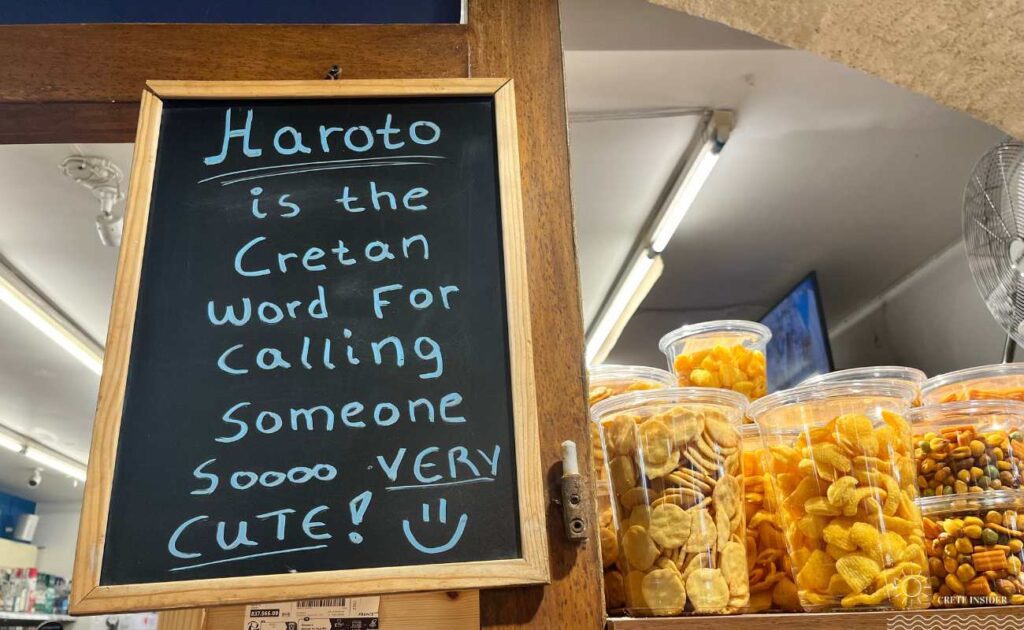
Crete’s official language is Greek, yet English is a widely spoken second language in all major tourist areas. The island has been a popular destination for at least 40 years. Many local people also try to communicate in Italian, German, or French.
Cretans are extremely proud of their legendary hospitality, and nothing makes them happier than being able to talk with foreigners. Despite Greek being a difficult language, it’s fair to say that there are virtually no language barriers.
I’ve also noticed that Greek TV usually broadcasts foreign programs in their original language (just adding captions). The difference is clear if I compare that to my almost 18 years living in Italy, where programs and films are dubbed.
Even those with no formal education in English can give you a hand. If you are lost in a remote village, chances are that there’s an old grandma who has been watching films in English for many years. She will be able to help (it happened to me personally, many times!)
Currency
The Euro is the official currency of the European Union, so it’s also used in Crete. Exchange offices are in every main city, and money can also be exchanged in banks, hotel desks, and the airports of Chania and Heraklion.
Almost every shop in big cities accepts credit and debit cards. The same goes for hotels and resorts. However, if you stay in more isolated areas, check with the owner beforehand. ATM points are also available throughout the north coast, while some southern villages lack the service. Save yourself a drive through the mountains (it also happened to me personally) and check in advance.
>> You might also want to read this guide about prices in Crete.

Valid Documents to Visit Crete
For European Citizens
Greece is a member state of the European Union. Citizens traveling inside the E.U. need their ID. However, a passport is needed for transactions such as currency exchange or sending money abroad.
Citizens of Member States under the Schengen Agreement can travel without a visa for up to 3 months; however, some airlines might require a valid passport to board.
For Non-European Citizens
Citizens of countries other than the E.U. need a visa to enter Greece. The Hellenic Embassy or Consulate in your home country can tell you about the specific requirements.
You can also check the website of the Greek Ministry of Foreign Affairs.
If you hold a valid passport from any of the following countries, you can visit Greece for up to 3 months without the need for a visa:
Andorra, Argentina, Australia, Brazil, Brunei, Canada, Chile, Costa Rica, Croatia, El Salvador, Guatemala, Honduras, Israel, Japan, Malaysia, Mexico, Monaco, New Zealand, Nicaragua, Panama, Paraguay, Saint Marino, Singapore, South Korea, US, Uruguay, Venezuela.
Where to Stay in Crete
Crete offers a wide variety of accommodations for all budgets. Lodging can range from small hotels to luxurious stays at 5-star resorts. These are some of the most common:
Rooms to let (domatia)
With the rise of Airbnb and Couchsurfing, this option stopped being unusual. However, not long ago, Greece was one of the few places in Europe where you could have a vacation on a budget by cutting down on accommodation expenses and renting a room in a private house.
Studios
Studios are the most traditional type of accommodation in Greece. They are usually one-bedroom apartments with a functional kitchenette and a bathroom. This convenient kind of accommodation is being lost in many important cities.
Hotels
Tourism is Greece’s main income source and an important business on the island. For that reason, you will find hotels everywhere.
Hotel categories range from 1 to 5 stars. Thematic hotels are also a new trend, they can be gastronomic hotels, eco-friendly hotels, wine hotels, and hotels specially designed for kids.
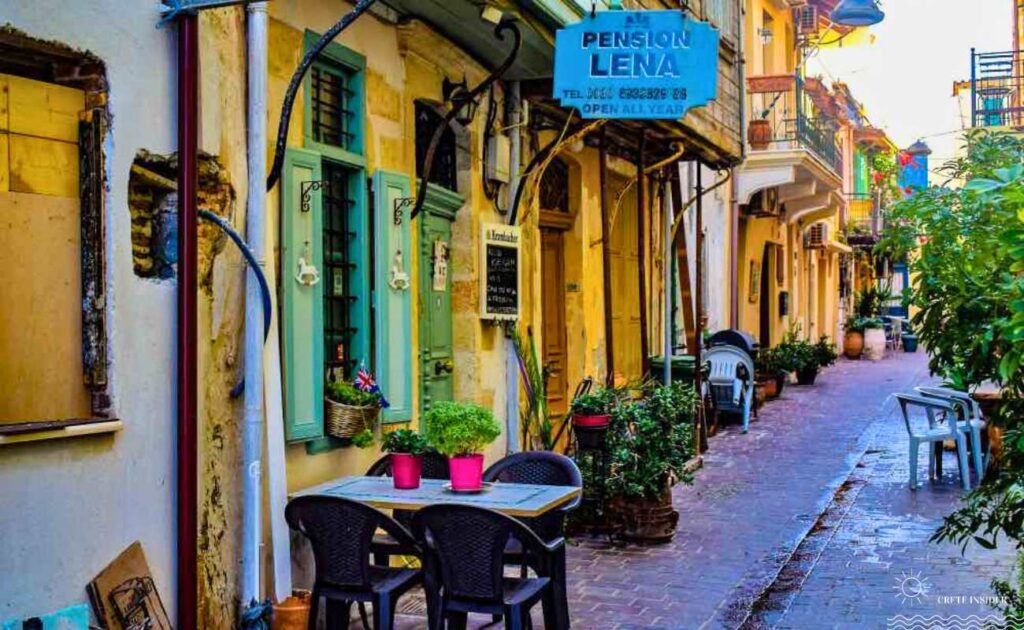
Boutique hotels
Boutique hotels are common on the island, mostly in old towns and main cities. Boutique hotel categories vary according to the services offered.
Property rental
Renting an entire house for an extended holiday has always been very common. The offer ranges from simple 2 or 3-bedroom apartments to luxury villas with pool, concierge, and housekeeping service.
All-inclusive resorts
Many all-inclusive resorts are a few kilometers from the main towns. In the region of Chania, most resorts are in the villages of Platanias and Agia Marina. In Rethymnon, most resorts are in Kavros, Panormos, or Adelianos Kampos. Hersonissos and Malia are the so-called resort areas in Heraklion, while Elounda can be considered the area with more resorts in Lasithi.
Camping
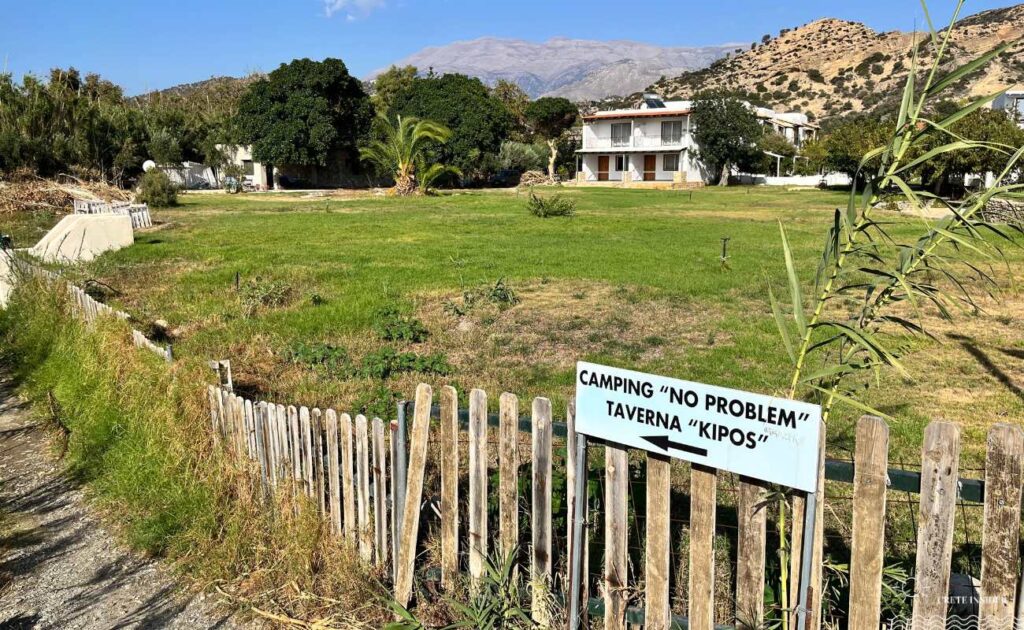
Crete offers different camping alternatives. The island has about 15 official camping sites, and this website provides detailed information about each facility.
The Greek law forbids outdoor camping in public places, although many tourists disregard this and camp illegally, especially near the beautiful beaches in the south of Crete.
Spending the night on the beach (using a sleeping bag and not a tent) is not illegal. In any case, whatever camping option you prefer, always respect the environment.
- Keep away from Natura-protected areas.
- Don’t leave any garbage behind.
- Avoid starting fires.
- Respect native flora, cedar trees are a protected species. Don’t use them to secure your tent, don’t hang your clothes, and don’t cut off branches.
>> RELATED ARTICLE
– Everything About Camping in Crete + Camping Sites on the Island
CRETE TRAVEL TIPS BY AN INSIDER
(and personal opinion)
- Always prefer Cretan accommodation to experience authentic local hospitality. You will also be doing something more important: helping every seasonal worker make a living for the rest of the year.
- The same goes for cart rental and the so-called “local tours” that belong to international tour companies! If a brand runs tours in hundreds of cities worldwide, it’s clearly not local!
Mobile and Internet
Can I use my mobile phone in Crete?
There shouldn’t be any problem if you want to use your (recent) mobile phone in Crete. However, take the following notes into account:
- Inform your provider that you are traveling abroad.
- Check what rates your provider applies for international calls.
- Be aware of roaming expenses: Phone apps usually use data, even when you’re not online.
- To avoid a surprise, you can turn off data (mobile settings). Messaging and calls won’t be blocked, but to use the internet, you must log in to any WiFi hotspot (the airport, a hotel, a restaurant, or the city center). To check what is available, open settings and look for connections.
- Public buses, city centers, hospitals, airports, most lodgings, and many beach facilities offer free Wi-Fi.
- Check hotspots in Chania, Rethymno, and Heraklion.
- This app is also helpful to check WiFi hotspots on the whole island and anywhere in the world!

If you don’t come from a country within the European Union
- It’s possible to use your current device and number. In this case, check fees and special offers from your provider.
- You can still use your current device and change the SIM card in Greece to a local number – (popular providers are Nova, Cosmote, and Vodafone, with shops in every major city). A copy of your passport will be necessary to activate the new number. Choose a pre-paid plan for a short stay and top up as needed.
- Or… you can always buy a new phone and number when you arrive in Crete (you won’t need to change any of your main phone settings, and you will still have your contact list).
Roaming within the European Union
According to EU legislation, citizens using their mobiles traveling outside their home country in any EU country don’t pay any additional roaming charges.
Read the resolution here because fees apply if you are not connected to a land-based network (fees to connect to a satellite-based network are very high).
Airports in Crete
How many airports are there in Crete?
There are three airports in Crete, two of them serving the whole island (Chania and Heraklion), as well as the small airport of Sitia. Here are the most important details:
Heraklion International Airport “Nikos Kazantzakis”
(HER) This is the main airport in Crete (Greece’s second busiest airport after Athens). It’s located about 5 km from the city center.
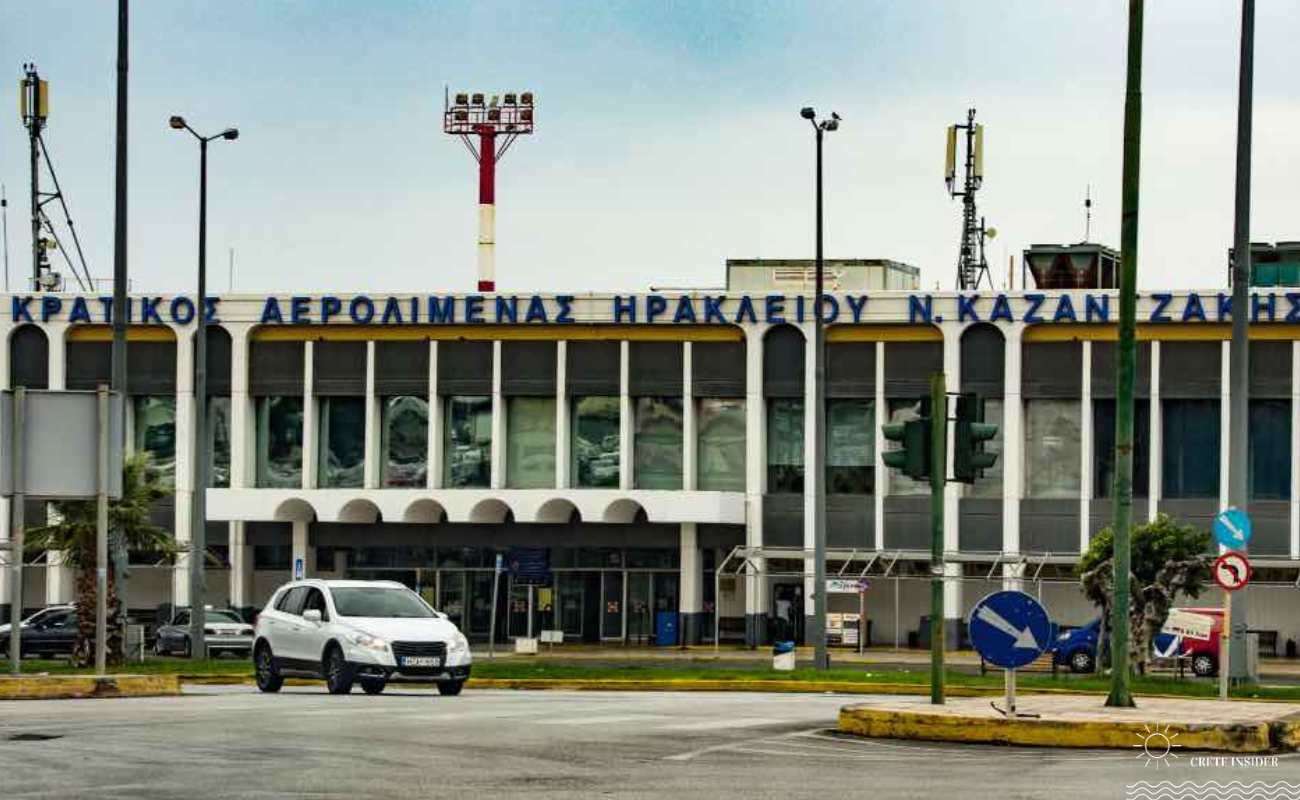
Public transport: The only option to reach the city center from Heraklion Airport is the public bus (blue coaches—KTEL).
The single fare from the airport to the city center is €2.00, and tickets are sold on the bus (cash and Eur only). The service runs from 6:00 am to 12.00 am, all year long, with a 15-minute frequency.
Chania International Airport “Ioannis Daskalogiannis”
(CHQ) This international airport is close to Souda Bay on the west coast of Crete. It’s in the heart of the Akrotiri Peninsula, about 14 km from Chania.

Public transport: The only public service to reach Chania Town from the local airport is the bus (KTEL, green or yellow buses).
The single fare to the city center is €2.50. Tickets can be purchased on the bus or online. The ride takes about 25 minutes. Buses run with a 30-minute frequency until 11 at night.
Sitia Public Airport “Vitsenzos Kornaros”
(JSH) This small community airport is in eastern Crete, about 1 km from Sitia. There is no public transport to the center. Taxis and car rental companies are outside the arrival halls of all airports.
>> If you’re looking for tickets to Crete, check out this guide to traveling to Crete by air or by sea.

Ports in Crete
There are six passenger ports on Crete, but you will probably arrive at Heraklion or Souda (Chania).
Main Ports in Crete: Heraklion & Souda
A ferry trip from Athens (Piraeus port) to Crete can last 5 to 6 hours, usually at night. Updated information about the Greek ferry service to the island can be easily found on the website of the major ferry lines reaching Crete, such as Minoan Lines and ANEK Lines.
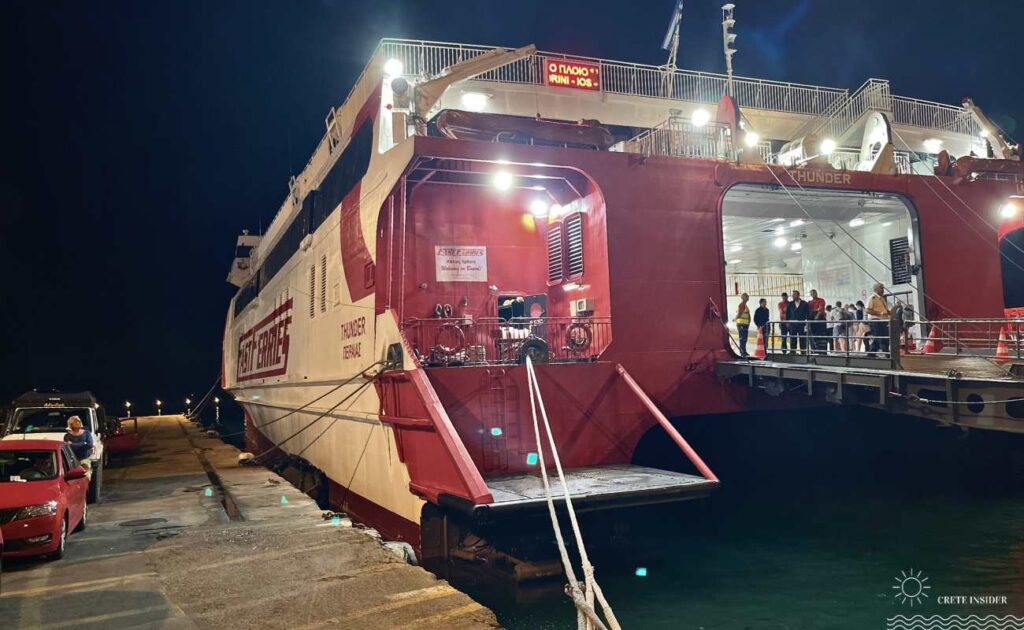
Other Ports in Crete
- Rethymno
- Kissamos (only excursions to Balos-Gramvousa, and ferries to the islands of Kythira, and Antikythira)
- Agios Nikolaos
- Sitia

Moving Around
Public Transport
The island has no trains or subway system, so the only way to move around with public services is by using the extensive bus network.
Fares are rather convenient when compared to the rest of Europe. For instance, a three-hour ride from Heraklion to Chania is about €15. The service is more frequent along the north coastal road than to the inland villages on the south coast.
There are stations in the main cities (two in Heraklion). Still, the bus stop is often close to a kafenio or tavern selling tickets in small towns. Buying a ticket on the bus is also possible when you board the bus in a small town (not if you depart from the main station with a ticket office).
>> RELATED ARTICLE
– Bus Travel in Crete: How to Move Around the Island without Renting a Car

During the peak season (May-October), buy the ticket a day in advance to secure a seat. Schedules can be found at every station and online.
>> Bus routes from Heraklion, Agios Nikolaos, Sitia, and Ierapetra
>> Bus routes from Rethymno and Chania

Car Rental in Crete
Road travel in Crete is my absolute favorite way to see the island. Crete is so big, and the roads are so challenging that unique driving experiences are part of the fun! Renting a car offers freedom and spontaneity like no other means of transport ever will.
All major international rental car companies operate just outside the airports. The best way to get a real feel of what the island is about is to drive from coast to coast. If you’re eager to get behind the wheel or don’t know how to get around when driving or renting a car on the island, check this guide for useful driving tips.

>> Driving in Crete? This is the perfect on-the-road itinerary to see the highlights of the island!
Local companies usually offer more convenient fees, but availability is reduced, so check your rental options before the trip. The best way to find the cheapest rental car is by using a good car rental search engine. This alternative website lets you compare prices for rental cars in Crete.
Health & Insurance in Crete
If you are a European Citizen, the European Health Card will give you access to free medical care with doctors from the Greek public health system.
Check your vaccines and medicine list with your doctor a few weeks before your trip, everyone should be up to date on routine vaccinations.
If you travel with private health insurance or travel insurance, check your policy to understand better what is covered and where to go in case of an emergency. There are general public hospitals in Chania, Rethymno, Agios Nikolaos, and Sitia.
There are two general hospitals in Heraklion. One is the University General Hospital, the largest hospital in Crete. It is located in Stavrakia, 8 km from the city. The second one is on the road to Knossos, about 4 km from Heraklion.
When to Visit Crete
There’s no best time to visit Crete because the island is a beautiful destination any month, and there are always plenty of things to do, no matter when you come. It’s not just a Summer destination.
Interesting cultural activities, festivals, and religious celebrations occur year-round. There are always fantastic opportunities to experience the local traditions. Let’s see the most important moments of the year in Crete.
>> RELATED ARTICLE
– When is the Best Time of the Year to Visit Crete
High Season
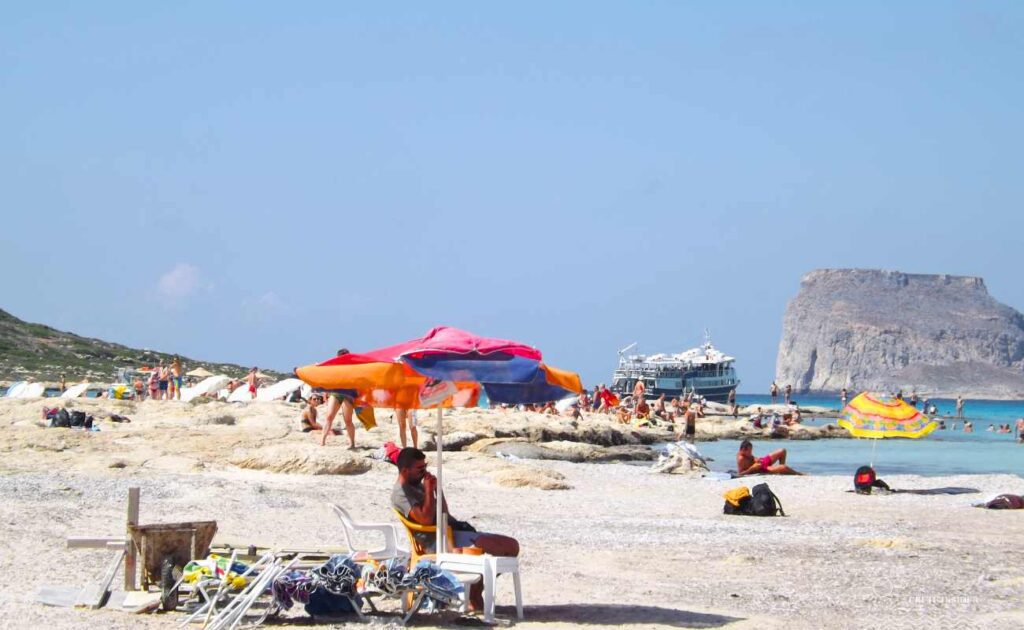
The high season is mostly June, July, August, and the first two weeks of September. The two central weeks of August are the busiest ones. During this period, prepare to wait in line and deal with crowds, scarce parking spots, and increased traffic. You will even find tourists on remote beaches sometimes.
Most beaches are full, and prices are higher than usual. The weather can be very hot during the day and even at night during the increasingly frequent heat waves. Usually, it doesn’t rain, and the sea temperature is warm.
Shoulder Season
Cities are less crowded from April to the beginning of June and mid-September to October, but tourism is still active.
During this time of the year, you’ll find the best weather conditions for outdoor activities such as trekking, hiking, or cycling. However, there might be occasional showers (pack accordingly).
Hotels and rental homes are not fully booked, and fees are more reasonable during this period.
Low Season
The weather is colder from November to March, and snow is uncommon in the mountains. Very rarely, it can also snow by the sea. Resorts and hotels by the sea are closed, but finding accommodation in the cities is easier.
Fees are affordable, but many tourist shops, small museums, and restaurants are closed. Some historical sites, local restaurants, and a few shops operate with reduced working hours, yet Crete is a fabulous winter destination with plenty of things to do.
What to Do in Crete According to the Weather
Winter: December, January, and February
During Winter, the days tend to get shorter and colder. It’s also windy sometimes, and rains are common, mostly in the island’s western area. However, you should visit Crete in Winter for many reasons.
There is snow in the mountains, but many gorges, including Samaria Gorge, are closed. Embrace Crete’s indoor activities and explore its museums and monasteries during this weather. The island buzzes with activity during the olive oil production season. The vast olive groves are a sight, brimming with olives and bustling with locals at work.
Feel the anticipation as locals gear up for the upcoming season. Many are already immersed in restoration works, breathing new life into the hotels and restaurants, preparing for the influx of visitors.

Winter days are also great for those looking for a short visit or a city break in the capital of Crete. You can visit Chania and Rethymnon or spend a weekend in Agios Nikolaos if you plan to visit the east.
You can also read about things to do in Crete when it rains. Every region has cultural activities, exhibitions, and other events, including festivals.
Winter is also a good month to visit archaeological sites if it’s not too cold and doesn’t rain.
They aren’t crowded; you can explore in complete loneliness or enjoy a tour guide on a private excursion and ask all the questions you want!
Christmas is less important than Easter in Greece, but it’s still celebrated at home and in church. New Year is dedicated to Saint Basil (Agios Vasilios), and it’s the day locals exchange presents, too. Families gather around the table to share the traditional sweet, the Vasilopita.
The Vasilopita, a cake that holds a coin, is not just a sweet treat but a symbol of luck and unity in Greek culture. Try my Vasilopita recipe to experience this tradition firsthand.

On January 6th, Greeks celebrate Epiphany (Fota or Theofania). On this joyful day, a Greek Orthodox priest blesses the waters. It’s also customary that the priest throws a cross into the water, and swimmers jump in to retrieve it, receiving a blessing for the whole year.
February is also the month devoted to Carnival, which is important in Greece. The best celebrations are in Rethymno, a city that has organized Crete’s best carnivals for over a hundred years. Check their official page to learn more.

Spring: March, April, and May
The atmosphere that invades Crete during Spring is, at the very least, festive. Fields blossom with wildflowers while everyone is getting ready for the major religious celebration in the Greek Orthodox calendar, Easter. Most hotels and tourist activities open right during the week of Easter.
As the days start to get longer, it’s not rare to find people swimming (usually not Cretans!).
By May, the weather gets better, with warmer temperatures and outdoor excursions. The most intrepid ones start visiting the local sandy beaches for an early tan.
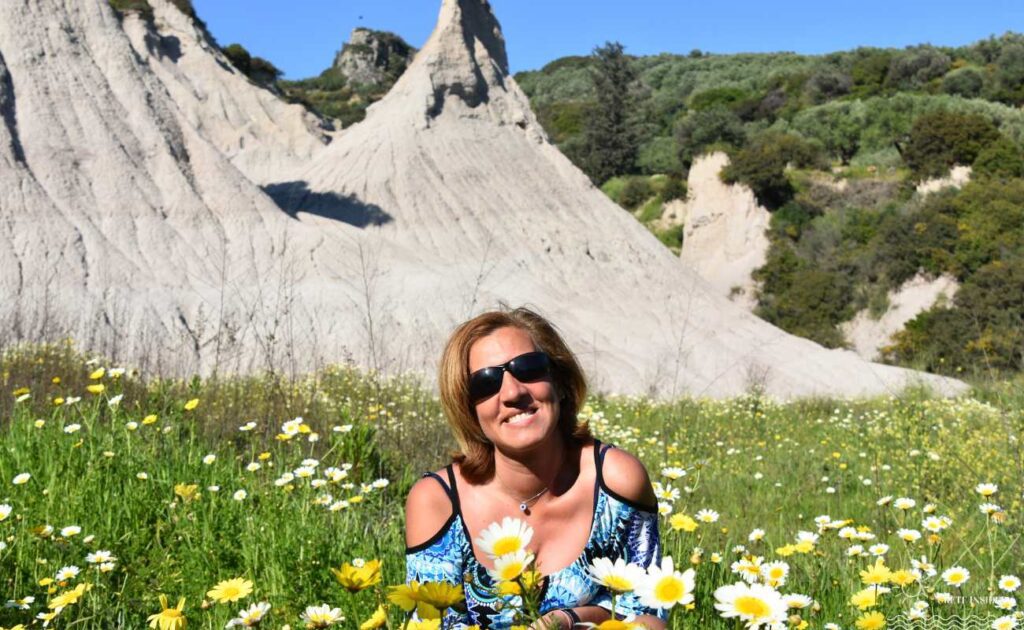
If you are on the island during Easter, participate in the celebrations! Either attend the candlelit processions on Friday night or assist in the spectacular fireworks on Saturday at midnight.
If you can, try to join an Easter lunch on Sunday. Following the austerity of Lent, there is an abundance of delicious dishes.
Mark your calendars for May 1st. On that day, the island comes alive with community spirit and togetherness. Locals gather in the countryside villages for a joyous family reunion or a delightful picnic, creating an atmosphere of anticipation and belonging.
One of the most colorful traditions is the Stefania. These flower wreaths, hung on the doors of homes, symbolize the welcoming of Spring. Seeing these wreaths will fill you with a sense of appreciation for the local culture.
Summer: June, July, and August
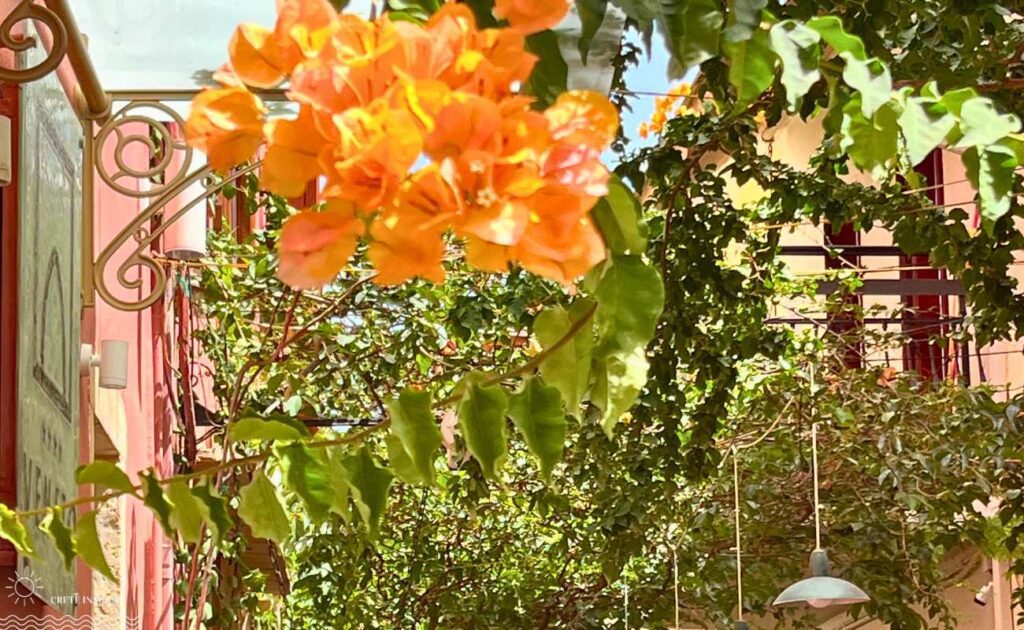
It’s time to go to the beach! In summer, Crete will start receiving visitors from all over Europe. Cities and the south beach areas get busier while traffic intensifies on the coastal road. On Crete, there are beaches for every taste.
The spectacular Balos and Elafonisi attract visitors the whole season. Preveli Beach, Vai, Falasarna, and Malata beaches are extremely popular.
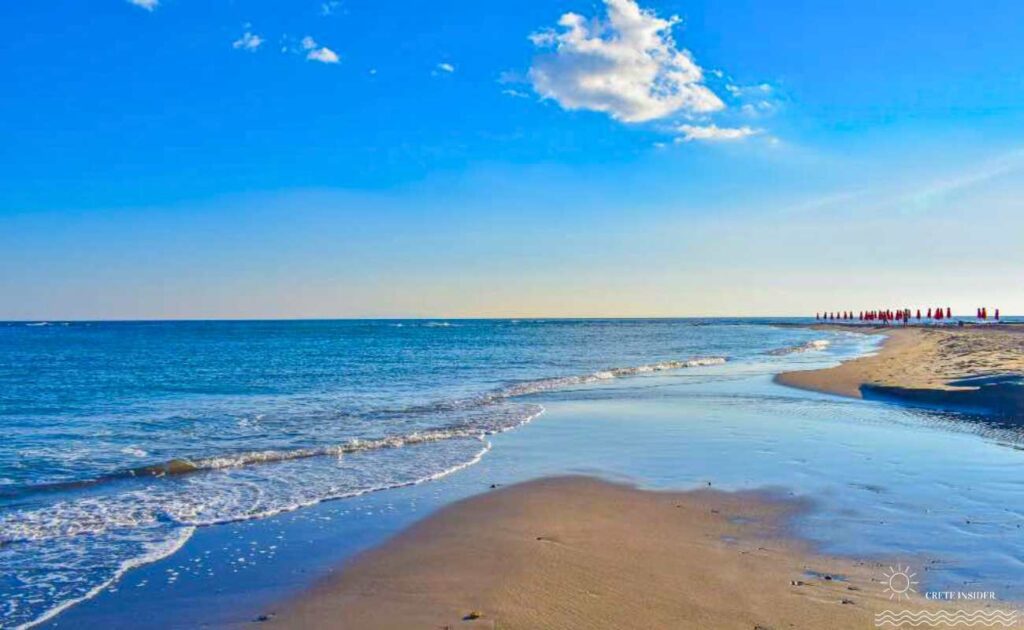
There are more hidden beaches in the Akrotiri Peninsula in western Crete and on the East Coast of Crete, as well as countless Cretan beaches for naturists. My absolute favorite beaches are on the West Coast.
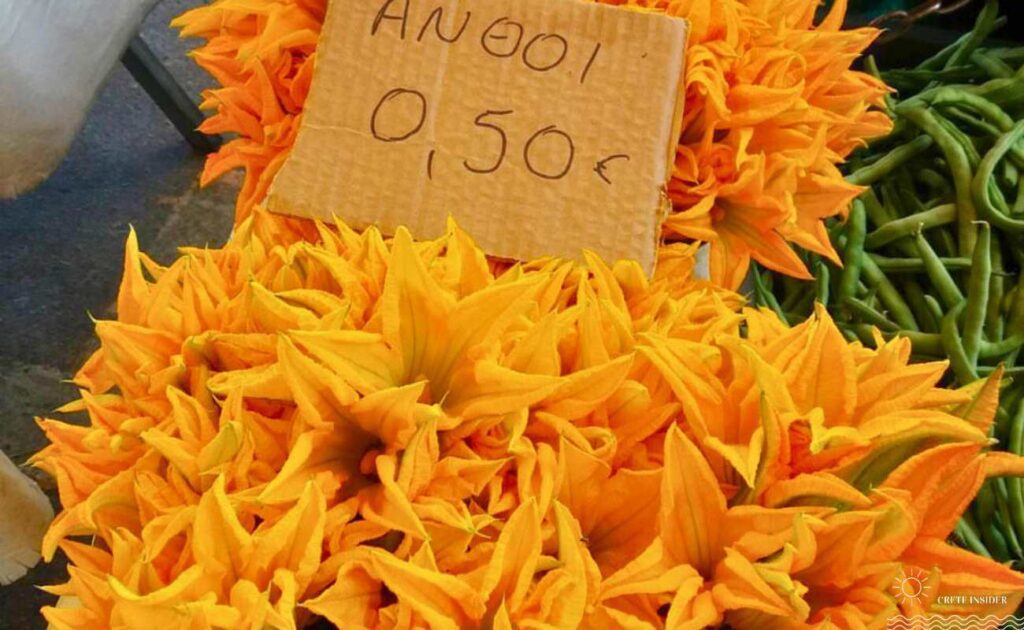
For those with a taste for local gastronomy, summer is a culinary delight. The farmer’s market is a treasure trove of fresh fruits and vegetables, all at very affordable prices.
On August 15th, locals celebrate the Assumption of the Virgin, an important day on the island. It’s customary for locals to visit their home villages and attend church.
Many commercial activities (supermarkets, shops, etc.) are closed, but not the facilities intended for tourists (such as tourist shops or restaurants in central areas, etc.).
The weather is very hot and it’s a good idea to seek relief in the mountains. On some days, there might be strong winds.
Fall: September, October, and November
While the weather is still warm during the beginning of Fall, activities begin to go back to normal with schools opening in September, and many resorts closing their doors from October. In the fields, locals get ready to harvest the grapes and start the winemaking season.
September is the best month for holidays on the island with small kids and for the elderly. The sun’s rays are still strong, but the temperatures are not so high, so there’s less risk of heatstroke.

On October 28th, witness the many parades in the different cities to commemorate Oxi Day, the famous No that the Greeks answered to Mussolini upon his request to allow the Italian troops to enter Greek territory. The date marks the entrance of Greece in the II World War.
The end of October and a good part of November are dedicated to producing the Cretan spirit, tsikoudia (or raki).
>> RELATED ARTICLES
– Crete in September
– Crete in October.
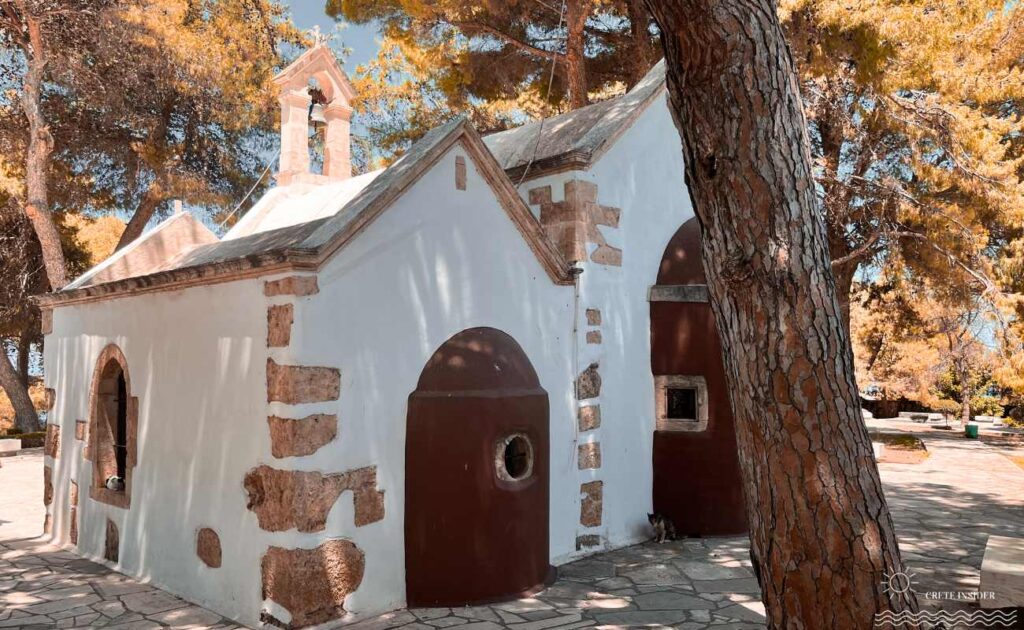
What to Do in Crete According to Your Interests
This is not a list of the best things to do in Crete. If you’re looking for specific activities, click the different links in the following paragraphs. Below is merely a collection of ideas for the many things you can do on the island.
Beaches
There’s nothing like forgetting a long year at the office by lazily sipping a cold beer by the sea. If you love going to the beach, Crete is just the perfect place, it has plenty of choices.
On the western coast, there are three famous gems every tourist wants to visit: Balos, Elafonisi, and Falasarna. They are not the only beaches in West Crete, but they are stunningly beautiful. Balos Lagoon is a paradisiac beach located in the Gramvousa Peninsula, you have probably seen some stunning pictures online.
Falasarna is a long sandy beach located in the extreme west, sunsets in Falasarna are famous all over the world. Elafonisi is an islet situated southwest of Crete, and it’s famous for the pinkish color of the sand.
There are also beautiful beaches in the Akrotiri peninsula, such as Stavros, Marathi, and Kalathas.
All of them are great beaches for kids too!
On the opposite coast, the beaches in East Crete also deserve a place in any Crete itinerary. Vai is a famous destination because of its palm trees. In fact, it’s home to the most extensive palm grove in Europe.

However, there’s another palm beach on Crete, Preveli, which is on the southern coast of Rethymno. In the same area, there are top sites such as the beaches of Agios Pavlos and Plakias, all worth a visit for their pristine waters and calm atmosphere.
You can read about those, as well as about Loutro, Glyka Nera, Frangokastello, and Paleochora in this article about the beaches of the south.
Some of them are perfect places for naturism, check which ones in this guide to Crete’s nudist beaches. Other places to visit for seaside relaxation are the fantastic, long coast of Paleochora, the village, the beach of Matala, and the neighboring Red Beach, as well as the southern city of Ierapetra.

Outdoors
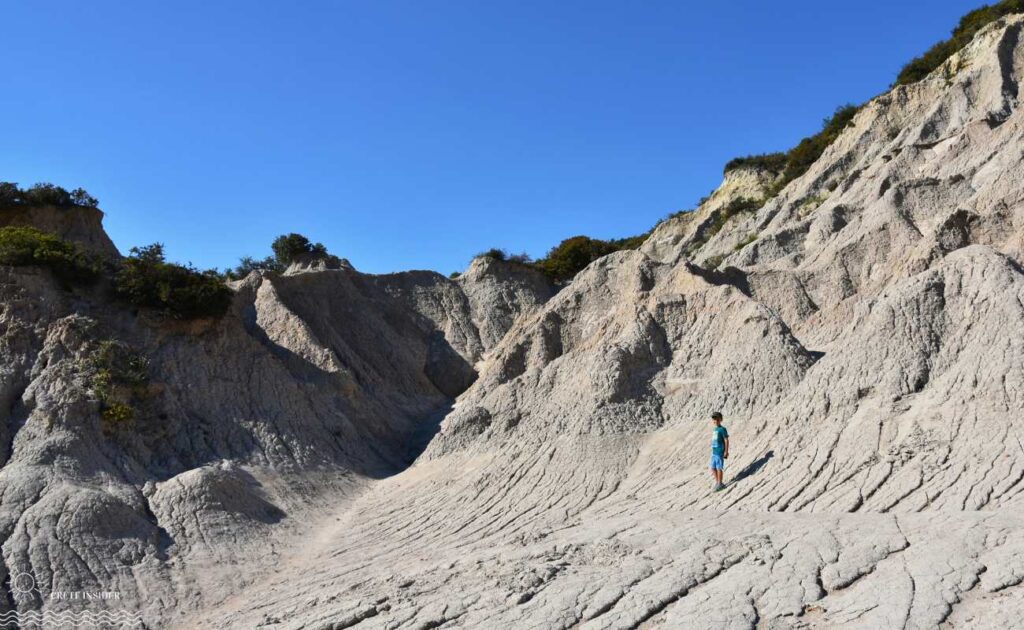
Crete is the perfect island to explore and a great place for adventure sports such as canyoning, hiking, trekking, and alpinism. There are also plenty of possibilities for those interested in water sports and subaquatic activities.
On the beach of Paleokastro, in Heraklion, it’s also possible to practice windsurfing, while the waves in Falasarna make it an ideal spot for surfing. Scuba diving in Crete is also very popular.
There are countless gorges on the island, from the most famous, Samaria, to Imbros, Patsos, or Agios Giorgos in Rethymno and Richtis and Zakros (the Valley of the Dead) in the east.
Those interested in bungee jumping will find a spectacular opportunity in the gorge of Aradaina, a short drive from Chora Sfakia.
Sites and Museums
If your thing is the past of the island and the Western civilization, you’ve come to the right place; it’s here that everything began! Located at the crossroads of three continents: Africa, Asia, and Europe, and in the center of the Mediterranean, Crete is considered the cradle of civilization.
The island is, according to Greek mythology, the birthplace of Zeus. More importantly, in Ancient Crete, the Minoan civilization flourished as early as the 4th millennium BC. Witnesses of that past are the many archaeological sites, ancient settlements, and former Minoan Palaces you can visit on the island.
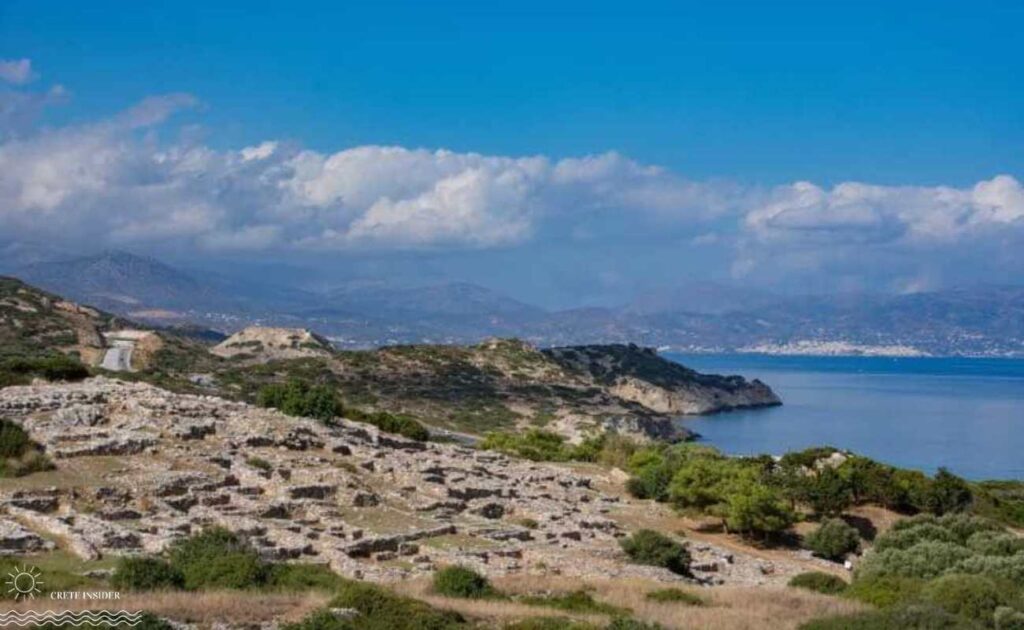
The best-known of all is Knossos, discovered in the early 1900s by the British archaeologist Sir Arthur Evans. The Minoan Palace of Knossos is just a few minutes from the center of Heraklion. Also, in the same region, the ancient ruins of Malia (north coast) and Festos (Phaistos, in the south) are decisive in the island’s history.
In the east, you can visit Gortyna on the Messara Plain, the open-air site of Gournia, and another major site, the Minoan Palace of Zakros.
Many objects found in the different sites can be seen at the Archaeological Museum of Heraklion, which has one of the world’s most impressive collections of Minoan history.
The Ancient Site of Eleftherna and its museum in Rethymnon also deserve a visit. On the western coast, Aptera is an important site overlooking the magnificent bay of Souda.

A few minutes from Falasarna Beach, you can visit Ancient Phalassarna or explore the Archaeological Museum of Kissamos. The Archaeological Museum of Chania is one of the most important museums in west Crete.
If you’re interested in Crete’s religious past, don’t miss a visit to the several monasteries of Crete. They all played a key role during the difficult occupations and foreign rules over Crete.
>> This article lists some of the archaeological sites you can visit in Crete.
Mountains & Villages

Crete’s villages have a very laid-back atmosphere and maintain traditions and costumes. Each one of them is worth visiting. It’s embarrassing and even impossible to choose just a few to include in this list. I encourage you to explore and visit as many as you can.
For the sake of this article, I want to include Kritsa and Tzermiado in Lasithi and Mochos in Heraklion. Towards the southern coast, the mountain village of Ano Vianos is small and pretty, and you can enjoy the quiet pace of life far from the hustle of urban areas.
Also near Heraklion, the small village of Rogdia can be an excellent lodging solution if you want to avoid the chaos of the coastal resorts.
Nestled at the foot of Mount Psiloritis, Anogia is known for its unique Cretan pride, tragic history, and traditions. Other villages in Rethymnon are Axos, Thronos, Spili, and the pottery settlement of Margarites. Loutro, Paleochora, Vouves, Vamos, and Therisos are some of my favorite villages in Chania.
If you don’t feel like driving on the narrow roads of the Cretan mountains, a safari is a great way to get a closer look at our natural landscape and discover hidden villages.

>> If you want to read about Crete’s villages, check this article.
Food & Wine
The best places to start discovering Crete’s culinary traditions are the markets. Visit the Agora, Chania’s central market, or Heraklion’s 1866 Street Market. It’s in the markets where you can see, smell, touch, and taste the authentic tastes of the island, the spices, the herbs, and the bread.
When it comes to dining, the offer ranges from peasant Cretan food to the most refined cuisine in some of Greece’s best restaurants. Try the local mezes in a traditional kafenio or discover the authentic dishes that make the local diet a hit among visitors!
Wine is another chapter. You can read all about the island’s wines and enjoy wine-tasting experiences.
I’ve loved Fragospito Winery and Lyrarakis, both in Heraklion. I also enjoyed the boutique winery concept of Klados in Rethymno and the delicious wines made by Dourakis Winery in the Chania region.
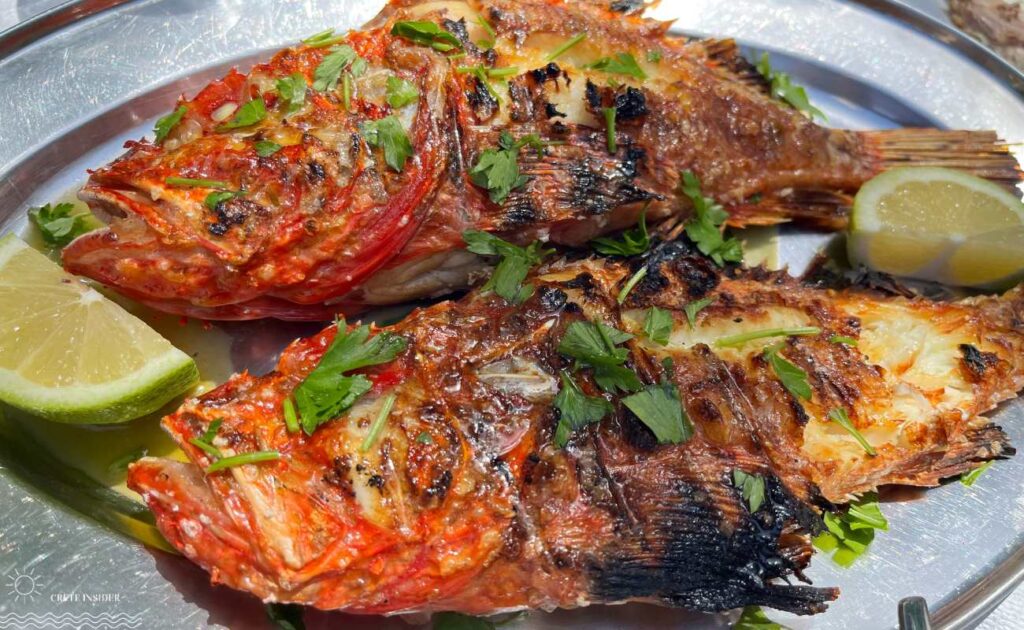
>> Check out what to eat in Crete or discover the best food tours on the island.
Small Islands Near Crete

Several islands surround Crete. Spinalonga is famous for its intense and tragic history. Chrissi (Gaidouronisi) is an uninhabited island that can be reached from Ierapetra by daily ferry.
We have already mentioned Elafonisi, while Imeri Gramvousa can be reached if you visit Balos (by boat), as it is usually included in the tour.
The southernmost point in Greece is Gavdos Island. Gavdos is the place to visit if you enjoy solitary places with a hippie vibe and unique panoramas of the Libyan Sea. Just one suggestion: Avoid it in August!
Other interesting uninhabited islands you can visit are Dia Island, right in front of Heraklion, and Koufonisi, a cluster of islets on the southeastern coast of Crete, opposite the village of Makrigialos.
In this guide, I have shared what I’ve learned, researched, and studied during over 10 years spent writing about the island. It was crafter considering first-hand experiences as a permanent resident since 2016. Summer after summer… and winter after winter.
Follow my comprehensive tips to ensure a well-planned trip to the island. Crete is a land of incredible beauty and unforgettable experiences, so embrace the Cretan spirit and embark on your very own Cretan adventure!

Are you visiting Crete Soon?
Join my Facebook group for more tips, or plan your Crete itinerary with me!
Pin it Now
Crete Travel Tips



Gabi, the Crete Insider
Hi, I’m Gabi — your go-to local expert in Crete! I’ve been living in Chania, Crete since 2016, and I’ve turned my love for the island into a full-time passion — guiding travelers, writing for travel media, and curating local experiences.
I co-authored DK Eyewitness Top 10 Crete and other guides. I run the blogs The Tiny Book, Greece Planner, and My Cretan Recipe. Through this platform I help travelers design unforgettable trips to Crete.


